Rumors Abound: Is BYD Set to Halt Profit-Sharing Bonuses? Cash Reserves Reach 164.7 Billion Yuan Despite 20.5% Profit Drop in First Half
 09/14 2026
 487
487
Author | Guanchejun
As the time for distributing profit-sharing bonuses draws near, rumors have surfaced suggesting that BYD might suspend these payments, sparking widespread discussion.
According to a report from Jiemian News, an engineer at BYD's Auto Engineering Research Institute mentioned that his department has yet to receive any information regarding profit-sharing bonuses this year. He recounted that by this time last year, the department head had already outlined the bonus arrangements during a regular meeting. However, this year, there has been a notable silence on the matter within his department.
On social media, accounts associated with BYD employees have also been sharing news about the absence of profit-sharing bonuses. Whether these bonuses will be distributed remains uncertain, as BYD has not made any official statements on the issue.

Why are profit-sharing bonuses so crucial for BYD employees? Public information indicates that BYD follows a 12-month salary system without traditional annual bonuses. Profit-sharing bonuses serve as the primary additional income for employees throughout the year, effectively functioning as an annual bonus.
BYD initiated profit-sharing bonuses in September 2022, based on the previous year's performance. These bonuses are allocated in "shares," with significant variations depending on job level.
For instance, ordinary E-level employees might receive five shares, managers could earn hundreds of thousands of yuan, and D-level key personnel typically receive tens of thousands. In 2024, one individual shared that they received 86,000 yuan.
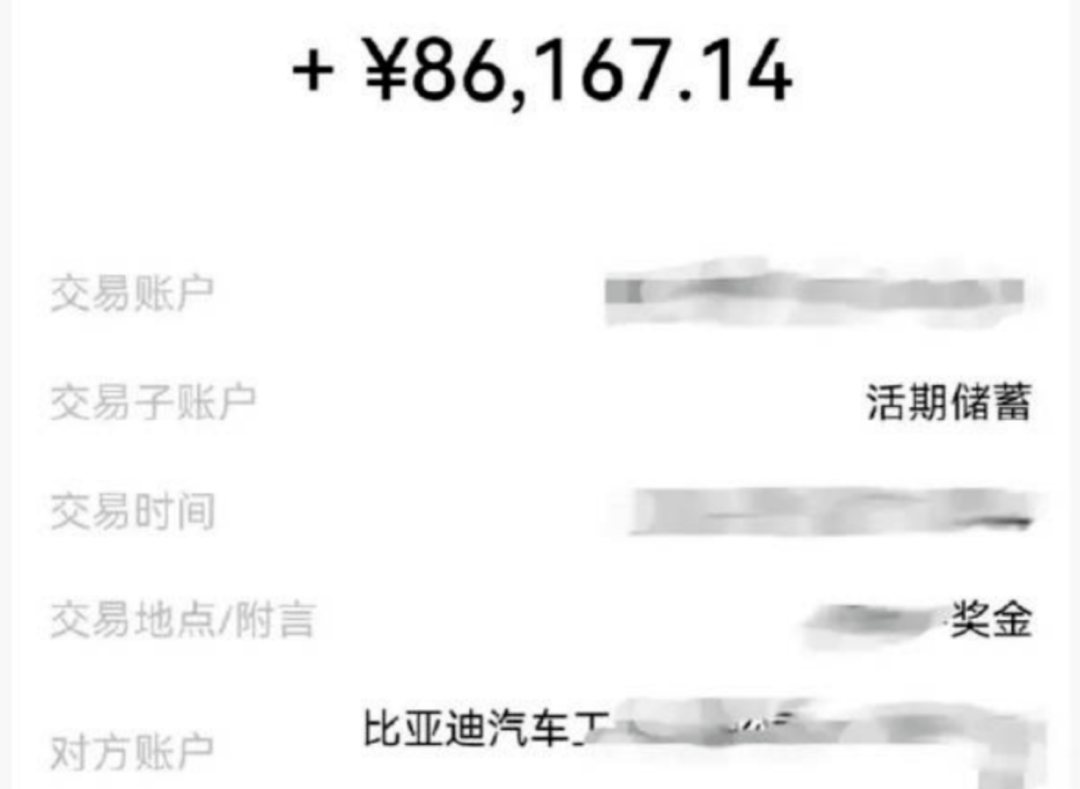
This additional income is not stipulated in employment contracts. BYD's official biography, The Soul of the Engineer, states that the company shares a portion of its profits with employees. Legally, this is considered a gesture of goodwill, but for many employees, it has become an integral part of their annual income and a significant factor in campus recruitment.
The controversy began with an anonymous post in early September 2026 on BYD's internal social platform, where an employee claimed that "all profit-sharing bonuses for this year have been canceled." This news rapidly spread across major social media platforms, prompting a surge of employees to question BYD's official accounts and brand executives in the comment sections, with emotions quickly escalating.

In response to these online rumors, while Guanchejun has not seen an official public statement from BYD, reports from the self-media outlet Cheshi Liaowang indicate that BYD has refuted the rumors through platform complaint channels, asserting that the claim of "no profit-sharing bonuses this year" is false.
While the ideal scenario would be for the bonuses to be distributed, their absence would undoubtedly disappoint employees, as this money is already factored into their financial expectations.
Some may wonder: Can't BYD afford these bonuses? Let's examine the latest data.
In the first half of 2026, BYD reported revenue of 344.815 billion yuan, a 7.13% decrease year-on-year; net profit attributable to shareholders was 12.325 billion yuan, a 20.54% decrease year-on-year. The net profit margin was 3.58%, marking a four-year low for the same period. The company earned approximately 3.2 billion yuan less than the previous year.
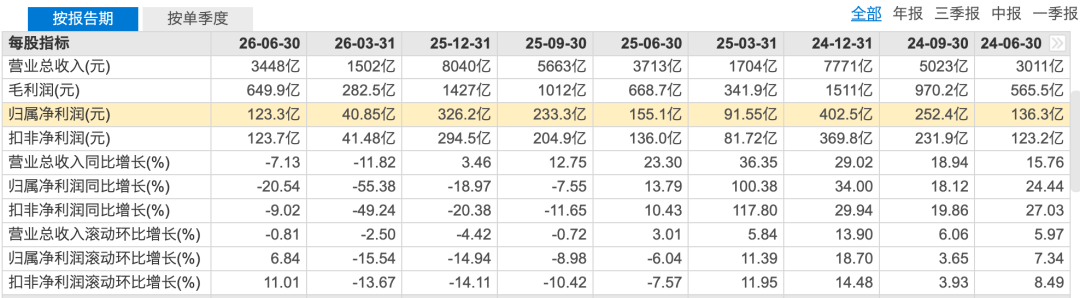
Eliminating this expense would indeed enhance the profit statement, particularly given the 20% drop in net profit attributable to shareholders. It represents a swift cost-cutting measure.
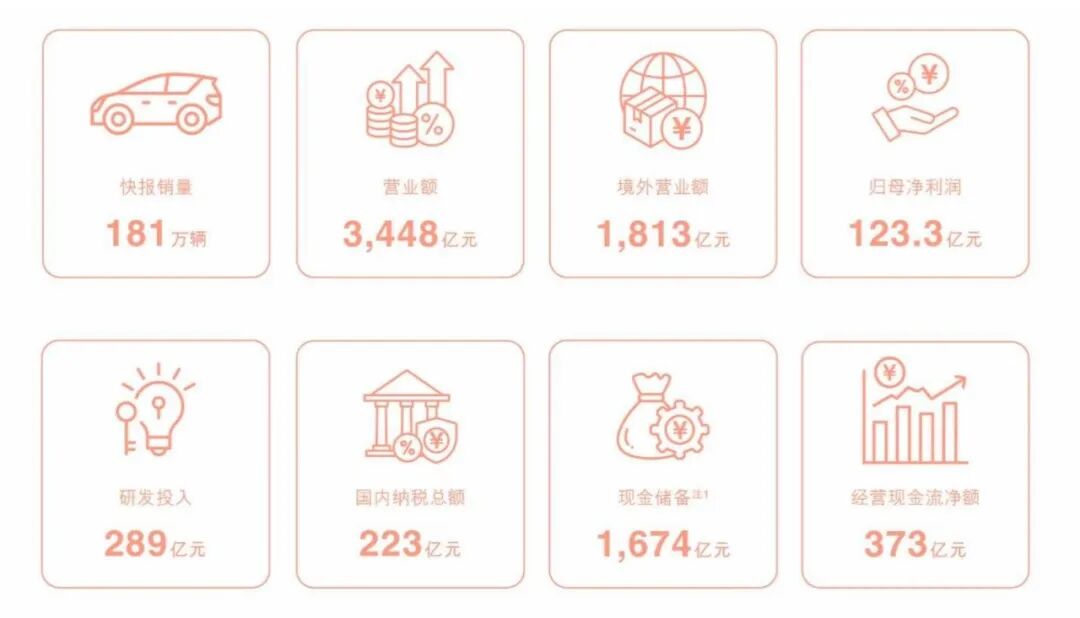
However, Guanchejun notes that BYD is not facing a cash shortage. In the first half of 2026, R&D investment reached approximately 28.9 billion yuan, and cash reserves stood at around 167.4 billion yuan. Net cash flow from operating activities was 37.335 billion yuan, a 17.28% increase year-on-year.
From an industry perspective, the domestic new energy vehicle market has shifted from incremental growth to fierce competition for existing market share in recent years. Price wars have intensified across all segments, from entry-level commuter vehicles to mid-to-high-end family models, compelling automakers to reduce prices to boost sales and maintain market share.
As an industry leader, BYD is both a core participant and a major bearer of this price war. Continuous terminal price reductions have directly compressed gross margins on vehicle sales, compounded by fluctuations in raw material prices for components and batteries, further diluting overall profitability.
Coupled with diminishing marginal returns from scale expansion, this explains why BYD's profit-sharing bonuses have become a widely discussed topic recently—earning money is no longer as straightforward as before.
This also underscores a broader point: The golden era of the new energy sector has concluded, and the industry is officially transitioning from an era of scale expansion to one of profit quality.
Prepare yourself mentally and embrace the new era.
-
![]()
The Paris Motor Show Amplified by Chinese Automakers: The Next Step for China's Auto Industry Going Global
-
![]()
Rumors Abound: Is BYD Set to Halt Profit-Sharing Bonuses? Cash Reserves Reach 164.7 Billion Yuan Despite 20.5% Profit Drop in First Half
-
![]()
Shining in Pengcheng, Pursuing Light with Ingenuity | Zolix's Successful Participation in CIOE2026 Shenzhen, Paving the Way for a New Journey in Optoelectronics
-
![]()
Domestic Computing Power Firms Favoring Private Placements: The New Capital Market Favorites
-
![]()
Blockbuster! Can NIO Auto ‘Rise Like a Phoenix’? Netizens Say: Only Taiyi Can Resurrect Nezha!
-
![]()
Latest Developments on Huawei’s ‘MaJie’ Collaboration? Maserati Announces Official Launch of December Brand Strategy
-
AI Office: The Race Intensifies
-
[Data Microscope] 100 Million Foldable Phones Split the Smartphone Market in Half