The Paris Motor Show Amplified by Chinese Automakers: The Next Step for China's Auto Industry Going Global
 09/14 2026
 567
567
In June 1898, the world's first motor show was held in the Tuileries Garden in Paris. There was a rule: cars had to first drive themselves from Paris to Versailles and back, covering 40 kilometers before being allowed to enter. That year, the event attracted 140,000 visitors and 269 exhibitors.
Later, the show moved to the Grand Palais and then settled at the Porte de Versailles Exhibition Center in 1962, where it continues to be held today. The highest attendance was in 2004, with 1.46 million visitors, which the organizers claimed made it the world's most visited motor show. Chinese cars made their debut here in 2006, with Great Wall and Landwind, the selling point being their affordability. In 2018, only GAC Motor represented Chinese automakers at the show.
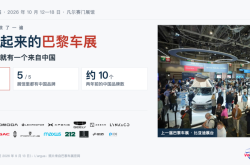
This year marks the 91st edition, with media day on October 12 and public days from October 13 to 18. As of September 13, the official exhibitor list included 55 complete vehicle manufacturers, with Chinese brands accounting for 19, roughly one in every three, while French brands numbered 10. BMW and MINI withdrew from the show in July.
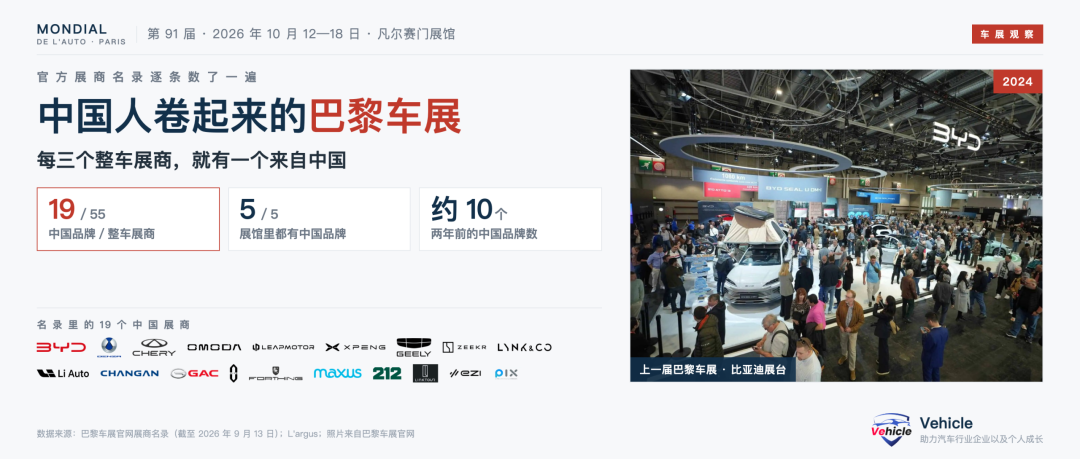
The background image shows the BYD booth at the 2024 Paris Motor Show, sourced from the official Paris Motor Show website.
Attendance Halved, Chinese Brands Double
The 2020 edition was canceled due to the pandemic. When it returned in 2022, apart from Renault and Stellantis, almost all German, Japanese, and Korean brands were absent, with only 398,000 visitors; BYD made its French debut at that show. In 2024, attendance rebounded to 508,000, with around 10 Chinese brands among the 48 present.
This year, organizers reported over 100 exhibitors and more than 60 automakers across five halls, with 70,000 square meters of indoor space and 15,000 square meters outdoors. However, as noted in our previous articles, "Four Major Trends at the 2026 Beijing Auto Show: A New Era for Chinese Automobiles" and "2025 Shanghai Auto Show: A Prime Time for Chinese Automakers Going Global," the Beijing and Shanghai auto shows feature 360,000-380,000 square meters of indoor exhibition space, reflecting the enormous production capacity and market size of Chinese automobiles. Of course, French friends have also told Vehicle that the Paris Motor Show is primarily a regional event focused on vehicle sales.
This year, however, several brands that had been absent for years returned due to the influence of Chinese automakers: Volvo after 12 years, Honda after 8 years, and Mercedes-Benz for the first time since 2018. Stellantis brought eight brands, up from three two years ago. As shared in our previous article, "Volkswagen's Future Plan 2030: Talent, Factories, Products, Technology, and What It Means for China and the World," Volkswagen's management, including Blume, Antlitz, and Thomas Schäfer, will attend and offer test drives of the ID.2 all family. European automakers seem to have been spurred on by Chinese competition.
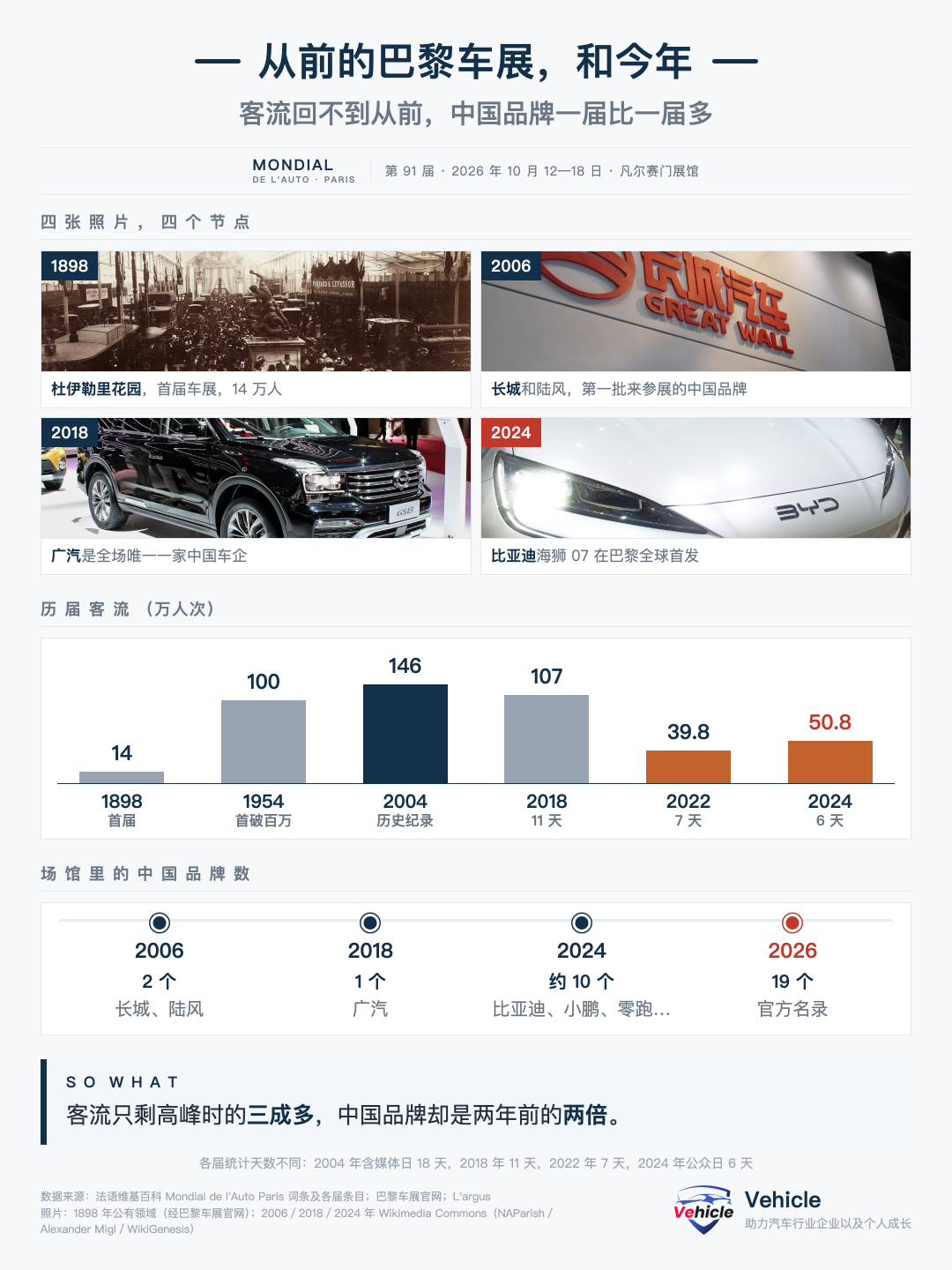
The number of days counted varies across editions (18 days in 2004, 7 days in 2022), so direct comparisons of visitor numbers are not appropriate for assessing foot traffic intensity.
Counting the Names: 19 Chinese, 10 French
I categorized the 55 complete vehicle exhibitors in the official list by brand origin: 19 from China, 10 from France, 6 from Germany, 4 from Italy, 3 from Japan, and 2 each from South Korea, Spain, and the United States. Volvo and Lotus, controlled by Geely Holding, as well as smart, jointly owned by Geely and Mercedes-Benz, were not counted as Chinese brands; including them would bring the total to 22.
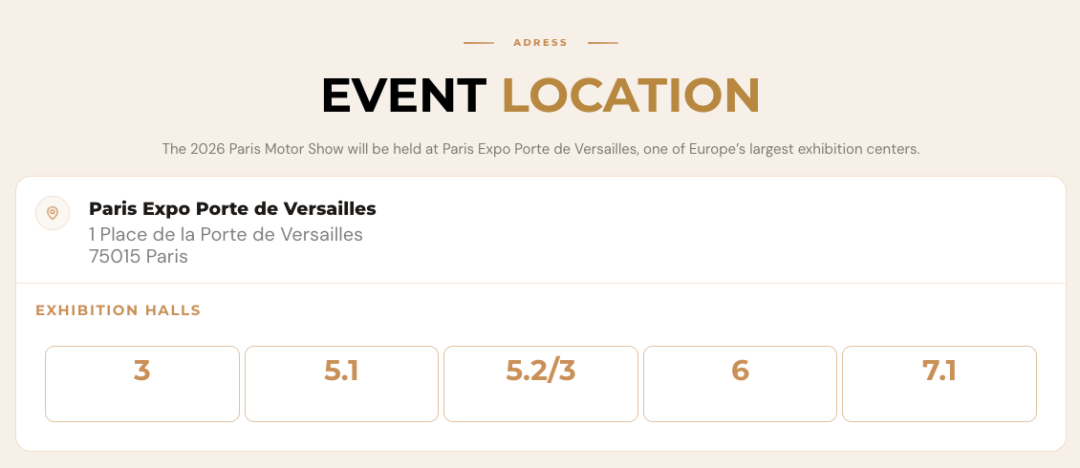
Every hall has a Chinese brand.
Hall 7.1 has 17 complete vehicle exhibitors, with 8 from China, including Geely, Changan, Beijing 212, Dongfeng Fengxing, and SAIC Maxus.
Hall 5.1 has only 4 complete vehicle exhibitors, with GAC Motor, Li Auto, and Lynk & Co occupying 3 spots, while Toyota appears only at the PFA innovation booth.
Hall 4 features Stellantis's eight brands sharing a 5,340-square-meter exhibition area and Volkswagen Group's space. Leapmotor is located within the Stellantis area, while Chery and Omoda & Jetour are also in this hall.
Hall 6 houses BYD with 1,000 square meters, XPENG, and Renault Group's 5,000-square-meter main booth.
The list of absent brands is also interesting. BMW withdrew on July 21, citing global performance below expectations. It had already lowered its automotive business profit margin guidance for the year from 4%–6% to 1%–3% in June, partly due to weakening demand in China. Porsche, Ferrari, and SEAT did not attend, nor did Tesla appear in the exhibitor list. Among Chinese brands, MG, the top seller in Europe, was absent, as were Hongqi and Skywell, which had attended two years prior.
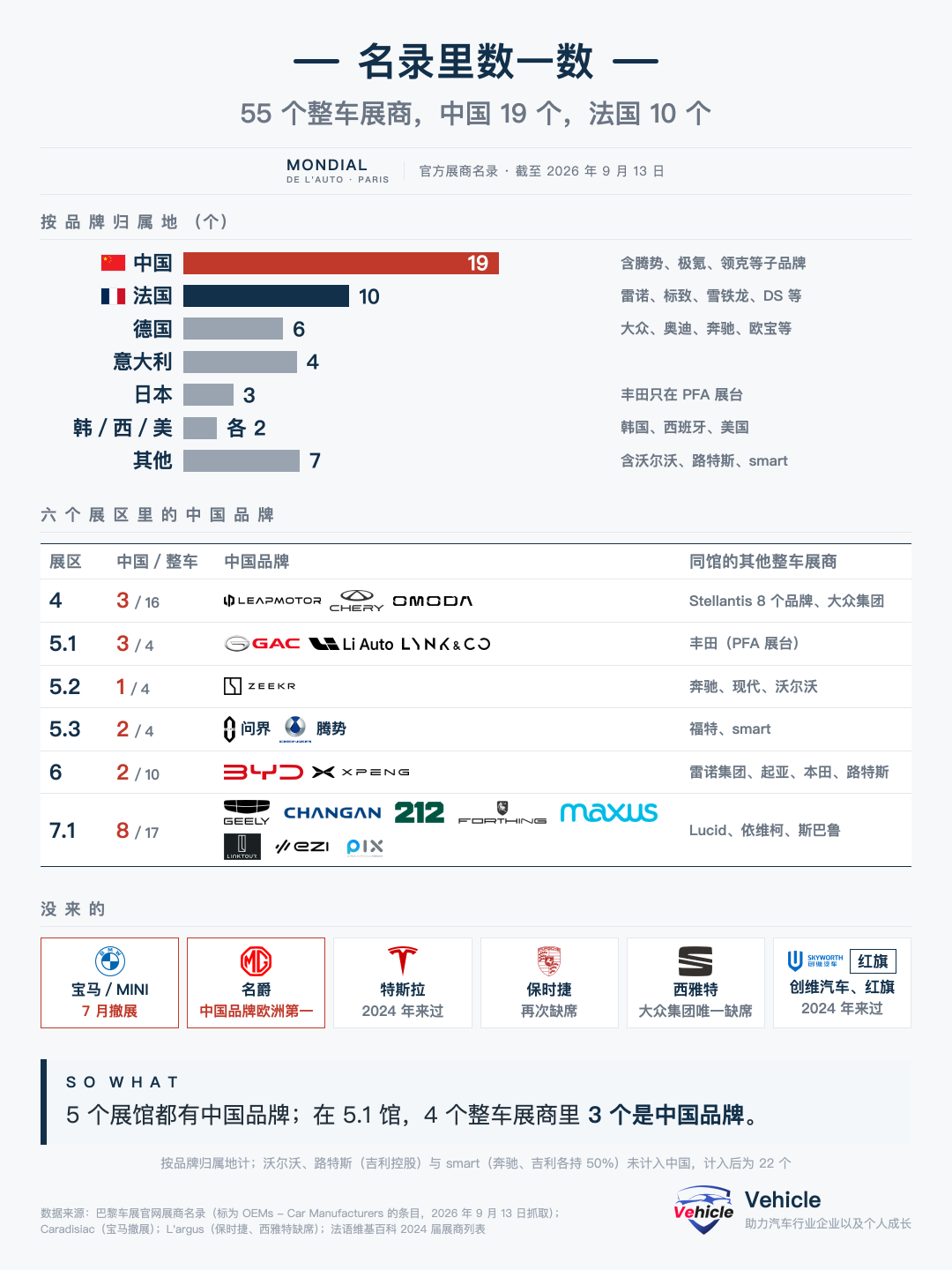
Statistics are based on items marked as OEMs - Car Manufacturers in the official list as of September 13, 2026, with updates ongoing.
Chinese OEMs Participating in the Paris Motor Show
Familiar face BYD is exhibiting for the third consecutive year, with a dedicated 600-square-meter booth for Denza this year, showcasing the Z9 GT and D9 to the French public for the first time.
XPENG brings three new SUV models: Mona L03, Mona L05, and G9L, which will go on sale after the show.
Leapmotor debuts the B03 (known as A05 in China) in Europe at the Stellantis booth. The B03X has been on sale in France since July, starting at €23,400, with over 130 dealerships.
GAC Motor, with its Aion brand, will announce a localization plan in Paris titled "In Europe, For Europe."
Seres, Dongfeng Fengxing, and SAIC Maxus are also returning after two years.
Newcomers include Chery, which launched its main brand in France on September 1 with over 50 dealerships, aiming to reach 90 by year-end. Omoda & Jetour debuted in April and have already signed 121 dealers.
Geely entered the French market on April 28, with over 60 dealerships opened or under construction. Its brands Zeekr and Lynk & Co are exhibiting for the first time, each bringing a European premiere model.
Li Auto debuts the Li 6 (known as i6 in China) in Europe, with sales starting in the fourth quarter, initially offering battery electric versions.
Changan Group is in Hall 7.1, with French media expecting it to showcase Deepal and Avatr.
Beijing 212, EZI (a Qianjiang Motorcycle subsidiary), and Weiqiao Group's Linktour are exhibiting off-road and micro vehicles, while PIX Moving displays its autonomous driving fleet on a 310-square-meter booth.
Geely's European brand Volvo features the EX60, built in Sweden, while smart globally debuts the #2 in Paris, and Lotus is also in Hall 6. In total, Geely-related brands occupy six booths across Halls 5.1, 5.2, 5.3, 6, and 7.1. More than half of the 19 Chinese exhibitors are already selling in France, bringing pricing and dealership networks to the show.
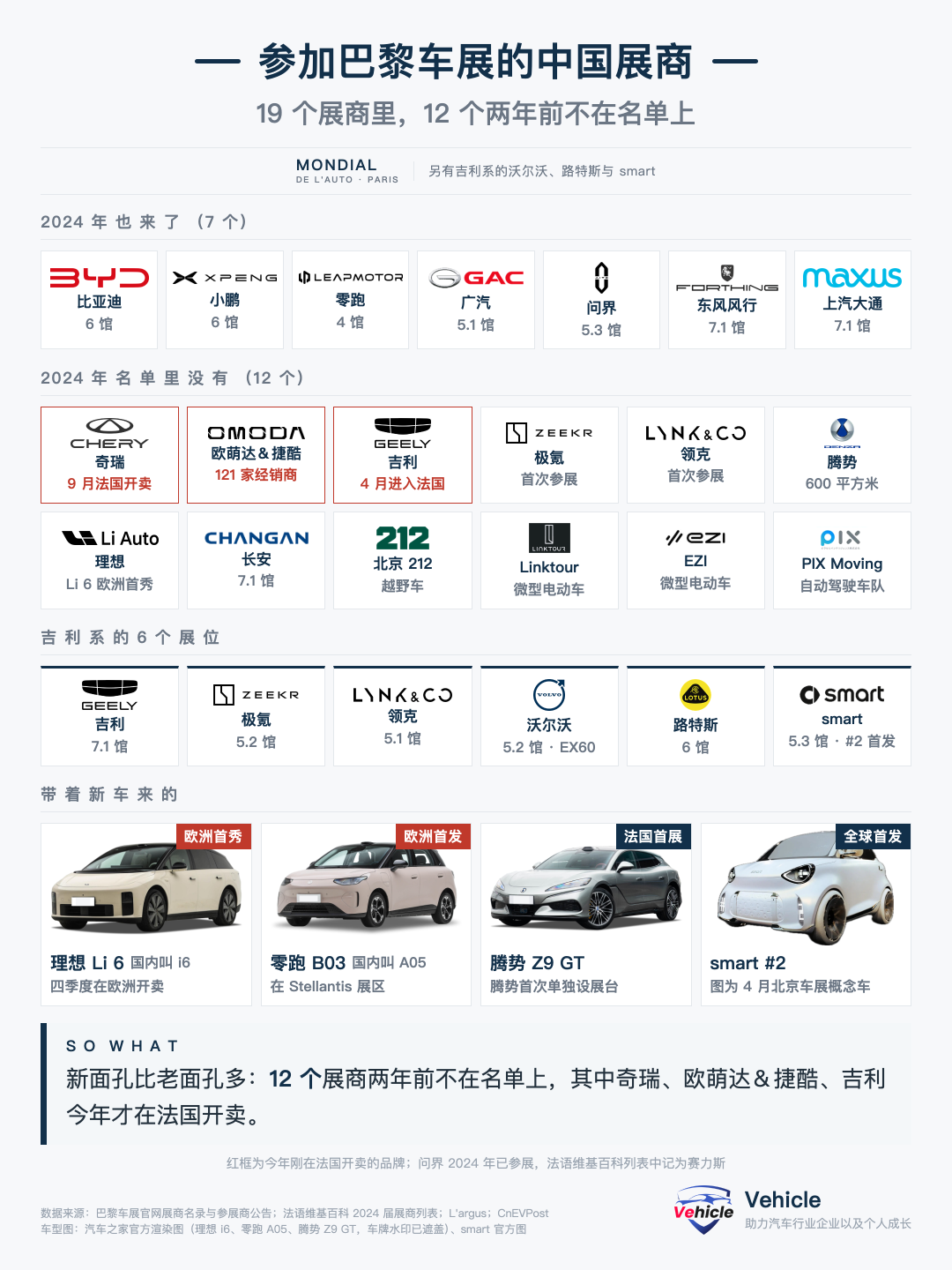
"Present in 2024" is based on the French Wikipedia list of 2024 exhibitors and Seres's official press release.
What Are They Selling in Paris?
Looking at several models with announced French pricing, at least six are priced below €30,000: Geely E2 at €20,990, Leapmotor B03X at €23,400, BYD Dolphin G DM-i at €23,990, BYD ATTO 2 DM-i at €26,990, Chery Tiggo 7 at €26,990, and Jetour 7 hybrid at €29,990. Four of these six models have internal combustion engines.
This relates to two thresholds.
Starting in October 2024, the EU will impose anti-subsidy taxes of 7.8%–35.3% on Chinese-made battery electric vehicles (BEVs) (details can be found in our previous article, "EU to Impose Up to 38.1% Tariffs on Chinese Electric Vehicles Going Global"). BYD faces a 17% tariff, Geely 18.8%, and SAIC 35.3%, while hybrids and plug-in hybrids are exempt. In June, Germany's Handelsblatt reported that the European Commission was considering including plug-in hybrids, pending approval from a majority of member states; as of publication, no official rates have been announced.
France also has an environmental scoring system: BEVs must score at least 60 points to qualify for purchase subsidies and social leasing programs. Scoring is based on materials, batteries, assembly location, and distance transported to France, making it difficult for vehicles manufactured in Asia and shipped by sea to qualify.
European competitors are also targeting this price range. Volkswagen Group plans to showcase electric vehicles starting at €25,000 in Paris, specifically the Volkswagen ID.2 and Dacia's new model, the Striker, both priced below €25,000. Chinese automakers in France are primarily focusing on family cars priced between €20,000 and €30,000 with internal combustion engines, which are the core market segments for Renault, Peugeot, and Dacia.
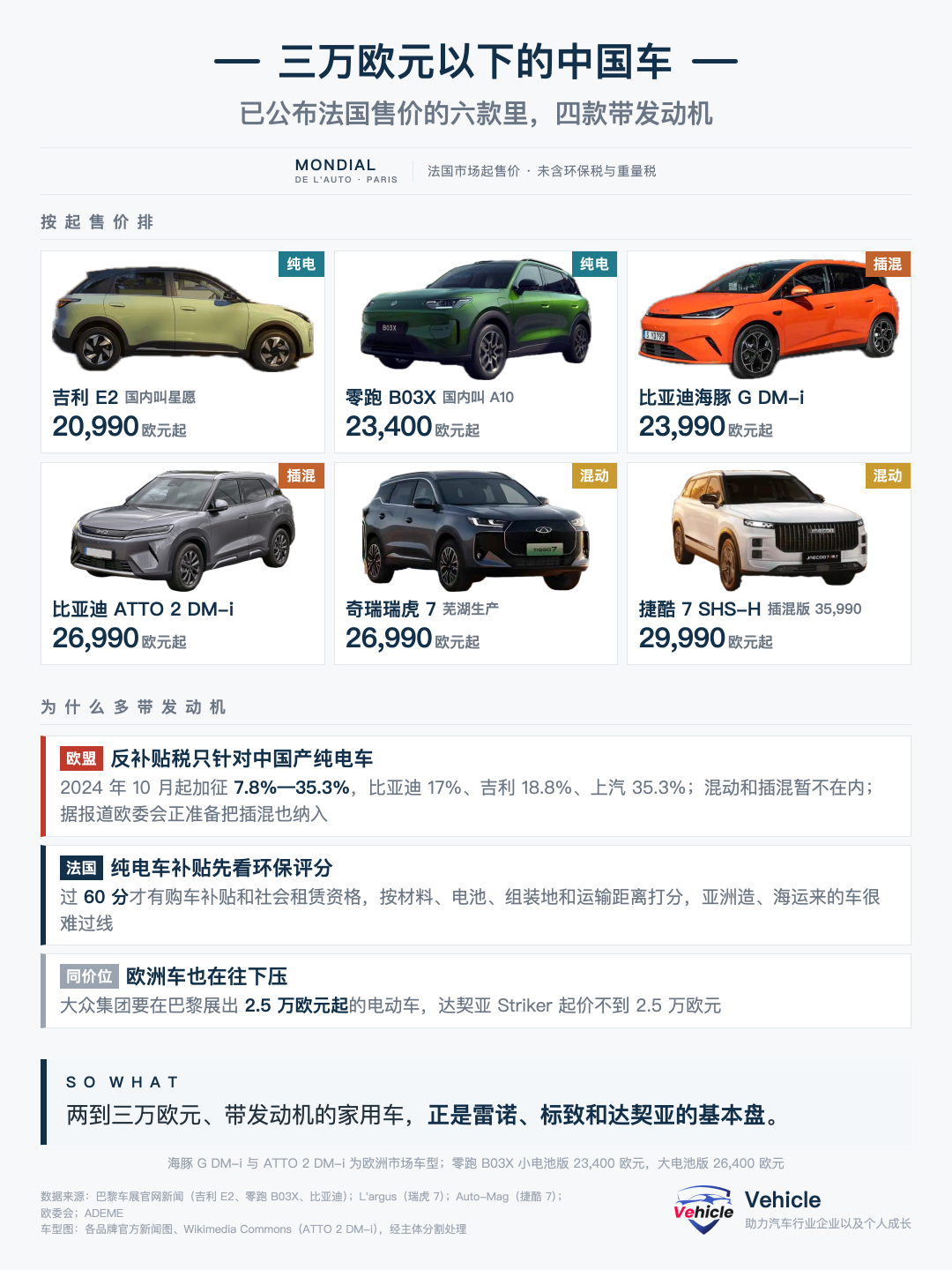
Prices are starting prices in the French market, excluding environmental and weight taxes; vehicle images are sourced from official brand press materials and Wikimedia Commons.
Why the Rush to Paris This Year?
France has one of the lowest market shares for Chinese brands among major European markets. According to French industry media Journal de l'Automobile, Chinese brands held a monthly market share of only 2.6% in January in France, rising to 7.9% in July; from January to July, MG sold 19,760 units, BYD 16,500 units, and Jetour 5,607 units, with XPENG and Leapmotor each selling just over 4,000 units. The top five brands accounted for 97.2% of total Chinese brand sales. Extrapolating from MG and BYD's shares, the cumulative market share from January to July was approximately 5.2% (this figure includes Polestar).
In contrast, the European market as a whole stood at 9.7% during the same period, with Dataforce reporting that Chinese brands sold 813,096 vehicles in Europe from January to July, already surpassing total sales for the entire year of 2025. In the UK, the market share reached 16.1% from January to August. France, at just over half the European average, makes the Paris Motor Show a critical opportunity for Chinese brands. In 2024, BYD secured over 1,600 sales leads and more than 500 orders during the Paris Motor Show week. MG, with an established network, could afford to skip the show, but newer entrants to the French market need this week of exposure.
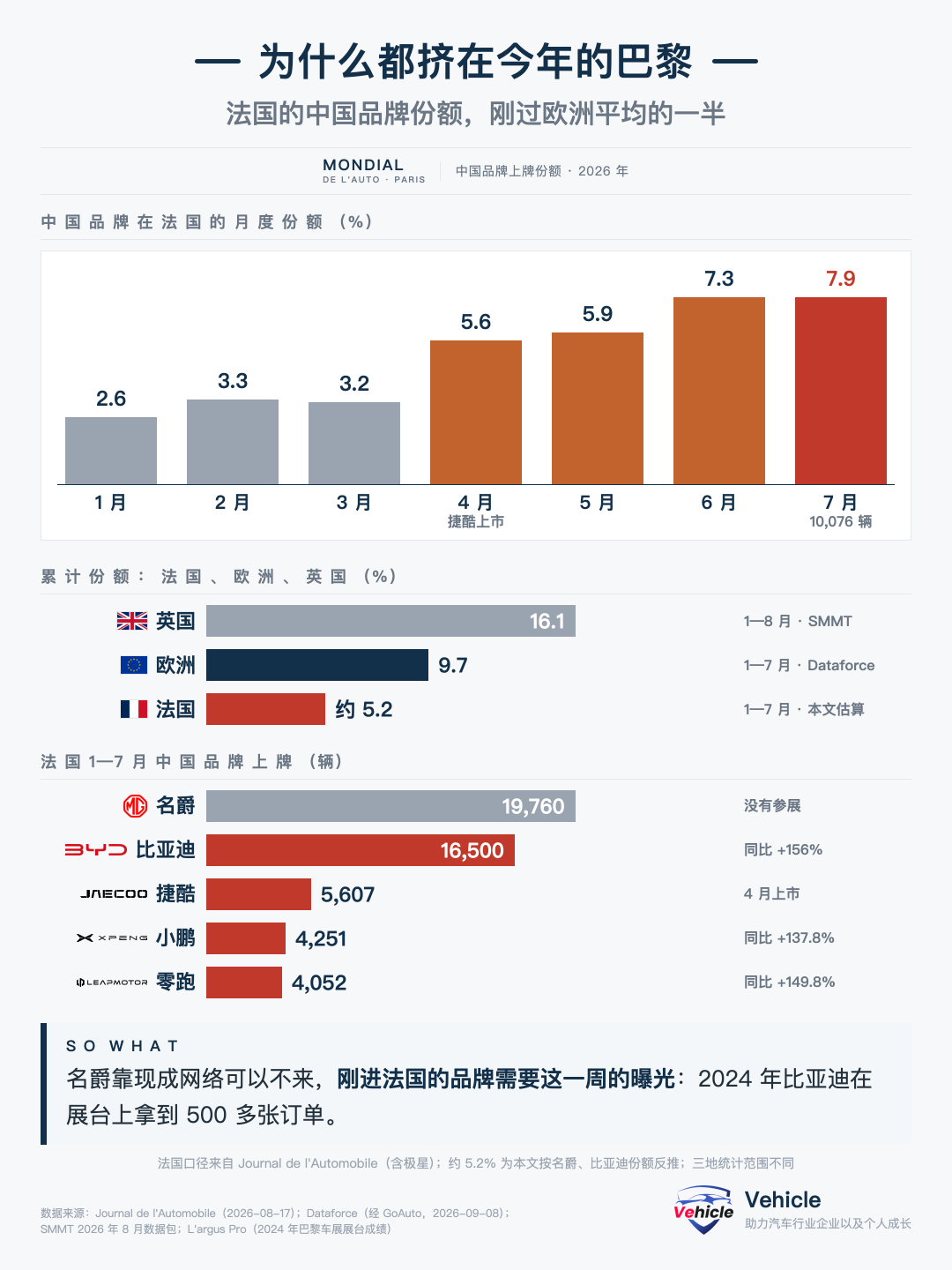
France's 5.2% is an extrapolation based on market share; Europe's figure is from Dataforce (including the UK, Norway, Switzerland, etc.), while the UK's figure is from SMMT.
Conclusion
A year ago, in our coverage of the Munich Auto Show ("IAA 2025 Munich Auto Show: Chinese Automakers—From 'Trade Exports' to 'Unstoppable'"), we highlighted the transition of Chinese automakers from "trade exports" to "unstoppable." The Paris edition this year appears to represent the next step for Chinese automakers going global: brands are arriving with French pricing, dealership networks, and timelines for European factories. Leapmotor's B10 will begin production in Zaragoza, Spain, in the second half of the year, while BYD's factory in Szeged, Hungary, started trial production earlier this year (though this remains subject to change, as discussed in our previous article, "BYD's Global Expansion: 26 Months of 'Catching Up' and 'Advancing')." These developments will determine whether Chinese brands' BEVs appear on France's environmental score list in the coming years.
After the show, three key developments will be worth monitoring: the final order numbers announced at each brand's booth, whether the EU imposes taxes on plug-in hybrids, and whether Chinese brands' monthly market share in France reaches 10% by the end of the year.
*Unauthorized reproduction or excerpting is strictly prohibited.*
-
![]()
Stellantis' Global Strategy Divided into Two Halves: Half North American Independence, Half Alliance with Leapmotor and Dongfeng
-
![]()
The Paris Motor Show Amplified by Chinese Automakers: The Next Step for China's Auto Industry Going Global
-
![]()
Rumors Abound: Is BYD Set to Halt Profit-Sharing Bonuses? Cash Reserves Reach 164.7 Billion Yuan Despite 20.5% Profit Drop in First Half
-
![]()
Shining in Pengcheng, Pursuing Light with Ingenuity | Zolix's Successful Participation in CIOE2026 Shenzhen, Paving the Way for a New Journey in Optoelectronics
-
![]()
Domestic Computing Power Firms Favoring Private Placements: The New Capital Market Favorites
-
![]()
Blockbuster! Can NIO Auto ‘Rise Like a Phoenix’? Netizens Say: Only Taiyi Can Resurrect Nezha!
-
![]()
Latest Developments on Huawei’s ‘MaJie’ Collaboration? Maserati Announces Official Launch of December Brand Strategy
-
AI Office: The Race Intensifies