FAW’s Integration with GAC Unveiled: Will China’s Southern and Northern Toyota Joint Ventures Further Consolidate, and Will Dongfeng Press On with Integration Efforts?
 09/15 2026
 435
435
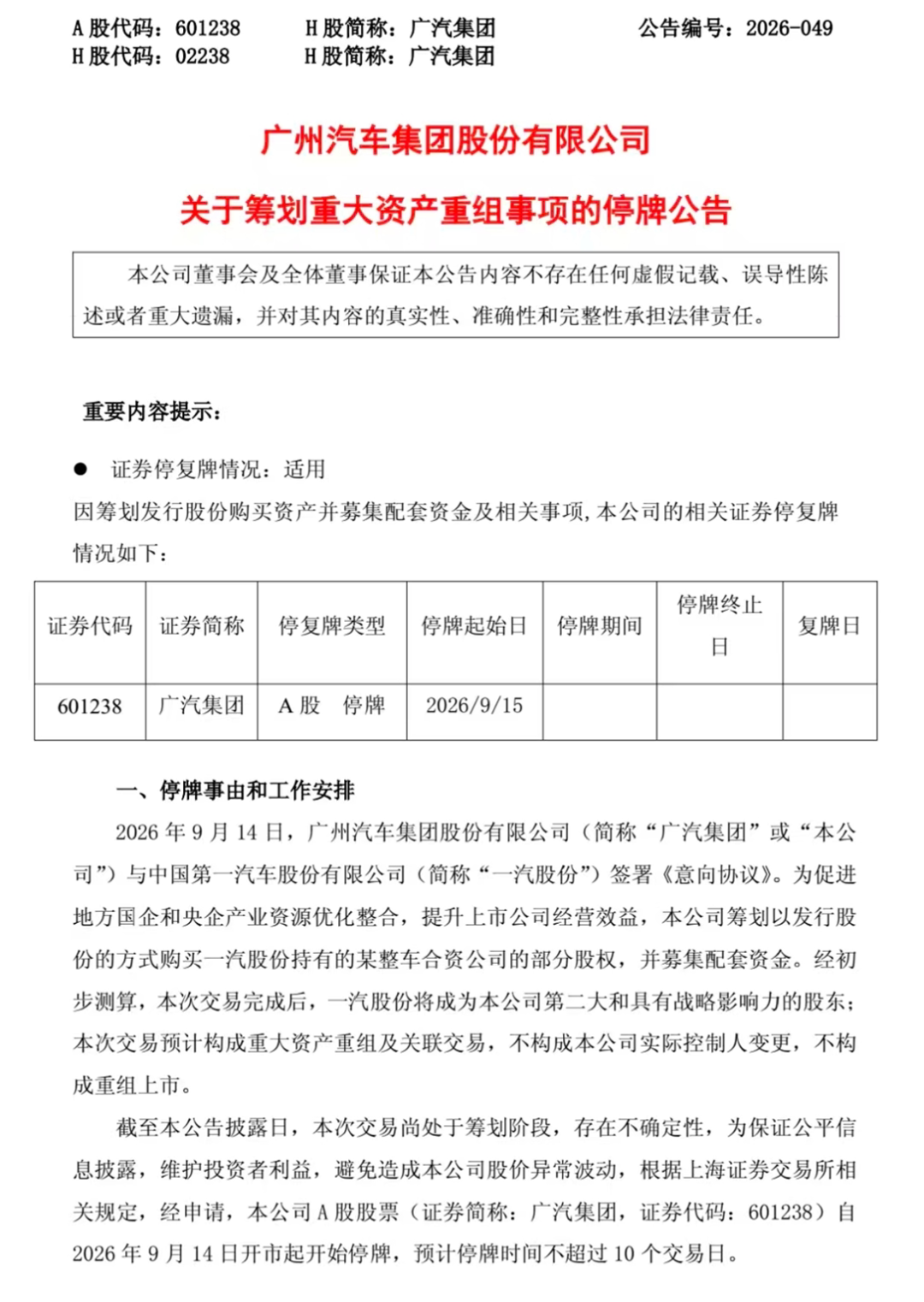
The restructuring of GAC by FAW has been finalized, but the outcome unfolds in a manner different from initial expectations.
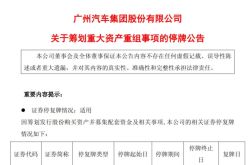
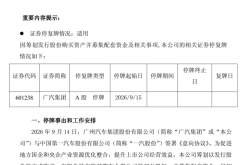
On the evening of September 14, GAC Group Co., Ltd. (hereinafter referred to as "GAC") announced that it had signed a Letter of Intent with China FAW Co., Ltd. (hereinafter referred to as "FAW Co."), which serves as the core operational entity of China FAW Group. In its announcement, GAC stated its intention to acquire a portion of the equity in a vehicle joint venture company held by FAW Co. through the issuance of shares and raise counterpart funding (supporting funds). Preliminary calculations indicate that, upon completion of this transaction, FAW Co. will become GAC's second-largest shareholder with strategic influence.
Currently, GAC's two primary shareholders are Guangzhou Automobile Industry Group Co., Ltd. and Hong Kong Central Clearing Agent Co., Ltd., holding 54.02% and 27.56% of the shares, respectively. For FAW Co. to assume the position of GAC's second-largest shareholder, its shareholding must surpass that of Hong Kong Central Clearing Agent. GAC has indicated that this transaction is expected to constitute a major asset restructuring and related-party transaction, but it will not result in a change of the company's actual controller or constitute a restructuring listing.
In simpler terms, this announcement signifies that GAC has invested funds to acquire equity in a joint venture company from FAW Co., while FAW has emerged as the second-largest shareholder of GAC Group. Given that the transaction is still in the planning phase and subject to uncertainties, GAC will suspend trading starting from September 14 to ensure fair information disclosure, safeguard investor interests, and prevent abnormal stock price fluctuations. The suspension is anticipated to last no more than 10 trading days.
Data reveals that FAW Group sold 3.302 million vehicles in 2025, generating revenue of RMB 541.5 billion, yet it has not gone public as a whole. By the end of 2025, it also signed an agreement to strategically invest in Leapmotor. Conversely, GAC is currently experiencing a performance slump, with sales of 1.7215 million vehicles in 2025, marking a year-on-year decrease of 14.06%; revenue of RMB 95.662 billion, down 10.43%; and a net loss attributable to the parent company of RMB 8.784 billion, transitioning from profit to loss. In the first half of 2026, the loss further widened to RMB 4.467 billion year-on-year. Outsiders perceive this as the initial stage of a merger. Should FAW and GAC fully merge, the combined entity would boast annual sales exceeding 5 million units, surpassing BYD and SAIC to become China's largest automaker.
However, the situation may not be as straightforward. Initially, there is speculation that the assets being acquired are likely FAW Toyota's assets within FAW Co., raising concerns about a significant restructuring of Toyota's joint venture layout in China. If all adjustments to the northern and southern Toyota entities are incorporated into GAC Toyota's assets, the current dual-Toyota landscape would cease to exist.
From the perspective of the joint venture entities, FAW Toyota's annual sales exceeded 805,000 units in 2025, while GAC Toyota's sales reached 756,000 units. Should these two joint ventures undergo simultaneous adjustments, the new Toyota joint venture is expected to exceed 1.7 million units, making it the largest joint venture to date. However, such adjustments would necessitate significant changes to the product lines of both companies, given that Toyota currently offers numerous products catering to both markets.
According to sources, signs of integration between the northern and southern Toyota entities have been apparent, with their model divisions already being separated last year. This is viewed as the completion of the first step in integration.
In fact, rumors of a merger between FAW and GAC surfaced two years ago, with clear versions already circulating. This strategic integration is seen as another new initiative in the consolidation of central and state-owned automotive enterprises. Just recently, on September 11, the National Development and Reform Commission stated at a press conference that it would actively support large enterprise groups in carrying out reforms, promoting mergers and acquisitions among industrial enterprises through market-oriented and legal means, and supporting key enterprises in effectively integrating resources such as R&D and production to avoid homogeneous competition in product design and technological development.
Currently, the overall approach to the integration of central and state-owned enterprises is to expand the scale of two core central enterprises: FAW and Dongfeng. FAW's strategy involves merging with GAC, while Dongfeng is set to restructure with Changan. However, subsequent changes occurred in the Dongfeng-Changan merger, with Changan ultimately being upgraded to an independent central enterprise. Nevertheless, persistent rumors suggest that Dongfeng and Changan are engaged in a race, with the winner leading the restructuring. However, this remains the perspective of some analysts, and the final outcome requires time to unfold.
GAC stated in its announcement that the move aims to foster the optimization and integration of industrial resources between local state-owned enterprises and central enterprises and enhance the operational efficiency of listed companies. Historically, there have been multiple rounds of mergers and acquisitions among automakers, but the pressure for reform remains substantial.
In March 2009, the State Council issued the "Automobile Industry Adjustment and Revitalization Plan," proposing to promote enterprise mergers and acquisitions, increase industrial concentration, and achieve optimization and upgrading of the automobile industry's organizational structure. Subsequently, in January 2013, the Ministry of Industry and Information Technology issued the "Guidelines on Accelerating the Merger and Reorganization of Key Industry Enterprises," proposing to promote horizontal mergers and acquisitions among vehicle enterprises, encourage mergers and acquisitions among parts and components enterprises, and support large automotive enterprises in extending into the service sector through mergers and acquisitions. With the support of a series of policies, multiple mergers and acquisitions among Chinese automakers have indeed been facilitated.
Interestingly, GAC was the earliest responder to the previous wave of enterprise mergers and acquisitions. In May 2009, GAC invested approximately RMB 1 billion to acquire a 29% stake in Changfeng Automobile, becoming its largest shareholder. This marked the first domestic automotive merger following the "Automobile Industry Adjustment and Revitalization Plan" and was later renamed GAC Changfeng. However, this acquisition impacted GAC's initial public offering (IPO) plans at the time. It is reported that before the acquisition, GAC consulted relevant departments on whether it would affect its overall IPO and received a response of "no impact." However, issues such as insufficient shareholding and horizontal competition later hindered the IPO, which was not completed until 2012 through a share swap and absorption of GAC Changfeng, leading to GAC Changfeng's delisting.
Another example is the restructuring of China Changan Automobile Group by China North Industries Group Corporation (NORINCO GROUP) and Aviation Industry Corporation of China (AVIC) in November 2009, which incorporated brands like Hafei and Changhe into Changan. This marked the first case of automotive restructuring among central enterprises. After the restructuring, Hafei's sales plummeted from a peak of 220,500 units in 2009 to just 38 units in 2015. In 2018, its 38% stake was listed for transfer at RMB 1, with no takers. In 2024, Hafei Automobile underwent bankruptcy restructuring and returned to local state-owned ownership in Harbin in May of this year.
Changhe Automobile, which was incorporated into Changan during the same period, also faced an unfavorable situation. In January 2012, Changan Automobile planned to transfer the independent vehicle production of Changhe Suzuki to Changan Mazda, triggering large-scale protests from Changhe employees. Subsequently, in January 2013, Changan Automobile planned to incorporate the Hefei Changhe base into China Changan's production base in Hefei, again causing dissatisfaction among Changhe Automobile. In April of the same year, Changhe Suzuki independently participated in the Shanghai Auto Show and announced a dual-brand strategy, which was interpreted as seeking "independence."
Later, in October 2013, Changhe officially separated from Changan and joined BAIC. BAIC restructured and established Jiangxi Changhe Automobile, holding a 70% stake, but sales remained sluggish for an extended period. Eventually, Changhe Automobile shifted from passenger vehicles to commercial vehicles, still relying on continuous financial support from BAIC.
Earlier, another classic acquisition occurred in June 2002 when FAW signed a joint restructuring agreement with Tianjin Automobile Industry Group, acquiring a 50.98% stake in Tianjin Xiali. It is worth noting that Xiali had been the top-selling economy car in China for 18 consecutive years (1986-2004), with sales peaking at 253,000 units in 2011. However, it eventually declined due to insufficient R&D investment and slow product iteration. In 2018, the Xiali brand ceased production. Nevertheless, through this acquisition, FAW gained a springboard for cooperation with Toyota and established FAW Toyota.
Therefore, for automotive groups, integration is not the ultimate goal; gaining new vitality through integration is paramount. As for how FAW and GAC will integrate in the future and what actions they will take, we shall await and observe.
-
![]()
Audi A2 e-tron’s Hasty Production Launch: Are Luxury Brands Compelled to Build Cars as a “Quick Fix”?
-
![]()
8% Surge on the Eve of Trading Halt! FAW Acquires Stake in GAC: Is the Dynamics of South and North Toyota Set to Transform?
-
Can Apple’s Foldable Phone Outpace Huawei to Claim Second Place Worldwide in Just Over Two Months?
-
![]()
Why Does Zhipu Still Need Financing?
-
![]()
FAW’s Integration with GAC Unveiled: Will China’s Southern and Northern Toyota Joint Ventures Further Consolidate, and Will Dongfeng Press On with Integration Efforts?
-
![]()
Hillhouse Venture Capital’s Post-90s Star Joins DeepSeek as CFO
-
The 'Three-tier Deconstruction' of the Restructuring Intentions Between FAW and GAC
-
![]()
"Living Room on Wheels": Pie or Trap?