8% Surge on the Eve of Trading Halt! FAW Acquires Stake in GAC: Is the Dynamics of South and North Toyota Set to Transform?
 09/15 2026
 405
405
On September 14th, the automotive industry was jolted by an announcement from GAC Group.
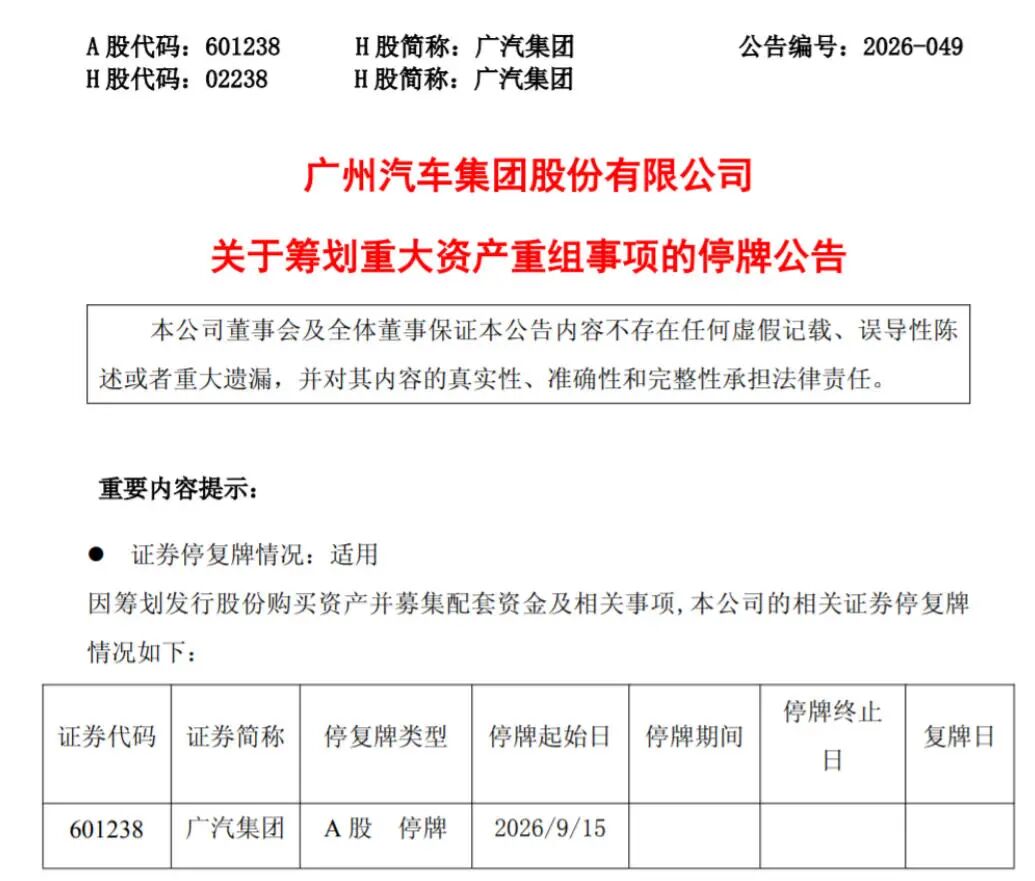
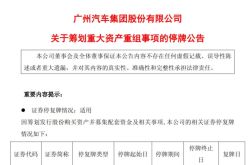
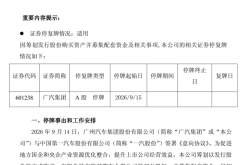
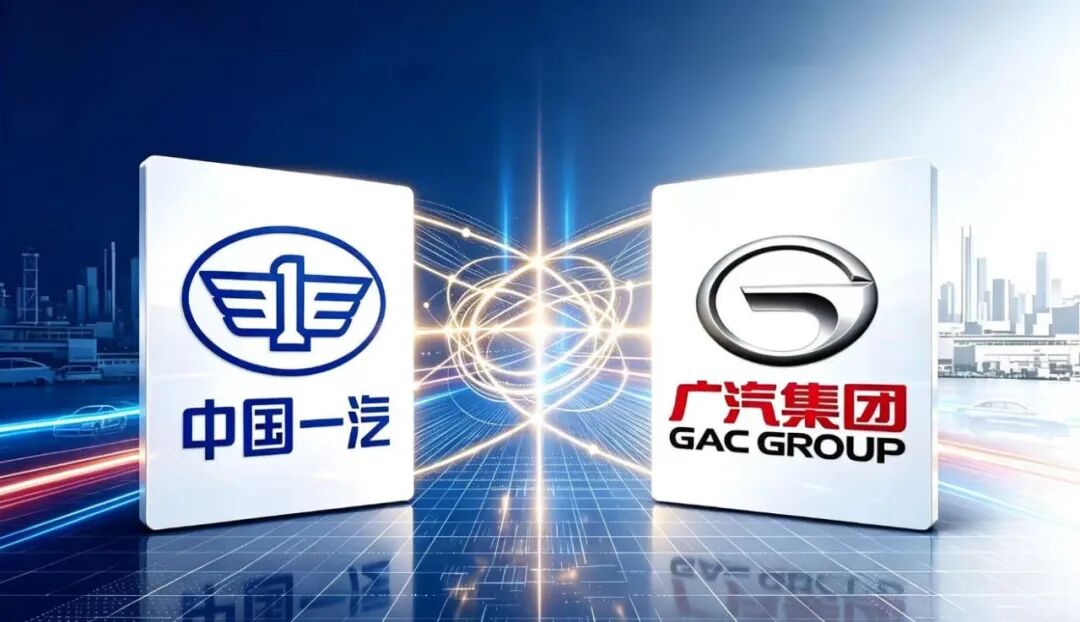
Trading in A-shares was immediately suspended at market opening, while the Hong Kong stock market had already shown signs of movement. By the close, GAC Group's Hong Kong-listed shares had soared by over 8%. Following the market closure, GAC Group issued a major asset restructuring suspension announcement on the Shanghai Stock Exchange, confirming the signing of a Letter of Intent with China FAW Group Co., Ltd. This agreement outlines the purchase of a portion of the equity in a vehicle joint venture company held by FAW Group through the issuance of shares, along with raising matching funds. Preliminary calculations suggest that FAW Group will emerge as the second-largest shareholder of GAC Group post-transaction.
The news instantly sparked speculation, with the market almost immediately identifying FAW Toyota as the likely target asset. The long-standing industry rumor of a "merger of South and North Toyota" swiftly transitioned from mere speculation to the verge of becoming a reality. Interestingly, a strikingly similar scenario unfolded with Mazda five years prior.
FAW to Become Second-Largest Shareholder of GAC
According to the official announcement by GAC Group on September 14th, the transaction's core framework is clear: GAC will acquire a portion of the equity in a vehicle joint venture company held by FAW Group through share issuance, while raising matching funds. The transaction is anticipated to constitute a major asset restructuring and related-party transaction but will not result in a change of GAC's actual controller, nor will it constitute a backdoor listing.
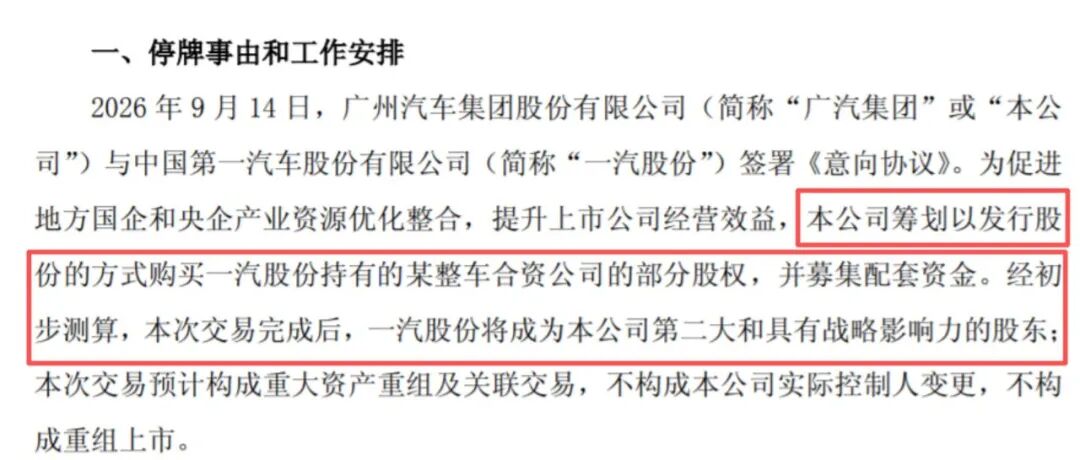
Currently, both parties have only signed a letter of intent, with core details such as the specific target, transaction price, and equity ratio still under planning and subject to uncertainty. GAC's A-shares have been suspended from trading since the market opening on September 14th, with an expected suspension period of no more than 10 trading days. Subsequent information will be disclosed promptly based on the restructuring's progress.
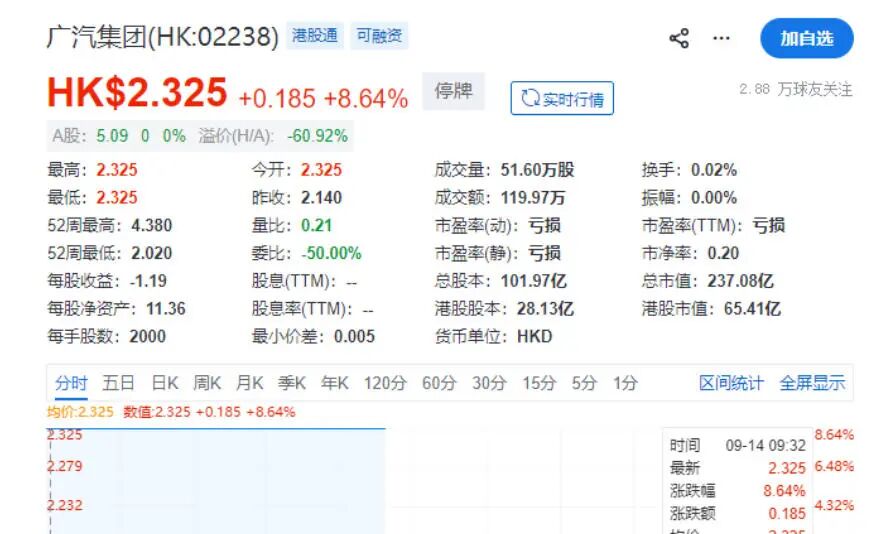
Notably, the Hong Kong stock market had already responded positively before the announcement. On September 14th, GAC Group's Hong Kong-listed shares opened higher and continued to rise, eventually closing up by over 8%, reflecting, to some extent, the capital market's expectations for this integration. As a local state-owned enterprise, GAC's strategic move to introduce FAW, a central state-owned enterprise, as a shareholder is viewed by the market as a significant step in optimizing resource allocation.
From "South and North Mazda" to "South and North Toyota"
The market's general consensus pointing to FAW Toyota as the target asset, apart from publicly available information on the joint venture equity structure, is influenced by the precedent set by the "South and North Mazda" merger five years ago, which provided a reference template for the market.
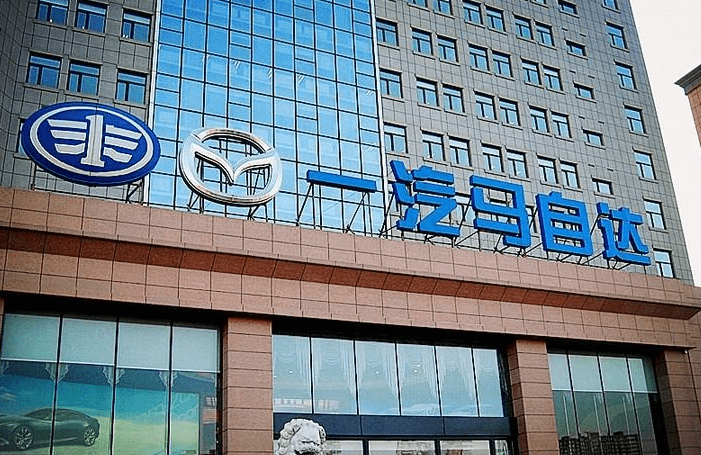
In August 2021, Mazda, Changan Automobile, and China FAW issued a joint statement: China FAW would use its 60% equity stake in FAW Mazda, valued through assessment, to increase its capital and participate as a shareholder in Changan Mazda. Following approval, Changan Mazda's equity structure shifted from the original 50% Mazda and 50% Changan Automobile to 47.5% Mazda, 47.5% Changan Automobile, and 5% China FAW. On August 30th of the same year, FAW Mazda officially released a "farewell letter"; on September 8th, FAW Mazda Automobile Sales Co., Ltd. was officially renamed Changan Mazda Automobile Sales (Changchun) Co., Ltd. Thus, the decade-long "South and North Mazda" pattern came to an end.
Comparing the two cases, the similarities are striking: both involve FAW using its equity stake in a joint venture company to become a shareholder in the Chinese parent company of another joint venture; both represent the unification of management for foreign brands with "south and north" divisions in China; and both involve equity ties between FAW, a central state-owned enterprise, and local state-owned enterprises (Changan/GAC). The transaction logic is nearly identical. However, the differences may be even more noteworthy.
Firstly, the scale and influence are not comparable. In the Mazda merger, FAW ultimately acquired only a 5% stake in Changan Mazda, essentially a "dignified exit." In the Toyota case, FAW Group will become the second-largest shareholder of GAC Group, indicating that FAW is not exiting but continuing to participate in the operation of Toyota's business in China through deeper equity ties. One represents subtraction, the other repositioning.
Secondly, the brand situations differ. Mazda's annual sales in China were less than 200,000 units at the time, and the merger of the north and south operations was more of a "self-rescue" effort for a niche brand. Toyota, on the other hand, is a leading player in the joint venture camp, with FAW Toyota and GAC Toyota's combined sales approaching 1.8 million units in 2024. The motivation for integration is not survival but pursuing higher synergistic efficiency under the pressure of new energy transformation.
Thirdly, the depth of integration may vary. The Mazda merger primarily focused on sales channels and brand operations, as FAW Mazda itself did not possess vehicle production qualifications and was essentially a sales company. In contrast, the target of this transaction is "a portion of the equity in a vehicle joint venture company." If it is indeed FAW Toyota, it involves the integration of manufacturing, R&D, and the entire supply chain, with complexity and impact far surpassing the Mazda case.
A New Model for Central-Local Automotive Enterprise Integration
Beyond the Toyota system, the industry significance of this transaction extends far beyond the channel integration of a single foreign brand. It more closely resembles a landmark case of cross-regional integration between central and local state-owned automotive enterprises under policy guidance.
Just three days before the transaction announcement, on September 11th, nine departments including the Ministry of Industry and Information Technology officially issued the "15th Five-Year Plan for the Development of the Intelligent Connected New Energy Vehicle Industry," explicitly proposing to "increase the intensity of mergers, acquisitions, and cross-regional integrations of automotive enterprises in accordance with the law and deepen the reform of group management for automotive production enterprises." The policy direction is clear: to promote industry resource integration through market-oriented and law-based means, resolve structural production capacity contradictions, and enhance overall competitiveness.
FAW, as a central state-owned automotive enterprise directly under the central government, and GAC, as a leading local state-owned enterprise, achieving deep binding through equity ties is a direct response to the policy direction. Prior to this, there had been multiple attempts and rumors of state-owned enterprise integrations in the automotive industry, ranging from discussions on the restructuring of Dongfeng and Changan to equity adjustments among local automotive enterprises in various regions. The trend of industry integration has long been evident. This cooperation between FAW and GAC marks the first time that a leading central state-owned enterprise and a leading local state-owned enterprise have achieved linkage at the equity level, and its demonstration effect is likely to drive subsequent cross-regional and cross-hierarchical integrations of state-owned automotive assets.
Of course, the integration path will not be achieved overnight. From the letter of intent to final implementation, multiple steps such as audit and assessment, board review, and regulatory approval are required, and there are still variables ahead. The channel integration after the Mazda merger was not smooth sailing, with issues such as dealer withdrawals and rights protection also arising. These are lessons that the Toyota integration needs to heed. However, what is certain is that in the era of intense competition in China's automotive industry, resource integration has shifted from a multiple-choice question to a must-answer question.
From an industry perspective, this letter of intent is more like a signal. The previously dispersed and fragmented state-owned automotive assets are moving toward collaboration under the dual impetus of policy and the market. Whether South and North Toyota will merge as a result remains to be seen, but the curtain on industry-wide integration has been tangibly lifted.
-
![]()
Xiaomi Xuanjie O3 Debuts, Qualcomm Reveals Next-Gen Snapdragon Platform, Paving the Way for the Agentic AI Era
-
![]()
Will New Energy Vehicle Prices Climb Following the Introduction of the Battery Tax?
-
Over 4.27 Million Vehicles Recalled: The Price of Hidden Door Handles' Technological Allure
-
![]()
Audi A2 e-tron’s Hasty Production Launch: Are Luxury Brands Compelled to Build Cars as a “Quick Fix”?
-
![]()
8% Surge on the Eve of Trading Halt! FAW Acquires Stake in GAC: Is the Dynamics of South and North Toyota Set to Transform?
-
Can Apple’s Foldable Phone Outpace Huawei to Claim Second Place Worldwide in Just Over Two Months?
-
![]()
Why Does Zhipu Still Need Financing?
-
![]()
FAW’s Integration with GAC Unveiled: Will China’s Southern and Northern Toyota Joint Ventures Further Consolidate, and Will Dongfeng Press On with Integration Efforts?