Will the 'Size Arms Race' in the Auto Industry Reach Its End?
 09/18 2026
 551
551
Recently, Li Xiang, the CEO of Li Auto, revisited the topic of vehicles' ever-increasing sizes during an interview. Li Xiang posited that the current trend of flagship SUVs growing larger is merely a temporary phase. He believes that as the full potential of pure electric vehicle architectures is realized, the automotive industry's 'size arms race' will inevitably come to a halt.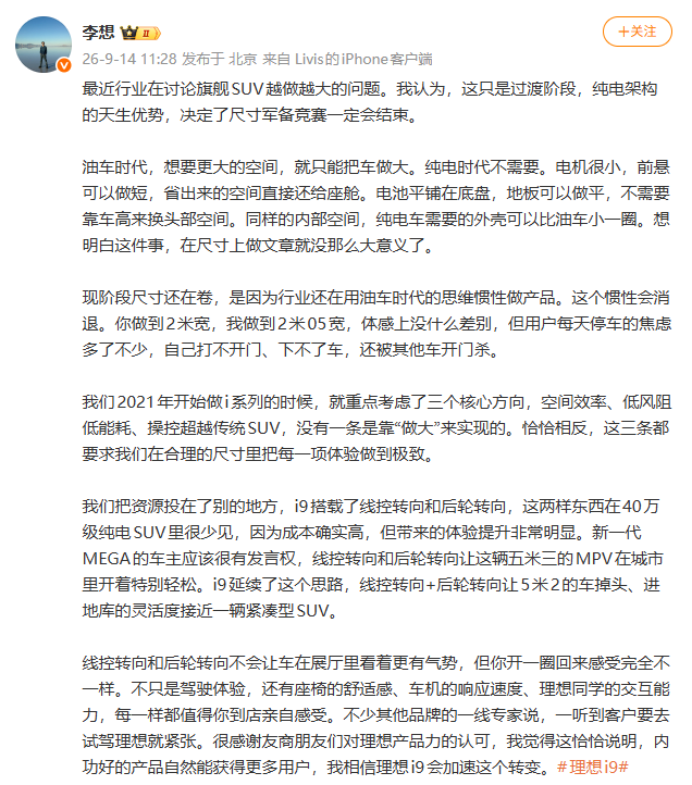
This sentiment is echoed by industry peers. Zhao Changjiang, Executive Director and Executive Vice President of Zhijie Automobile, also took to social media to express that while family vehicles indeed require ample interior space, bigger doesn't always equate to better. He emphasized that size is merely a metric; what truly counts is the comfort and convenience of the entire family when using the vehicle.
The perspectives from these two automotive leaders reflect a discernible trend in the automotive market: In recent years, new energy vehicles (NEVs) have been growing in size, with 5-meter-class SUVs becoming increasingly common. Models boasting wheelbases approaching or even surpassing 3 meters are now the norm, and the widths of some flagship SUVs are nearing or exceeding 2 meters. In today's NEV market, 'larger vehicles' have transitioned from an isolated occurrence to an industry-wide phenomenon. So, how did this trend emerge? The answer is relatively straightforward.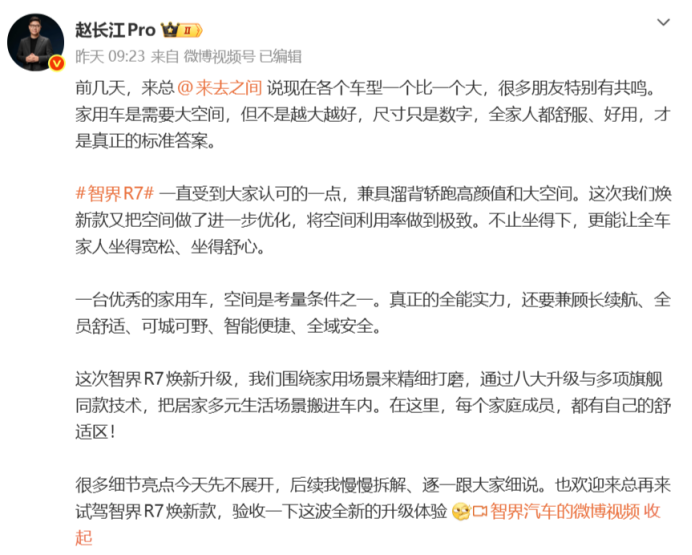
Initially, this trend towards larger vehicles was driven by the demand for spacious interiors among domestic family users. For many families, a single vehicle must cater to daily commuting needs, transport elderly family members and children, and accommodate weekend getaways. As vehicle usage demands escalate, so do consumer expectations for interior space.
However, in recent years, 'family use' has evolved into a catch-all marketing term for many automakers, with large size and spacious interiors being touted as key selling points. Observing the effectiveness of this strategy, numerous automakers have followed suit, each striving to outdo the other in terms of length and width. What was once a practice limited to a select few models has now become an industry-wide pursuit.
Moreover, consumer demand for extended range in pure electric vehicles has also fueled the trend of NEVs growing larger. To achieve longer ranges, automakers continuously increase battery capacity. However, larger batteries occupy more chassis space and add to the vehicle's overall weight, necessitating the allocation of even more space to accommodate them. The combined demands for space and range have resulted in NEVs becoming increasingly 'longer and wider,' adopting a more robust appearance. Some netizens have humorously likened this to the proverbial situation of 'adding flour when the dough is too watery, and adding water when the dough is too floury.'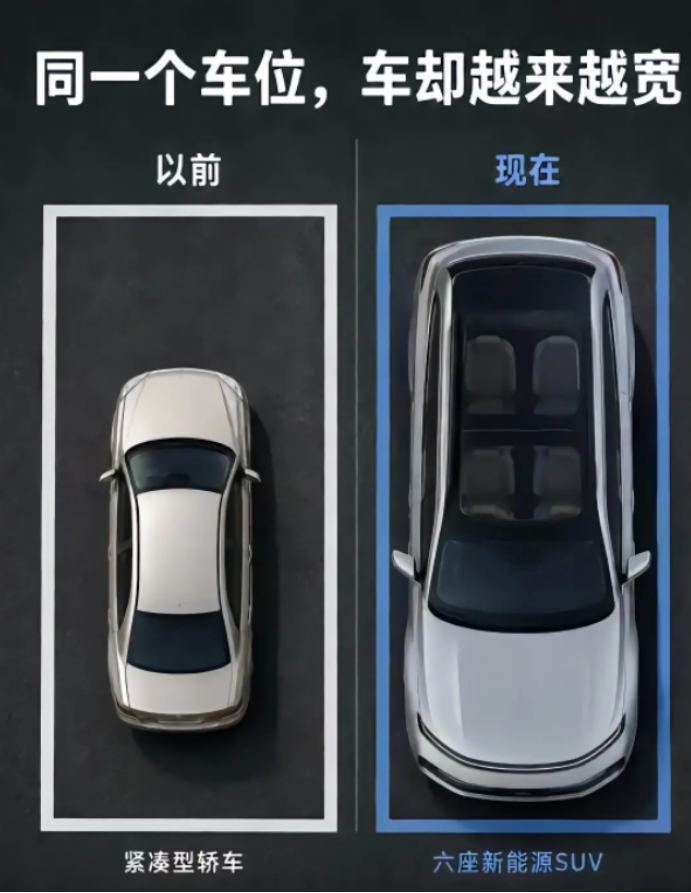
In reality, there is nothing inherently wrong with automakers increasing vehicle size and battery capacity to meet consumer demands for space and range. The issue arises when the continuous increase in body size and battery capacity, while improving space and range, simultaneously drives up the vehicle's weight and energy consumption, leading to higher daily usage costs.
Many netizens joke that 'while it's easy to sit cross-legged in the back seat, getting out requires squeezing through a tight space' or 'after finally parking the car, one has to contort to exit.' Although these are merely jests, they directly highlight the real pain points of large-sized vehicles. It is evident that as body size continues to increase, the improvement in space becomes increasingly marginal. Once the benefits of 'largeness' are outweighed by the increased weight, energy consumption, and usage burden, the value of continuing to compete on size naturally diminishes.
In Li Xiang's view, this 'size arms race' will eventually reach its end. Automakers do not necessarily have to enlarge their vehicles; they can also create more interior space through technological innovation, thereby forming new product competitiveness. In other words, the future focus of competition may shift from whose vehicle is larger to who can achieve higher space utilization within limited body dimensions.
This also suggests that the way automakers meet consumer demand for spacious interiors may no longer involve simply lengthening or widening the vehicle body. Instead, there will be a gradual shift towards utilizing technological means to optimize cabin layouts and improve space utilization, thereby releasing more interior space while controlling body size. After all, when more interior space can be 'squeezed out' through technological innovation, the cost-effectiveness of lengthening the vehicle body for space becomes less favorable, and the notion that 'the larger the vehicle, the more valuable it is' will naturally begin to weaken.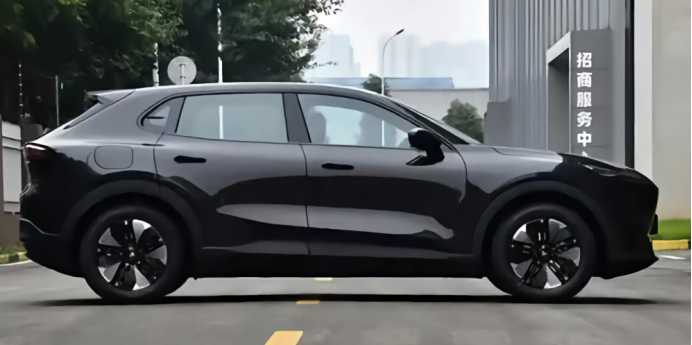
However, this does not imply that large-sized vehicles will vanish. For families requiring six or seven-seater vehicles, large vehicles will still have their place. What will truly decline in the future is the homogenized competition that relies solely on lengthening and widening the vehicle body as a selling point. At that point, the criterion for judging whether a vehicle is 'large' will no longer be just its body size, but rather whether the automaker can leverage technological means to release more space within limited body dimensions.
(Image sourced from the internet. Removal upon infringement notice.)
-
![]()
GAC Acquires Stake in FAW Toyota: The Merger of North and South Toyota Unveils the Complex Landscape of China’s Auto Market
-
![]()
[Electrical Equipment] 45 BRT Pure Electric Mining Trucks Supplied to Chaonaoliang Coal Mine
-
![]()
FAW Acquires Stake in Leapmotor
-
![]()
From Booming Stocks to Trading Halt: Why is the Market So Optimistic About FAW's Investment in GAC?
-
![]()
US and Europe Act in Unison, Chinese Automakers Confront Dual Barriers in Global Expansion
-
![]()
Will the 'Size Arms Race' in the Auto Industry Reach Its End?
-
![]()
AITO Takes the Helm: Smart Selection Car Model Faces Pivotal Challenge
-
![]()
Seres Regains Autonomy: AITO's Front-End Operations Shift Back to Automaker, Huawei Returns to Supplier Role