Seres Regains Autonomy: AITO's Front-End Operations Shift Back to Automaker, Huawei Returns to Supplier Role
 09/18 2026
 515
515
In recent times, there has been a growing chorus of voices demanding an apology to Chen Hong. Back in 2021, Chen Hong, the then-chairman of SAIC Motor, famously rebuffed Huawei's partnership overture, asserting, "We won't compromise our core values." Now, Seres, which did take a different path at that time, is beginning to reassert its independence after enduring significant losses.
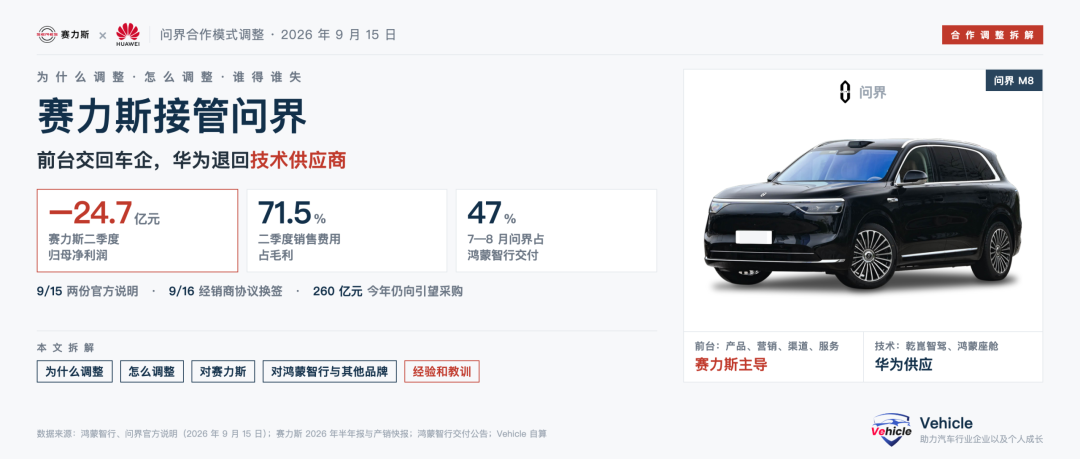
Here's the scoop: Harmony Intelligent Mobility Alliance recently announced that Seres will now take the helm in product definition, design, brand marketing, channel retail, and service systems for AITO, with Huawei Terminal providing technological support. Notably, Smart, Luxeed, Maextro, and Shangjie are not part of this realignment and will continue to be fully managed by Huawei.
The following day, AITO dealers' comprehensive service agreements were updated to be signed with Seres' affiliated entities. This signifies that front-end operations—those involving direct user interaction—are reverting to Seres. However, the core technologies—intelligent driving and cockpit systems—that Chen Hong referred to as the "soul" will still be supplied by Huawei.
This article aims to address five key questions: Why did Seres decide to revise its partnership with Huawei's Harmony Intelligent Mobility Alliance? How was this adjustment implemented? What implications does it hold for Seres? What does it mean for Harmony Intelligent Mobility Alliance and its other brands? And what lessons can be gleaned from this development?
What Transpired: A Swift Transition with Dual Statements
On the morning of September 15th, Cailian Press reported on the adjustment, citing informed sources. Later that afternoon, Securities Times, also drawing on sources, described it as a systemic and structural realignment aimed, in part, at bolstering Seres' financial performance. By 5 PM, both Harmony Intelligent Mobility Alliance and AITO had issued statements with identical main content, although Harmony referred to AITO as a "family member," while AITO's statement specified a "core family member."
That evening, AITO sent a letter to all channel partners stating that, effective September 16th, the signing party for dealer agreements would change to a Seres-affiliated company. Comprehensive service fees for new orders would be settled by Seres, while previous orders would remain under Huawei's purview, with no alterations to existing business rules. As of September 17th, Seres had not issued a formal exchange announcement, and the terms of the new agreement remained undisclosed.
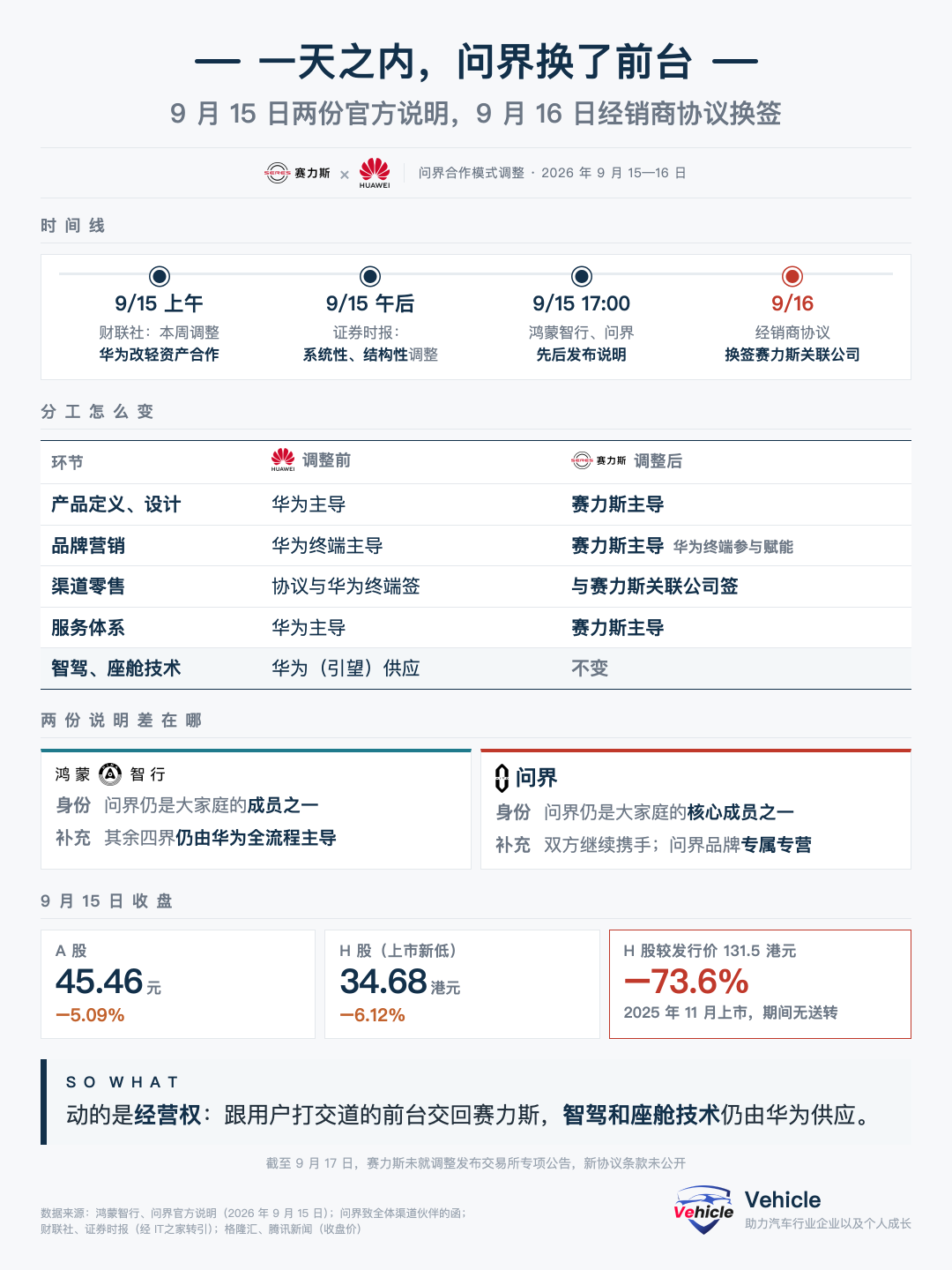
The official statements are based on the original texts released by Harmony Intelligent Mobility Alliance and AITO on September 15th; closing prices are as of that date.
In essence, this adjustment pertains to operational control. AITO's trademarks and manufacturing facilities already belong to Seres, while the technological expertise remains in Huawei's hands.
Why the Adjustment: Seres' Financial Struggles
In our previous article, "For Every AITO Sold, RMB 136,000 Goes to Huawei: Seres' Compaq Moment," we highlighted that Seres' revenue in the first half of 2026 was RMB 57.493 billion, a 7.87% decrease year-on-year. The net profit attributable to shareholders was a loss of RMB 1.717 billion, compared to a profit of RMB 2.941 billion in the same period the previous year. The losses were particularly pronounced in the second quarter, with a single-quarter loss of RMB 2.471 billion, including RMB 1.862 billion in asset impairments. Excluding this, the first half was roughly break-even. However, the first quarter's profit of RMB 754 million included RMB 628 million in government subsidies, indicating that the second quarter's operations were already incurring losses.
Costs and sales deteriorated simultaneously. In June, Zhang Xinghai noted that rising prices of memory chips and lithium carbonate had increased per-vehicle costs by RMB 15,000 to RMB 20,000. AITO sold just over 20,000 units in July and August, nearly halving year-on-year, compared to over 40,000 units per month in the second half of the previous year. Meanwhile, the domestic auto market declined by 21.8% in the first eight months. Seres' operating cash flow saw a net outflow of RMB 12.376 billion in the first half, although cash reserves stood at RMB 73.15 billion.
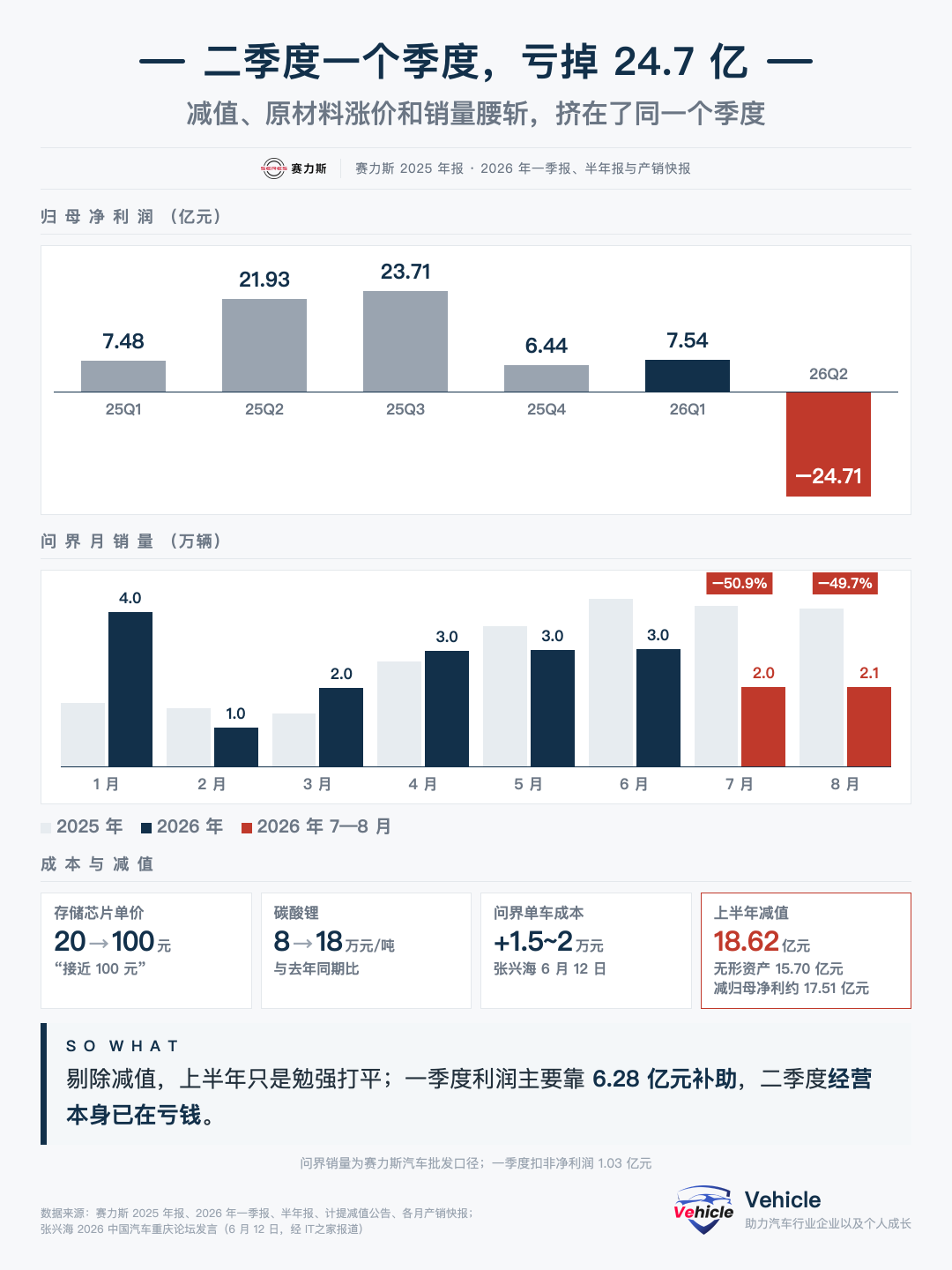
AITO sales figures are derived from Seres' production and sales reports (wholesale volume); cost figures are from Zhang Xinghai's forum speech.
Per-Unit Cost Sharing Exacerbated Losses
Under the initial division of labor, Seres compensated Huawei for store operations, marketing, and sales services, an expense recorded as "advertising, flagship store construction, and service fees." This cost was only RMB 4.545 billion in 2023 but surged to RMB 18.112 billion in 2024 and RMB 22.953 billion in 2025, accounting for 94.9% of sales expenses. These costs were incurred on a per-vehicle basis, unrelated to profits.
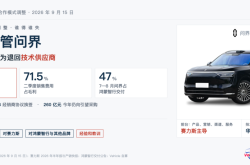
Breaking down the gross profit and sales expenses per vehicle: In 2025, the gross profit per unit was RMB 102,000, with sales expenses per unit at RMB 51,000, or 50.3% of gross profit. By the second quarter of this year, the gross profit per unit had fallen to RMB 66,000, while sales expenses remained at RMB 47,000, rising to 71.5% of gross profit. The remaining gross profit was insufficient to cover R&D and administrative expenses for the quarter.
The portion paid to Huawei was never disclosed, and the rumored "8% channel fee plus 2% licensing fee" lacks a credible source. Another per-vehicle payment to Huawei was for technology procurement: In the first half of this year, Seres purchased RMB 9.840 billion from HiNova, averaging RMB 61,000 per AITO vehicle. This was not included in the adjustment. The often-cited figure of "RMB 136,000 per AITO vehicle going to Huawei" is derived from dividing total procurement from Huawei by delivery volume, mostly representing component costs, not profit-sharing.
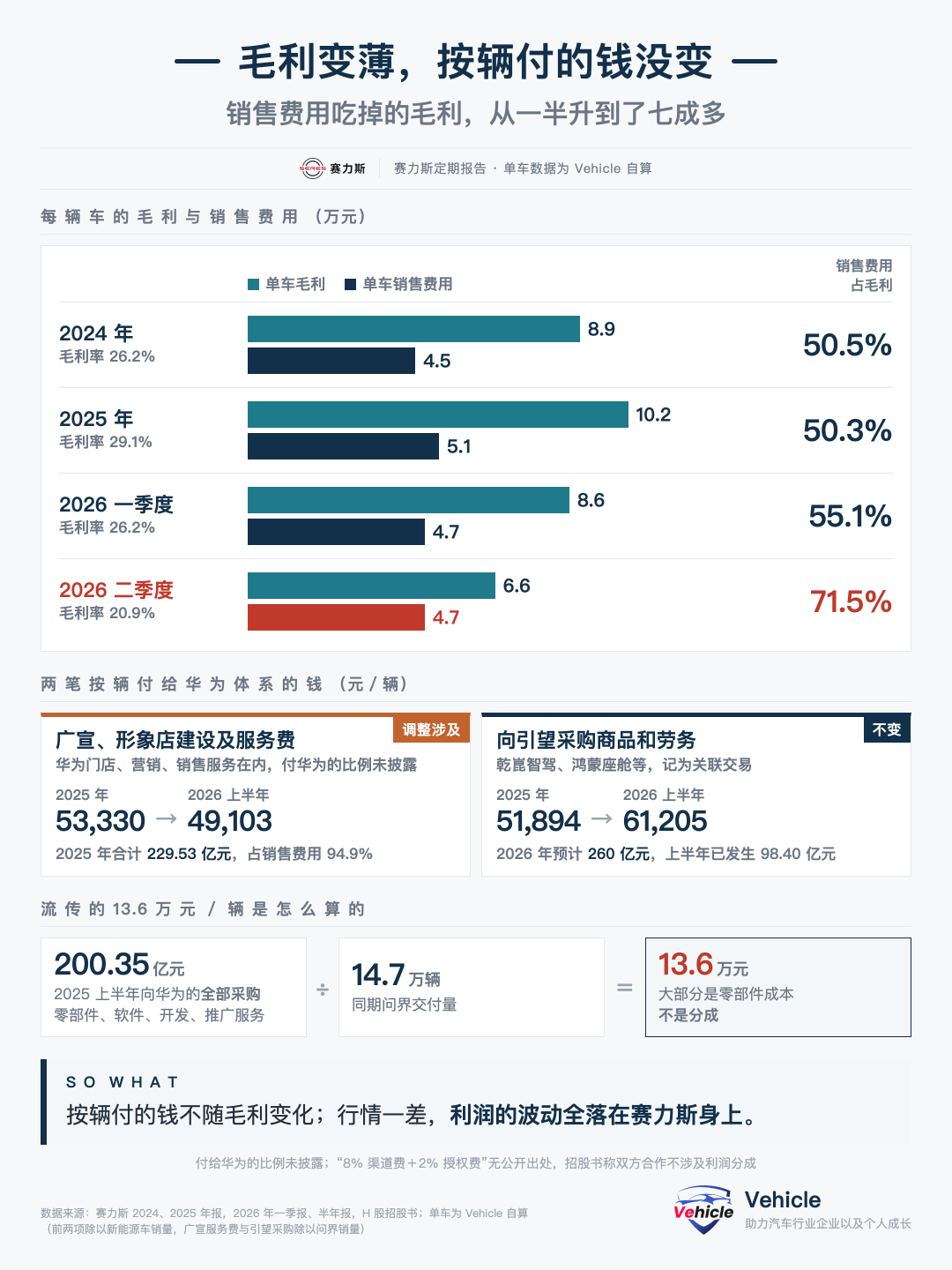
Per-vehicle data is calculated by Vehicle based on Seres' periodic reports; see methodology notes at the end.
Per-vehicle payments, which remained constant despite fluctuations in gross profit, left Seres bearing the full brunt of profit swings during downturns.
Huawei's Perspective: AITO No Longer the Sole Focus
Harmony Intelligent Mobility Alliance delivered 589,000 units in 2025, with AITO accounting for approximately 73%. In July-August of this year, AITO's share dropped to 47%, while the other four brands collectively surpassed it, with sales roughly doubling in the first eight months. Yu Chengdong set a 2026 target of 1-1.3 million units for Harmony Intelligent Mobility Alliance, although only 329,000 units were delivered in the first eight months.
Huawei has made substantial commitments to these four brands. According to other media reports, investments in Smart and Maextro exceed RMB 10 billion each, with Luxeed planning RMB 20 billion over three years and Shangjie (SAIC's brand) receiving an initial RMB 6 billion. At Harmony's August event, the Luxeed G9, Maextro V800, and Smart RX were all from these four brands, with the Luxeed G9 overlapping in price with the AITO M8 and M9. Friction in stores had already existed, with media reports of disputes over order attribution and insurance services. Some Huawei Terminal staff previously responsible for AITO models have been reassigned to other brands. At the August 20th event, Harmony Intelligent Mobility Alliance highlighted Huawei Terminal's end-to-end capabilities—from product definition to user service—as unique advantages for its five brands. Less than a month later, all four aspects of AITO's operations were handed over to Seres.
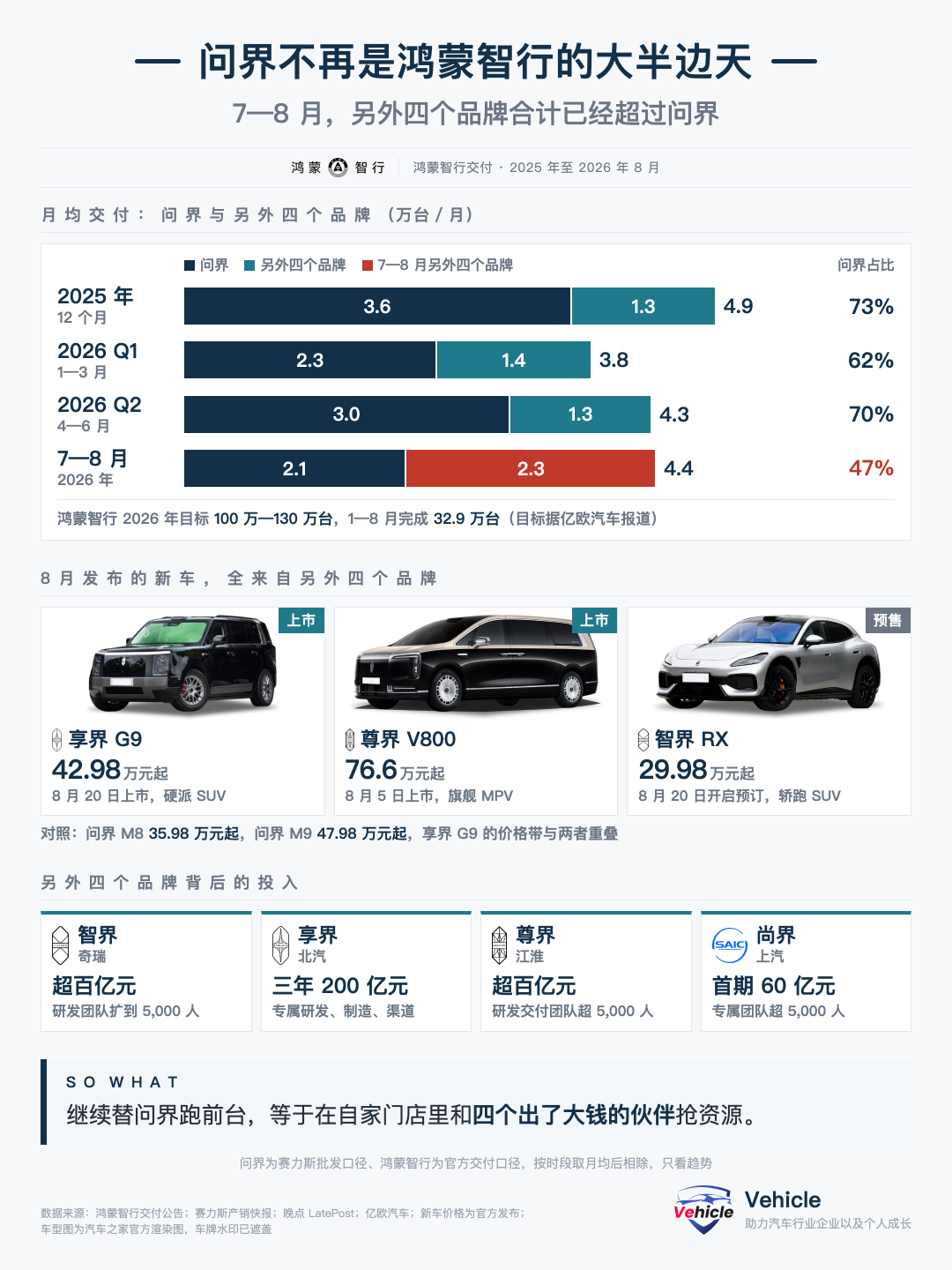
AITO figures are wholesale volumes announced by Seres; Harmony figures are official delivery numbers. The ratio is for trend analysis only.
Continuing to manage AITO's front-end operations would mean competing for resources with four heavily funded partners in Huawei's own stores.
The Same Huawei Tech, Now in More Affordable Cars
Another significant development is the launch of multiple brands this year from Huawei's Qiankun partners—automakers leading operations with Huawei providing technology. The Huajing S starts at RMB 159,800, the Qijing GT7 at RMB 209,900, and the Yijing X9's pre-sale price starts at RMB 299,800, all featuring Huawei's intelligent driving and Harmony cockpit as standard. For comparison, the AITO M8 starts at RMB 359,800. Huawei's Intelligent Automotive Solutions business generated RMB 45.018 billion in revenue in 2025, up 72.1% year-on-year.
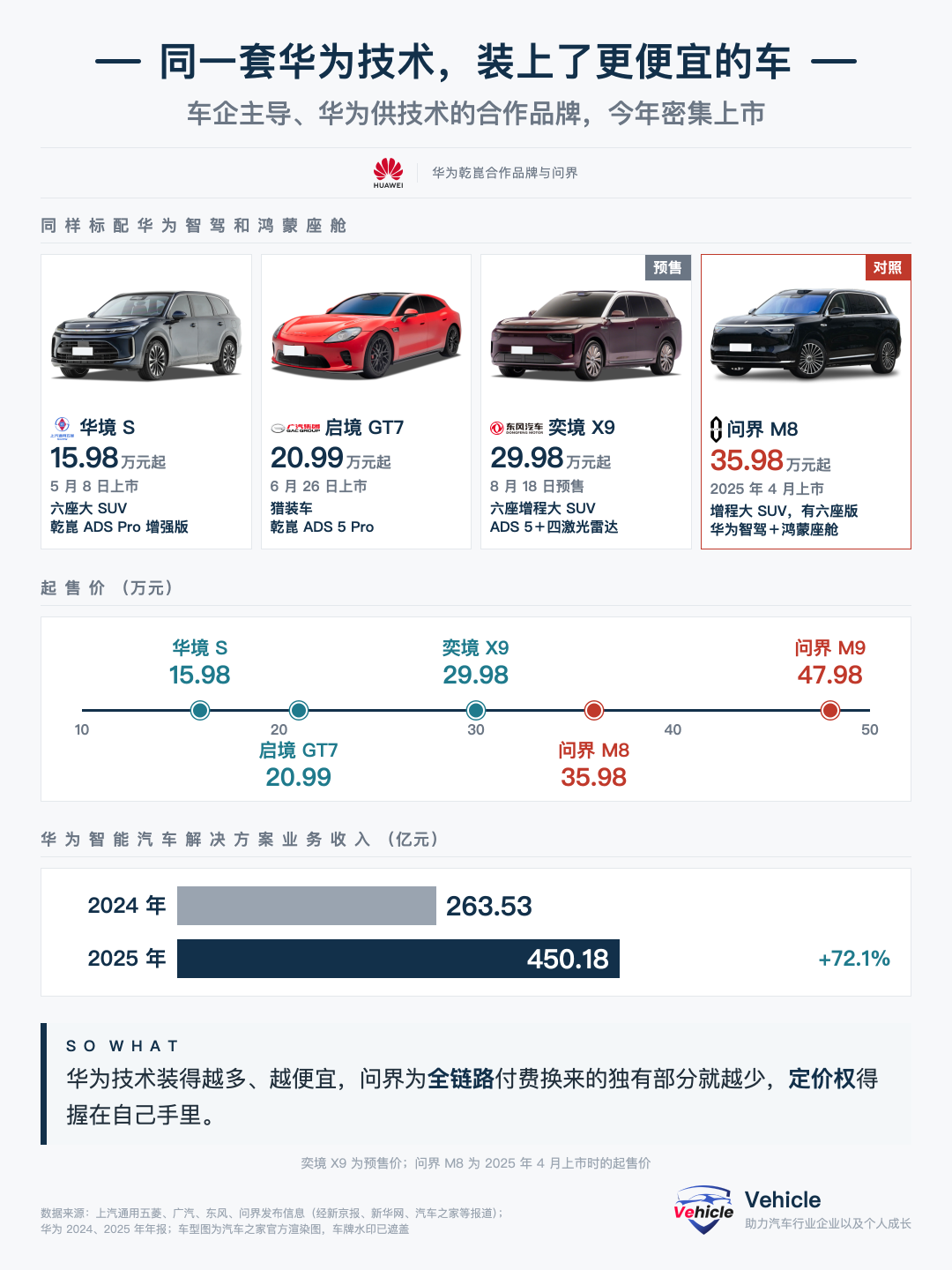
Vehicle images are official renders from Autohome; prices are official MSRPs or pre-sale prices.
The more Huawei technology is adopted in cheaper models, the less exclusivity AITO gains from its full-chain payments.
Seres' Two-Year Preparation for This Transition
In 2024, Seres signed agreements to acquire the AITO mega-factory for RMB 8.164 billion and the AITO trademarks and patents from Huawei for RMB 2.5 billion (assessed at RMB 10.233 billion). It also signed a long-term agreement with Huawei that neither party could unilaterally terminate, indicating that this adjustment was the result of negotiations. That same year, Seres invested RMB 11.5 billion for a 10% stake in HiNova. By the end of 2025, AITO had 380 self-owned user centers, with plans for exclusive operations.
In June of this year, Saido Tech, co-founded by Seres, launched the AIVA brand, utilizing Doubao Large Model from Volcano Engine for the cockpit and Autowise.ai for intelligent driving, without adopting Huawei's solutions. Since the original AITO had to align with Harmony's unified product planning, models that didn't fit could be placed under the new brand. However, Zhang Xinghai reaffirmed at the June shareholders' meeting that strategic agreements with Huawei and CATL would remain unchanged.
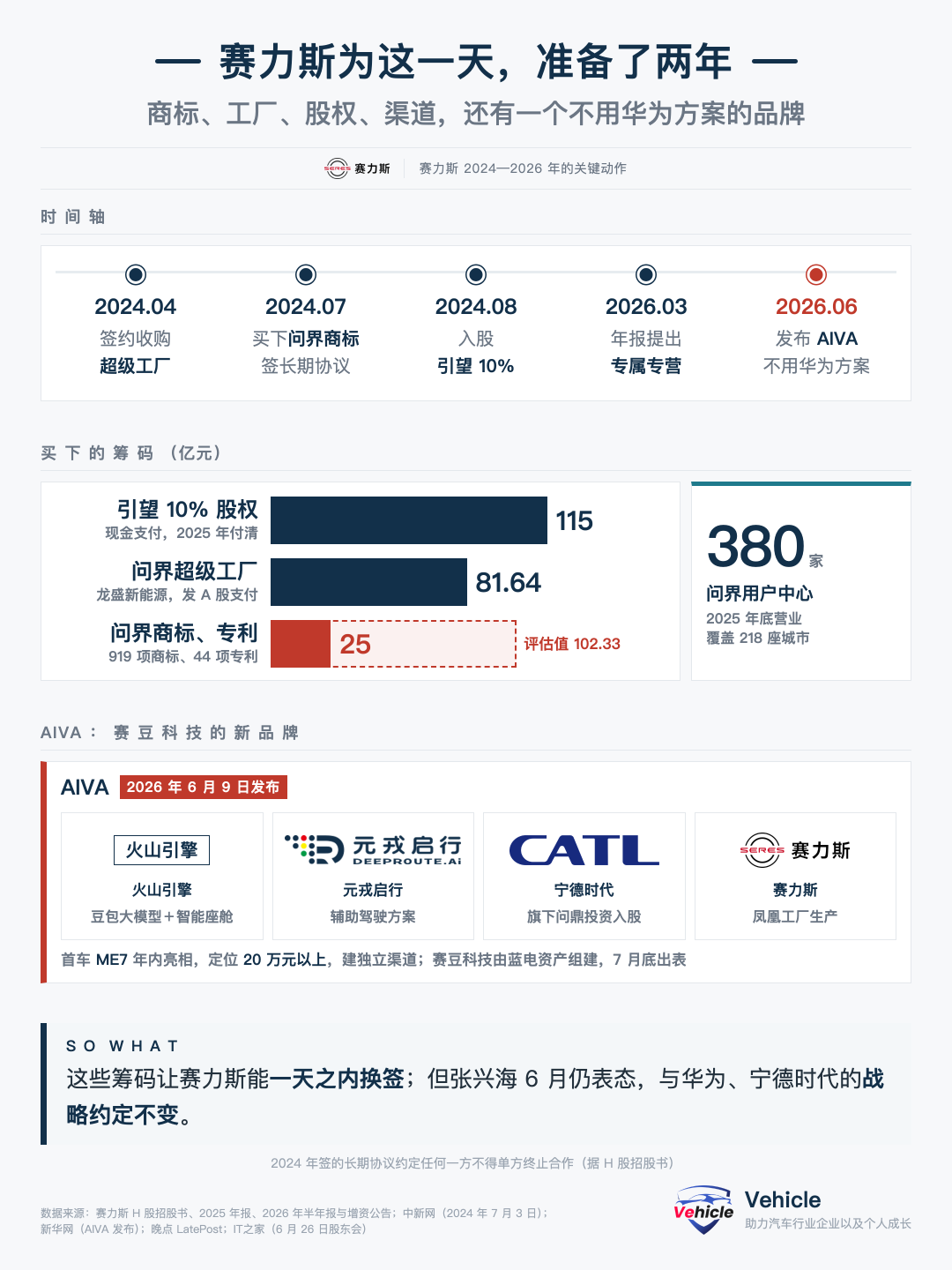
Trademarks, factories, equity, and self-built channels enabled Seres to complete the transition in a single day.
How the Adjustment Works: Front-End Swap, Back-End Unchanged
Product: Shifts from aligning with Harmony's unified planning to Seres leading pricing, configurations, and launch timing.
Channels: Dealer agreements and service fee settlements now belong to Seres. A likely approach is for AITO to adopt exclusive operations like Maextro, with Huawei's commercial stores selling other brands. Some stores may be allocated to Seres for AITO-only sales, with sales staff certification and evaluations shifting to Seres' provincial teams. However, given Maextro's underperformance, this model remains unproven.
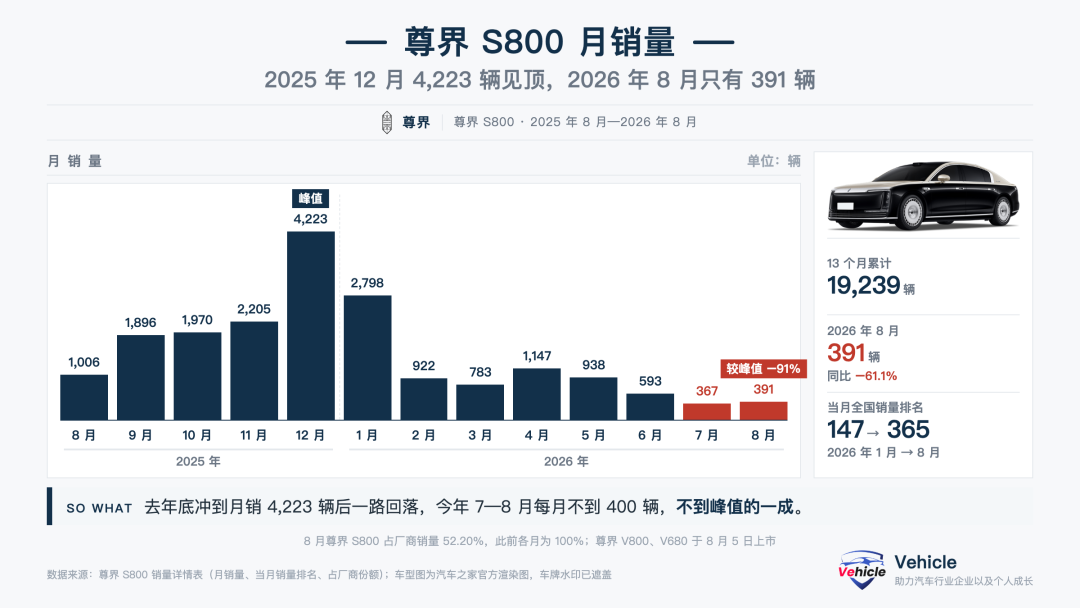
What Remains Unchanged: Intelligent driving and cockpit technologies will still be procured from HiNova, projected at RMB 26 billion this year. Trademarks and factories already belong to Seres; AITO remains a member of Harmony Intelligent Mobility Alliance.
Inferred from the channel letter, Huawei Terminal previously handled central settlements, but now Seres will settle directly with dealers. Seres eliminates one intermediary layer but must bear marketing, store operations, and customer acquisition costs independently. Questions remain about fee structures under the new agreement, dispute resolution, and whether AITO can still utilize Harmony's exclusive technologies like the Touring Platform. Front-line reactions have been calm, with core AITO dealers believing that delivery and after-sales policies, already set by Seres, will see little impact from the transition.
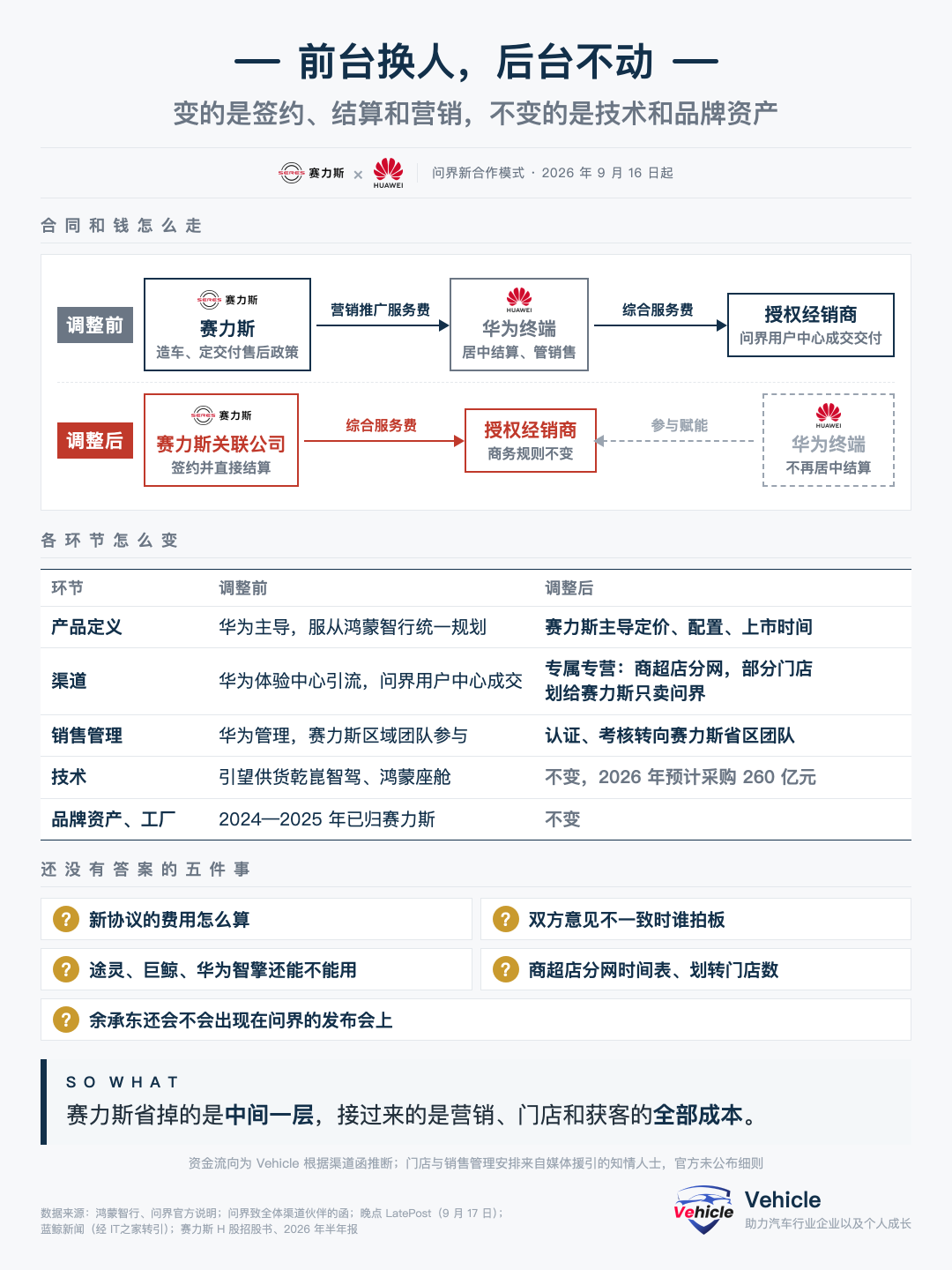
Capital flows and store arrangements are inferred by Vehicle based on the channel letter.
For Seres: Steering Wheel and Operational Costs Now Its Responsibility
Advantages include full control over pricing, configurations, and product lines, enabling quicker responses to competitors like the Yijing X9 and Huajing S, which also utilize Huawei technology. Dealership networks and customer leads remain in-house.
Challenges are threefold:
1. Traffic: Yu Chengdong's product launches and leads from Huawei stores will likely decrease or require paid acquisition.
2. Cost Structure: Shifting from per-vehicle payments to building in-house teams and stores, at an estimated annualized volume of 300,000 units, a RMB 10,000 change in per-unit sales expenses would alter annual pre-tax profit by approximately RMB 3 billion, roughly half of 2025's net profit attributable to shareholders.
3. Timing: The transition coincides with AITO's weakest sales period. Technologically, AITO's intelligent driving and cockpit systems share origins with those in the Yijing, Qijing, and Huajing models, leaving differentiation to rely on the vehicle platform, extended-range systems, chassis, safety, and service.
Seres regains an AITO with adjustable pricing but must shoulder operational costs alone during a sales
Huawei has moved beyond simply providing the most readily scalable technological solutions, while Seres has reasserted its dominance over the most formidable operational challenges.
In Conclusion
Initially, I contemplated listing a series of lessons learned, but they seemed clichéd—everyone is already familiar with them! Instead, each company should introspectively draw wisdom from the lessons of the Spring and Autumn and Warring States periods.
Reflecting on the past, Huawei has effectively positioned Seres on the global stage. Without Huawei's intervention, Seres might still be recognized under its former name, Sokon Seres. Ultimately, Seres has emerged as a beneficiary, riding this wave of success, while Huawei, despite encountering opposition from all fronts, has found in Seres a partner to demonstrate its prowess. This narrative of mutual accomplishment is a recurring theme in the business landscape.
AITO, a brand co-created by Huawei and Seres, has undergone a role redefinition after five years for two primary reasons: firstly, AITO has matured, and Seres now possesses both the capability and the ambition to operate autonomously; secondly, as the industry faces a downturn, neither party is content with the previous arrangement of charging per vehicle while divorcing dominance from operational outcomes. Looking ahead, it will be intriguing to observe the September sales figures released in early October, the third-quarter results at the end of October, as well as which entity will unveil AITO's next new model and at what price point.
Over the past five years, AITO has demonstrated that Huawei can assist an automaker in selling premium vehicles, even if the automaker itself has not yet achieved profitability. The forthcoming challenge is to prove that Seres can independently market vehicles.
*Reproduction or excerpting without permission is strictly prohibited.
-
![]()
Seres Regains Autonomy: AITO's Front-End Operations Shift Back to Automaker, Huawei Returns to Supplier Role
-
![]()
Can the XPENG G9L, Touted as Unrivaled Globally, Become a Blockbuster?
-
![]()
27-Day Price Reduction of 40,000 Yuan: Fangchengbao Skirts Direct Rivalry with Xiaomi
-
![]()
Has the Savior of Traditional Fuel Vehicles Finally Made Its Appearance?
-
![]()
FAW and GAC Restructuring: Forging Ahead with Integration, Enhancing Efficiency through Synergy
-
![]()
Under the Wave of Restructuring, Are the Struggling Neta and Zotye Making a Comeback?
-
![]()
Bumper Bookings! BAIC Unveils New Car, Securing Over 30,000 Reservations in Just One Hour!
-
![]()
Li Auto i9 Priced at 369,800 Yuan 'Shakes Up the Market': Is NIO ES8's 'Sales Dominance' Under Threat?