GAC Takes Stake in FAW Toyota: Good News for BYD and Geely
 09/30 2026
 461
461
Lead
Introduction
The merger of North and South Toyota heralds the era of major joint venture integration, presenting the best opportunity for domestic leaders like BYD and Geely.
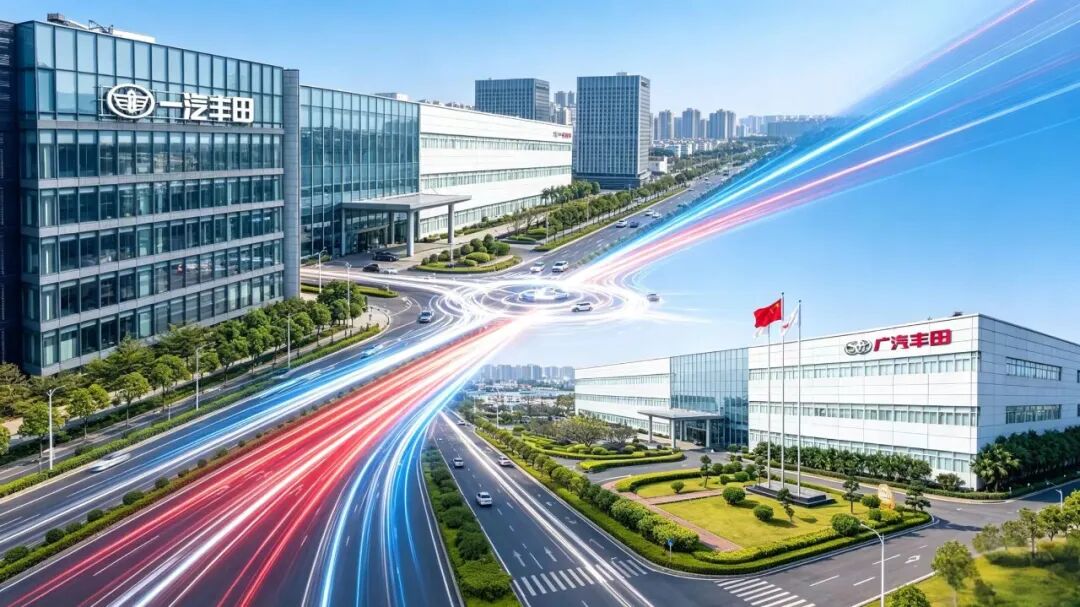
On the evening of September 28, GAC Group disclosed a major asset restructuring plan, proposing to acquire a 50% stake in FAW Toyota held by China FAW Group through the issuance of shares at a price of 5.75 yuan per share.
The long-rumored 'merger of North and South Toyota' has thus come to the surface.
This is not about one acquiring the other or one devouring the other. It's about directing resources to where they belong.
More critically, when North and South Toyota combine their 1.578 million units, a mega-entity emerges, capable of ranking third in total Chinese automaker sales and first among joint ventures. Scale effects will bring new vitality to Toyota, Japanese brands, and the entire joint venture sector.
And this is precisely good news for BYD and Geely.
Mencius·Gaozi Down states: 'Without lawful ministers at home and formidable foreign rivals abroad, a state will invariably perish.' Surviving in adversity and perishing in comfort has always been a truth on the path of development.
A strong joint venture automaker serves as the best 'running partner,' 'opposing force,' and 'whetstone' for Chinese automakers. The merger of North and South Toyota triggers the first domino in the era of major joint venture integration.
01 A New Joint Venture Champion Will Be Born
Let's do the math. In 2025, FAW Toyota sold 805,518 units, while GAC Toyota sold 772,668 units, totaling approximately 1.578 million units for North and South Toyota.
Where does this figure stand on the 2025 Chinese automaker retail sales chart? BYD leads with 3.485 million units, Geely follows with 2.606 million units, and FAW-Volkswagen ranks third with 1.531 million units. After the merger, North and South Toyota will surpass FAW-Volkswagen, jumping to third place overall.
Adding Lexus's contribution of over 180,000 units in China, Toyota's total scale in China approaches 1.78 million units, making it the undisputed leader among joint ventures. The combined sales of North and South Toyota account for 17.03% of joint venture passenger vehicle sales, meaning roughly one in every six joint venture vehicles sold bears a Toyota logo.
More noteworthy is the quality of this scale.
In 2025, intelligent electric hybrid models accounted for 47% of FAW Toyota's sales, with high-end models making up 61%. GAC Toyota's hybrid models exceeded 50% for the first time, while the pure electric bZ4X topped joint venture new energy sales with 70,000 units. This scale is not achieved through low-priced volume but through higher structural quality.
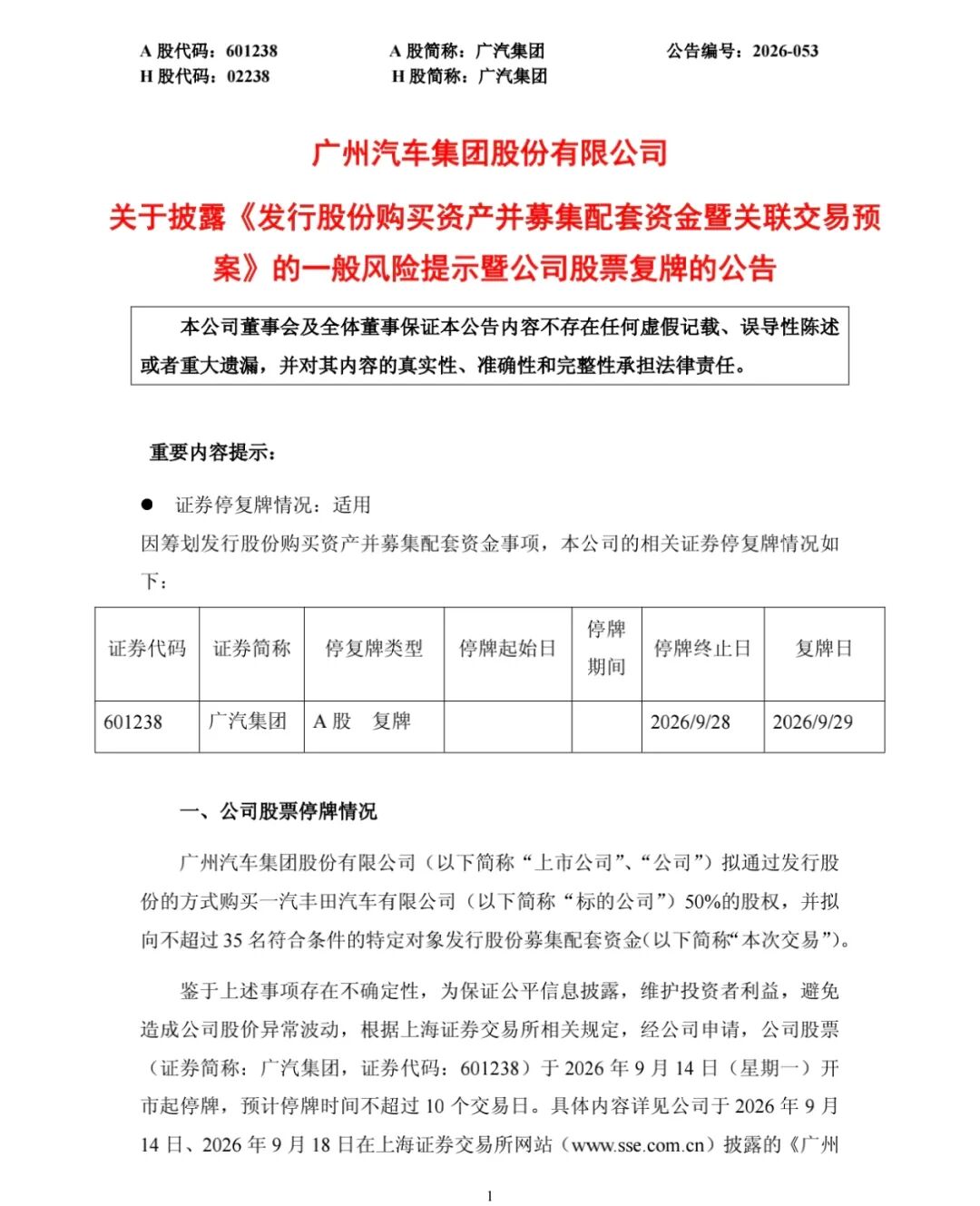
FAW Toyota's current equity structure is 50% China FAW Group, 45.77% Toyota Motor, and 4.23% Toyota China. GAC is acquiring the 50% stake held by China FAW Group.
After the transaction, FAW Toyota's Chinese shareholder will shift from FAW to GAC, forming a dual joint venture structure with 'GAC + Toyota' each holding 50%. FAW will exchange its FAW Toyota stake for shares in GAC Group's listed entity, involving no cash payment.
This is the underlying logic of the North-South Toyota merger. It's not about one devouring the other but about elevating a joint venture brand to third place on the sales chart, granting it unparalleled bargaining power, supply chain influence, and channel control—precisely what joint venture automakers currently lack: scale.
In 2025, domestic brands accounted for 64.6% of passenger vehicle market share, while joint venture brands fell to 35.4%, a historic low.
BYD and Geely are crushing everything with scale. BYD's 3.485 million units are backed by a vertically integrated supply chain, self-developed batteries and electric drives, and a product matrix covering all price segments. Geely's 2.606 million units are supported by the integration of Zeekr and Lynk & Co and economies of scale from the SEA architecture. The common logic of these two Chinese automakers: use scale to reduce costs, use costs to support pricing, and use pricing to achieve greater scale.
When North and South Toyota operated independently, FAW Toyota's 800,000 units and GAC Toyota's 770,000 units were significant but paled in comparison to BYD and Geely.
Purchasing bargaining power was fragmented, R&D expenses were split across two systems, and channel resources cannibalized each other within the same brand. 'North and South Toyota sister models are engaged in price wars,' a auto circulation insider told Automobile Commune.
After the merger, the 1.578 million-unit scale means Toyota can negotiate prices with suppliers in a unified voice in China, dilute technology costs through a single R&D system, and cover the national market with one channel network.
And this is precisely what BYD and Geely want to see. Only a sufficiently strong and efficient rival can push them to be better.
02 FAW and GAC: Southern Fist and Northern Leg
Policy signals preceded the integration.
In March 2025, Gou Ping, Deputy Director of the SASAC, explicitly stated that strategic restructuring of central automotive enterprises would occur. In December, SASAC Director Zhang Yuzhuo further deployed efforts to vigorously promote strategic and professional restructuring and high-quality mergers and acquisitions in 2026.
Why did FAW and GAC come together? The answer lies in complementarity—'Southern Fist and Northern Leg' each excel in different areas.
FAW is a central SOE directly managed by the SASAC, headquartered in Changchun. It boasts the heritage of the Hongqi brand and a complete R&D and manufacturing system.
However, FAW's shortcomings are evident: insufficient agility in rapidly iterating market-oriented products and slow implementation of electrification technologies. In 2025, FAW Group's new energy vehicle output was approximately 446,000 units, accounting for only 13.5%, with joint venture brands contributing just 61,000 units. Meanwhile, domestic NEV penetration exceeded 60%.
GAC is a Guangdong provincial SOE located in southern China's most concentrated NEV industrial region, with strong expertise in electrification, three electric technologies (batteries, electric motors, electronics), and understanding of the C-end market. However, GAC faces its own ceiling: a net profit loss of 4.467 billion yuan in the first half of 2026 and difficulties in brand upgrading.
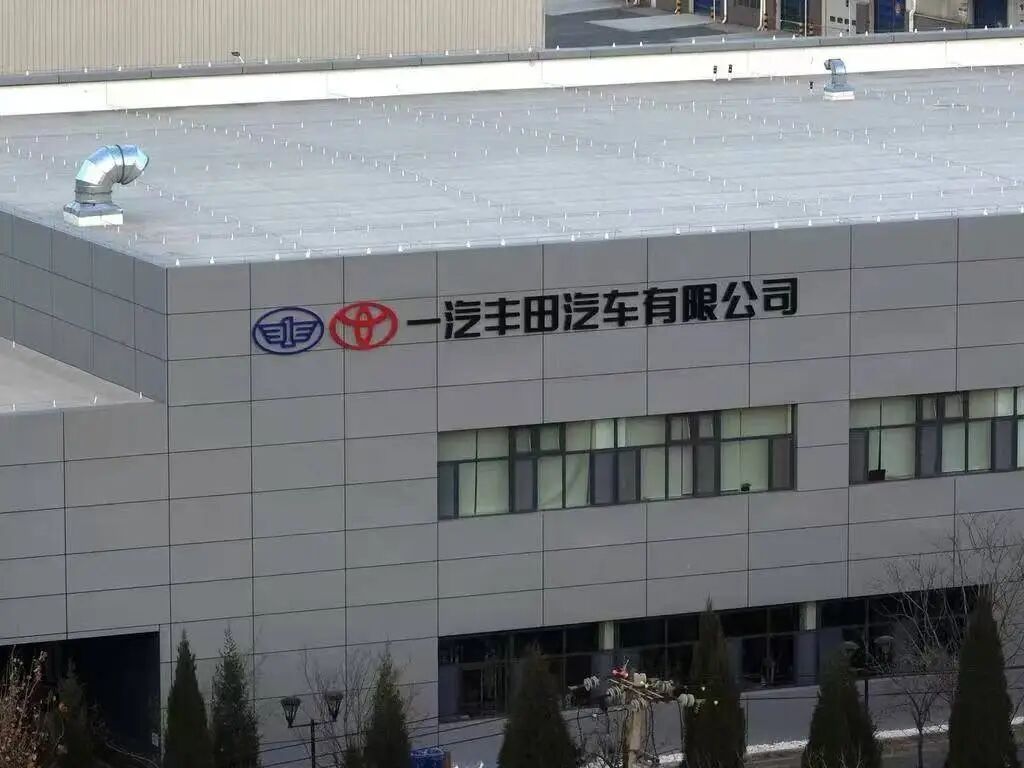
FAW has brands; GAC has technology. FAW has resources; GAC has markets. FAW needs more agile electrification technology implementation; GAC needs stronger brand endorsement and system resources. Bestune needs technology infusion; Aion needs brand empowerment. Many issues can be resolved without starting from scratch if resources are interconnected.
Notably, the transaction model itself is significant. FAW becomes a strategic shareholder by acquiring GAC's shares, gaining direct access to GAC's market-driven mechanisms and electrification technologies. By relinquishing its 50% stake in the Toyota joint venture, FAW can focus resources on its proprietary brands.
Hongqi and Bestune are in critical stages. For this central SOE, focus trumps joint venture scale.
GAC, acquiring a 50% stake in FAW Toyota, can further integrate Toyota's business system, reduce internal competition, and enhance operational efficiency. FAW Toyota's 2025 net profit was approximately 4.234 billion yuan, with the 50% stake contributing over 2.1 billion yuan in annual profit—a much-needed boost for GAC, which lost 4.467 billion yuan in the first half.
Toyota's role is equally crucial. For years, North and South Toyota operated independently, with fragmented channels and redundant investments in sister models like Corolla and Levin, RAV4 and Wildlander. The Sienna and Granvia, sharing platforms and powertrains and targeting the same family users, forced the two joint ventures to undercut each other at the dealership level.
Channel infighting, price wars, and brand dilution ultimately harmed Toyota's pricing power and brand premium in China. After integration, Toyota gains full flexibility in product and channel allocation.
Automobile Commune learned that North and South Toyota plan to establish a unified sales company, with Toyota holding 50%, and FAW and GAC each holding 25%. Toyota secures the top spot in single joint venture sales in China while eliminating internal friction.
The deeper premise of North-South Toyota integration is that Toyota has already unified its R&D system in China.
At the 2025 Shanghai Auto Show, Li Hui, Toyota China's General Manager, introduced the ONE R&D system, integrating R&D from FAW Toyota, GAC Toyota, BYD Toyota, and Toyota's Intelligent Electric Vehicle R&D Center into a unified framework, with core decision-making power shifted from Japan to China.
The accompanying China Chief Engineer (RCE) system delegates product definition rights to local engineers who better understand Chinese users. R&D is unified, and product definition is decentralized, but production bases, supply chains, and sales channels remain separate.
The North-South Toyota merger essentially completes the final piece of business integration through equity restructuring.
The core of this model: FAW provides resources and profit-sharing rights; GAC gains operational control; Toyota handles products and technologies. Operational authority, profit distribution, and technology sharing are stratified—operational control goes to whoever understands operations best; resources ensure profit connectivity for providers. Separating property rights and operational control meets diverse needs. If this path succeeds, others will follow.
03 Where Do Honda, Nissan, and German Brands Go From Here?
Toyota's move naturally pressures Honda and Nissan, extending from Japanese brands to German and American ones.
What are the strengths and weaknesses of Honda, Nissan, and German automakers in integrating their Chinese joint ventures?
In December 2024, Honda and Nissan signed a basic agreement for operational integration, aiming to finalize a deal by June 2025, with Mitsubishi considering joining. If successful, the new entity would become the world's third-largest automaker after Toyota and Volkswagen.
However, on February 13, 2025, the companies formally announced the termination of merger talks. The core dispute lay in the merger method and control arrangements: Honda proposed acquiring Nissan as a subsidiary, while Nissan sought an equal merger. Unable to reconcile differences, Japan's largest automotive integration effort collapsed.
Yet the door remains open. In August 2026, Honda and Nissan launched cooperation, signing a joint development agreement for next-generation software-defined vehicles, standardizing key components like electronic control units, in-vehicle operating systems, and middleware.
From marriage to partnership, the form of cooperation evolves, but the logic of integration remains.
Honda faces greater urgency in China than Toyota. In 2025, Honda's cumulative terminal sales in China were 645,300 units, while Dongfeng Nissan sold 601,000 units, both falling out of the top ten automakers.
Combined, they reach approximately 1.246 million units, ranking around seventh. While still insufficient compared to BYD and Geely, this scale provides a basis for dialogue with the leading camp.
More critically, Honda and Nissan's joint venture systems in China are highly overlapping. Dongfeng Honda and Dongfeng Nissan both belong to Dongfeng Group, with models like CR-V and X-Trail, Accord and Teana, Civic and Sylphy competing for two decades. If Honda and Nissan merge globally, Dongfeng will house two joint venture brands under one global group, making integration more logical than Toyota's case.
Integration has already begun. On December 31, 2025, Dongfeng Honda Engine Co., Ltd. completed its business registration change, becoming GAC Honda Engine Co., Ltd., now 100% owned by GAC Honda.
This acquisition resolved a nearly three-decade-old historical issue, ending Honda's 'one project, two companies' engine business layout in China.
However, the challenges of a Honda-Nissan merger in China are evident.
The North-South Toyota integration had a natural premise: only one layer of relationships needed restructuring, with Toyota's headquarters united in its strategic judgment of the Chinese market.
Honda and Nissan must reconstruct both Chinese and foreign relationships, involving twice as many stakeholders as North-South Toyota. This is not a technical issue but a governance challenge.
Will German brands follow? Volkswagen remains one of the few foreign automakers in China capable of sustaining two major joint ventures—FAW-Volkswagen and SAIC Volkswagen—plus Volkswagen Anhui as a third pillar. In 2026, Volkswagen will launch 13 new NEV models in China, distributing them across the three joint ventures. Volkswagen's strategy focuses on 'expanding increments' rather than 'consolidating stock.'
However, both FAW-Volkswagen and SAIC Volkswagen saw sales decline in 2025—FAW-Volkswagen down 4.8% year-on-year, SAIC Volkswagen down 11.4%. The appeal of integration grows as sales pressure mounts. Yet, fostering integration drivers between FAW and SAIC is harder than between FAW and GAC. Thus, after the North-South Toyota merger surpasses both Volkswagens in sales, Wolfsburg can only watch helplessly, unable to immediately merge Changchun and Shanghai.
In March, joint venture market share shrank to a historic low of 20.2%. By the first half of 2026, combined share of joint venture and foreign brands stood at just 28.2%. Joint venture automakers have moved beyond simple product introduction, entering a deep transformation phase of systemic restructuring.
04 Joint Ventures Must Integrate, Industry Must Restructure
The North-South Toyota merger signals more than just 'two joint ventures teaming up'; it hints at a broader macro trend: the industry is entering an era of intense integration.
Many attribute this solely to the pressure of declining joint venture market share.
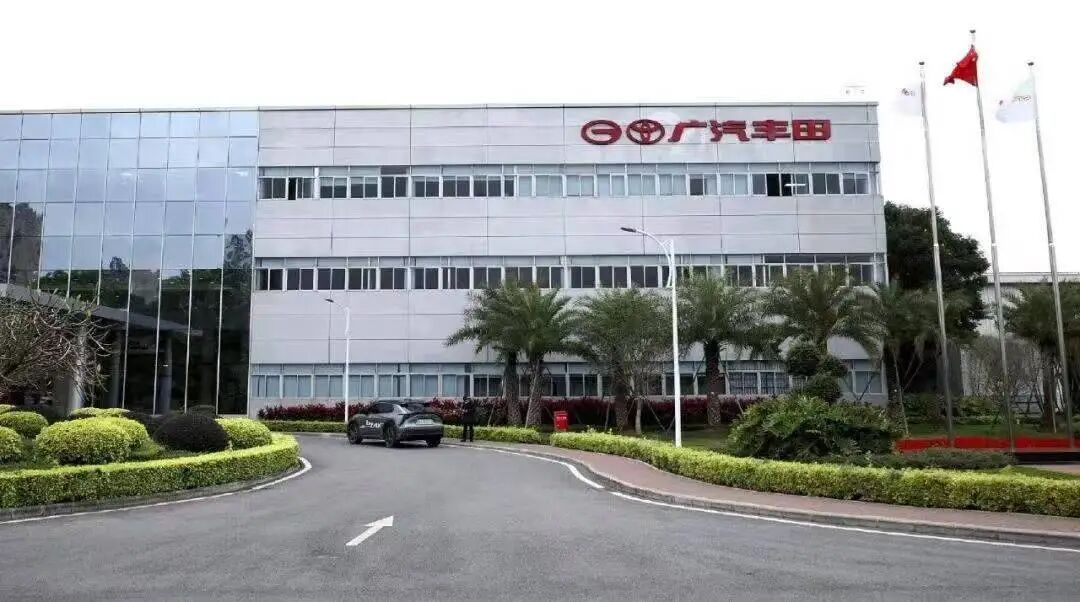
However, in Automobile Commune's view, declining share does not equate to the demise of joint ventures. Li Yunfei, General Manager of BYD's Brand and Public Relations, noted that the automotive industry is highly globalized, and domestic automakers cannot eliminate joint ventures entirely. Joint venture market share will not completely wither.
Joint venture automakers play more than just a 'vehicle-selling' role in China's automotive industry. They are supply chain cultivators, industry norm maintainers, and technical standard co-builders.
Volkswagen's joint venture with Horizon Robotics to establish Core Cheng , and Toyota, Honda, and Nissan collectively choosing Momenta as their autonomous driving solution provider—these collaborations not only enhance joint venture product competitiveness but also penetration Chinese suppliers' technical standards into the global supply chain.
The bZ4X, priced from 109,800 yuan, shatters the 'high-premium' label of joint venture brands, while Dongfeng Nissan's N7, starting at 119,900 yuan, invades the heartland of domestic brands. Joint venture automakers are evolving from 'global product agents' to 'co-builders of China's automotive industry.'
The advent of the era of joint venture integration will not only help the joint venture camp (I keep this term as is for now since it refers to a specific group in the automotive industry; if needed, it can be translated as 'joint venture group' based on context) solidify its market share but also provide a ballast for the Chinese automotive industry. A healthy automotive market has never been a one-man show dominated by a single force.
When domestic brands are charging ahead, there needs to be someone on the other end of the scale to keep them in check. The adherence of joint venture automakers to price systems, quality standards, and safety norms has become a differentiated advantage amidst the wave of intelligence.
The ultimate form of joint venture automakers is no longer a vague vision—they are no longer someone's 'contract manufacturer' but an integral part of the Chinese automotive industry and a 'balancer' for the standardized development of local automobiles.
The merger of Toyota's northern and southern branches marks the first major move in this transformation. From equity ties to business synergies, from the layered design of management rights and ownership to the re-aggregation of scale effects, the exploration by FAW and GAC Toyota provides a new paradigm for resource integration among large state-owned enterprises. Honda and Nissan should take note—this is not a urge (I translate this as ' urge ' meaning 'urging' in a general sense, but in context, it's more of a 'matter-of-fact statement' rather than a urge (push)); it's the truth. Whether German brands follow suit is just a matter of time.
A strong opponent is always more valuable than a weak one. GAC's investment in FAW Toyota is not a threat but a gift to BYD and Geely.
The game is at its midpoint, and the most exciting moves are just beginning. Those who complain about 'opponents being too strong' are never suited to sit at the chessboard. A true chess player only cares about one thing: where to place the next move.
Editor-in-charge: Shi Jie Editor: Wang Yue

THE END
-
![]()
New Breakthrough: GAC Group Reveals Plans to Purchase 50% Stake in FAW Toyota
-
![]()
Is an Extra 60,000 Yuan Worth It for L3 Autonomous Driving?
-
![]()
Leveraging DSec as a Framework? Unveiling How Muse Significantly Elevates CPU Demand
-
![]()
US Lawmakers Attempt to Impose a Permanent Ban on Chinese Cars: 'Otherwise, Annual Sales Will Reach 1.9 Million Units'
-
![]()
GAC Takes Stake in FAW Toyota: Good News for BYD and Geely
-
![]()
The RSI Craze Hits Embodied AI: Ideals, Realities, and an Unreachable Endpoint
-
![]()
Queen of Chips Teams Up with AI Godmother to Take on Nvidia's Huang
-
![]()
Changsha Offers a 'New Solution' to China's Robot Industry