Is an Extra 60,000 Yuan Worth It for L3 Autonomous Driving?
 09/30 2026
 327
327
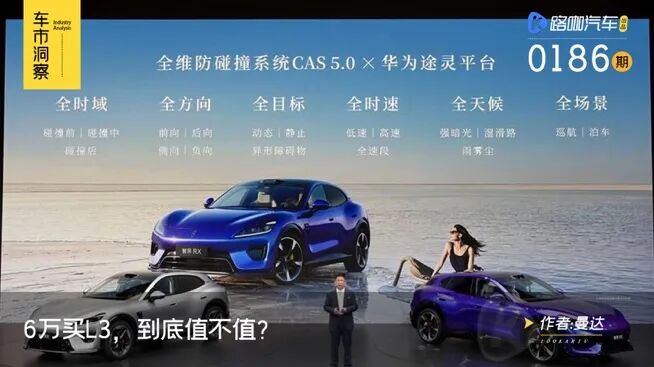
After three months and three rounds of pricing adjustments, Hongmeng Zhixing's inaugural SUV, the Smart Horizon RX, has officially hit the market.
Initially priced at 299,800 yuan for pre-sale, the price dropped to 269,800 yuan with the introduction of two new 81-degree battery variants on September 20th. On the launch day, the price was further reduced by 10,000 yuan, starting at 259,800 yuan.
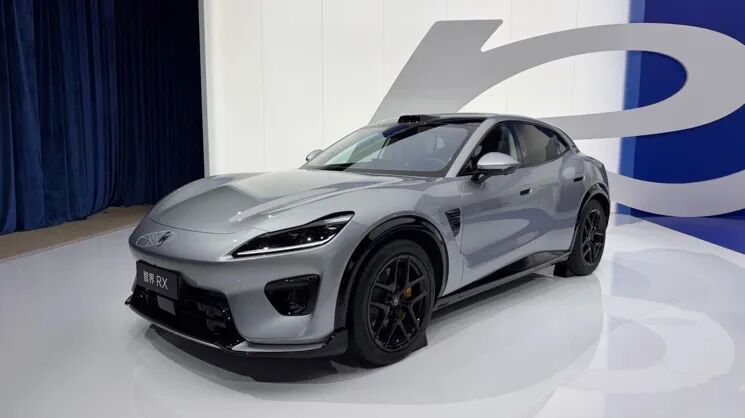
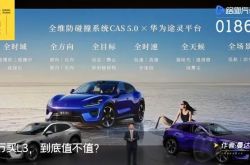
The company also highlighted that the Smart Horizon RX is "designed with an L3-level autonomous driving architecture" and "has secured an L3-level autonomous driving road test license." With a more attractive price point and a strong emphasis on L3 capabilities, the Smart Horizon RX aims to compete with top sellers in its price range.
Is an Extra 60,000 Yuan Justified for L3?
Before the official launch of the Smart Horizon RX, Hongmeng Zhixing's strategic pricing moves underscored its ambition to capture market share. By introducing two new 81-degree battery versions, the pre-sale price was slashed from nearly 300,000 yuan to a starting price of 269,800 yuan. The pre-sale price for the Max version starts at 269,800 yuan, while the Ultra version, equipped with L3-level autonomous driving capabilities, starts at 329,800 yuan.
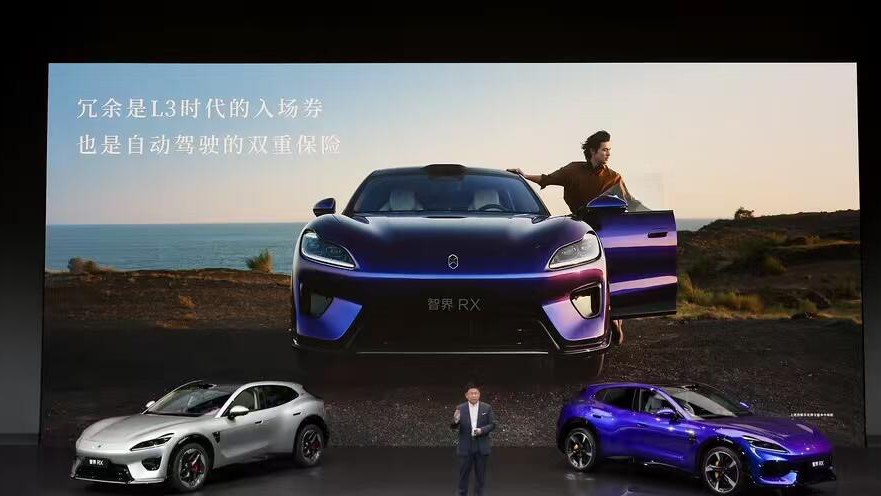
Compared to the previous 100-degree battery versions, these new models are each 30,000 yuan cheaper. However, this cost reduction comes with a direct trade-off: the CLTC range of the Max version decreases from 822km to 672km, and the Ultra version from 852km to 702km, representing a range reduction of 100 to 150 kilometers. For many users concerned about range, this is a significant consideration.
Beyond battery capacity, the new versions do not compromise on core features. Huawei's Turing platform, virtual kingpin four-ball full-aluminum double-wishbone suspension, rear five-link independent suspension, and front six-piston fixed calipers—components typically found in high-end luxury vehicles—are fully equipped in these "entry-level" models. More importantly, both 81-degree battery versions are built on an 800V high-voltage platform, with the manufacturer claiming a fast charging time of just about 15 minutes from 30% to 80%.
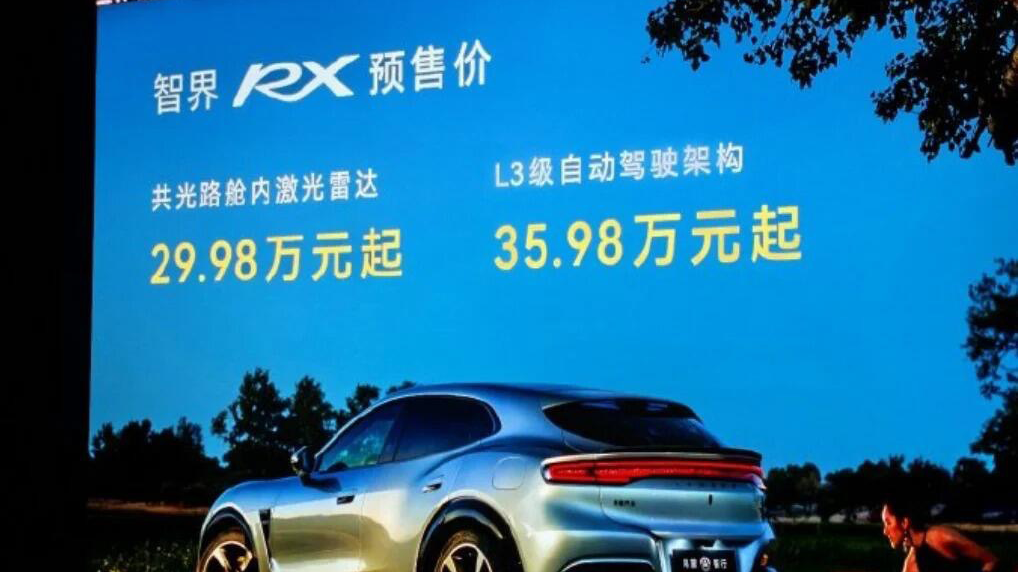
The real differentiator lies in the level of intelligent driving. The two newly added models represent distinct technological paths and value propositions. The Max version, with a final launch price of 259,800 yuan, features an innovative "coaxial in-cabin LiDAR solution."
The Ultra version, priced at 319,800 yuan, is rigorously designed according to the L3-level autonomous driving architecture, equipped with up to 38 fused perception sensors, including an industry-leading 896-line dual-optical-path image-grade LiDAR and three high-precision solid-state LiDARs. Critically, it incorporates physical redundancy in all core aspects such as power supply, communication, perception, steering, and braking, ensuring the vehicle maintains basic control capabilities under extreme conditions.
This raises a crucial question for consumers: Is the 60,000 yuan price difference primarily for "L3" capabilities worth it?
To address this, we must first understand the current state of "L3" in China. There are two types of L3-level autonomous driving certifications. The first is the "road test license" issued by local governments, allowing automakers to conduct L3 functional tests on designated public roads. The Smart Horizon RX has obtained this license, which serves as an "admission ticket" to conduct tests, but there is currently no clear legal framework for determining responsibility in case of accidents during testing.
The second type is the "access and road use pilot notification" jointly issued by four ministries and commissions, including the Ministry of Industry and Information Technology, which is a product access permit. This permit allows the vehicle to activate L3 functions under limited conditions, shifting responsibility from the driver to the automotive manufacturing enterprise during activation. Currently, only two models, the Shenlan SL03 and the Arcfox Alpha S, have obtained this permit nationwide, and both come with strict restrictions (such as a speed limit of 50km/h in Chongqing and 80km/h in Beijing), and the vehicles are used by designated operational entities and cannot be directly sold to ordinary consumers.
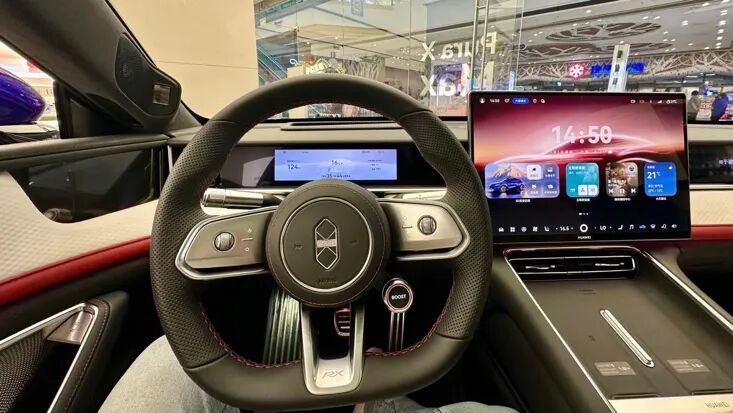
This means that the Smart Horizon RX Ultra version, for which you pay an extra 60,000 yuan, does not allow you to immediately "let go of the steering wheel and pedals" on the highway. According to the first domestic mandatory national standard for L3/L4 autonomous driving released in August this year, the standard will not be officially implemented until July 2027. Therefore, before then, the extra 60,000 yuan buys you not an "admission ticket" to L3, but "safety redundancy."
Is a 40,000 Yuan Reduction in the Entry Threshold the Smart Horizon RX's Greatest Sincerity?
The final price range of 259,800 to 389,800 yuan for the Smart Horizon RX represents a further reduction of 10,000 yuan from the pre-sale price, making its entry threshold 40,000 yuan lower than its initial appearance three months ago. This is unprecedented for a new car from Hongmeng Zhixing and undoubtedly reflects the Smart Horizon RX's greatest sincerity in its pursuit of high sales volume.
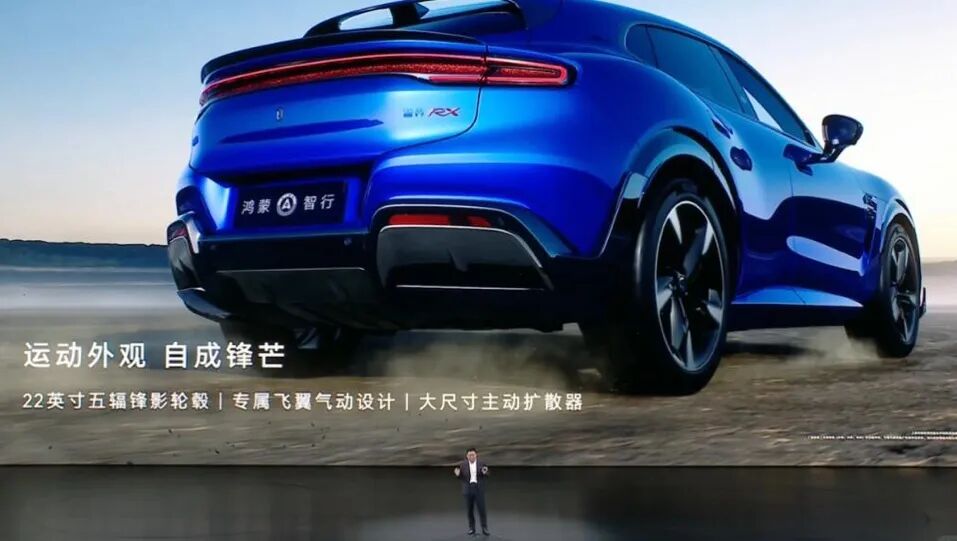
The price adjustment also clarifies the competitive landscape for the Smart Horizon RX. In the 250,000 to 350,000 yuan price range, where competition is fierce, the Xiaomi SU7 and Tesla Model Y are benchmarks that any new entrant cannot ignore, while formidable contenders like the XPeng G9 and NIO ES6 have already established a strong presence. Facing such intense competition, the Smart Horizon RX's advantages lie in three areas: the superior space provided by its nearly 5-meter body and 3-meter wheelbase, chassis hardware specifications that far exceed those of its peers, and a top-tier perception and redundancy architecture reserved for L3.
Apart from the futuristic "L3" appeal, Yu Chengdong positioned the Smart Horizon RX more directly at the launch event as "the best-driving car from Hongmeng Zhixing," and it has even been nicknamed the "Tech Ferrari" by the public. To prove this point, the Smart Horizon RX boldly took to the Zhejiang International Circuit.
This track demonstration was highly dramatic. Before the Smart Horizon, the Xiaomi SU7 had set a new lap record for Chinese-branded mass-produced SUVs at the Zhejiang Circuit with a time of 1:43.384.
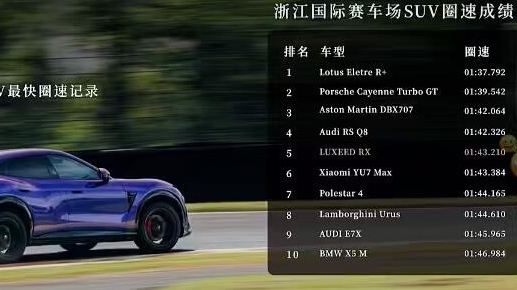
This head-to-head "siege" elevated the performance rivalry between the Smart Horizon RX and the Xiaomi SU7 to new heights. Yu Chengdong also admitted at the launch event, "The track is not the goal; testing in the most extreme scenarios is to ensure that users can drive with peace of mind and fully enjoy the pure pleasure of driving." In other words, the handling performance of the Smart Horizon RX has undergone rigorous track-level testing, sufficient to boost users' confidence in daily driving.
Regarding handling, the official provided a series of impressive data: 0-100km/h acceleration in 3.6 seconds, 100-0km/h braking in 32.4 meters, a sports car-like steering ratio of 12.9, and a torsional stiffness of the entire vehicle (vehicle torsional rigidity) of up to 51040N·m/deg.
Of course, the Smart Horizon RX's appeal is not limited to performance. The vehicle connectivity experience brought by the Hongmeng cockpit, the ALPS five-star healthy cockpit, and the powerful connectivity capabilities enabled by Huawei's Star River communication technology together constitute its unique "Huawei-style" experience.
Looking back at the Smart Horizon RX's three-month journey to market, from its high-profile debut to three consecutive price adjustments, we can see both the "sincerity" of Smart Horizon's desire to quickly penetrate the market and replicate the success of the Aito series, as well as the immense "pressure" brought about by the intense competition in the current market.
The 40,000 yuan price reduction is also a challenge issued by Smart Horizon to competitors like Xiaomi and Tesla. Can the Smart Horizon RX's "three trump cards"—ultimate performance, a future-ready L3 architecture, and Huawei's comprehensive ecosystem—help it break through in the fiercely competitive market and become another blockbuster following the Aito series?
-
![]()
New Breakthrough: GAC Group Reveals Plans to Purchase 50% Stake in FAW Toyota
-
![]()
Is an Extra 60,000 Yuan Worth It for L3 Autonomous Driving?
-
![]()
Leveraging DSec as a Framework? Unveiling How Muse Significantly Elevates CPU Demand
-
![]()
US Lawmakers Attempt to Impose a Permanent Ban on Chinese Cars: 'Otherwise, Annual Sales Will Reach 1.9 Million Units'
-
![]()
GAC Takes Stake in FAW Toyota: Good News for BYD and Geely
-
![]()
The RSI Craze Hits Embodied AI: Ideals, Realities, and an Unreachable Endpoint
-
![]()
Queen of Chips Teams Up with AI Godmother to Take on Nvidia's Huang
-
![]()
Changsha Offers a 'New Solution' to China's Robot Industry