Zunjie V800 Brake Pedal Bracket Base Upgrade Plan to Be Finalized by Month-End, With Upgrades Commencing in November
 10/12 2026
 344
344
On October 11, Farsight reported that a fresh timeline has been set for resolving the controversy surrounding the brake pedal bracket base of the Zunjie V800. According to Chang'an Street Knows, Zunjie's official customer service indicated that the upgrade plan for the V800's brake pedal bracket base is anticipated to be finalized by the end of October, with the upgrades set to roll out sequentially from November.
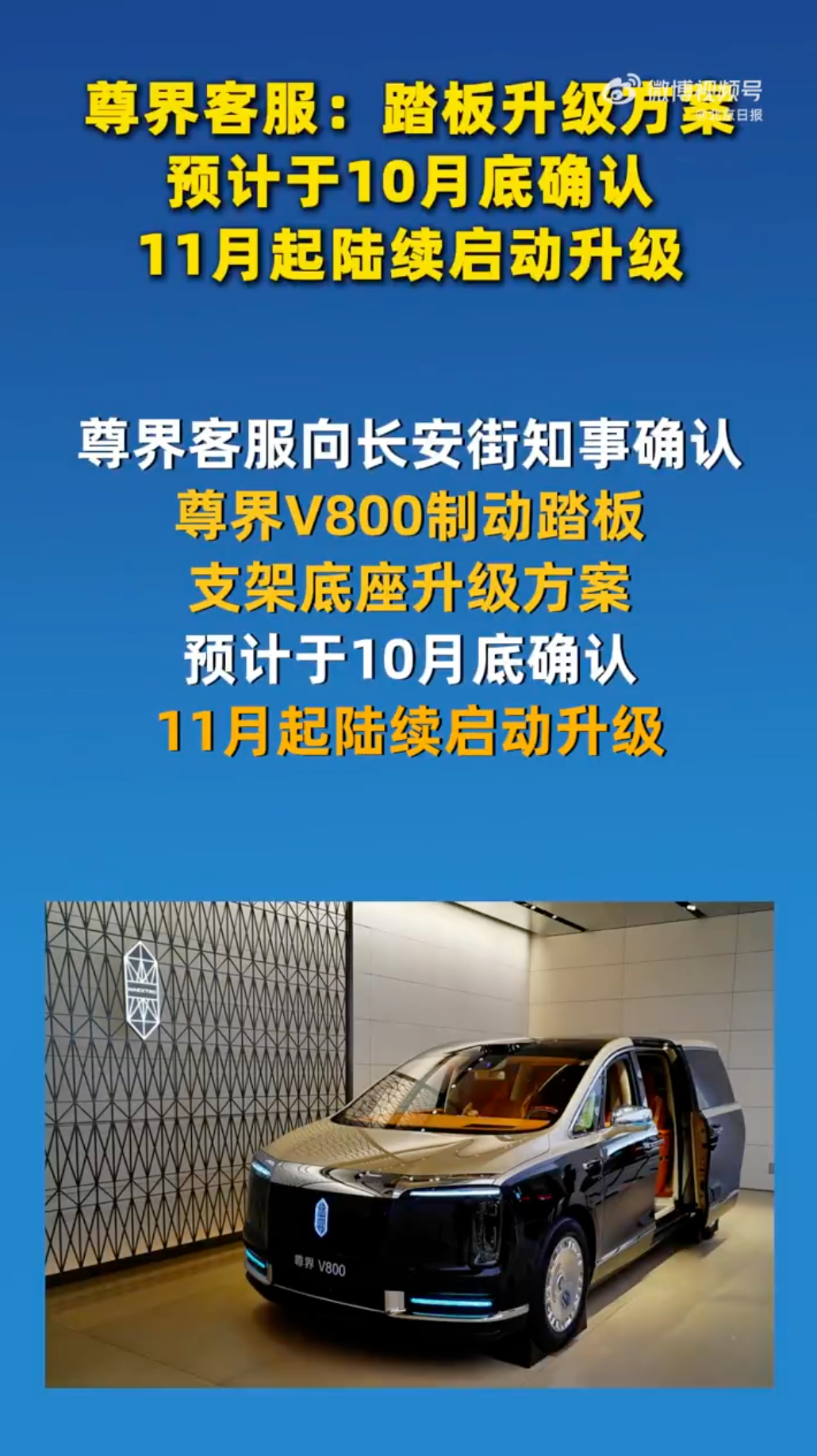
Zunjie's customer service team clarified that vehicles yet to be shipped will be equipped with the upgraded components upon delivery. For vehicles already shipped but not yet handed over to owners, the latter will have the option to get them upgraded at a dealership at a later date. However, the customer service did not reveal whether the upgrade entails material or structural modifications.
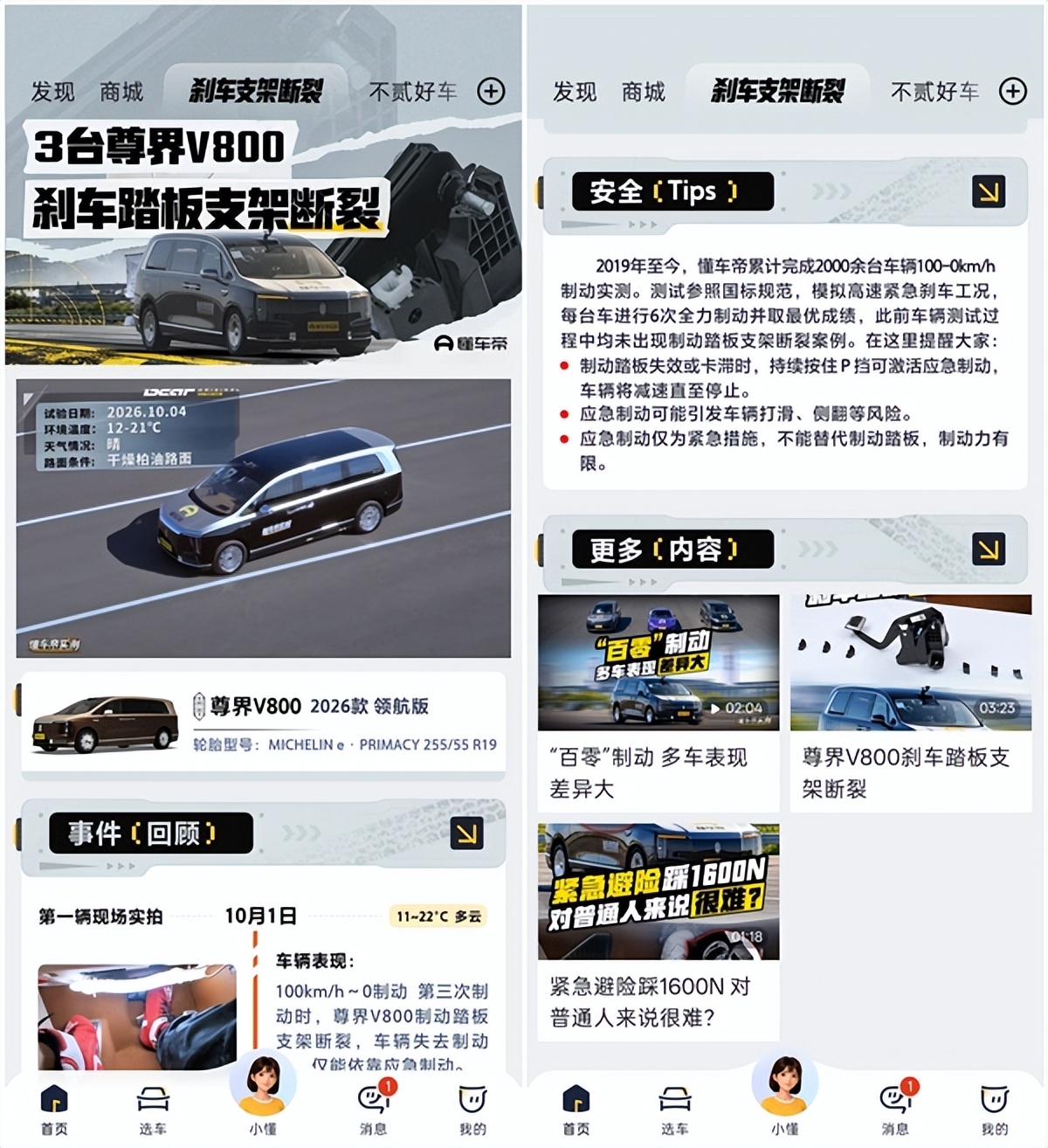
The impetus for this upgrade came from a brake test conducted by Dongchedi. On October 8, Dongchedi released a video revealing that during a full-force braking test from 100 km/h to a complete stop, three brand-new Zunjie V800 vehicles suffered pedal bracket fractures on their third, fourth, and second braking attempts, respectively, with the fractures occurring at consistent locations. Dongchedi subsequently clarified that emergency braking from 100 km/h is a fundamental test for vehicles and refuted claims that the test involved excessive force on the pedal. The recurrence of similar failures across multiple vehicles has also sparked discussions on the adequacy of component load-bearing capacity and verification processes.
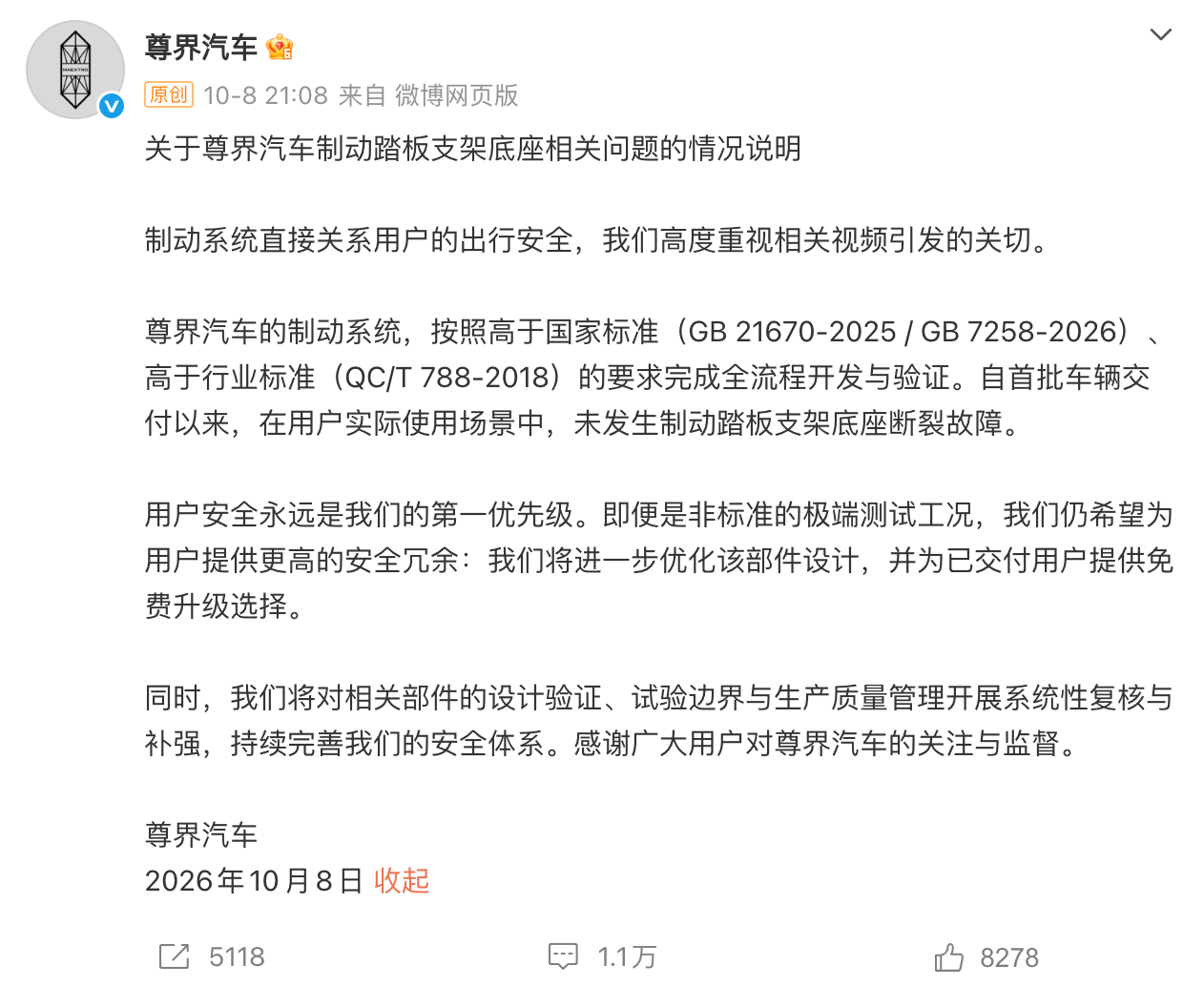
Zunjie Automobile responded via Weibo that same evening, stating that its braking system was developed and verified in accordance with requirements that surpass national and industry standards. The company also mentioned that no fractures of the brake pedal bracket base have been reported in real-world user scenarios since the delivery of the first batch of vehicles. Zunjie referred to the relevant tests as non-standard extreme conditions and committed to optimizing component design, offering free upgrade options for delivered users, and conducting a comprehensive review of design verification, test boundaries, and production quality management.
The two parties hold differing views on the test conditions, and whether the upgrade plan can sufficiently address safety concerns remains contingent on technical explanations and verification results. On October 11, People's Daily published an article titled 'Four Departments Unite to Reject 'Hasty Vehicles',' explicitly pointing out, in reference to this controversy, that the incident awaits authoritative investigation conclusions. The article emphasized that 'a car's brake pedal should never 'fracture' while driving!' It further criticized practices that shorten R&D cycles and compromise real-vehicle verification processes.
From a media standpoint, announcing the upgrade timeline signifies tangible progress in addressing owner concerns. However, consumers also need clarity on why the original component failed, the extent of the additional safety margin provided by the new plan, and how to safely use their vehicles while awaiting the upgrade. Zunjie could more effectively alleviate doubts by publicly sharing failure analyses and verifiable test results, as well as elucidating the scope and implementation process of the upgrade. When it comes to braking safety, rebuilding trust ultimately hinges on engineering evidence and tangible handling outcomes.
-
![]()
J.P. Morgan's 2027 Forecast for China's Auto Industry: Three Hurdles, Competing for Share in a Shrinking Market
-
![]()
Nominal vs. Effective Computing Power: Key Considerations for Autonomous Driving
-
![]()
Final Verdict: Unveiling the Scale of China’s Domestic Off-Road Vehicle Market
-
![]()
Geely Launches Global Dealer Recruitment Drive for Battery Sales!
-
AI Assistant: Beyond Mere 'Chatting'
-
![]()
68% of Notebook Production Costs Tied to CPU, Memory, and SSD! Manufacturers Grapple with Tough Choices
-
![]()
Young People’s Disillusionment with Mercedes-Benz and BMW: The Decline of the Premium Brand Pricing Model
-
![]()
Zunjie V800 Brake Pedal Bracket Base Upgrade Plan to Be Finalized by Month-End, With Upgrades Commencing in November