Young People’s Disillusionment with Mercedes-Benz and BMW: The Decline of the Premium Brand Pricing Model
 10/12 2026
 347
347
Yesterday, the hashtag #YoungPeopleAreDisillusionedWithMercedesBenzAndBMW# trended on Weibo, igniting widespread debate.
Let’s cut to the chase: the landscape has shifted. Young people’s disillusionment with Mercedes-Benz and BMW isn’t primarily about affordability. Instead, it reflects a refusal to pay inflated prices for brand prestige or social status. The luxury car market’s competitive dynamics have evolved, prioritizing intelligent technology, total cost of ownership, and genuine product quality over mere brand image.
To be clear, this represents a fundamental industry transformation driven by changing consumer mindsets and advancements in electrification technology—not just a collapse of brand reputation. So, why has this shift occurred so rapidly? Here are four key factors:
1. Domestic EVs have redefined what luxury means
Traditionally, luxury cars justified their premium pricing through powerful engines, refined chassis, opulent interiors, and iconic logos. Today, younger consumers prioritize smart cockpits, urban NOA (Navigate on Autopilot), voice interaction, OTA updates, charging efficiency, and family-friendly travel experiences. Brands like AITO, Li Auto, NIO, and Xiaomi have carved out clear generational advantages in the ¥300,000–500,000 price range, reshaping the luxury car market and undermining BBA’s (Mercedes-Benz, BMW, Audi) traditional narrative of mechanical sophistication.
2. Price cuts have eroded brand prestige
Models such as the Mercedes-Benz C-Class, GLC, BMW 3 Series, and Audi A6L now offer substantial discounts, with some entry-level versions dipping below ¥200,000. While these reductions may boost short-term sales, they alter consumer expectations over time: when luxury cars lose their exclusivity, the social cachet of their logos diminishes.
3. Young consumers are pragmatic and value experiential quality
Consumers under 35 now dominate the luxury car market, but their loyalty to BBA has declined sharply. They’re not rejecting premium products—just overpriced, outdated, or high-maintenance options. For many, family comfort, reliable intelligent driving, and reasonable ownership costs outweigh brand recognition.
4. BBA has lagged in electrification and smart technology
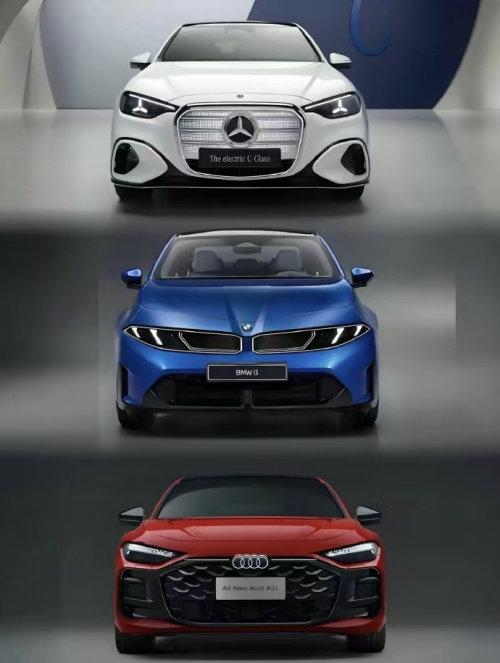
BBA’s early electric vehicles often relied on repurposed internal combustion engine platforms or suffered from sluggish platform updates, falling short in infotainment, Chinese language support, OTA update frequency, and advanced driver-assistance systems compared to local competitors. While BBA is now partnering with Chinese tech firms, their delayed response is already apparent.
This doesn’t mean BBA will vanish entirely. From my perspective, young people’s disillusionment is concentrated in the mainstream luxury segment (¥300,000–500,000), while ultra-luxury, executive, and performance-oriented models still hold appeal. For instance, Porsche, Maybach, and Mercedes-Benz S-Class vehicles retain symbolic value in certain circles.
Meanwhile, BMW’s driving dynamics, Mercedes-Benz’s interior design, and their luxury ambiance continue to attract loyal fans, particularly among those who cherish the thrill of internal combustion engines and value brand service networks. Of course, BBA is accelerating adjustments, including deeper discounts, localized intelligent driving solutions, and faster EV platform rollouts. However, the era of “slap a logo on it and charge a premium” is over.
From a business standpoint, this is a classic case of brand equity revaluation. Traditionally, BBA’s competitive edge lay in brand heritage, mechanical excellence, and dealership networks. Now, the focus has shifted to intelligent ecosystems, software update speed, charging infrastructure, user engagement, and total cost of ownership. Brands that demonstrate tangible experiential advantages in these areas will regain young consumers’ trust.
In short, young people aren’t abandoning luxury—they’re rejecting luxury that offers only a logo. Their disillusionment with Mercedes-Benz and BMW reflects both a return to rational consumption and a transition between old and new luxury paradigms in the automotive industry. As brand logos lose their luster, product quality and real-world usability will define future competition. What’s your take?
-
![]()
J.P. Morgan's 2027 Forecast for China's Auto Industry: Three Hurdles, Competing for Share in a Shrinking Market
-
![]()
Nominal vs. Effective Computing Power: Key Considerations for Autonomous Driving
-
![]()
Final Verdict: Unveiling the Scale of China’s Domestic Off-Road Vehicle Market
-
![]()
Geely Launches Global Dealer Recruitment Drive for Battery Sales!
-
AI Assistant: Beyond Mere 'Chatting'
-
![]()
68% of Notebook Production Costs Tied to CPU, Memory, and SSD! Manufacturers Grapple with Tough Choices
-
![]()
Young People’s Disillusionment with Mercedes-Benz and BMW: The Decline of the Premium Brand Pricing Model
-
![]()
Zunjie V800 Brake Pedal Bracket Base Upgrade Plan to Be Finalized by Month-End, With Upgrades Commencing in November