Is Li Auto's L Series Poised to Embrace Pure Electric? Is Range Extension on Its Way Out?
 10/12 2026
 454
454
Lead-in
Introduction
Regardless of the veracity of the rumors, it is evident that the industry is witnessing a slowdown in the adoption of range-extending vehicles and an acceleration towards pure electric models.
In September, Li Auto experienced a year-over-year and month-over-month decline in deliveries, reaching only 31,800 units, attributed to the L6 model update.
Since 2025, Li Auto has consistently fallen short of the 40,000 monthly sales mark. Despite introducing pure electric product lines and successful models like the i6, it has struggled to ascend to the upper echelons of new energy vehicle sales.
Against this backdrop, rumors have surfaced suggesting that Li Auto's L Series may also introduce pure electric variants. Recently, a blogger claimed that Li Auto's Changzhou plant will upgrade its production lines at the end of October to accommodate the L Series pure electric models.
Although this news remains unverified, the rumors themselves provide valuable insights. As an automaker renowned for its range-extending technology, Li Auto's decision to expand the L Series into pure electric models, alongside the i Series, signifies not only a strategic shift in its product lineup but also mirrors a broader transformation in the energy pathways of the entire new energy market.
01 Monthly Sales Stagnate Below 30,000: L Series Goes Pure Electric to Fuel Growth
By the end of 2024, Li Auto's deliveries approached 60,000 units, marking a historical peak. However, post-2025, the market environment took a downturn. Li Auto not only failed to reach the 50,000-unit milestone but also struggled to maintain the 40,000-unit threshold. Throughout 2025, only in May and December did monthly sales exceed 40,000 units, with several months dipping below 30,000 units.
Faced with this predicament, Li Auto has proactively sought change, with the launch of the i Series being a pivotal move.
The ideal i8 was introduced in late July 2025, followed by the i6 in late September. The i6's impact was immediate, swiftly becoming a new sales pillar with average monthly deliveries nearing 20,000 units, far surpassing the initial target of 9,000 to 10,000 units. After ramping up production capacity in March, it even briefly surged to 24,000 units.
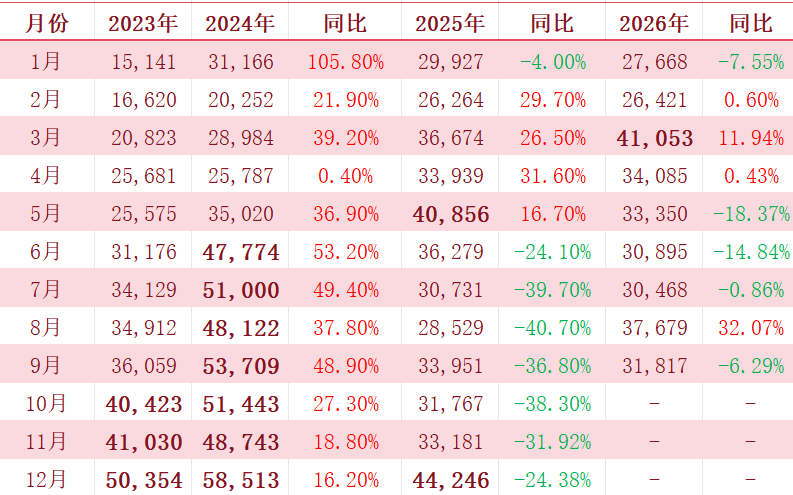
Figure: Li Auto's Monthly Sales and Year-on-Year Growth Over the Past Four Years
However, the emergence of these successful models has not lifted the brand's overall sales.
By simultaneously offering both range-extending and pure electric product lines in similar positioning and price ranges, internal competition within Li Auto has become inevitable. A clear indicator is the rise in i6 sales, while the former sales mainstay, L6, began to decline. Although the overall cooling of the range-extending market plays a role, the primary factor is that both series compete for the same customer base.
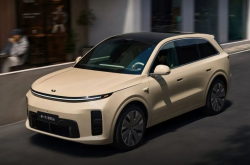
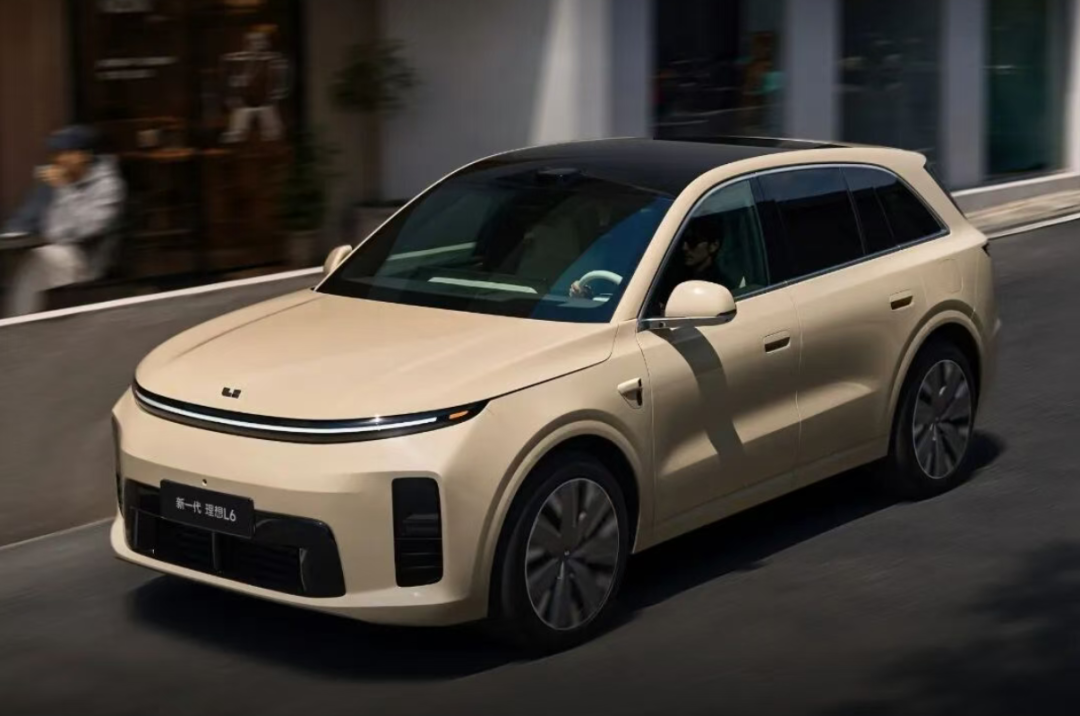
Compared to the avant-garde design of the i Series, the L Series' boxy and grand appearance aligns more closely with mainstream family aesthetics. If a pure electric version is introduced, it could capitalize on its design advantage to tap into new growth opportunities, helping Li Auto return to the 40,000 monthly sales range. This is the core business rationale behind the rumors of the L Series pure electric models.
Evaluating this scenario, the primary significance of the L Series pure electric models lies in their potential to boost Li Auto's sales and operations.
This can be distilled into two key points: first, whether they will cannibalize sales from the i Series and squeeze existing pure electric sales; second, whether they can unlock real growth and propel the brand to new heights.
From a competitive standpoint, the prerequisite for deploying two pure electric product lines is market differentiation between them. Currently, the i Series attracts tech-savvy users with its avant-garde design, low drag, and long range, while the L Series excels in boxy styling and spaciousness, creating some distinction.
However, if the L Series introduces a pure electric version, it will likely enter the same 250,000–300,000 yuan price range as the i6, compelling customers to choose between the two series at similar price points. Cannibalization becomes almost inevitable, as evidenced by the i6's early diversion of demand from the L6.
Now, considering growth potential. If the L Series pure electric models can complement the i Series by targeting different aesthetics and needs—home utility versus avant-garde tech—they could still achieve differentiated competition. For Li Auto, basing the L Series pure electric models on the existing platform and sharing the three-electric systems (battery, motor, controller) with the i Series would effectively control R&D costs and further amortize platform and supply chain investments.
However, this all hinges on whether the new growth can offset the cannibalization between product lines. If the L Series pure electric models debut but the brand's total sales remain around 30,000 units, the dual-line strategy will only further fragment the existing market without delivering substantial growth.
A more realistic market assessment is that with advancements in battery technology, pure electric vehicles priced around 250,000 yuan now offer minimal range anxiety in daily use, as consumer sensitivity to range gradually declines. In contrast, vehicle design is increasingly influencing purchasing decisions, even becoming a critical factor.
This suggests that the L Series pure electric models could quickly divert a significant portion of i Series sales. Users who prefer the L Series' design have little reason not to choose a pure electric L Series model with comparable product strength and sufficient range. The key question is whether this diversion can be offset by even greater growth, ensuring a net increase in sales even if the i Series declines.
The i Series has proven that Li Auto can create pure electric hits, but it has not achieved a brand-wide leap. The mission of the L Series pure electric models may be to push the boundaries of the pure electric market.
02 The Inevitable Decline of Range Extension
Behind the speculation about the L Series pure electric models lies another overlooked question: Why is Li Auto, a company renowned for its range-extending technology, widely expected to fully expand its pure electric product line?
As an automaker highly attuned to market trends and capable of foresight, Li Auto's moves carry significant symbolic weight. When speculation focuses on the classic L Series also going pure electric, it reflects a reversal in the market status of range-extending and pure electric vehicles.
Recently, data released by Mobility Global revealed that the global auto market underwent a historic shift in the first half of 2026. New car sales of pure gasoline models fell to 49%, the first time below 50% since the widespread adoption of automobiles, representing a 24% decline from 73% in 2021.
In contrast, the market share of pure electric vehicles continues to rise. Statistics released by Clean Technica show that in June this year, the global penetration rate of electric vehicles reached 30%, with pure electric vehicles accounting for 22%, becoming the core driver of growth in the new energy market.
Focusing on Li Auto itself, the shift in its sales structure is even more apparent. From January to August 2026, Li Auto sold a cumulative total of 261,600 vehicles, with the i6 alone accounting for 152,800 units, contributing over half of the total sales, while sales of range-extending models continue to contract.
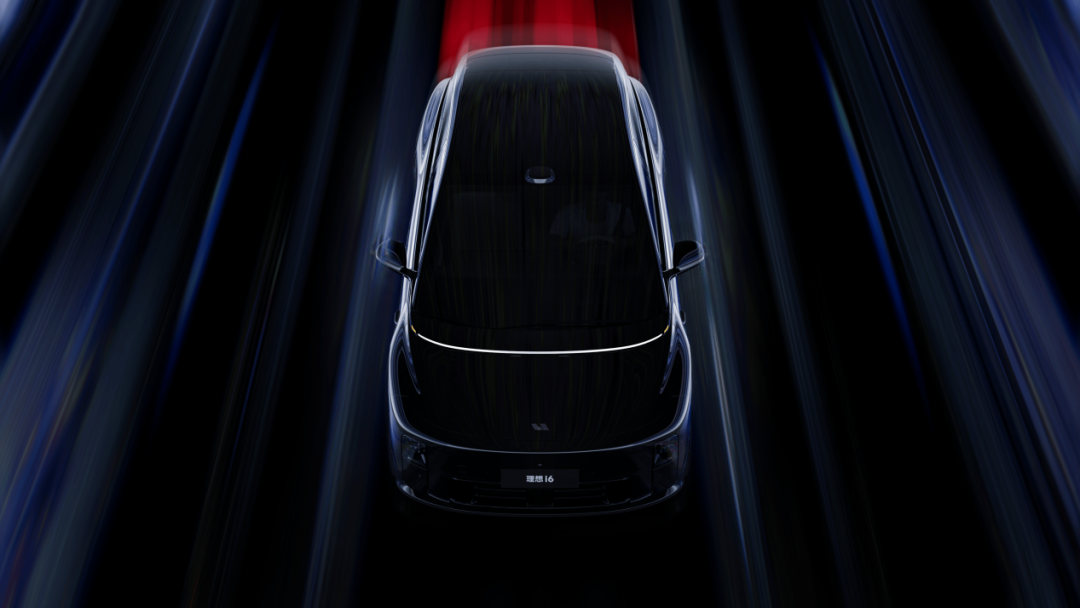
In the 200,000 yuan pure electric market that Li Auto targets, the i6 has consistently ranked among the top three in sales for an extended period, competing head-to-head with the Xiaomi YU7 and Tesla Model Y.
This is also an interesting phenomenon. All three models—the Model Y, Xiaomi YU7, and Li Auto i6—feature avant-garde designs rather than conservative ones. The Model Y pioneered the SUV market above 200,000 yuan with its mouse-like coupe styling, differing significantly from mainstream SUVs. The Xiaomi YU7 adopts a rare FUV supercar design, while the Li Auto i6's teardrop design is highly disruptive.
This somewhat resembles Geoffrey Moore's theory of market segmentation. In Crossing the Chasm, he divides users based on insight and perception into: 2% innovators, 14% early adopters, 34% early majority, 34% late majority, and 16% laggards.
During the innovation phase, the 2% innovators and 14% early adopters are more receptive to avant-garde designs, explaining why niche-styled models can dominate segments in the early market.
However, as the pure electric market matures, the early and late majorities become the primary consumer groups, and models aligning with mainstream aesthetics gain an edge. In recent years, boxy, grand SUVs have surged in popularity, and high-end flagship models have increasingly returned to classic designs, signaling a market shift from avant-garde to mainstream.
For the pure electric SUV market, avant-garde pioneer models will gradually give way to mainstream models that appeal to broader audiences. The L Series' boxy design aligns perfectly with this trend, offering a more significant advantage over the i Series.
Meanwhile, in the range-extending market where the L Series originally competed, amid rising new energy vehicle sales, range extension is the only category among the three major new energy routes experiencing declines in both wholesale and retail sales, with its market share also shrinking. For Li Auto, relying on range extension for growth is no longer realistic. A full transition to pure electric vehicles to cover more mainstream users is almost an inevitable choice.
Beyond speculation about a single automaker's product line adjustments, the rumors surrounding the Li Auto L Series also reflect subtle shifts in consumer purchasing factors, industry energy trends, and even market segmentation.
Whether Li Auto launches the L Series pure electric models remains uncertain, but regardless, the industry trend of slowing range extension and accelerating pure electric adoption is clear. The pure electric era for the mainstream family market is truly arriving.
Editor-in-Charge: Shi Jie Editor: He Zengrong

THE END
-
![]()
2027 Changan Qiyuan A06 Hits the Market: Worth Buying If You Can Overlook These Drawbacks
-
![]()
Jia Zhangke Tunes into Hongguo: AI Buzzes, but the Masses Just Want to 'Kick Back'
-
![]()
Can JAC Motors Withstand Further Challenges?
-
![]()
NIO Achieves Three Consecutive Quarters of Profitability: Is Li Bin Walking on Air?
-
![]()
FAW Toyota and GAC Toyota Merge: FAW Leads the Exit! What’s the Real Value Behind the FAW-GAC Alliance?
-
![]()
Luxury Electric Cars Falter: Those Who Spent 1 Million Yuan Reconsider the Allure of Fuel Cars
-
![]()
Farewell to 'Bragging in the Name of Technology'
-
![]()
Is Li Auto's L Series Poised to Embrace Pure Electric? Is Range Extension on Its Way Out?