Can JAC Motors Withstand Further Challenges?
 10/12 2026
 371
371
A High-Stakes Gamble It Can't Afford to Lose
”
Author|Wang Lei
Editor|Qin Zhangyong
The broken brake pedal bracket is just the beginning.
In just two days, JAC Motors' market value plummeted by 11.7 billion yuan, erasing nearly all of the 41% gain it had achieved over the past month on the back of the 'Huawei + Stellantis' concept. Its market cap fell from 62 billion yuan to 51.3 billion yuan, returning to the level before the hype began in mid-September.
Compared to its peak of 58.79 yuan per share in February this year, the company's market value has evaporated by approximately 81.2 billion yuan in just eight months.
The market never patiently listens to explanations, especially when you can't provide one.
More seriously, the damage extends far beyond short-term stock prices—it has also shaken market confidence in JAC's high-end transformation. This brake safety component failure has prompted the market to re-examine JAC's hard power in high-end manufacturing and the reliability of its engineering systems.
01 Nine Consecutive Years of Main Business Bleeding
Since the fourth quarter of 2024, JAC has been in a losing streak for eight consecutive quarters. If we consider the net profit after excluding non-recurring gains and losses, which better reflects the true profitability of its main business, JAC has been unprofitable for nine full years from 2017 to 2025, with cumulative losses exceeding 16 billion yuan.
Before 2024, although JAC's annual net profit attributable to shareholders was positive, it was largely propped up by non-recurring gains and losses exceeding 1 billion yuan each year.
Starting in 2024, the situation worsened. In 2024, the net loss attributable to shareholders reached 1.784 billion yuan, followed by another 1.703 billion yuan loss in 2025. If we simply divide the losses by sales volume, JAC lost over 6,000 yuan per vehicle sold in 2024-2025.
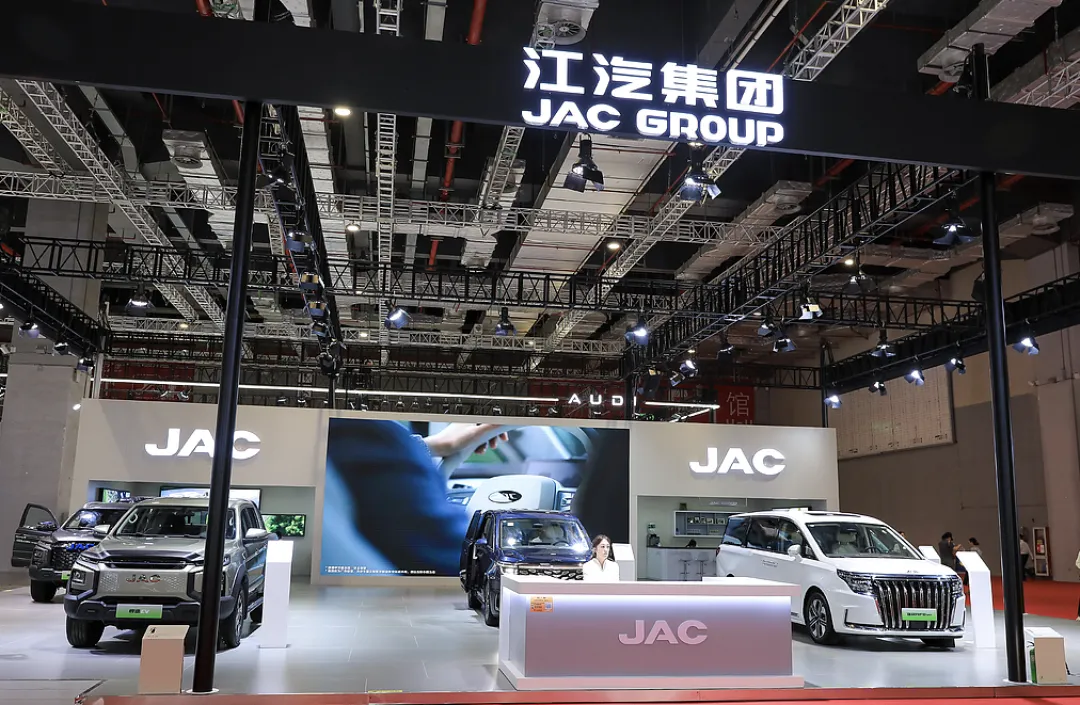
According to JAC's latest first-half financial report for this year, its revenue was 22.13 billion yuan, up 14.31% year-on-year. However, the net loss attributable to shareholders for the first half was 749 million yuan, a narrowing of 3.09% from 773 million yuan in the same period last year.
On the surface, this seems like an improvement, but the net loss after excluding non-recurring items was 991 million yuan, compared to 916 million yuan in the same period last year—an 8.22% increase. This means that after excluding various non-recurring gains and losses, JAC's main business losses continue to widen.
Cash flow pressure has further intensified. In the first half of the year, the net cash flow from operating activities was -5.288 billion yuan, a 2.141 billion yuan increase in net outflow compared to the same period last year, representing a significant 68.03% year-on-year decline. This marks the second consecutive mid-year report showing substantial operational cash bleeding.
Continuous investment in high-end R&D, production line upgrades, and brand marketing has been draining funds, while high-end model sales have fallen short of expectations, leaving little room for error in JAC's transformation.
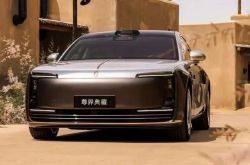
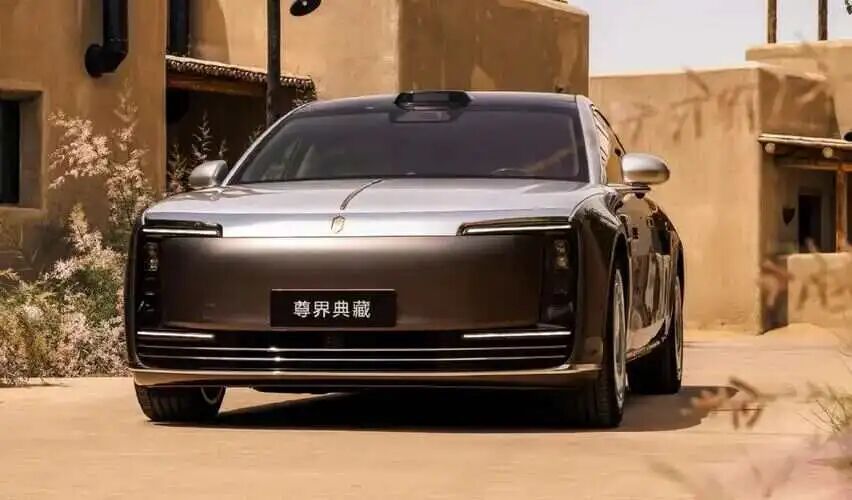
To be fair, the Zunjie brand represents a significant milestone for JAC Motors. As the best-selling ultra-luxury car for ten consecutive months, it has also boosted JAC's overall gross margin, offering one of the few breakthrough hopes for its long-term transformation.
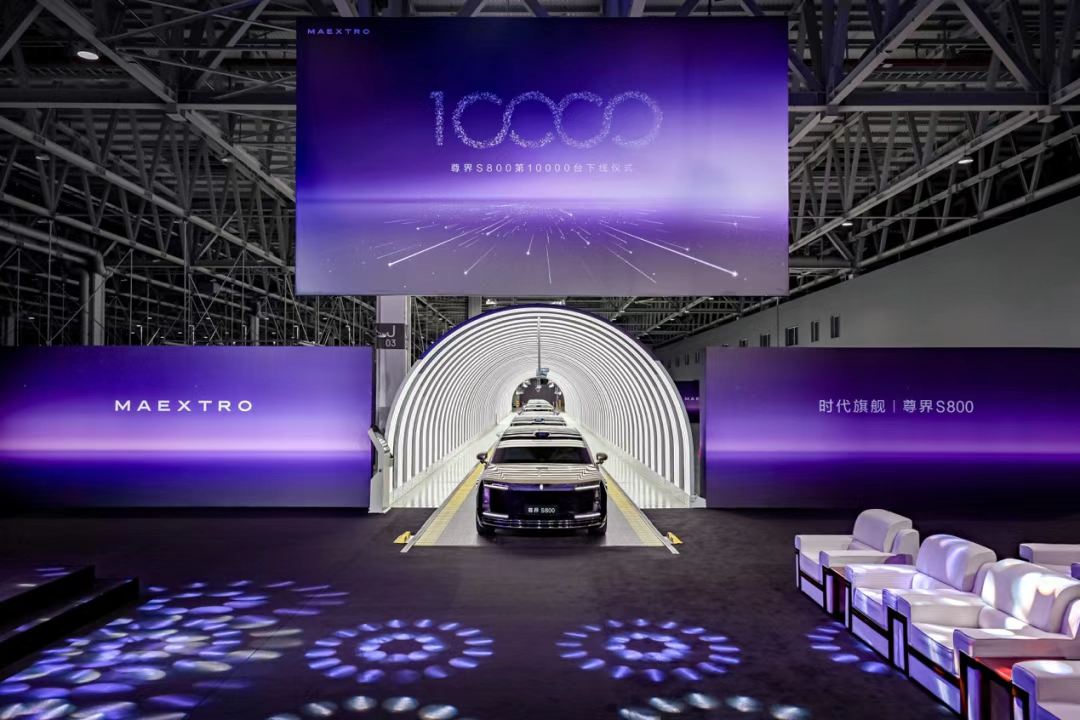
From a financial perspective, the Zunjie brand has directly contributed to improving JAC's revenue. In the first half of 2026, the company's revenue was 22.13 billion yuan, up 14.31% year-on-year. Passenger vehicle revenue reached 6.655 billion yuan, a 36.93% increase, primarily due to the product mix optimization driven by Zunjie sales, pushing the average selling price per vehicle to 121,000 yuan from a low base.
Notably, in the first quarter of this year, the Zunjie brand achieved a profit of approximately 51,400 yuan per vehicle, boosting JAC's overall gross margin by 1.33 percentage points year-on-year. However, the reality is that relying solely on the Zunjie brand is far from enough to save the company's performance.
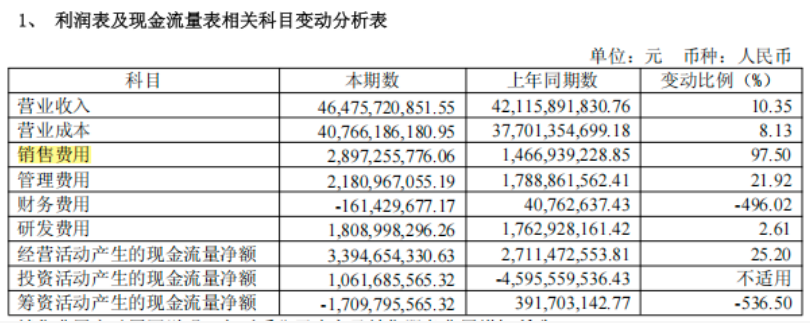
Moreover, Zunjie's own cost structure is unfavorable. To promote the Zunjie brand, JAC's full-year sales expenses in 2025 reached 2.897 billion yuan, a 97.5% year-on-year surge. Advertising and sales service fees skyrocketed from 211 million yuan to 1.572 billion yuan.
Additionally, JAC's dedicated super factory for the Zunjie brand involved a total investment of approximately 10 billion yuan, with a planned annual capacity of 200,000 vehicles and an estimated output value of 100 billion yuan upon full production. However, as of now, cumulative deliveries across the entire Zunjie system stand at around 19,000 vehicles.
This indicates extremely low capacity utilization. To amortize fixed costs for high-end passenger vehicle production lines, the sales-to-production ratio typically needs to exceed 50%—a critical threshold for survival. JAC's massive investment in this intelligent production line and flexible manufacturing system remains a vast and rigid fixed cost sinkhole until economies of scale are achieved.
At the time, netizens commented: 'Selling 20,000 ultra-luxury cars a year would be a miracle. Building a factory for 200,000 units from the start is essentially applying mass-market logic to luxury car business.'
There are also rumors that JAC's revenue from the Zunjie project is 'limited to manufacturing-related income,' with most of the million-yuan terminal selling price flowing to partners, leaving JAC's actual income far below external estimates based on terminal prices.
This means that even if Zunjie sales continue to grow, JAC's profitability improvements will fall far short of market expectations.
02 The Trust Crisis Has Just Begun
In the first half of this year, JAC's passenger vehicle sales (excluding Zunjie) plummeted by 36% year-on-year to 42,103 units, primarily driven by mid-to-low-end models (such as Refine and Sihao), with an overall low gross margin of 9.04% in the first half of 2026.
As JAC's traditional stronghold, commercial vehicle sales totaled 123,307 units in the first half of the year, down 1.16% year-on-year.
Thus, JAC must convince the market that high-end is its future.
Before the 'brake pedal' test results were announced, JAC's stock market performance looked like this:
Ahead of National Day, from September 22 to September 30, JAC Motors secured three trading limits in just six sessions, with cumulative gains exceeding 41%. Particularly from September 28 to 30, the daily closing price deviations accumulated to over 20% in three consecutive trading days, triggering disclosure requirements for abnormal stock trading fluctuations.
This rally was fueled by market enthusiasm over rumors of a tripartite cooperation between JAC, Huawei, and Stellantis, with speculation that JAC would leverage Maserati—a super-luxury brand—despite JAC later clarifying in an announcement that the three parties were only in the 'stage of discussing cooperation intentions' without signing any binding formal agreements, leaving significant uncertainty for future progress.
Nevertheless, this propelled JAC's 'ultra-luxury' image to new heights. Then came the abrupt halt on October 8.
The consequences were predictable. For million-yuan-level vehicles, the tolerance for component structural strength, assembly tolerances, and reliability is extremely narrow. Once structural quality control issues arise, the damage to a luxury brand's reputation is magnified exponentially.
Moreover, Zunjie's deliveries peaked at 4,376 units in December 2025 before declining throughout 2026, dropping to just 367 units in July—a over 90% fall—before rebounding to 2,105 units in August thanks to the new V800 model. The quality and safety controversy erupting at this juncture further amplified the blow to JAC.
Although Zunjie has stated that no brake pedal bracket base fractures have occurred in actual user scenarios since the first batch of vehicle deliveries, the capital market interpreted this as a tacit admission of component defects, given the acknowledgment of 'optimization space under extreme conditions.'
For million-yuan luxury cars, the safety baseline should not merely be 'no user failures' but should possess far greater redundant protective capabilities beyond daily scenarios—precisely to ensure safety in extreme situations. Otherwise, the extra money spent would only provide emotional value.
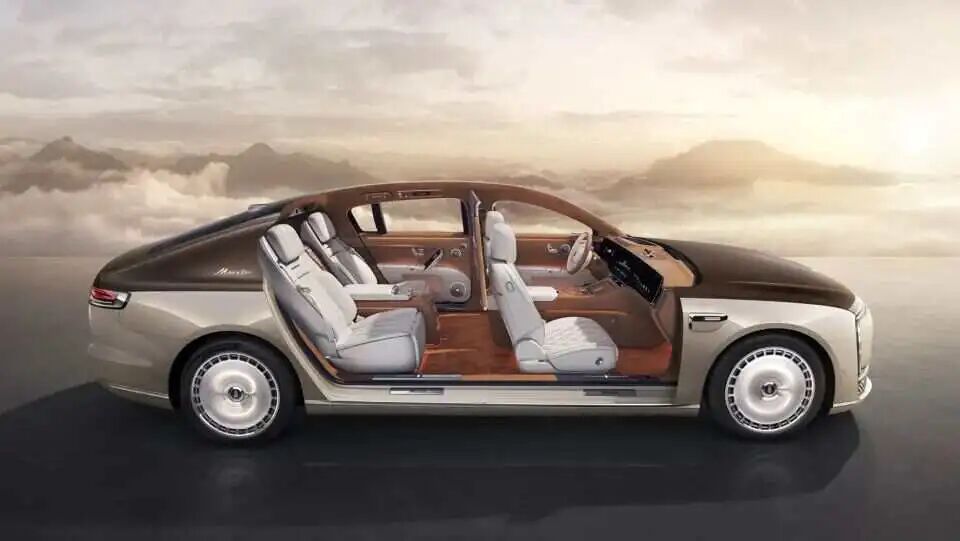
Amid this trust deficit, real-world examples have emerged. A Zunjie V800 owner has already informed sales of canceling his pre-order, stating bluntly: 'If even a critical component like the brake is problematic, I can't trust anything else.' He even said, 'I'll forfeit the deposit—I definitely don't want the car anymore.'
For Zunjie, consumers are not just buying a vehicle but a 'trust package' of 'Huawei technology endorsement + ultra-luxury + top-tier safety.' The premium the market assigns to JAC's high-end transformation is precisely betting on its alliance with Huawei and its potential for a turnaround.
Even before JAC and Huawei jointly launched Zunjie, many questioned whether JAC, with no prior experience in ultra-luxury passenger vehicles, could create a brand competitive enough for the mainstream market. Even with years of vehicle manufacturing experience, directly entering the luxury car market priced at hundreds of thousands or even millions of yuan remains challenging.
When the foundation of safety cracks, high expectations are quickly—even excessively—liquidated, easily triggering investors to reassess risks, with panic reflecting in stock prices ahead of facts.
Trending topics fade, but once trust is eroded, it often requires several times the effort to restore.
For a veteran automaker like JAC, which has suffered eight consecutive quarters of losses, tight cash flow, and sluggish core segments, this gamble involves not just the reputation of a single model but whether there's even a next move in its comeback strategy.
-
![]()
September 2026 Sales Review of Emerging Automakers: Leapmotor Soars to New Heights
-
![]()
September’s Centralized Feedback Highlight: Beijing Benz Faces a Surge of Complaints Over Camshaft Filter’s Vulnerability to Detachment
-
![]()
2027 Changan Qiyuan A06 Hits the Market: Worth Buying If You Can Overlook These Drawbacks
-
![]()
Analysis Report on Automobile Reputation Index for September 2026
-
![]()
Jia Zhangke Tunes into Hongguo: AI Buzzes, but the Masses Just Want to 'Kick Back'
-
![]()
Can JAC Motors Withstand Further Challenges?
-
![]()
NIO Achieves Three Consecutive Quarters of Profitability: Is Li Bin Walking on Air?
-
![]()
FAW Toyota and GAC Toyota Merge: FAW Leads the Exit! What’s the Real Value Behind the FAW-GAC Alliance?