FAW Toyota and GAC Toyota Merge: FAW Leads the Exit! What’s the Real Value Behind the FAW-GAC Alliance?
 10/12 2026
 342
342
China’s state-owned automotive sector is currently experiencing an unprecedented wave of consolidation, driven by the goals of mutual support, value enhancement, and sustainable growth.
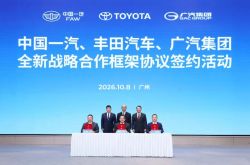
On October 8, China FAW Group announced that GAC Group plans to acquire FAW’s 50% stake in FAW Toyota through a share issuance. Following the transaction, FAW Toyota will continue to operate independently, while FAW will become a key strategic shareholder of GAC Group.
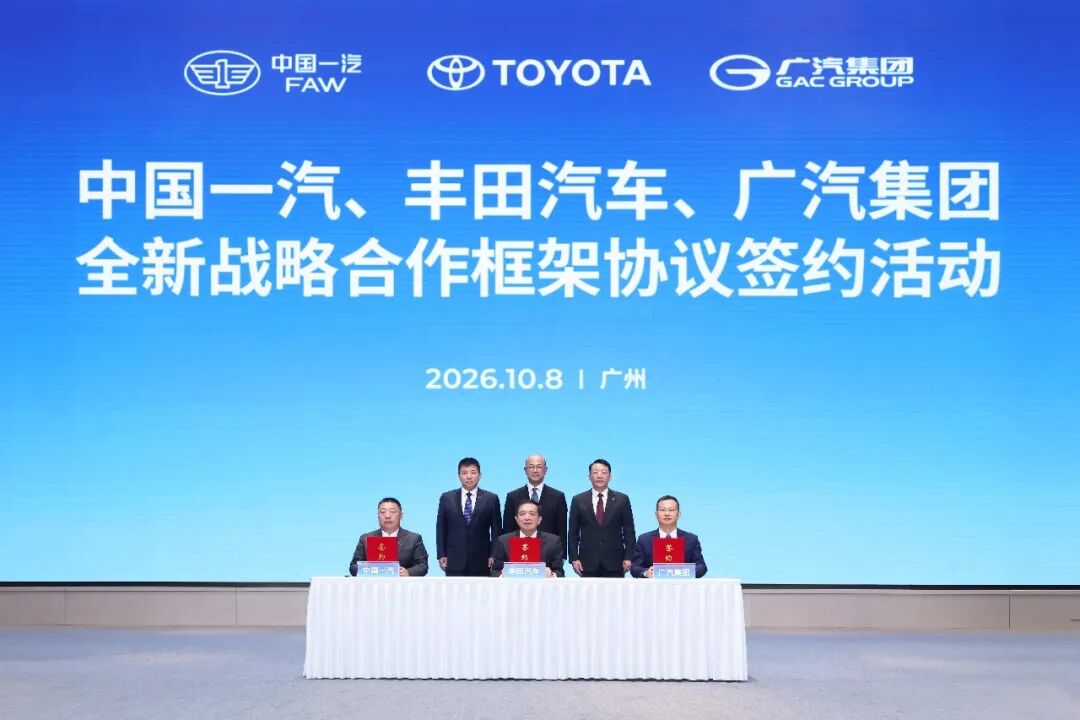
Public data indicates that FAW Toyota currently has three major shareholders: China FAW Group, Toyota Motor, and Toyota (China), with FAW holding a 50% stake. By transferring its entire stake to GAC Group, FAW effectively exits its joint venture with Toyota.
From GAC’s perspective, it already owns 50% of GAC Toyota. After acquiring FAW’s stake, GAC will consolidate all of Toyota’s resources, technology, and products in China under its umbrella, eliminating concerns about internal competition between the two joint ventures for access to Toyota’s technology and products.
From Toyota’s standpoint, it previously had to supply technology and products separately to both FAW Toyota and GAC Toyota, negotiating cooperation details with two Chinese partners. Now, it only needs to collaborate with one Chinese partner, GAC Group.
Notably, through this transaction, FAW becomes GAC Group’s second-largest shareholder, while GAC holds 50% stakes in both of Toyota’s joint ventures in China. This means FAW still “indirectly” retains a stake in Toyota’s Chinese joint ventures.
However, from any angle, this strategy represents a contraction of the original business operations for both FAW and Toyota.
On a broader scale, Toyota’s business in China is no longer at its peak. From February to August this year, Toyota’s sales in China have declined for seven consecutive months, with a 31.7% drop in May alone. Excluding March, all other months saw double-digit declines, with five months experiencing drops exceeding 19%. Historical data shows that Toyota sold 1.941 million vehicles in China in 2021, accounting for about 18.5% of its global sales of approximately 10.5 million vehicles, second only to its largest market, North America. However, this marked the peak for Toyota’s Chinese sales, which fell to 15.7% in 2025 and 13.9% in the first half of this year. The visible continuous decline is one of the core reasons prompting Toyota to contract its business in China.
Globally, China surpassed Japan in 2023 to become the world’s largest automotive exporter. By 2025, Chinese automakers’ global sales reached 27 million vehicles, surpassing Japanese brands for the first time, with Japanese automakers selling approximately 25 million vehicles that year.
In the first half of this year, China exported 5.096 million complete vehicles, compared to Japan’s 2.053 million. Institutions predict that China’s automotive exports will reach 10 million vehicles in 2026, 2.5 times that of Japan.
Most critically, Mobility Global’s latest data reveals that in the first half of 2026, pure gasoline vehicles accounted for 49% of global new vehicle sales, marking the first time their share fell below 50% and a significant 24-percentage-point drop from 73% in 2021.
From the perspective of new energy vehicles (NEVs), global NEV sales reached 11.234 million units in the first half of this year, up 14% year-on-year, with market penetration rising to 24%. The cumulative global sales of NEVs have surpassed 94 million units, with China accounting for over 62 million units, solidifying its position as the core market.
In terms of automotive patents, China has consistently led globally in patent disclosures over the past decade, far surpassing the United States, Japan, and Europe. In the NEV sector, patent disclosures grew from over 50,000 in 2016 to over 110,000 in 2025, with an average annual growth rate of 17.1%. For intelligent connected vehicles, patents increased from 44,000 to 93,000, with an average annual growth rate of 11.6%. Chinese automakers’ overseas patent deployments now cover over 50 countries and regions.
All signs indicate that Chinese brands, particularly in the NEV sector, are rapidly gaining global market share, and Chinese automotive technology, especially in NEVs, has become one of the most advanced in the world. This trend is unlikely to change shortly. China has shifted from seeking foreign automotive brands for joint ventures to exporting technology and products, which is the fundamental reason for Toyota’s business contraction in China.
From FAW’s perspective, losing FAW Toyota, once a major profit driver, may seem regrettable. However, Toyota’s contraction in China, especially in the fuel vehicle segment, is inevitable, with a high probability of future losses. Additionally, FAW Toyota’s operational capabilities lag significantly behind those of GAC Toyota. Concentrating resources on the more capable partner may be an inevitable choice in this consolidation.
After FAW becomes GAC Group’s second-largest shareholder, the extent of its influence on GAC’s overall operations and whether it will achieve a 1+1>2 effect remains uncertain. Personally, I hold reservations. FAW’s proactive transfer of equity appears more like a self-preservation strategy to avoid greater losses.
Operationally, both FAW and GAC have similarly performing self-owned brands. FAW’s Besturn and Hongqi have struggled in the market, while GAC’s Aion and Hyper have shown only moderate performance. After FAW becomes GAC’s second-largest shareholder, whether these four brands will form synergies or achieve technical collaboration remains to be seen, with no signs or necessity for integration yet.
Referring to FAW’s investment in Leapmotor, where FAW invested 3.744 billion yuan for a 5% stake without seeking control, essentially taking a strategic equity position. The cooperation agreement did not mention any business collaboration or joint vehicle development between the two companies.
This approach resembles a financial investment, primarily aimed at preserving and enhancing the value of state assets. FAW’s “investment” in GAC and its divestment from Toyota reflect a strategy to avoid potential losses rather than pursue business expansion.
Furthermore, at the group business level, the official announcement of the “alliance” between GAC and FAW merely states that “both sides will leverage asset and capital linkages, driven by technological innovation, to gradually deepen and expand cooperation boundaries, promote efficient cross-regional industrial resource synergy, jointly achieve qualitative and quantitative operational improvements, and collectively advance the development and upgrading of China’s automotive industry.” This description is purely directional and does not indicate any fundamental changes at the specific business or strategic levels. From this perspective, the alliance between FAW and GAC appears more like a mutual support mechanism under unfavorable market conditions rather than a strategic expansion.
Public information shows that in 2002, FAW acquired Tianjin Automotive, a high-profile move at the time, but FAW Xiali eventually faded into obscurity.
In 2018, FAW invested $260 million as a strategic investor in Byton, announcing in-depth cooperation in product development, production, sales, and services. However, Byton burned through 8.4 billion yuan without producing a single mass-produced vehicle, ultimately going bankrupt.
In 2019, FAW Xiali, which had been out of production for years, signed an agreement with Borqin Automobile, contributing land, factories, equipment, and liabilities related to complete vehicles valued at 505 million yuan for a 19.9% stake in Borqin. However, this integration plan also failed following Borqin’s bankruptcy. Thus, FAW’s track record in mergers and acquisitions has been entirely unsuccessful.
The alliance between FAW and GAC this time appears to be more about mutual support and avoiding future losses than about business integration and expansion. Nevertheless, in today’s increasingly competitive automotive industry, where private automotive enterprises like BYD and Geely are thriving, FAW’s proactive strategic adjustment and groundbreaking integration with a local state-owned enterprise hold significant guiding value for the entire Chinese automotive industry.
-
![]()
September 2026 Sales Review of Emerging Automakers: Leapmotor Soars to New Heights
-
![]()
September’s Centralized Feedback Highlight: Beijing Benz Faces a Surge of Complaints Over Camshaft Filter’s Vulnerability to Detachment
-
![]()
2027 Changan Qiyuan A06 Hits the Market: Worth Buying If You Can Overlook These Drawbacks
-
![]()
Analysis Report on Automobile Reputation Index for September 2026
-
![]()
Jia Zhangke Tunes into Hongguo: AI Buzzes, but the Masses Just Want to 'Kick Back'
-
![]()
Can JAC Motors Withstand Further Challenges?
-
![]()
NIO Achieves Three Consecutive Quarters of Profitability: Is Li Bin Walking on Air?
-
![]()
FAW Toyota and GAC Toyota Merge: FAW Leads the Exit! What’s the Real Value Behind the FAW-GAC Alliance?