September’s Centralized Feedback Highlight: Beijing Benz Faces a Surge of Complaints Over Camshaft Filter’s Vulnerability to Detachment
 10/12 2026
 352
352
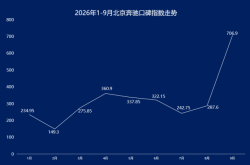
Recently, Qichemen.com unveiled the automotive reputation index for September 2026. Several automakers, including Beijing Benz, experienced a notable uptick in concentrated feedback, resulting in a significant escalation in reputation-related pressure. Data indicates that Beijing Benz’s reputation index soared to 706.9 in September, marking a 145.8% increase month-on-month and a nearly 371% surge year-on-year. A data chart illustrates that Beijing Benz’s reputation index has been inconsistent from January to September this year. It started at 234.95 in January, dipped to 149.3 in February, then steadily climbed to 360.9 in April. It subsequently declined gradually, reaching 242.75 in July and rebounding slightly to 287.6 in August. In September, the index spiked abnormally, peaking at 706.9. 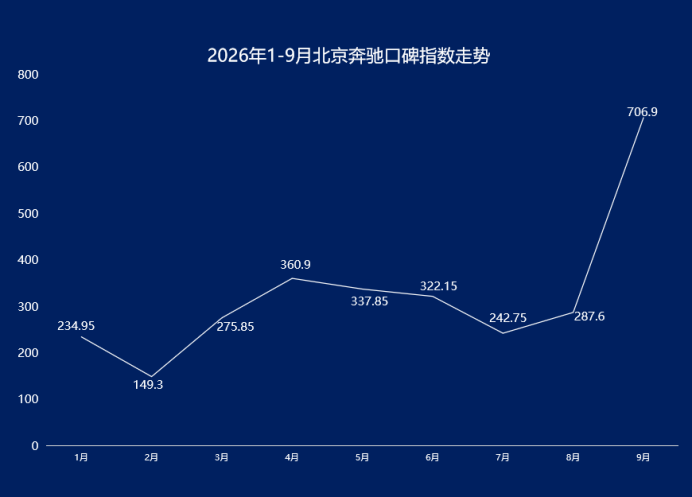
User feedback reveals that the primary cause of the sharp rise in Beijing Benz’s reputation index is the engine camshaft filter’s propensity to detach easily. In fact, concentrated feedback on this issue began to emerge in March-April this year for the Mercedes-Benz GLC’s engine camshaft center valve filter, with a similar wave of feedback occurring for the Mercedes-Benz C-Class around June. By September, the camshaft filter detachment issue had expanded from the GLC to multiple models, including the C-Class and E-Class, ultimately propelling Beijing Benz’s reputation index to its annual peak.
Specifically, the issue predominantly affects the 2022-2024 models of the Mercedes-Benz C-Class, E-Class, and GLC, which are equipped with the M254 engine and are key sellers in terms of volume. It is understood that the M254 engine’s intake camshaft front end is fitted with a center valve, which has a metal filter pressed onto its port to filter oil flowing to the camshaft adjuster. This acts as a protective barrier for the engine, but the problem lies in the method of fixation. The filter is simply pressed into the valve seat through interference fit, without screw fixation or snap ring locking, and the plastic pressed edge thickness of this batch of filters is only about 1 millimeter. 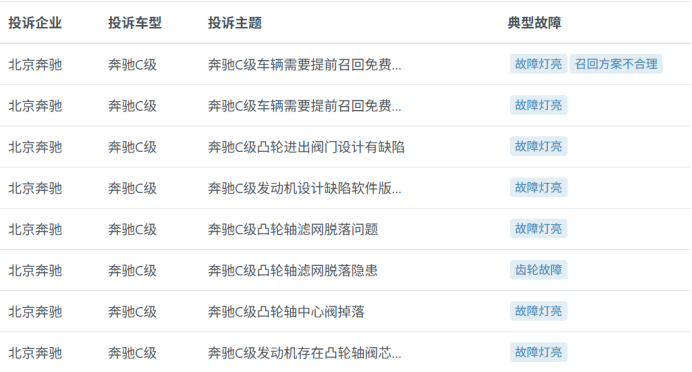
Under the repeated impact of high oil pressure during cold starts and the pulsed vibrations caused by frequent engine starts and stops, it is only a matter of time before the thin filter detaches. Once detached, fragments can enter the oil passages with the oil circulation, potentially causing blockages that lead to camshaft adjuster sticking, activation of the engine fault light, and cold start noises. In severe cases, it can wear down the camshaft journal and bearing seat, potentially resulting in engine seizure or stalling while driving. Notably, Mercedes-Benz is not oblivious to this issue.
According to evidence provided by owners, Mercedes-Benz has internally issued a relevant technical service bulletin (TSBL105), acknowledging a manufacturing defect where filters pressed before July 2024 have excessively thin edges and are prone to detachment. Since July 2024, the production line has fully transitioned to improved and reinforced filter components. The official has also introduced an internal preventive free replacement policy for vehicles produced in the risky batches prior to that time. 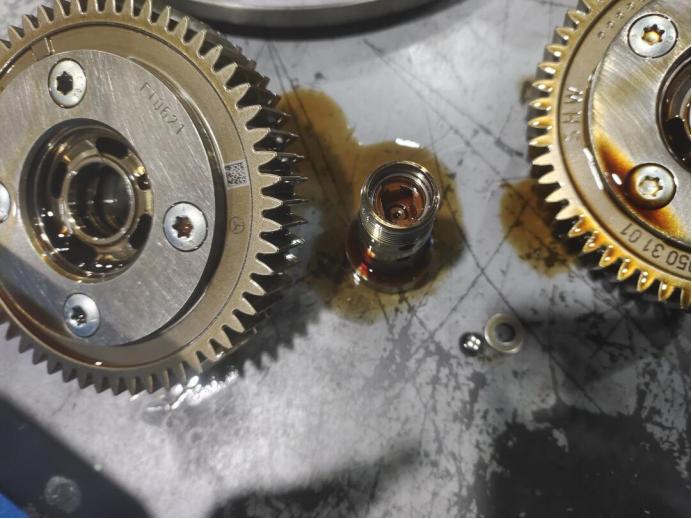
However, when numerous owners contacted 4S stores to request preventive replacements, they were turned down on the grounds of ‘no public recall,’ ‘no fault codes,’ and ‘no abnormal phenomena.’ Some owners reported that 4S stores even informed them that if they proceeded with a replacement on their own, their vehicles would no longer be eligible for warranty coverage. This left owners who were aware that their vehicles belonged to high-risk batches but had not yet experienced failures in a dilemma: waiting for a problem to arise might mean missing the warranty period, while attempting to address the potential hazard early was met with resistance from the manufacturer and 4S stores. Currently, the situation remains in a state where ‘internal technical actions have been taken, but a public recall has not been initiated.’ Additionally, on third-party platforms, Mercedes-Benz’s official responses are generally along the lines of ‘we are aware and will promptly arrange for relevant departments to follow up and handle it.’ 
Overall, the abnormal fluctuation in Beijing Benz’s reputation index in September appears to be a concentrated release of long-accumulated frustrations among owners. The manufacturer has internal technical bulletins and improved parts but has not initiated a public recall or proactively notified owners of vehicles in risky batches to bring them in for inspections and part replacements. 4S stores have also refused preventive replacements on the grounds of ‘no fault codes.’ Owners, aware of the potential hazard in their vehicles, can only passively wait for failures to occur. This approach has transformed an issue that could have been resolved internally into a public reputation crisis.
(Image sourced from the internet, will be removed if infringing)
-
![]()
BMW and Porsche Exit Collectively as Chinese Brands Steal the Spotlight at Paris Auto Show
-
![]()
Xiaomi Tightly Trails XPeng, NIO Edges Out HiMode by a Whisker, September Sales Fall Short of 'Golden September' Expectations
-
![]()
September 2026 Sales Review of Emerging Automakers: Leapmotor Soars to New Heights
-
![]()
September’s Centralized Feedback Highlight: Beijing Benz Faces a Surge of Complaints Over Camshaft Filter’s Vulnerability to Detachment
-
![]()
2027 Changan Qiyuan A06 Hits the Market: Worth Buying If You Can Overlook These Drawbacks
-
![]()
Analysis Report on Automobile Reputation Index for September 2026
-
![]()
Jia Zhangke Tunes into Hongguo: AI Buzzes, but the Masses Just Want to 'Kick Back'
-
![]()
Can JAC Motors Withstand Further Challenges?