September 2026 Sales Review of Emerging Automakers: Leapmotor Soars to New Heights
 10/12 2026
 423
423
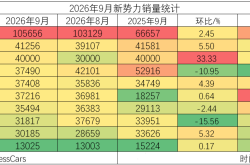
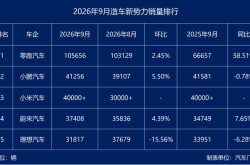
As the automotive market's peak 'Golden September' sales season draws to a close, the September sales figures for emerging automakers have been progressively unveiled. Performance across the sector has once again shown divergence, with certain brands sustaining their growth trajectory while others exhibit signs of weariness. Data indicates that Leapmotor has surged ahead with 105,656 units sold, maintaining its top position and exceeding 100,000 monthly sales for three consecutive months, thereby further cementing its lead. XPENG delivered 41,256 units, securing second place with a 5.5% month-on-month increase, albeit experiencing a slight 0.78% year-on-year decrease. While sales have rebounded, a full year-on-year recovery remains elusive. Xiaomi Auto, propelled by the Pengcheng series, once again surpassed the 40,000-unit mark after several months, demonstrating a significant increase compared to August. NIO followed closely with 37,408 units, achieving both month-on-month and year-on-year growth, with sales steadily climbing. In contrast, Li Auto delivered 31,817 units, becoming the sole brand among the five to witness both month-on-month and year-on-year declines, thus trailing in this sales contest. 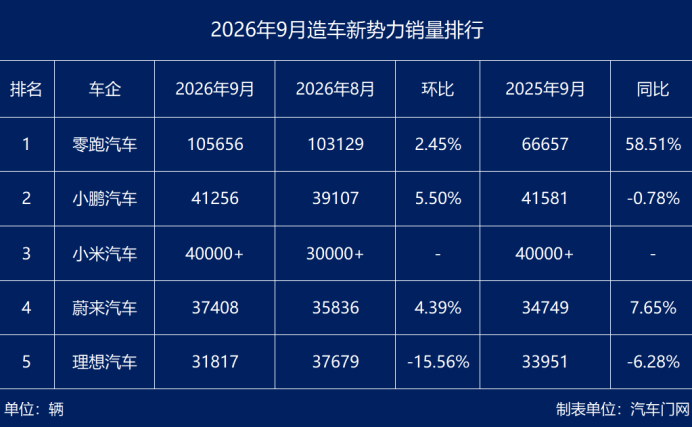
Rank 1: Leapmotor - 105,656 units
In September, Leapmotor continued its remarkable performance, delivering 105,656 units, marking a 59% year-on-year increase, and sustaining its position in the 100,000+ tier for three consecutive months, thereby continuing to lead the emerging automakers. The consistent sales growth can be attributed to Leapmotor's increasingly comprehensive product matrix. Currently, Leapmotor boasts four series—A, B, C, and D—spanning the entry-level home market to the mid-to-high-end segment. Models like the A10 and B10 focus on volume sales, the C series deeply cultivates the home market, while the D19 and D99 target higher price points. Each series has a distinct role, enabling Leapmotor to have models carry the baton in different price ranges, thereby supporting its sales growth.
More notably, Leapmotor's overseas market is also gaining momentum. This month, Leapmotor exported over 27,000 units overseas, with cumulative exports surpassing 150,000 units in the first three quarters, achieving its annual export target ahead of schedule. However, to reach its annual target of 1 million units, Leapmotor still needs to intensify its efforts in the final three months.
In the first three quarters, it delivered approximately 666,500 units, leaving a gap of about 333,500 units to reach the 1 million target. Monthly deliveries in the fourth quarter need to exceed 110,000 units. Notably, Leapmotor has surpassed 100,000 units in monthly sales for three consecutive months, putting it within reach of the required average. Entering the fourth quarter, if it maintains its current momentum and further boosts sales, Leapmotor has a strong chance of achieving the 1 million-unit target. 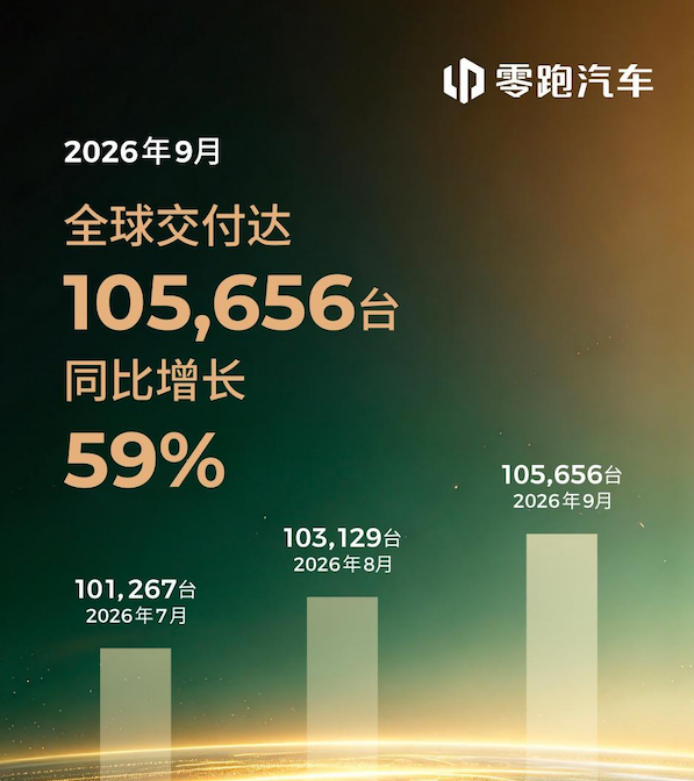
Rank 2: XPENG - 41,256 units
In September, XPENG delivered 41,256 units, a 5.5% month-on-month increase, returning to monthly sales of over 40,000 units after two months and setting a new single-month delivery record for the year. While sales have picked up, the slight year-on-year decline indicates that while XPENG has rebounded, it still requires more growth to return to stable expansion. In terms of model performance, the MONA L03 exceeded 10,000 deliveries this month, continuing to lead in volume sales. The XPENG GX has delivered over 7,000 units for three consecutive months, gradually becoming a new growth driver.
Additionally, the MONA L05 is slated to launch in the fourth quarter, potentially bringing new growth to XPENG. Despite strong performance from some models, XPENG still has a significant gap to its annual delivery target. In the first three quarters, it delivered 284,267 units, a 9.24% year-on-year decrease, achieving only about 51.7% of its annual target of 550,000 units.
At this pace, XPENG will need to accelerate in the fourth quarter to achieve its annual target, which will not be an easy feat. Fortunately, XPENG is also actively expanding overseas. Currently, it has over 500 international stores, covering 79 countries and regions globally. The expanding overseas channels provide new growth opportunities for XPENG. Moving forward, whether XPENG can convert its channel advantages into actual delivery growth will be crucial to alleviating pressure in the domestic market. 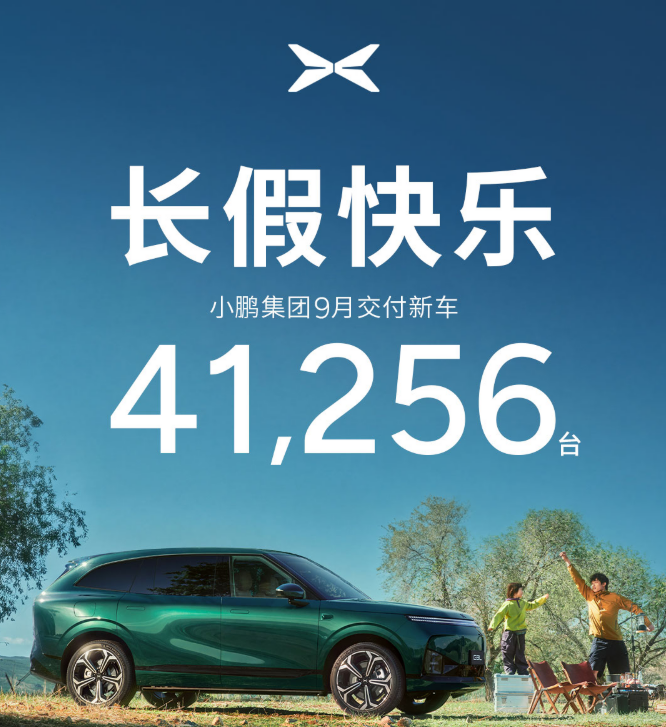
Rank 3: Xiaomi Auto - Over 40,000 units
In September, Xiaomi Auto's sales reached a new peak, with monthly deliveries surpassing 40,000 units, setting a new annual record and finally breaking through the 30,000-unit monthly ceiling. This growth was largely driven by the Pengcheng series. After deliveries commenced on September 12, the Pengcheng series exceeded 10,000 units in its debut month, adding momentum to overall sales.
Previously, Xiaomi Auto relied mainly on the SU7 and YU7 to drive sales, but now, with the addition of the Pengcheng series, it has a new growth driver. Notably, as of October 7, the Pengcheng series had secured over 70,000 orders within 30 days of its launch, indicating strong market enthusiasm. Whether the Pengcheng series can sustain its momentum and whether the SU7 and YU7 can maintain their market position will determine whether Xiaomi Auto can make its September breakthrough the new normal.
Currently, Xiaomi Auto has delivered over 280,000 units in the first three quarters, leaving a significant gap to its annual target of 550,000 units. While September saw a breakthrough, Xiaomi Auto will need to accelerate deliveries in the fourth quarter to achieve its annual goal. 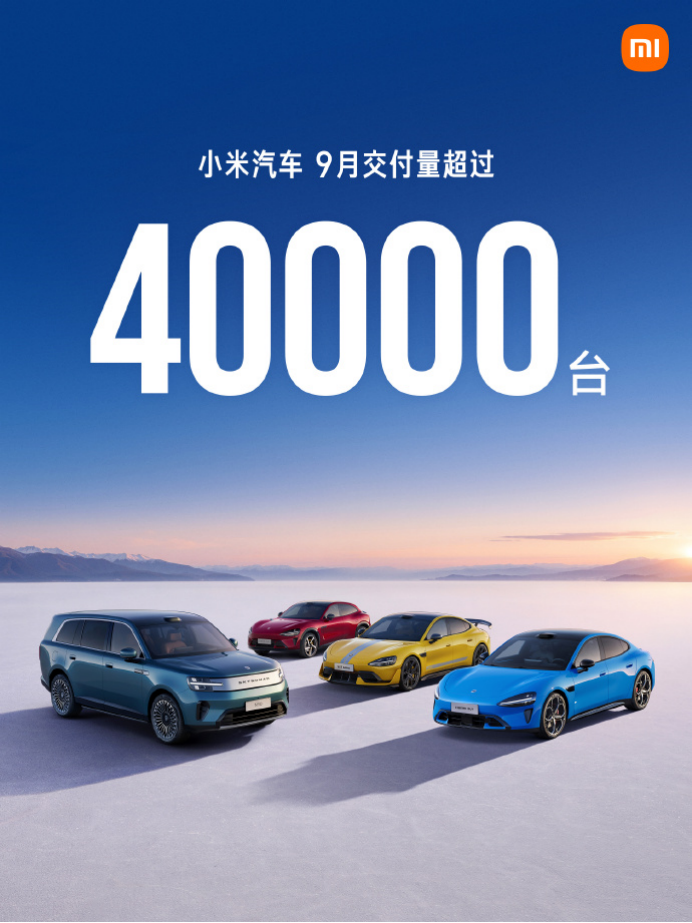
Rank 4: NIO - 37,408 units
In September, NIO delivered 37,408 new vehicles, achieving both year-on-year and month-on-month growth. The NIO brand delivered 21,318 units, a 55.3% year-on-year increase, serving as the primary driver of overall sales. Specifically, the all-new ES8 delivered 10,542 units, continuing to lead in sales. The ES9, within 119 days of its launch, has surpassed 30,000 cumulative deliveries, winning the sales crown in the 500,000-yuan pure electric vehicle segment for three consecutive months, showcasing a strong performance in the high-end market.
In addition to the main NIO brand, Firefly and Ledo are also contributing to sales. Firefly delivered 7,327 units, a 26.9% year-on-year increase, maintaining solid growth momentum. Ledo delivered 8,763 units, a slight 0.53% month-on-month decrease. Overall, NIO's three brands are working in tandem to drive sales growth in September. However, the September sales rebound is not enough for NIO to relax.
Founder and CEO William Li previously stated that NIO aims to increase its annual deliveries by 40% to 50% in 2026 compared to 2025, corresponding to a delivery target of approximately 456,400 to 489,000 units for this year. In the first three quarters, NIO delivered 300,301 units, leaving a substantial gap to the annual target. Monthly deliveries in the fourth quarter need to reach approximately 52,000 to 63,000 units to stay on track. In the coming months, NIO will need to maintain growth momentum in its main brand while driving higher contributions from Ledo and Firefly to further narrow the gap to its annual target. 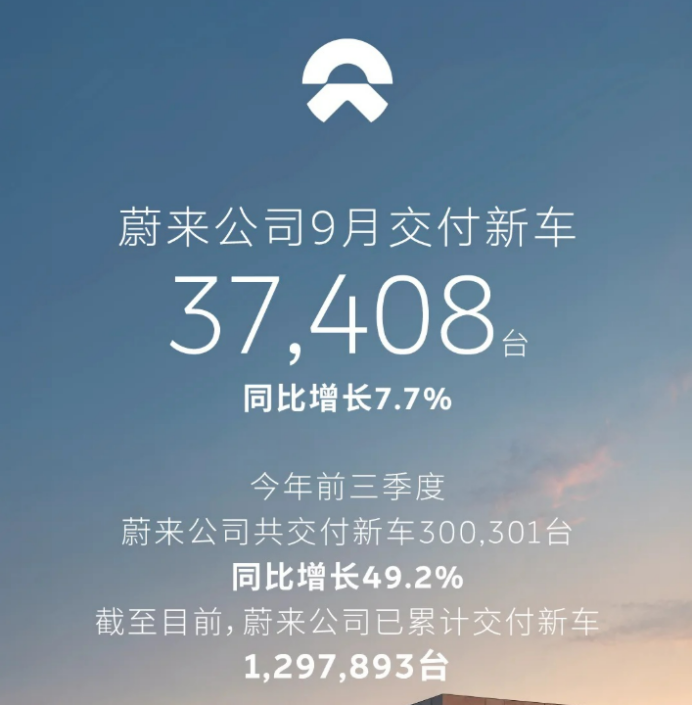
Rank 5: Li Auto - 31,817 units
In September, Li Auto delivered 31,817 units, a 15.56% month-on-month decrease, failing to maintain growth momentum during the 'Golden September' peak season. Specifically, the new-generation Li L6 exceeded 10,000 deliveries, remaining the sales mainstay, but new models like the MEGA Home and i9 Home have had a minimal impact on Li Auto's overall sales. A bigger issue is that Li Auto's past sales pillar, the L series, is no longer performing as strongly as before.
As brands like AITO continue to capture market share in the family SUV segment, the L8 and L9's once-dominant price and configuration advantages have diminished, with the extended-range route and family positioning no longer exclusive strengths. Additionally, Li Auto faces significant challenges in the pure electric market. Currently, its pure electric models rely heavily on the i6, while also facing competition from NIO, XPENG, and other rivals, making it difficult for Li Auto to establish a strong presence in the pure electric segment. To address this, Li Auto is accelerating its product lineup adjustments.
The 2026 Li Auto i6 is scheduled to launch on October 28, further strengthening its pure electric lineup. Meanwhile, Li Auto is also looking to Europe, planning to prioritize pure electric models to enter the market. The 2026 i6 will make its overseas debut at the Paris Motor Show in October and begin its European market rollout in the fourth quarter, seeking new breakthroughs for sales growth. 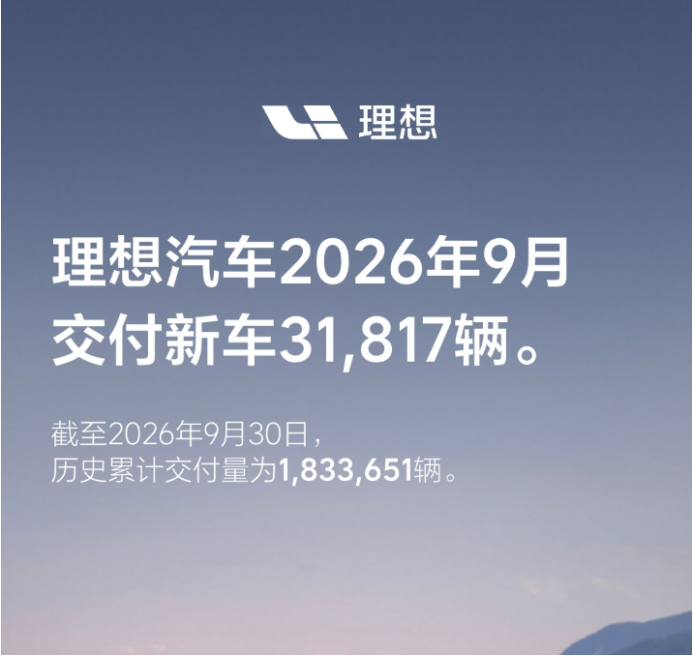
In Conclusion: Overall, September sales performance among emerging automakers has been mixed, with Leapmotor continuing to lead, XPENG and Xiaomi rebounding, NIO growing steadily, and Li Auto facing downward pressure. Entering the fourth quarter, each company will need to rely on new models for growth while maintaining sales momentum in their mainstay models. Since most automakers still have a gap to their annual targets, delivery performance in the final three months will be critical. It is foreseeable that to make up for lost ground, automakers will intensify their efforts, further heating up the sales competition among emerging automakers.
(Image sourced from the internet; removed if infringing)
-
![]()
BMW and Porsche Exit Collectively as Chinese Brands Steal the Spotlight at Paris Auto Show
-
![]()
Xiaomi Tightly Trails XPeng, NIO Edges Out HiMode by a Whisker, September Sales Fall Short of 'Golden September' Expectations
-
![]()
September 2026 Sales Review of Emerging Automakers: Leapmotor Soars to New Heights
-
![]()
September’s Centralized Feedback Highlight: Beijing Benz Faces a Surge of Complaints Over Camshaft Filter’s Vulnerability to Detachment
-
![]()
2027 Changan Qiyuan A06 Hits the Market: Worth Buying If You Can Overlook These Drawbacks
-
![]()
Analysis Report on Automobile Reputation Index for September 2026
-
![]()
Jia Zhangke Tunes into Hongguo: AI Buzzes, but the Masses Just Want to 'Kick Back'
-
![]()
Can JAC Motors Withstand Further Challenges?