Analysis Report on Automobile Reputation Index for September 2026
 10/12 2026
 496
496
Recently, Qichemen.com released the Analysis Report on Automobile Reputation Index for September 2026. After several consecutive months of decline, the automobile reputation index surged by 28.3% in September, reaching 17,389.65. Concentrated criticism of multiple models drove up the overall automobile reputation index.
On this month's TOP 10 list of automobile manufacturers' reputation indices, the reputation indices of nine manufacturers increased to varying degrees. Among them, Tesla China and Beijing Benz both experienced concentrated problem feedback. As a result, Tesla China's reputation index increased by 3.5 times month-on-month, while Beijing Benz's reputation index nearly doubled.
Significant Increase in Reputation Index in September
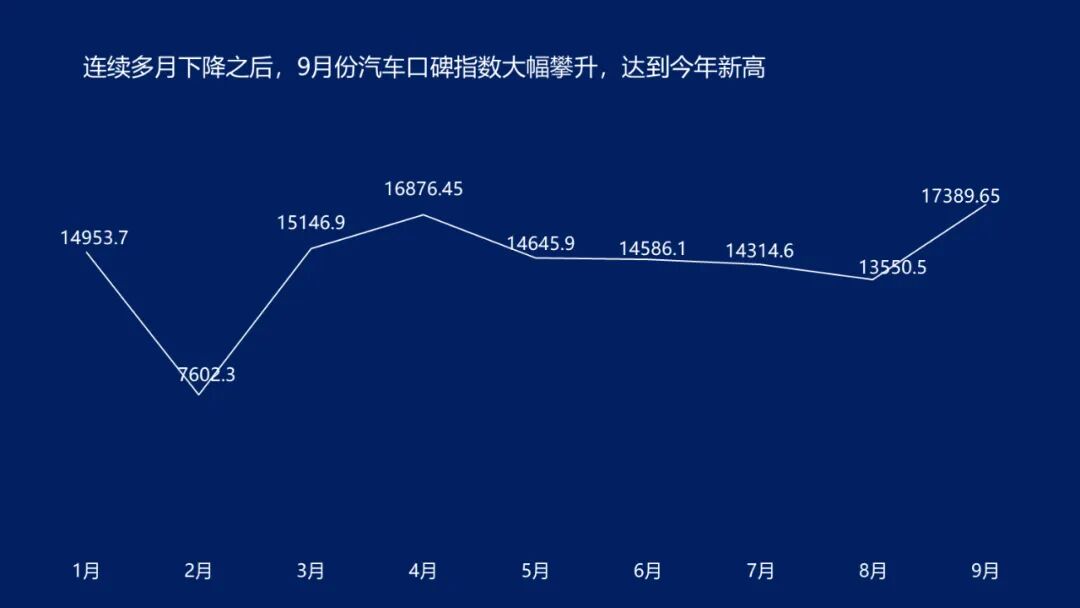
From a monthly trend perspective, after several months of decline, the automobile reputation index in September saw a significant "rebound," reaching its highest value of the year at 17,389.65. This typically indicates that there was a concentrated feedback of problems from vehicle owners during the month.
Multiple New Models Make It onto the Reputation Index List
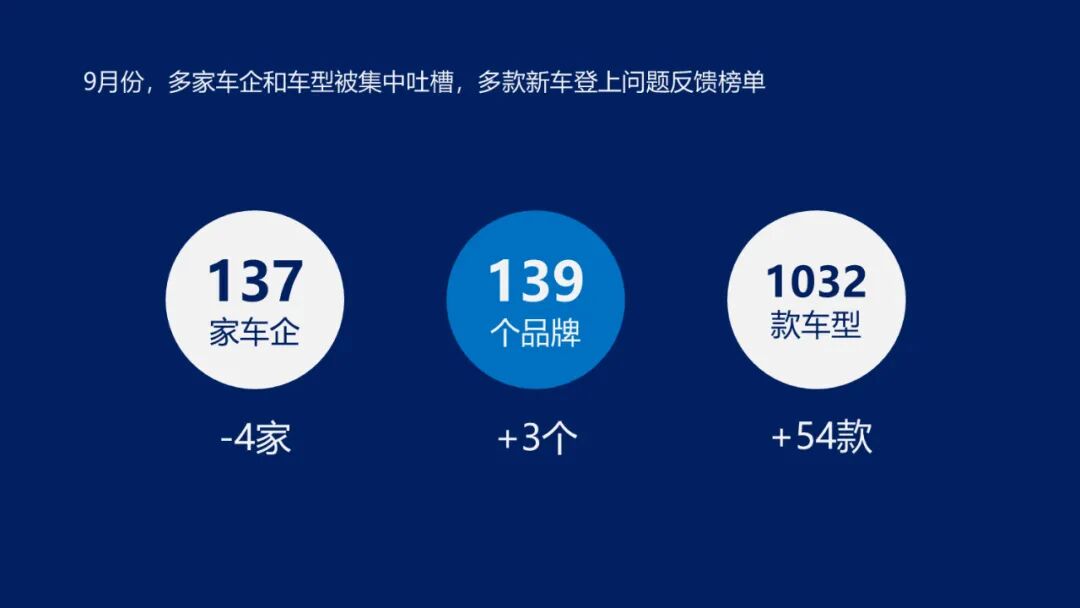
In September, a total of 137 automobile manufacturers, 139 brands, and 1,032 models made it onto the problem feedback list. The number of listed manufacturers decreased, but the number of listed brands and models increased.
Decrease in Problem Feedback Rate for Fuel Vehicles, Increase in Problem Feedback Proportion for Electrified Models
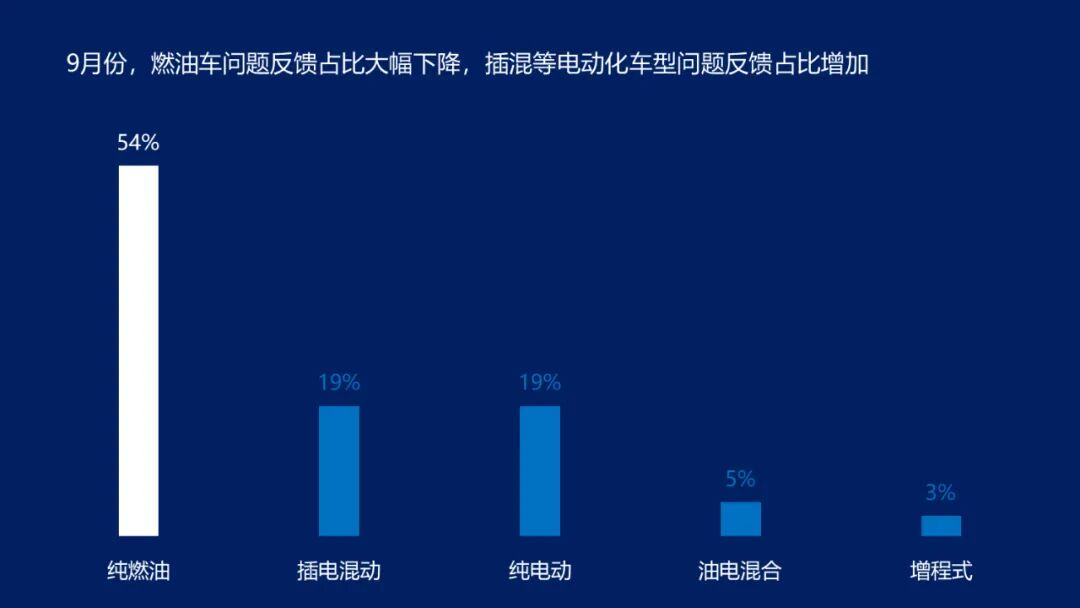
From the perspective of the powertrain types of problematic models, fuel vehicles remained the primary target of criticism from users, but their proportion in the reputation index decreased significantly by 10 percentage points month-on-month compared to August. Meanwhile, the proportion of problem feedback for pure electric and plug-in hybrid models exceeded 40%. Among them, the problem feedback rate for plug-in hybrid models increased by 6 percentage points.
SUV Models Account for Nearly Half of Problem Feedback
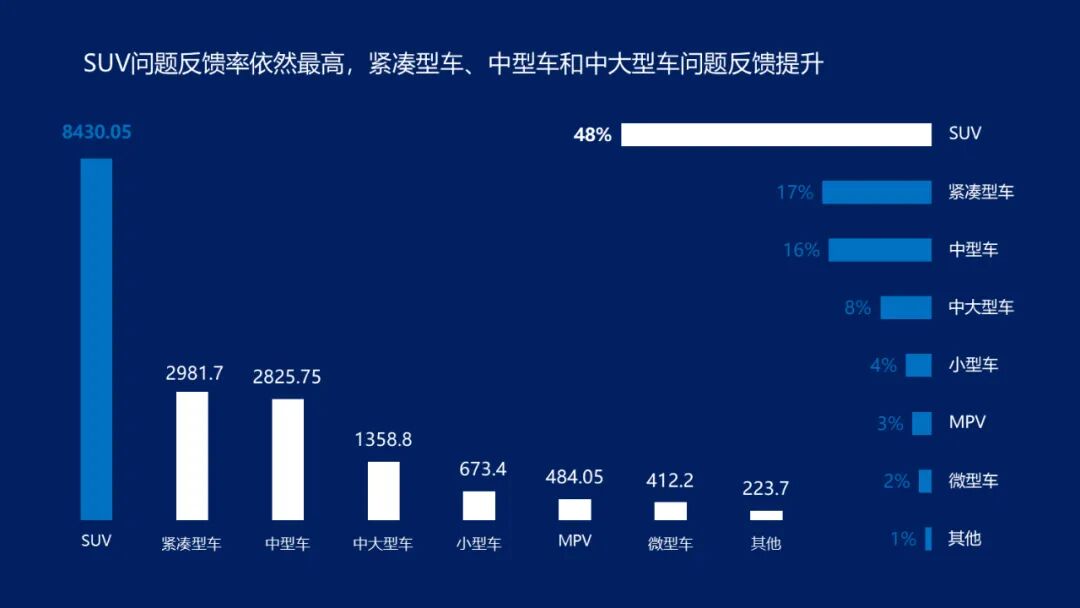
From the perspective of the model segments with problems, the proportion of problem feedback for various segments in September remained largely the same as the previous month. SUVs continued to be the segment with the highest problem feedback rate, accounting for nearly half. Compact cars, mid-size cars, and full-size cars followed closely behind, with the combined problem feedback proportion for these three segments once again exceeding 40%. The problem feedback rates for these major segments also reflected their market presence.
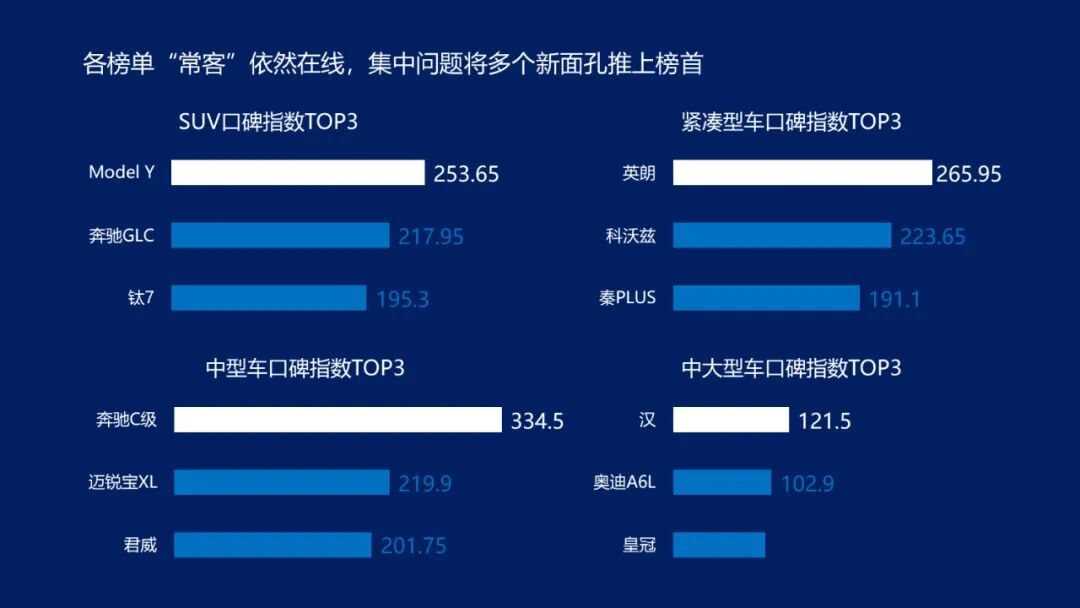
The specific rankings showed that the head (top spots, literally 'head parts,' but contextually means 'top positions') of the reputation index list for various segments in September were still dominated by the usual "familiar faces." The TOP 3 compact cars were the Excelle GT, Cavalier, and Qin PLUS. On the mid-size car list, the Malibu XL and Regal remained in the top three. Notably, the Tesla Model Y, Mercedes-Benz GLC-Class, and Mercedes-Benz C-Class surged to the TOP 3 of their respective segment lists due to concentrated problem feedback.
Services and Body Electricals Remain the Primary Issues
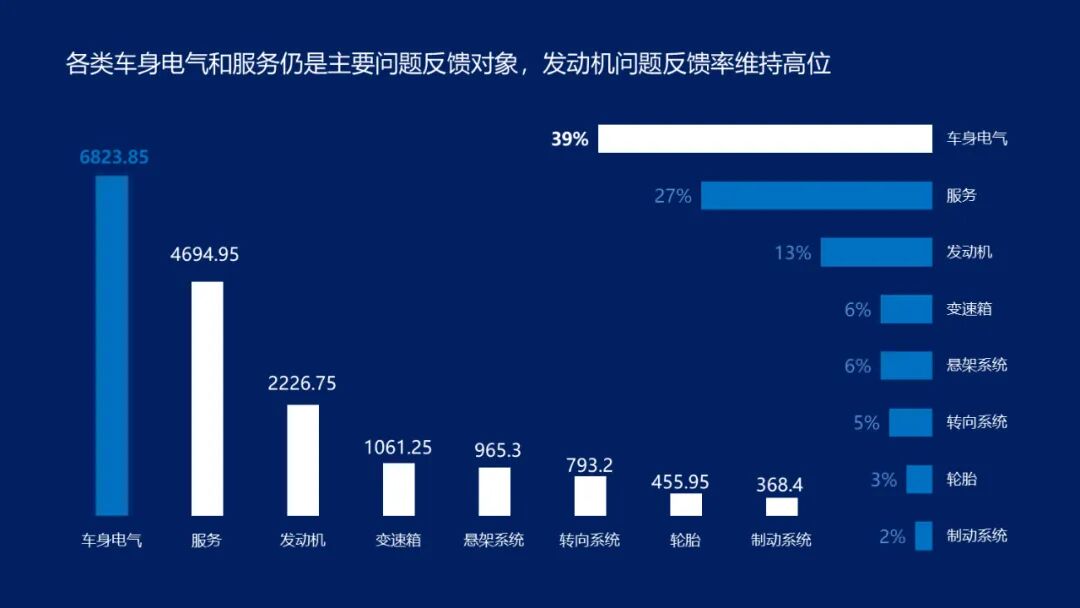
From the perspective of problem categories, in September, complaints about body electrical issues remained the most frequently reported problem, with the proportion of problem feedback remaining largely the same as the previous month. The increasing popularity of electrification and intelligence has led to various usage issues that have kept the body electrical reputation index high. Service issues followed closely behind, with the proportion of problem feedback reaching 27%. Behind this, occasional occurrences of non-delivery of vehicles, non-upgrading of infotainment systems, and increasing instances of unfulfilled promises and non-refundable deposits have kept service issues high. Additionally, due to ongoing engine problems from automakers such as Honda and Mercedes-Benz, the engine reputation index still ranked third.
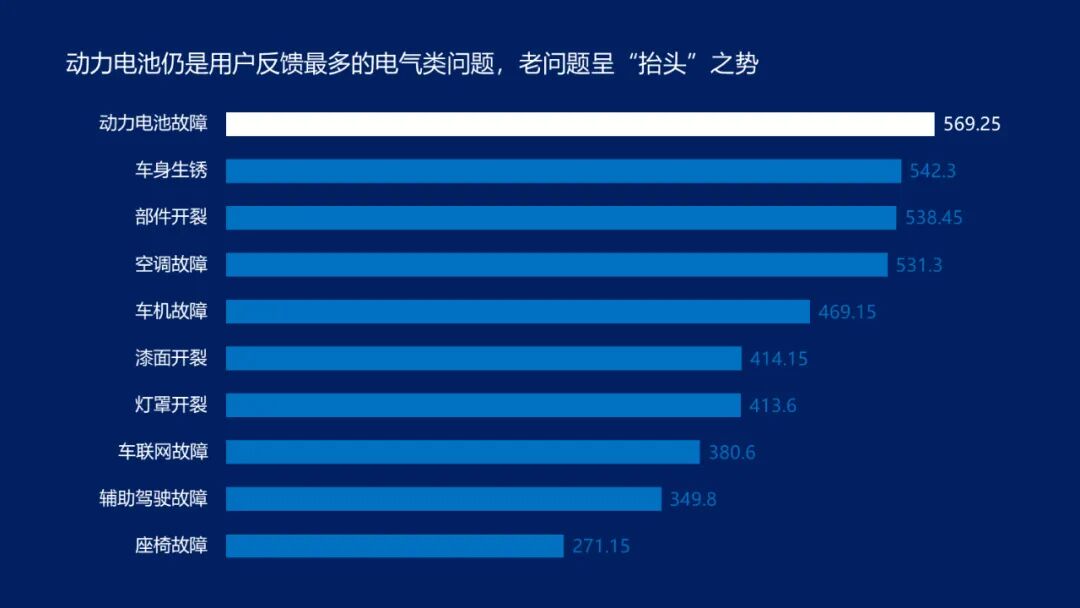
In terms of body electrical issues, in September, power battery failures, body rust, component cracking, and air conditioning failures were the most frequently reported body electrical problems by vehicle owners, with reputation indices all exceeding 500. Issues such as infotainment system problems, paint cracking, and lamp cover cracking also had reputation indices exceeding 400. From the feedback, the TOP 10 body electrical issues were all common recent problems, primarily related to electrification issues and various aging problems.
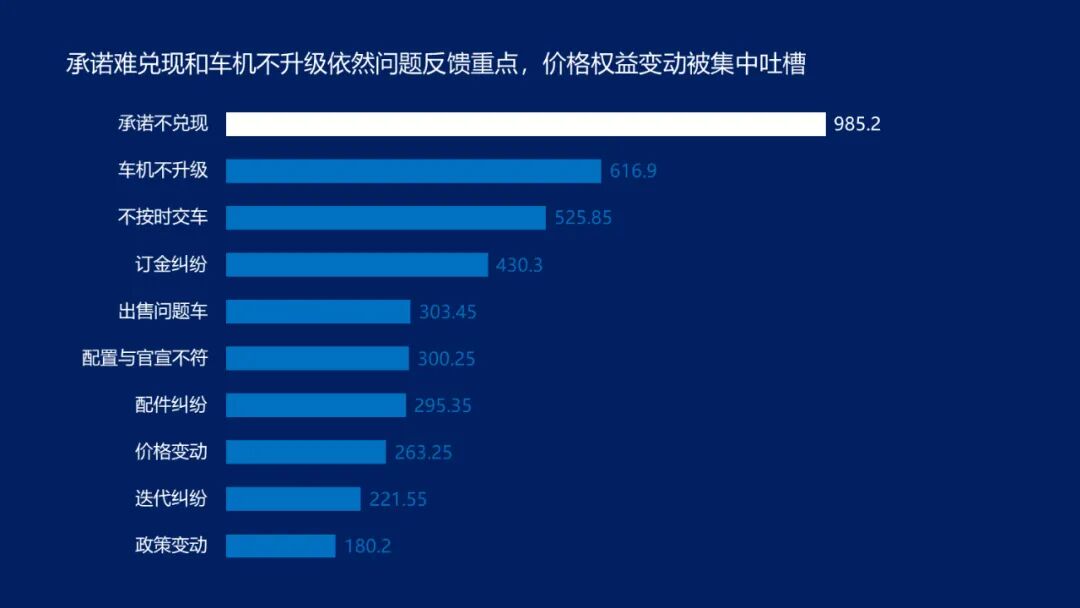
In terms of service feedback, various instances of unfulfilled promises remained the most frequently reported service issues by users. Problems such as delayed delivery of vehicles, non-refundable deposits, non-upgrading of infotainment systems, and mismatches between configurations and official announcements were all reported by many users. Meanwhile, issues such as price or benefit adjustments after the launch of new models also elicited significant dissatisfaction from users. Additionally, after-sales service issues related to dealers, such as the use of non-original parts, new problems arising from repairs, and the sale of problematic vehicles, received a large amount of user feedback this month.
Higher Complaint Volume for Chinese Automobiles, Decreased Volume for Japanese, German, and American Models
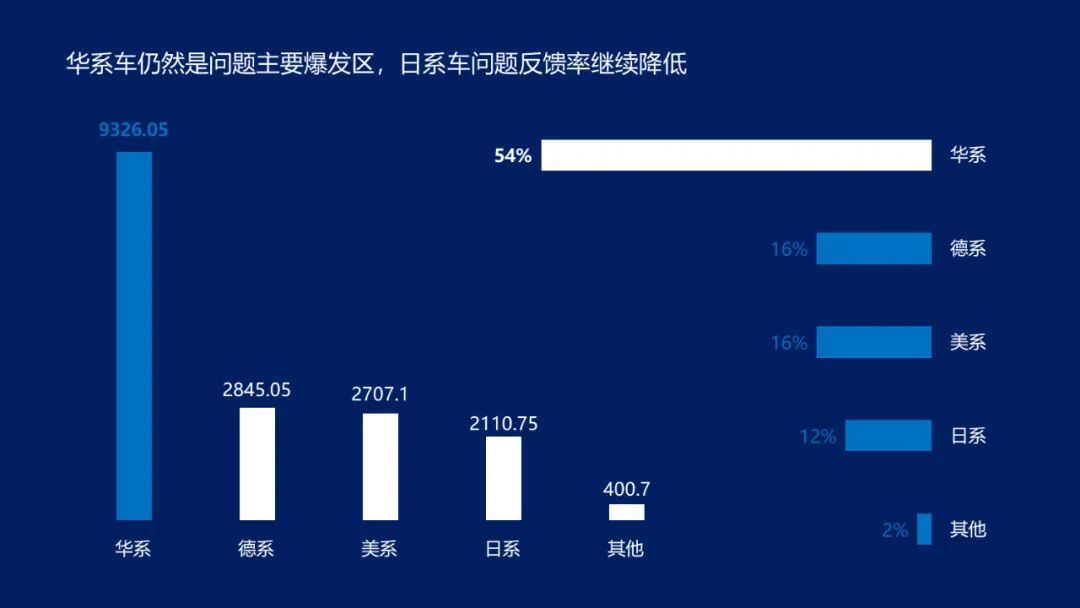
From the perspective of the national origins of problematic models, Chinese automobiles still had the highest problem feedback rate this month, accounting for 54% of the total. Problem feedback for German, American, and Japanese models followed closely behind. This also reflects the current market presence of each vehicle segment. Notably, the proportion of problem feedback for German and American models increased this month. Behind this, the risk of detachment of the camshaft center valve filter screen in Mercedes-Benz vehicles and Tesla's price reductions were concentratedly reported by multiple vehicle owners, driving up the reputation indices for German and American models.
Service and Body Electrical Complaints for Chinese Automobiles Far Exceed Those of Other Segments
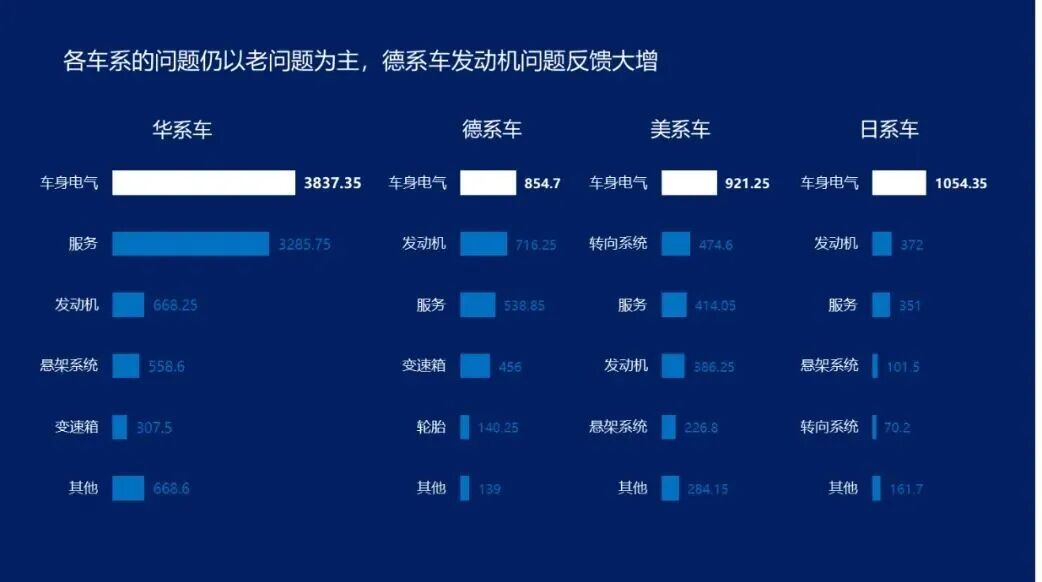
The distribution of various complaint issues across vehicle segments showed that body electrical issues remained a common complaint across all segments. Moreover, due to market presence, the body electrical reputation index for Chinese automobiles was significantly higher than that of other segments. Meanwhile, each segment also had its own typical issues. As mentioned earlier, the high degree of electrification and intelligence in Chinese automobiles has objectively led to a high incidence of service issues. German models continued to face criticism for transmission issues this month, while Japanese models faced engine problems, and American models faced steering stuttering and abnormal noises, all of which were the primary focus of feedback for each segment.
The 2026 Models Have the Highest Proportion of Problem Feedback Among All Model Years
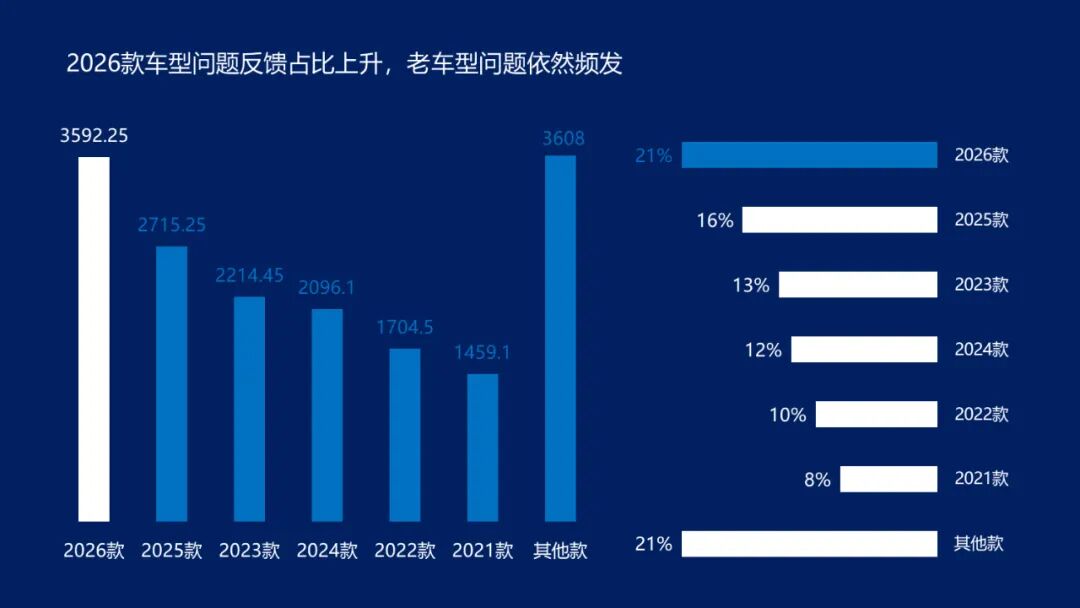
From the perspective of the distribution of problematic models by model year, the proportion of reputation indices for various model years was relatively balanced this month. The 2026 models had the highest reputation index this month, with the increasing release of market presence driving up the reputation index for the 2026 models. Meanwhile, the reputation index for models over six years old still exceeded 21%, with vehicle owners continuing to report many "chronic" issues with older vehicles.
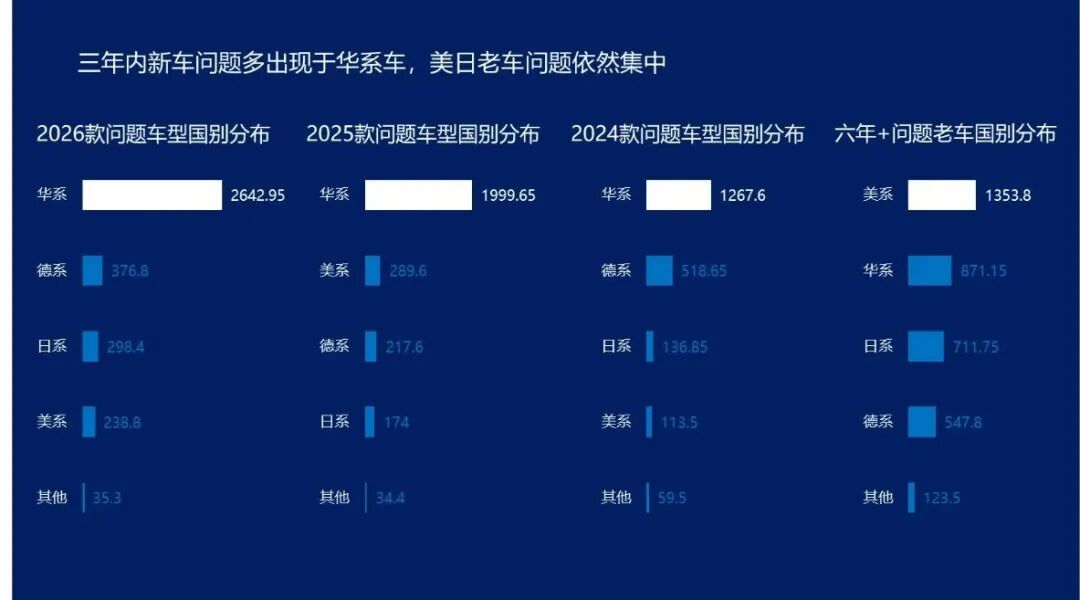
From the perspective of the vehicle segments involved in lawsuits for each model year, the 2026, 2025, and 2024 models still had the highest proportion of problem feedback for Chinese automobiles. In particular, the reputation indices for the 2026 and 2025 models were significantly higher than those of other segments, with the large market presence objectively leading to a high volume of problem feedback. American models still had the highest problem feedback rate for vehicles over six years old, with ongoing steering stuttering and abnormal noises being the driving force behind the feedback. Meanwhile, Japanese older models also had a relatively high problem feedback rate, with ongoing complaints about engine abnormal noises being the driving force.
Electrification Issues Are More Prominent in Chinese Automobiles
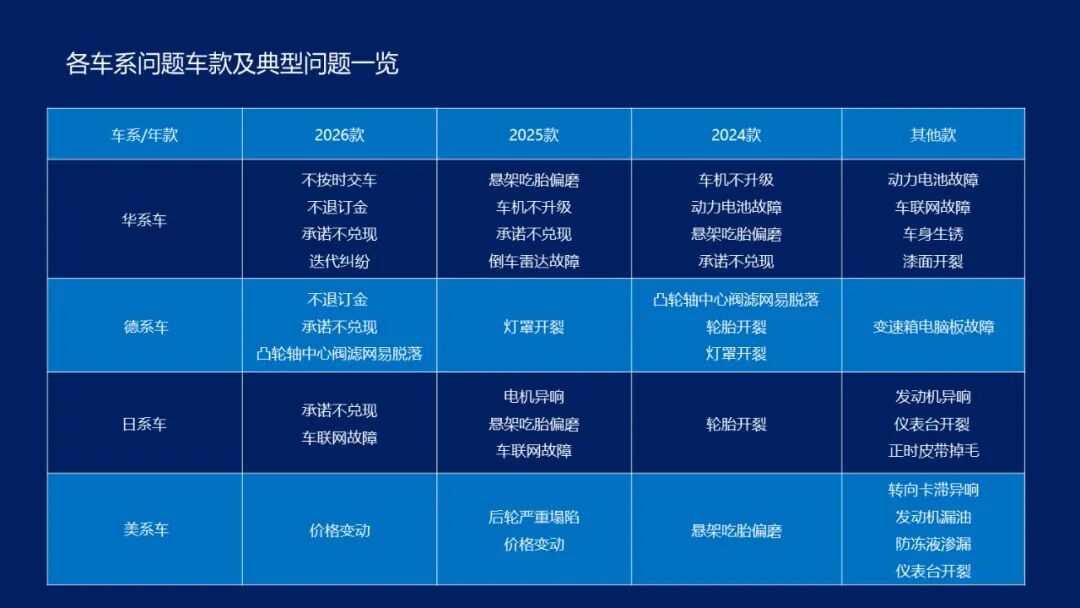
From the perspective of the model years and typical issues of problematic models across various segments, in September, typical issues with new Chinese automobiles within three years were more prevalent, with a relatively high proportion of issues related to new car sales. Problems such as non-delivery of vehicles, sale of problematic vehicles, non-refundable deposits, unfulfilled promises, and mismatches between configurations and official announcements were all reported by many users this month. Meanwhile, new German and American models also received a relatively high volume of problem feedback this month. As mentioned earlier, Mercedes-Benz and Tesla became the primary points of problem feedback.
Complaint Index: Qichemen.com's automobile quality reputation index calculation model (abbreviated as: QCMS) categorizes model quality complaints into eight major categories, assigning weights based on the severity of issues such as engines, transmissions, body and electricals, braking systems, steering systems, suspension systems, tires, and services. It also applies additional weighting to concentrated events, ultimately forming an effective reputation index, with a higher index indicating more severe problems.
Data Source: Qichemen.com
Time Period: September 1, 2026 - September 30, 2026
Produced by: Qichemen.com Data Department
-
![]()
BMW and Porsche Exit Collectively as Chinese Brands Steal the Spotlight at Paris Auto Show
-
![]()
Xiaomi Tightly Trails XPeng, NIO Edges Out HiMode by a Whisker, September Sales Fall Short of 'Golden September' Expectations
-
![]()
September 2026 Sales Review of Emerging Automakers: Leapmotor Soars to New Heights
-
![]()
September’s Centralized Feedback Highlight: Beijing Benz Faces a Surge of Complaints Over Camshaft Filter’s Vulnerability to Detachment
-
![]()
2027 Changan Qiyuan A06 Hits the Market: Worth Buying If You Can Overlook These Drawbacks
-
![]()
Analysis Report on Automobile Reputation Index for September 2026
-
![]()
Jia Zhangke Tunes into Hongguo: AI Buzzes, but the Masses Just Want to 'Kick Back'
-
![]()
Can JAC Motors Withstand Further Challenges?