New Wave of Major Industry Consolidation: VW Sets Sights on Toyota, Anhui Focuses on Chery and JAC
 10/16 2026
 484
484
Lead
Introduction
Is Another 'Da An Auto' Initiative on the Cards?
In a span of less than 30 days, from mid-September to post-National Day, the long-anticipated tripartite cooperation agreement involving China FAW Group, GAC Group, and Toyota Motor finally came to fruition.
The crux of the agreement is that GAC Group plans to acquire a 50% stake in FAW Toyota from China FAW Group through share issuance, thereby making China FAW Group a significant strategic shareholder in GAC Group.
As numerous analyses have already pointed out, this new collaboration centers around the 50% stake in FAW Toyota as the focal point of the deal.
China FAW Group's divestiture of a 50% stake in FAW Toyota has been reciprocated with an undisclosed specific stake in GAC Group and the attainment of a crucial shareholder position. GAC Group now enjoys unified control over both 'FAW Toyota' and 'GAC Toyota,' becoming the sole Chinese shareholder to simultaneously oversee both joint venture systems.
Toyota Motor, through this equity consolidation, has harmonized its two systems, putting an end to the internal friction between FAW Toyota and GAC Toyota. In essence, without incurring any additional costs, Toyota has centralized its resources in China, the world's largest automotive market, through equity exchanges.
This scenario readily evokes memories of 2020 when Volkswagen announced a €1 billion investment to secure a 50% stake in JAC Holdings, while boosting its shareholding in the joint venture JAC Volkswagen from 50% to 75%, thereby gaining management control. Subsequently, JAC Volkswagen was rebranded as Volkswagen (Anhui) Co., Ltd., emerging as an independent stronghold for new energy vehicles.
Whether it was Volkswagen in the past or Toyota now, both share a common strategy: leveraging capital or equity ties to restructure their joint venture relationships.
However, from the Chinese perspective, the FAW-GAC cooperation represents an equity swap and resource integration between a central enterprise and a local state-owned enterprise. Volkswagen's investment in JAC Holdings, on the other hand, falls under the umbrella of foreign participation in the mixed-ownership reform at the state-owned enterprise group level. Although the former constitutes a restructuring and the latter a mixed-ownership reform, with distinct essences, both involve equity alterations in the process.
Once equity changes occur, it signifies that the final outcome has been agreed upon by multiple parties, rendering the formal name less significant. What truly counts is that multiple parties can reap benefits, which is the ultimate objective.
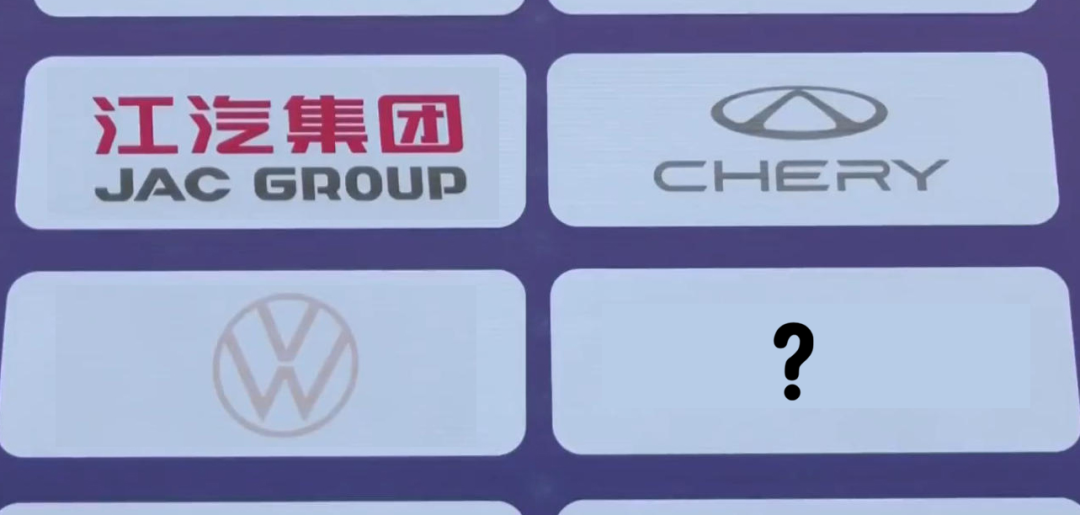
As highlighted in the article 'FAW and GAC Take Action: When Will 'Da An Auto' Surface?' published by Auto Business Review, why does Anhui's automotive industry come to mind first? The answer lies in the successful mixed-ownership reforms of both JAC Group and Chery Automobile. Moreover, both Chery Automobile and JAC Group had previously contemplated restructuring.
01 Mixed-Ownership Reform: Why Not Take It Further?
Faced with the successful integration of FAW and GAC, do JAC Group and Chery Group need to undergo further changes? This hinges on whether both entities are currently under pressure. Undoubtedly, the competitive landscape in China's automotive industry is intensifying, with each company confronting unique challenges.
However, as two local automotive companies in Anhui Province, they naturally perceive the situation differently from other automakers. Especially for Anhui Province, a major automotive hub, the development of the automotive industry is of paramount importance. In fact, during the FAW-GAC integration, the top leader of Anhui Province visited Chery Group for research and engaged in in-depth discussions with Chery's Chairman Yin Tongyue.
Since its mixed-ownership reform, Chery Automobile has reaped the benefits of an overseas market boom, with its performance data shining brighter year after year. However, it has also encountered numerous issues, such as over-reliance on overseas markets, persistent setbacks in penetrating the high-end market, and a relatively small commercial vehicle volume. Despite these challenges, they are fortunately not severe.
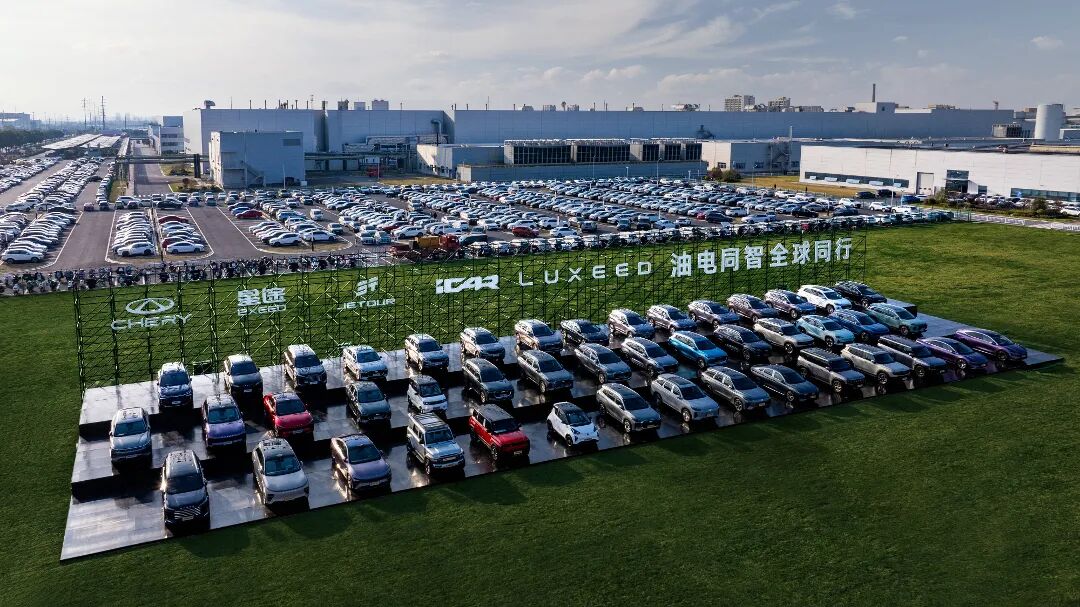
In contrast, JAC Group's situation differs. When it introduced Volkswagen for its hybrid drive, Anhui aimed to exchange equity for technology and industrial establishment, transforming Hefei into a new energy vehicle base. Volkswagen aimed to circumvent the shareholding restrictions of 'FAW-Volkswagen' and 'SAIC-Volkswagen' to secure an independent new energy vehicle platform in China.
But what was the outcome? JAC's passenger car sales in 2025 reached only 149,000 units, with new energy passenger car sales throughout the year at a mere 28,900 units. Although the collaboration with Huawei's ZEEKR brand presents a new avenue for future sales and profits, it has yet to achieve economies of scale and has a limited impact on overall sales and profits.
Additionally, Volkswagen Anhui has accumulated losses exceeding 11.5 billion yuan over the past three years. More critically, Volkswagen Anhui's transformation has become heavily reliant on XPENG's technology. JAC's irreplaceability as a joint venture partner at the technological level is rapidly diminishing, and its role is becoming increasingly marginalized.
Nevertheless, it cannot be denied that JAC Group still possesses advantageous projects, such as commercial vehicles and overseas channel capabilities, which perfectly complement Chery Group. From another perspective, in the domestic market, Chery is also open to exporting technology and products, with examples like Karry and South East Motor serving as prime illustrations.
However, considering Chery's stronger momentum overseas, it might be more efficacious for both parties to focus their cooperation on targeting overseas markets.
The simplest approach would be for both parties to engage in badge-engineering of each other's passenger and commercial vehicles in overseas markets. In markets where JAC's commercial vehicles excel, such as Central Asia and North Africa, Chery can leverage JAC's network to promote passenger vehicles. Conversely, in markets where Chery's passenger vehicles hold an advantage, such as Europe and South America, JAC can utilize Chery's commercial vehicle sales channels.
In this manner, in markets where both parties have a presence, they can explore the possibility of sharing KD assembly plants or even jointly investing in and constructing new production bases to share costs and enhance utilization rates. They can also establish joint regional spare parts centers and after-sales training bases to share inventory, expedite service response times, and address the common pain point of after-sales service for Chinese brands overseas.
It is worth noting that the Anhui Provincial Government is vigorously promoting the 'Going Global Together' model, having established the Anhui Enterprise International Economic and Trade Cooperation Alliance, explicitly supporting leading enterprises represented by Chery and JAC to drive the industry chain to go global collaboratively.
Looking back at whether Chery and JAC can undergo restructuring, there are already precedents. The most recent one is the equity swap and strategic alliance model of the FAW-GAC-Toyota joint venture assets. Another is learning from the failed lessons of Dongfeng and Changan, and finally, drawing inspiration from the cross-shareholding model of Geely and NIO.
Through these three cases, if the integration of Chery and JAC is meticulously designed, it is entirely feasible to achieve a '1+1>2' effect.
02 The Crux Lies with Volkswagen
In reality, the aforementioned scenario is merely an ideal assumption. The linchpin of the FAW-GAC integration was Toyota Motor. Therefore, Toyota agreed to utilize its shares as an intermediate bargaining chip to facilitate the successful integration of FAW and GAC. The same rationale applies to Volkswagen. In the integration of Chery and JAC, Volkswagen holds the key.
According to the capital increase agreement of JAC Group at that time, although Volkswagen relinquished some voting rights to enable the Anhui Provincial SASAC to maintain control, as a 50% shareholder, Volkswagen's consent is almost certainly required for matters involving control, equity structure, or major asset disposals at the JAC Group level. Volkswagen effectively wields a veto power over any integration plan that seeks to alter JAC Group's existing equity structure.
Now, let's examine Volkswagen Anhui. When Volkswagen increased its capital and gained control in 2020, it secured the priority to introduce B-class and C-class models. This implies that any move to introduce Chery as a new shareholder in Volkswagen Anhui would be tantamount to allowing a direct competitor into Volkswagen's core new energy base in China and could potentially encroach upon Volkswagen's control over model introductions and technological routes.
Of course, Volkswagen's stance is not inflexible. If the conditions are appropriately crafted, Volkswagen might consent to the integration.
For instance, Volkswagen Anhui's continuous substantial losses have become a significant burden on Volkswagen's financial report in China. If through integration, Volkswagen can transfer some or all of its shares in Volkswagen Anhui to Chery or the newly integrated entity in exchange for cash or more valuable assets, it would essentially constitute a form of loss mitigation.
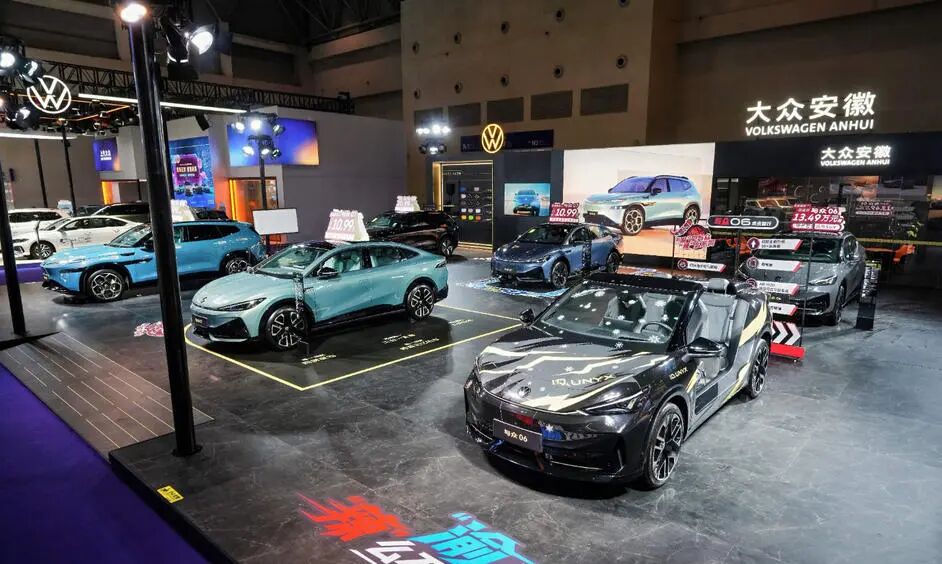
However, the optimal solution might lie in overseas markets. It should be noted that Volkswagen is compressing production capacity in the European market, planning to reduce global annual production capacity from 10 million units to 9 million units. Among them, annual production capacity at German domestic factories will be reduced by 734,000 units, and European factory capacity exceeds actual demand by over 500,000 units.
Coincidentally, Chery is accelerating its localized production layout in Europe, planning to utilize existing factories to expand production capacity through cooperation with local automakers rather than constructing new factories independently. Volkswagen could employ concessions on its equity in Volkswagen Anhui as a bargaining chip to exchange for equivalent value in Chery's European factory cooperation.
However, an even more critical issue is that, unlike the clear equity structures of FAW and GAC, both Chery Group and JAC Group possess intricate equity structures.
For example, Chery is not solely controlled by state-owned or private capital but boasts a mixed-ownership structure dominated by local state-owned assets with multiple capital participations. Among them, state-owned assets maintain strategic control, but employee stock ownership platforms and market-oriented investors hold significant stakes, creating a balance of power. Moreover, the senior management team holds stakes through platforms like Ruichuang Investment, and although their direct individual equity stakes are not high after in-depth analysis, as the founding team, they wield significant influence at the operational level.
Currently, JAC Group is equally held by the Anhui Provincial SASAC and Volkswagen China at 50% each. This implies that JAC Group itself is not an independent entity that can freely dispose of its equity. Volkswagen Anhui is 75% held by Volkswagen entities and 25% by JAC Motors.
From the perspective of shareholders and equity relationships, the difficulty of integrating both parties far surpasses any previous case. Additionally, both have already introduced foreign capital like Volkswagen and private capital like Luxshare Precision for mixed-ownership reforms, involving relationships and complexities that are hard to fathom.
It should be noted that the famous 'Da An Auto' plan has failed twice in history, and as previously mentioned by Auto Business Review, the current willingness and conditions for all parties to promote deep integration are insufficient.
However, if future industry competition intensifies further and both companies face survival pressures, the possibility of strong provincial-level promotion will rise, and 'Da An Auto' might once again be placed on the agenda.
Editor-in-Chief: Du Yuxin Editor: He Zengrong

THE END
-
![]()
Three Departments Launch Joint Probe into Zunjie Brake Issue; Yu Chengdong: Justice Will Prevail
-
Why is Meta’s Muse, an AI ‘Not the Smartest,’ Taking the World by Storm?
-
The Next Battleground Isn't Computing Power, It's Security: Jensen Huang's New AI Gamble
-
![]()
Sichuan Airlines Seeks to Offload 6 Aircraft in One Fell Swoop: What's Behind the Move?
-
![]()
New Wave of Major Industry Consolidation: VW Sets Sights on Toyota, Anhui Focuses on Chery and JAC
-
![]()
The Second Half of AI Short Dramas: A 40 Billion Yuan Feast with 98.7% in the Red
-
![]()
Breaking News! Three Departments Initiate Joint Probe into Zunjie, Unveiling 4 "Potential Scenarios" and 2 "Regulatory Measures"
-
![]()
Amidst the Frenzied Competition in New Energy Vehicles, 4S Dealerships Face Sudden 'Collapse'