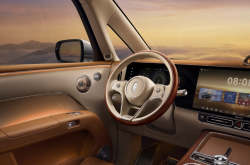
Three Departments Launch Joint Probe into Zunjie Brake Issue; Yu Chengdong: Justice Will Prevail
 10/16 2026
 442
442
No Longer a PR Tug-of-War
Author | Zaizhou
The safety controversy surrounding the million-yuan MPV, which has dominated trending topics for a week, has now transcended corporate PR skirmishes and entered the realm of official authoritative determination.
The Ministry of Industry and Information Technology (MIIT), the Cyberspace Administration of China (CAC), and the State Administration for Market Regulation (SAMR) have jointly established an investigation team to scrutinize the brake pedal bracket fracture issue in the Zunjie V800. The verification process will adhere strictly to legal procedures, with the findings promptly disclosed to the public.
Within an hour of the announcement, Zunjie Auto promptly responded, expressing its active cooperation and full compliance. Yu Chengdong, Chairman of Huawei's Terminal BG, also shared the statement and voiced his stance:
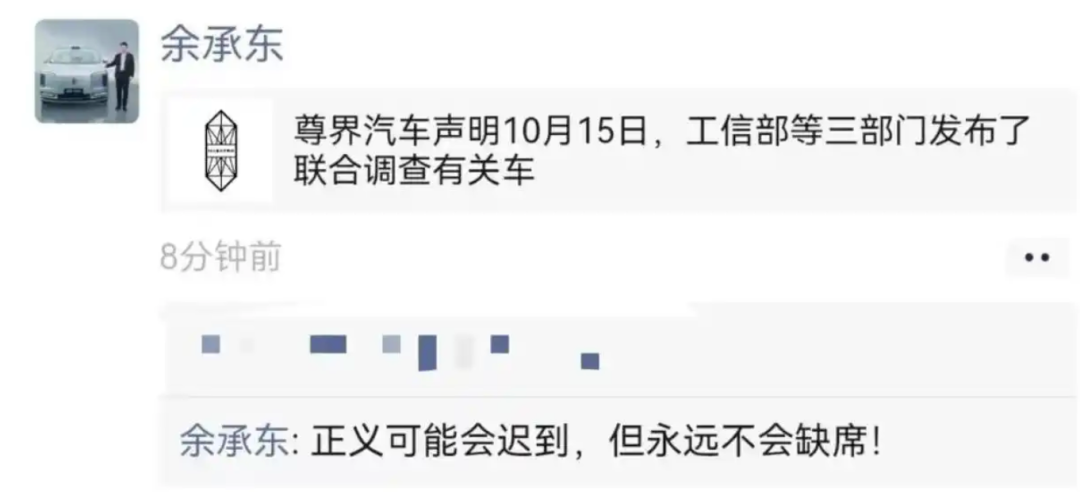
"Justice may be delayed, but it will never be absent."
The incident unfolded on October 8 when Dongchedi conducted extreme braking tests on three brand-new Zunjie V800 units from different production batches. During 100km/h emergency braking tests, all three vehicles experienced pedal bracket fractures.
The lowest recorded fracture force was 1612N, rendering the foot brake ineffective. The vehicles could only rely on P-gear emergency braking, resulting in stopping distances exceeding 100 meters.
The release of the test video immediately sparked public outrage. A domestically produced luxury MPV priced over a million yuan, failing its core safety component in a basic braking scenario, shattered public expectations.
Zunjie's initial response that evening failed to quell the controversy but instead fueled it further.
The company dismissed the tests as "non-standard extreme conditions," emphasized that its braking system exceeded national and industry standards, and promised free upgrades for delivered vehicles. However, it neglected to address the root cause of the fractures or mention any recall plans.
This "shift-the-blame" approach intensified the controversy. Over the next three trading days, JAC Motors' market value plummeted by over 12 billion yuan as the product quality issue rapidly escalated into a brand trust crisis.
On October 13, Zunjie released a third-party inspection report. The conclusions from a national-level testing agency were unequivocal: the brake pedal met the QC/T 788-2018 industry standard, with displacement well below the limit under a 1500N standard load. Even when subjected to repeated 3000N static pressure tests, the component showed no cracks or damage.
However, this "pass" certificate precisely underscored the core contradiction of the controversy.
Static bench testing with uniform loading differs fundamentally from the instantaneous impact loads experienced during emergency braking. Surviving 3000N static pressure in a lab does not explain why the component fractured at 1612N in real-world conditions.
Public opinion remained unsettled, trapped in a cycle of "meeting standards but failing safety."
Just as both sides dug in their heels, news of the three-department joint investigation broke.
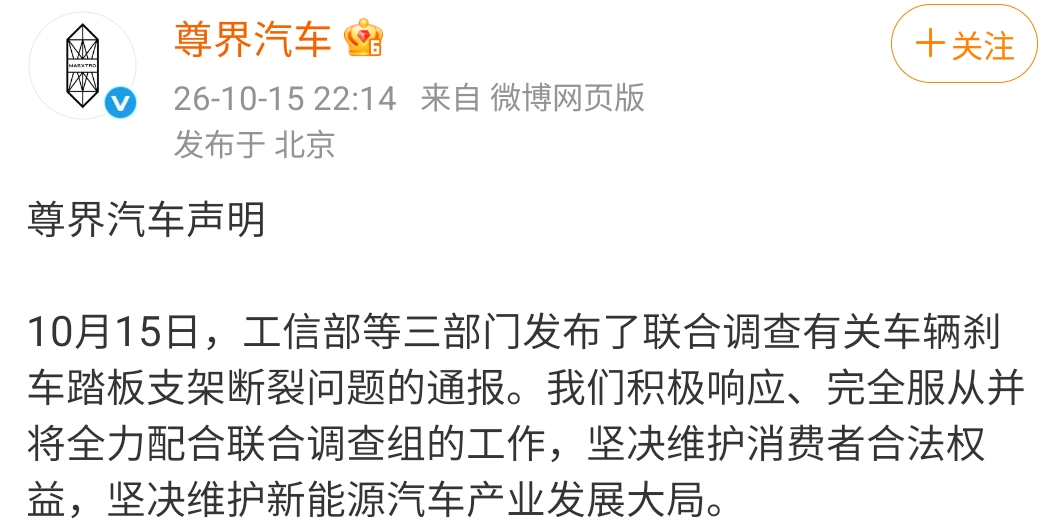
Within an hour of the announcement, Zunjie swiftly issued a statement, abandoning the "non-standard conditions" narrative. Instead, it pledged to "firmly safeguard consumers' legitimate rights and interests and uphold the overall development of the new energy vehicle industry," adopting a noticeably softer tone.
Yu Chengdong, when sharing the statement, publicly declared: "Justice may be delayed, but it will never be absent." Initially, he had only shared Zunjie's statement on WeChat Moments without any additional commentary.
The scale of this joint investigation far exceeds ordinary product quality complaints.
The MIIT oversees industry standards and market access, the SAMR handles quality supervision and enforcement, and the CAC manages public opinion and information authenticity verification. Their combined efforts ensure the review will not be limited to the "pedal's compliance" but will instead examine the entire chain—from design standards and production quality control to testing conditions and information dissemination. The final conclusions will represent authoritative regulatory answers, not corporate self-defense or opinions from testing agencies.
Its deeper value lies in applying a safety recalibration brake to China's rapidly advancing high-end new energy vehicle sector.
In recent years, Chinese brands have surged upward, piling on configurations, competing in intelligent driving, and showcasing luxury, with prices steadily climbing into the million-yuan range. However, the Zunjie incident exposed a fundamental misconception: all premium pricing must be built on foundational mechanical safety.
A brake pedal that cannot withstand being stepped on is not a high standard but a century-old baseline of the automotive industry. Moreover, the current brake pedal industry standard, established in 2018, focuses solely on static load requirements and fails to account for the changing conditions brought about by faster acceleration and heavier vehicle weights in modern new energy vehicles.
For million-yuan products, consumers demand not just compliance but far exceeding standards for peace of mind. If this investigation drives upgrades to industry standards toward dynamic conditions and higher safety margins, all consumers in the market will benefit.
Now, with the joint investigation team on-site, the issue is finally shifting from public opinion battles to factual verification.
For Zunjie, this represents both a trust crisis and a genuine opportunity for self-proof. Previous corporate self-inspections and third-party submissions could not escape accusations of self-serving narratives. Only the official investigation's conclusions will carry convincing authority.
For the entire industry, this is a rare safety reassessment. Amid the frenzy of competing in intelligence, cabin luxury, and brand premium, the most fundamental mechanical qualities—the bedrock of all high-end experiences—are easily overlooked.
After all, consumers willing to pay a premium for domestic high-end vehicles are not buying a certificate of compliance but the assurance that every brake press will be reliable.
This safety debate deserves a clear, unambiguous answer.
-
![]()
Three Departments Launch Joint Probe into Zunjie Brake Issue; Yu Chengdong: Justice Will Prevail
-
Why is Meta’s Muse, an AI ‘Not the Smartest,’ Taking the World by Storm?
-
The Next Battleground Isn't Computing Power, It's Security: Jensen Huang's New AI Gamble
-
![]()
Sichuan Airlines Seeks to Offload 6 Aircraft in One Fell Swoop: What's Behind the Move?
-
![]()
New Wave of Major Industry Consolidation: VW Sets Sights on Toyota, Anhui Focuses on Chery and JAC
-
![]()
The Second Half of AI Short Dramas: A 40 Billion Yuan Feast with 98.7% in the Red
-
![]()
Breaking News! Three Departments Initiate Joint Probe into Zunjie, Unveiling 4 "Potential Scenarios" and 2 "Regulatory Measures"
-
![]()
Amidst the Frenzied Competition in New Energy Vehicles, 4S Dealerships Face Sudden 'Collapse'