The 412th Batch of New Cars from MIIT: Mutual Inspiration Becomes the Norm
 10/19 2026
 412
Introduction
Year-End Rush: New Car Launches Set the Stage for Next Year's Market
As the year draws to a close, each new car launch represents a strategic move for the upcoming year's market.
Delayed by the National Day holiday, the latest batch of new cars from the Ministry of Industry and Information Technology (MIIT) has finally arrived.
With just two months left until the end of 2026, and considering the attention Chinese cars have garnered at the Paris Motor Show, it's a prime opportunity for Chinese brands to showcase their prowess and gear up for the market battle ahead.
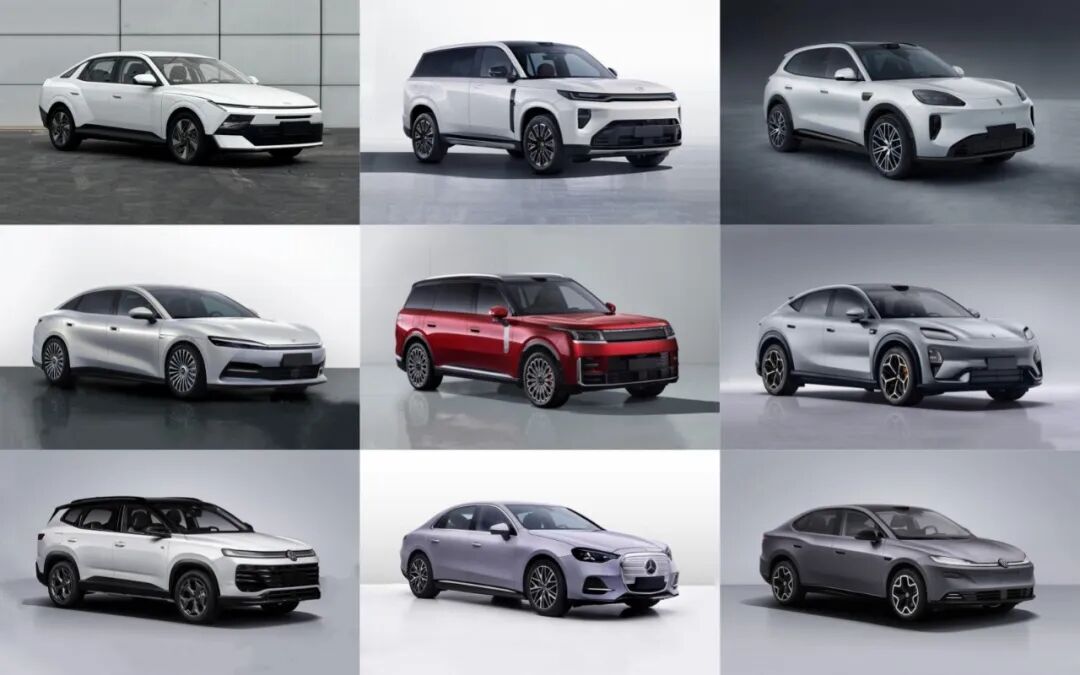
This year, driven by new consumption trends, home-use new energy SUVs continue to dominate the MIIT's new car list, with large SUVs going fully electric emerging as a significant trend. Leading Chinese companies like BYD and Geely are aggressively launching new models, while joint ventures are also mounting a fierce counterattack.
This trend is vividly reflected in the latest batch of new cars.
While BYD unveils the all-new Han and Qin PLUS, and Geely introduces the Lynk & Co 900L, domestic giants are fiercely defending their market base. FAW-Volkswagen has also placed the ID.AURA L5 and T-Roc L on the table, while Beijing Hyundai swiftly introduces the all-new Elantra to China. These moves underscore the intense competition and the drive to keep pace with the evolving Chinese auto market.
01 Lynk & Co 900L: Shedding Youthfulness, Embracing the Mainstream
With its two-tone body, large wheel hubs, and sleek headlight design, it's hard to believe this is a Lynk & Co model. Even for a large model like the Lynk & Co 900, youthfulness, sportiness, and individuality have been its defining traits since its launch.
However, Chinese consumers' demands for mid-to-large SUVs have not always aligned with Lynk & Co's pre-sales expectations. After initial strong sales and recognizing the market's increasing preference for ideal-type SUVs, the Lynk & Co 900L's conscious return to a more traditional SUV design further illustrates this point.
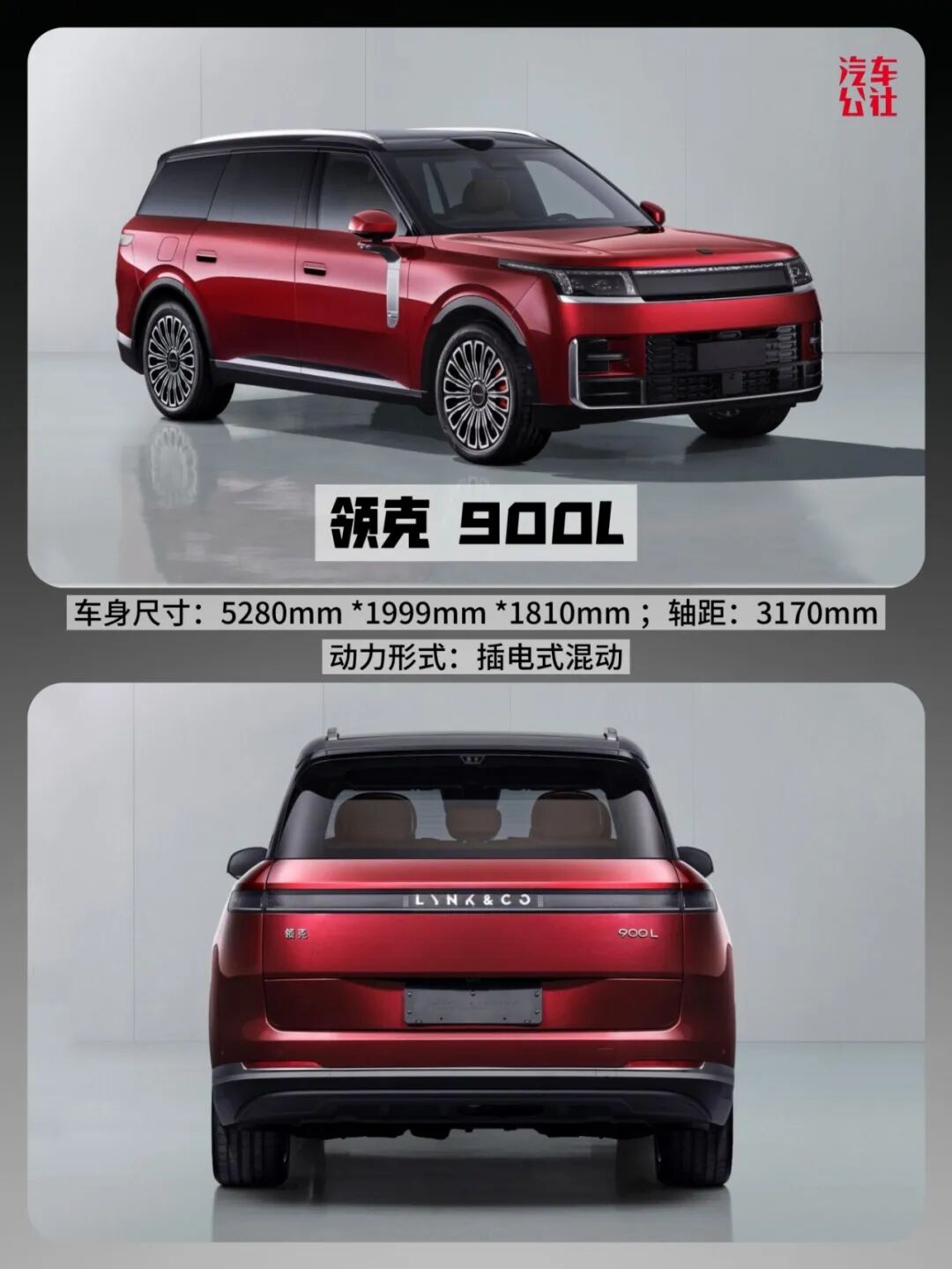
Compared to the current model, the Lynk & Co 900L has grown in size, with dimensions reaching 5280×1999×1810mm and a wheelbase extended to 3170mm, presenting a typical 532-type SUV profile.
Referring to the market performance of the current Lynk & Co 900 since its launch in 2025, with over 10,000 orders placed within an hour and a user replacement rate exceeding 80%, including 30% from BBA brands, the foundation was strong. This redesign, whether in terms of exterior changes or configuration upgrades, suggests that the Lynk & Co 900L is well-prepared to change its current situation.
02 BYD Han: Expanding the 'Han' Family, Achieving a Mission
Just as the BYD Han was launched, the Han family welcomes a new member. Although details about this new model's positioning are still scarce, its dimensions of 5156×1969×1507mm, slightly larger than the Han L but smaller than the Han, largely determine its class.
To be honest, in the 200,000-yuan-level new energy sedan market, it's challenging for any new model to fully challenge the positions of the Tesla Model 3 and Xiaomi SU7, not even Toyota's BZ4X, despite its sincerity, can do so.
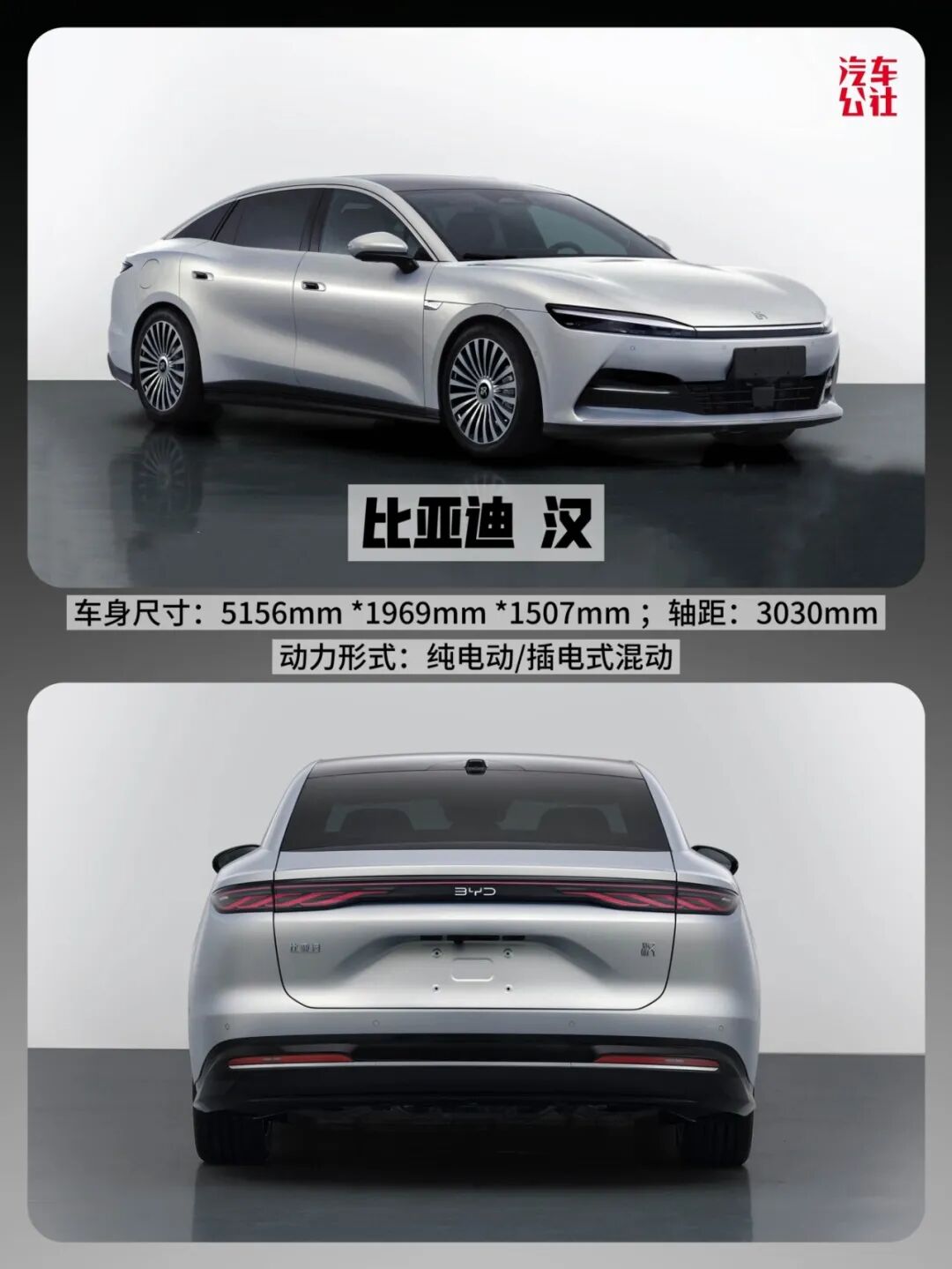
With such a rigid market boundary, the collective launch of the Han family can be seen as an effective offensive strategy for BYD.
Currently, the prospects of the BYD Han need further observation; the Han L's market performance is less than ideal, and the original Han is nearing the end of its product lifecycle. These factors directly prompted BYD to introduce this new model.
Based on pricing logic, the new model's price will be lower than the Han, meaning the Han family now covers the price range from 160,000 to 300,000 yuan. This also gives BYD the potential to achieve some success in this sedan segment.
03 Shangjie Z9: Familiar Yet Backed by Huawei
As the marginal effect of the Z7/Z7T as new models diminishes, Shangjie's monthly sales have plateaued. To heat up the brand and strengthen the cooperation between SAIC and Huawei, the sudden appearance of the Shangjie Z9 is like a strong boost for the brand.
Most consumers will likely feel a sense of familiarity with the Shangjie Z9, similar to when the Z7 was first introduced. However, with dimensions of 5139×2005×1776mm, the Z9 still meets the expectations of most Chinese users for this type of SUV.
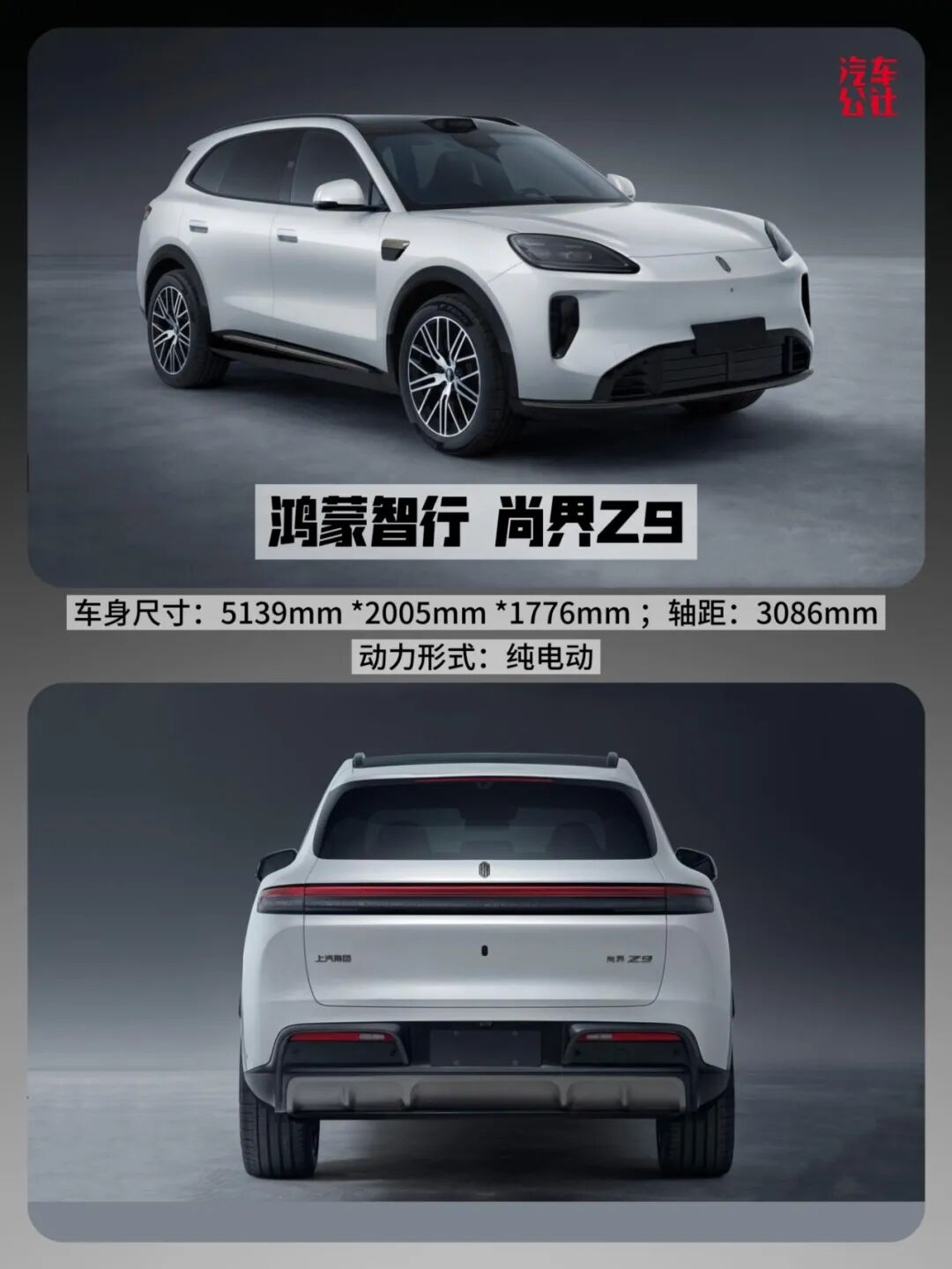
In terms of powertrains, the Shangjie Z9 offers two versions: single-motor and dual-motor, sufficient to meet the demands of potential users with any power requirements. Meanwhile, this power level aligns well with its sporty design.
As a new model from the Huawei ecosystem, intelligent equipment remains the Shangjie Z9's trump card. Overall, the Shangjie Z9 is expected to have strong product appeal, similar to all previously launched Huawei-backed SUVs.
However, as unexpected events frequently occur towards the end of 2026, the Shangjie Z9 enters the market with great respect. In the next era, brand alone will no longer suffice; product strength will ultimately determine the path forward.
04 Trumpchi S7: Cost-Effectiveness Remains a Key Tag
In 2025, building on its existing product lineup, GAC Trumpchi chose the Xiangwang series as a pivot for brand elevation. Now, over a year later, with the new Trumpchi S7 appearing on the MIIT list, it's clear that Trumpchi has made new strategic product adjustments.
Currently, for a new energy SUV to achieve strong sales, it must possess a series of attributes: oversized dimensions, rich configurations, advanced intelligent driving, a strong brand image, and an affordable price. Therefore, while the Trumpchi S7's dimensions are 'only' 4895×1950×1780mm, not particularly advantageous compared to competitors, it must demonstrate strengths in other areas.
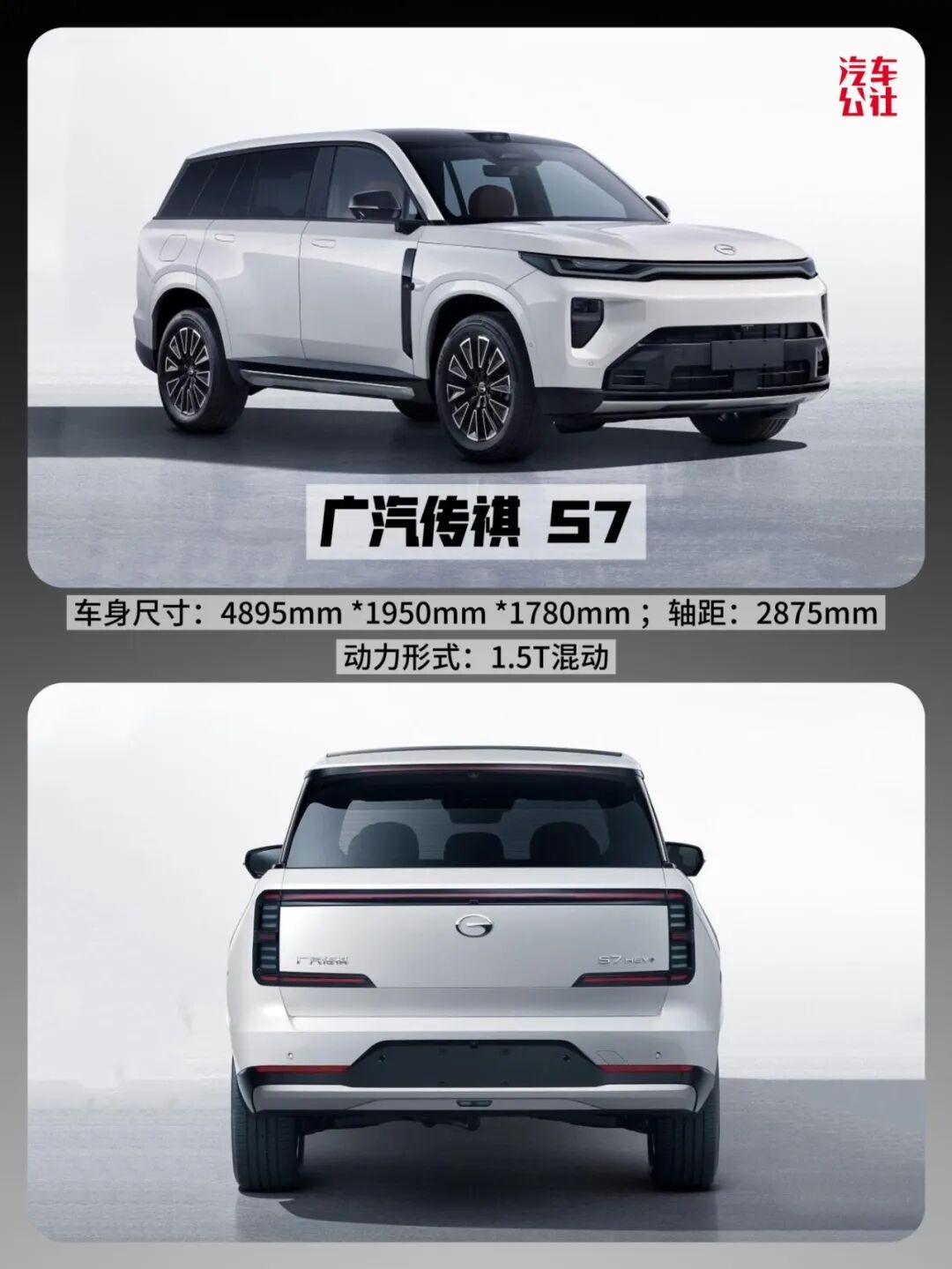
GAC has always been a leader in product definition, and the S7 aims to abandon previous superficialities and truly transform product strength into a key solution for consumer pain points.
Of course, given Trumpchi's overall sales growth this year, when the S7 is officially launched, Trumpchi will not allow this model to remain as niche as last year's offerings. A price reduction is almost inevitable.
05 Volkswagen ID.AURA L5: Aligning with SAIC Volkswagen
The importance of the Chinese market to Volkswagen needs no introduction. This year is also a crucial period for Volkswagen's electric transformation in China. With the previous launches of the SAIC Volkswagen ID.ERA 9X/5S and the FAW-Volkswagen ID.AURA T6, the timely arrival of the FAW-Volkswagen ID.AURA L5 is well-timed to capitalize on this momentum.
As the final production version of the concept car, the new model faithfully reproduces all design elements. Compared to SAIC Volkswagen's pure electric sedan, the ID.AURA L5 still maintains a high degree of distinctiveness.
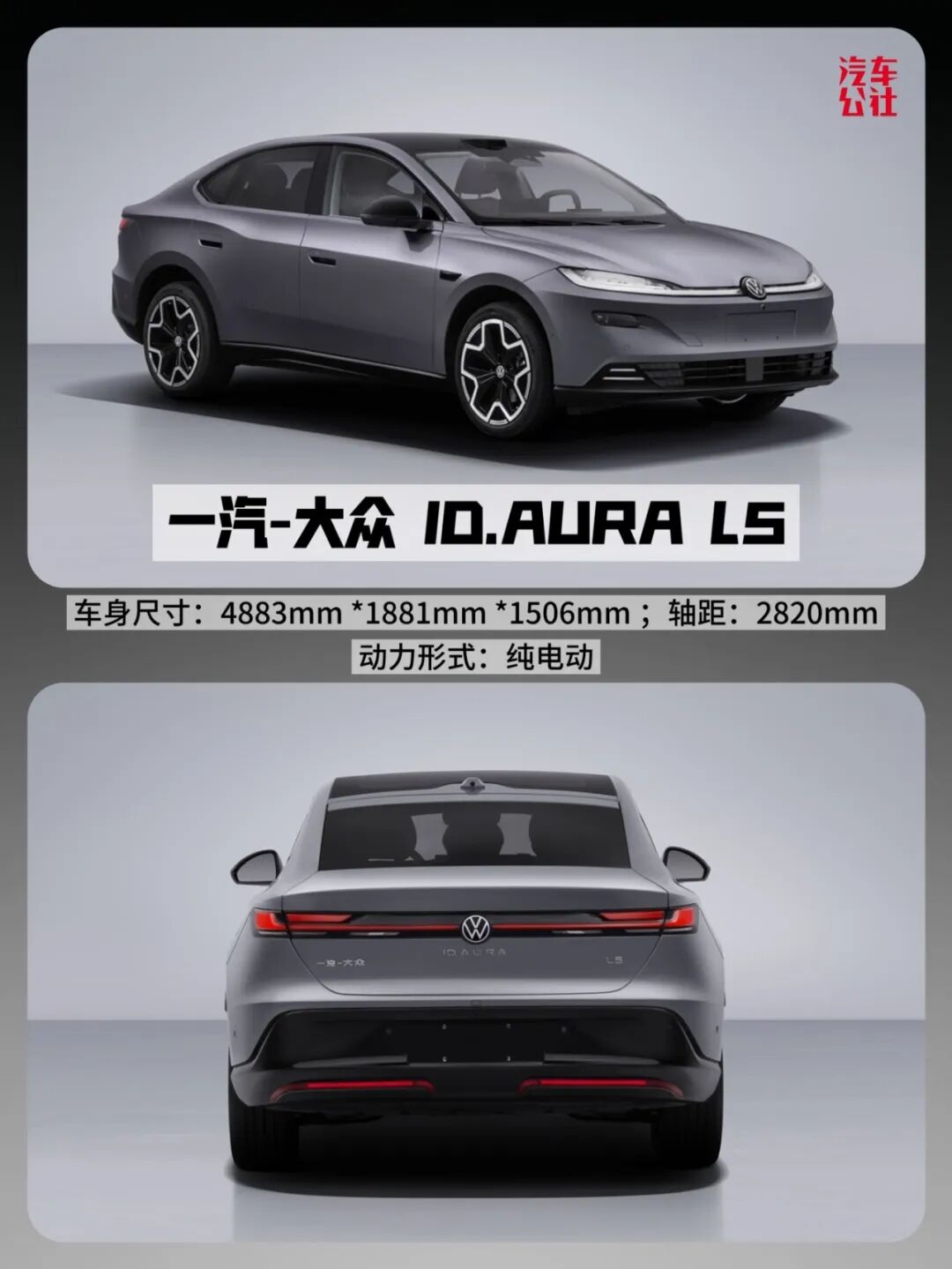
With dimensions of 4883×1881×1506mm and a wheelbase of 2820mm, the ID.AURA L5 stands out in its class. Given that SAIC Volkswagen has priced similar products in the 100,000-yuan range, this sedan's final price is expected to be similar.
In other words, both SAIC Volkswagen and FAW-Volkswagen are going all-in on their transformation paths as joint ventures. If the past ID.7 retained some of FAW-Volkswagen's arrogance as a joint venture brand, then today's ID.AURA L5 represents another instance of its complete humility.
06 Volkswagen T-Roc L: Don't Forget the Fuel Car Base
The T-Roc was FAW-Volkswagen's leading model when it first entered the SUV market, and given its strong German flavor, it initially held its own against the SAIC Volkswagen Tiguan.
The second-generation T-Roc completed its generation change in Europe quite early. However, due to the rapid transformation of the Chinese auto market towards electrification, FAW-Volkswagen delayed introducing the successor model to China.
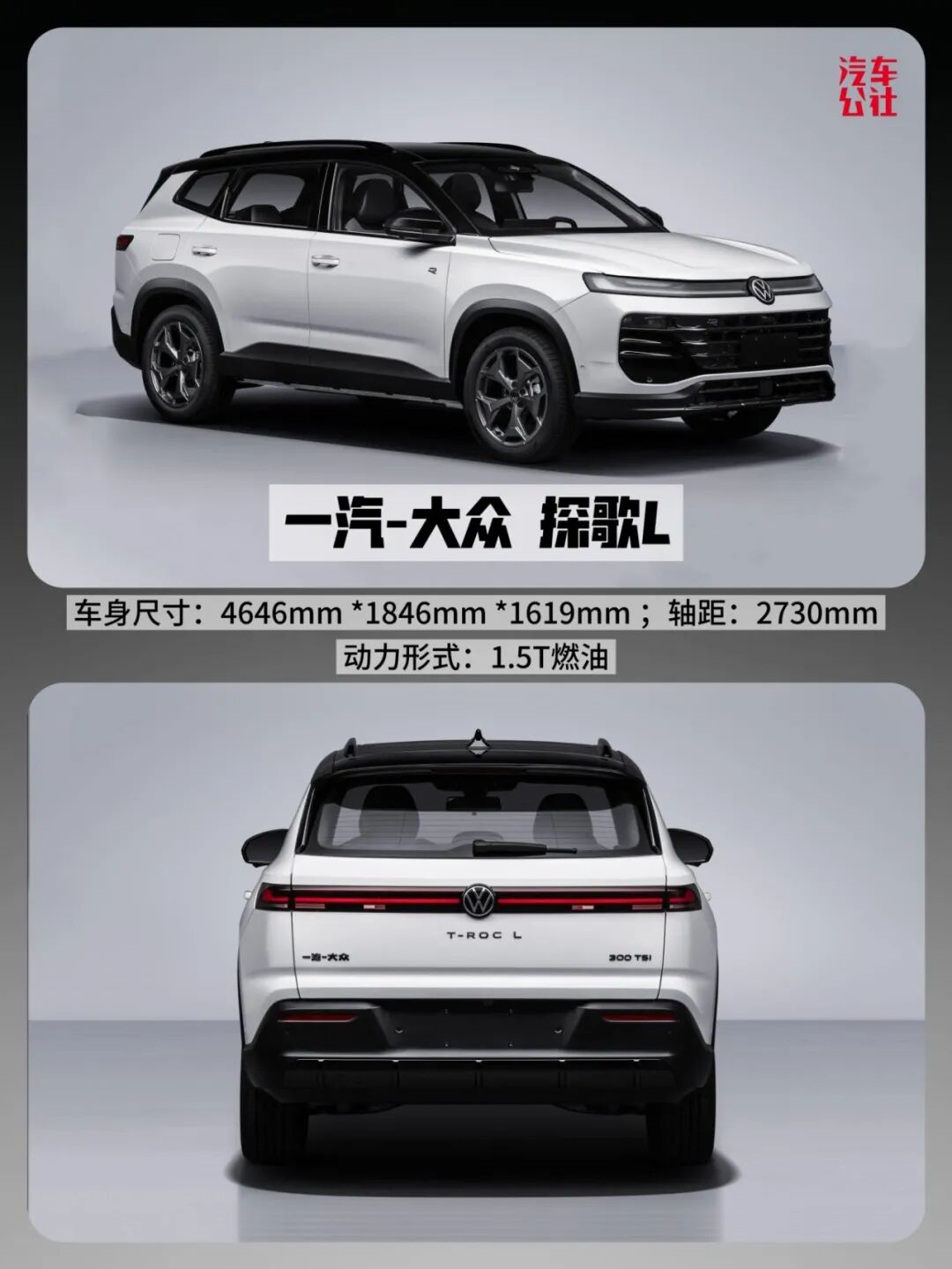
Now, the arrival of the T-Roc L clearly differs significantly from the overseas version. Its dimensions of 4648×1846×1619mm surpass the traditional standards for entry-level compact SUVs. In China's market that favors larger vehicles, such a change is naturally necessary.
According to MIIT information, the T-Roc L will still be equipped with a 1.5T engine. However, FAW-Volkswagen is well aware of the current state of the fuel car market.
Since the product strength is 'very Volkswagen,' on the day of its official launch, a sufficiently competitive price will be the strong foundation that FAW-Volkswagen injects into this new model.
07 Hyundai All-New Elantra: The Last Dignity of Korean Cars
As the world's third-largest automaker, Hyundai's development in the Chinese market has reached a preliminary stage of proving its existence, but it's unlikely that Hyundai will sink into obscurity.
Now, Beijing Hyundai has embarked on a dual-track development path of domestic sales + exports, not implying that all models on sale will only provide the most basic versions to Chinese users. As Hyundai's flagship model, the all-new Elantra has just been released overseas and is now being introduced domestically, still revealing some clues.
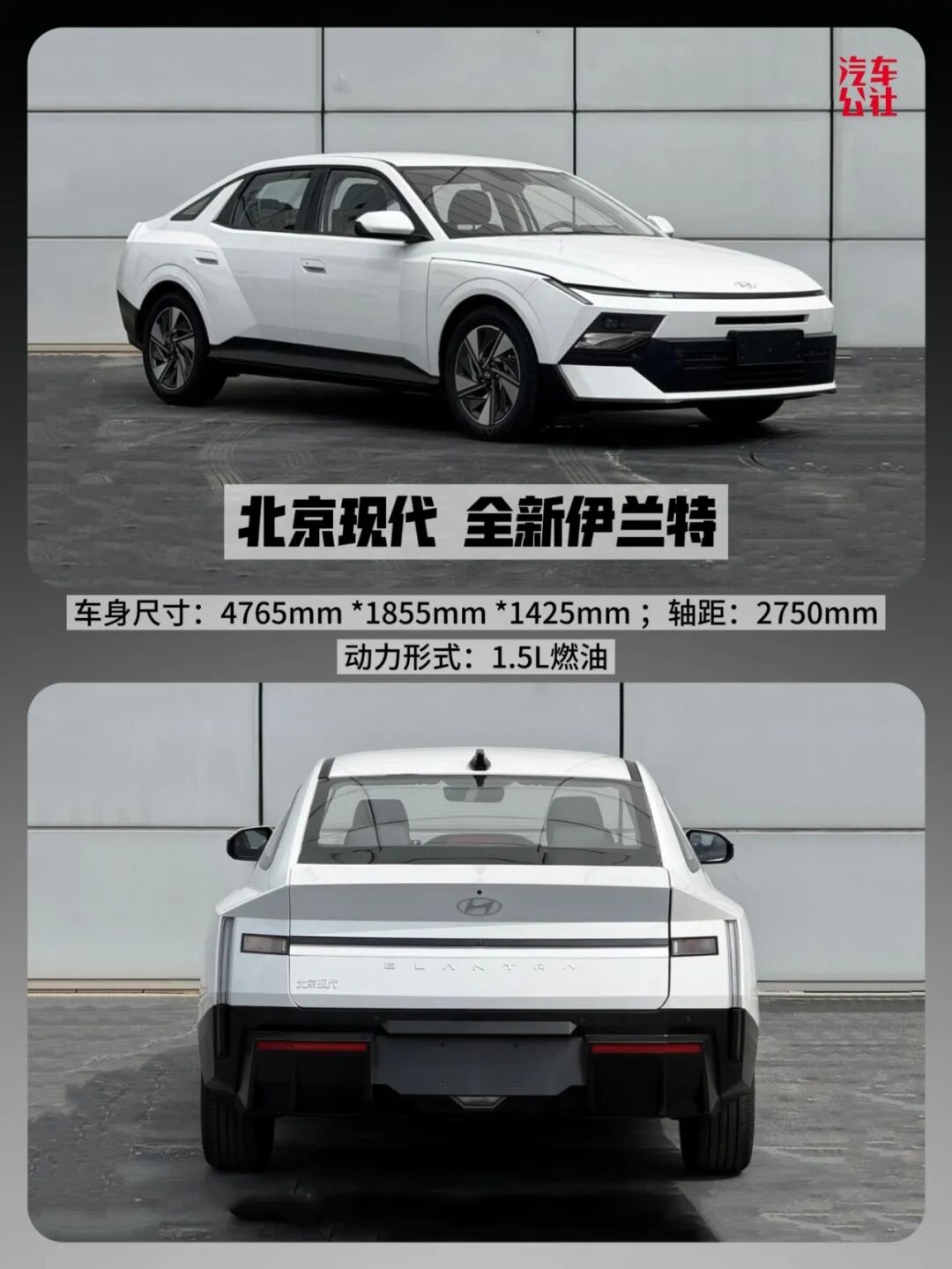
Compared to the current model, the all-new Elantra's dimensions of 4765×1855×1425mm haven't increased significantly, but in the traditional compact fuel sedan market, it is still expected to be positioned at an entry-level.
As long as this remains unchanged, for many users in lower-tier cities, the Elantra's joint venture status remains a plus, especially during this period when 'quick-fix' cars are frequently halted, and joint ventures' confidence in their products is not just talk.
08 Mercedes-Benz C-Class Electric: A Direct Competitor to the BMW i3
Mercedes-Benz has always been proactive in electrification within the BBA camp. From the EQ series to the domestically produced CLA Electric and GLC Electric, Mercedes-Benz has nearly laid all its cards on the table in the Chinese market.
However, reality remains harsh; not only have none of the pure electric models met Mercedes-Benz's sales expectations, but the brand is also increasingly feeling pressure from the Chinese market in terms of technological investment.
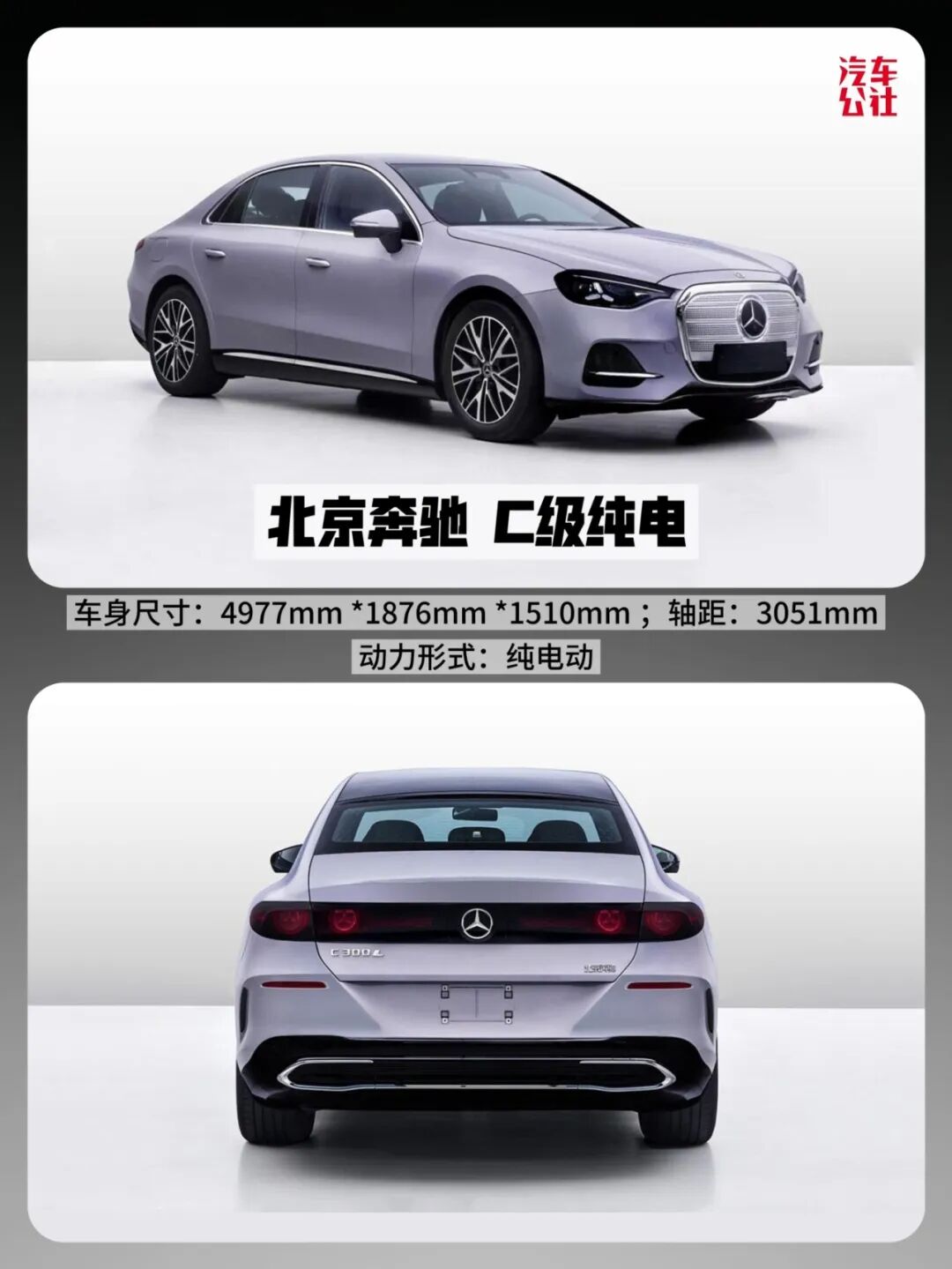
Like the GLC Electric, the C-Class Electric represents Mercedes-Benz's strongest electrified product in this new era. However, the GLC Electric's sales performance is still visible, and pure electric sedans in the Chinese market continue to struggle to break through the "Surrounding Circle" of the Xiaomi SU7 and Tesla Model 3.
Based on its dimensions of 4977×1876×1510mm, the C-Class Electric is not particularly large. Therefore, it's hard to say whether the Mercedes-Benz C-Class Electric can definitely turn the tide.
09 Yijing X9 Electric: Large SUVs Going Fully Electric, a Significant Trend
Although the popularity of extended-range SUVs has improved somewhat, driven by Xiaomi's Pengcheng, the overall trend still favors pure electric models. This batch includes several similar models, such as the Yijing X9 Electric, on the MIIT list.
In comparison, the Yijing X9 itself has a massive body measuring 5301×2015×1805mm, and with the assistance of Huawei's technology, the launch of the electric version is bound to impact the market. Of course, as market competition intensifies, whether simply attracting consumers with configurations can still achieve significant sales remains uncertain.
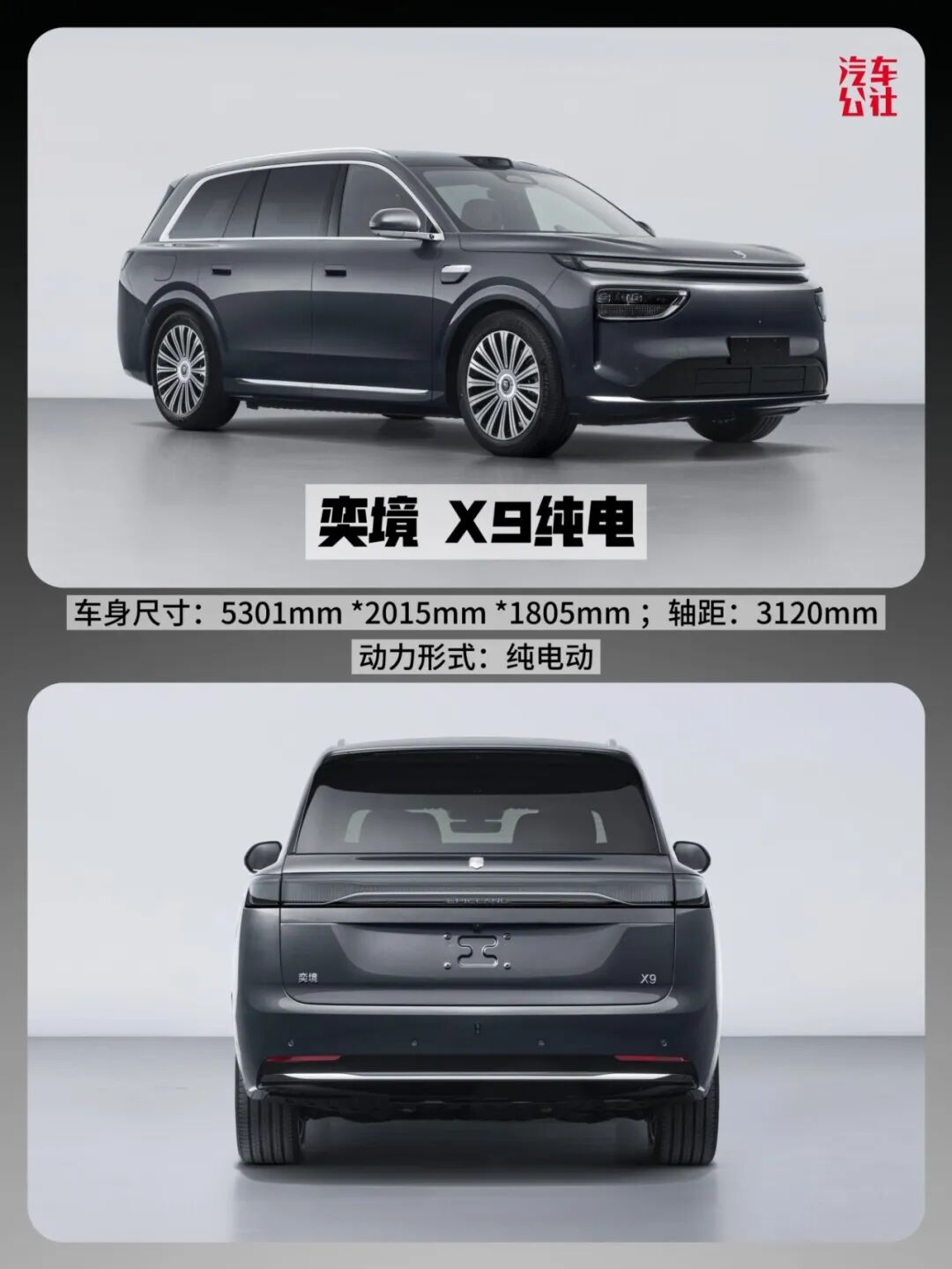
For Yijing, the addition of the X9 series' electric model to complete the product lineup is always beneficial. Whether the market will embrace it will be clear within six months.
If the Yijing X9 Electric can stand out among leading products like the NIO ES8, everything will unfold as hoped.
10 Saido ME7: From Paris Back to China
The Saido ME7 measures 4999×1999×1626mm in length, width, and height, with a wheelbase of 3050mm. It is launched in two versions: single-motor and dual-motor, both offering a 5-seat layout. It is evident that this new model is positioned as a competitor to Xiaomi YU7, with its own distinctive features.
However, can the Chinese market still accommodate yet another new brand? No one can provide a definitive answer at this point.
Editor-in-charge: Du Yuxin Editor: Wang Yue
-
![]()
Could Hard-to-Sell Sedans Finally Be Making a Comeback?
-
![]()
The 412th Batch of New Cars from MIIT: Mutual Inspiration Becomes the Norm
-
![]()
Don't Be Too Hasty to Dismiss Internal Combustion Engine Vehicles
-
![]()
104th in Ultrafast Nonlinear Optics: Mid-Infrared Dual-Comb Spectroscopy and Compressive Sensing Sampling
-
![]()
Delving into AI-Native Smartphones with the Release of STEPX Neo
-
![]()
Geely's 'Resilience': A Testament to Adaptive Strength
-
![]()
Major Breakthrough for Luxeed! Chery Takes a Daring Step
-
![]()
Collective Negative Growth in Metropolises: Beijing, Shanghai, Guangzhou — Who’s Behind the Slump in Car Sales?