Tesla’s “Flying Car” Stuns Automotive and Aerospace Experts
 10/19 2026
 352
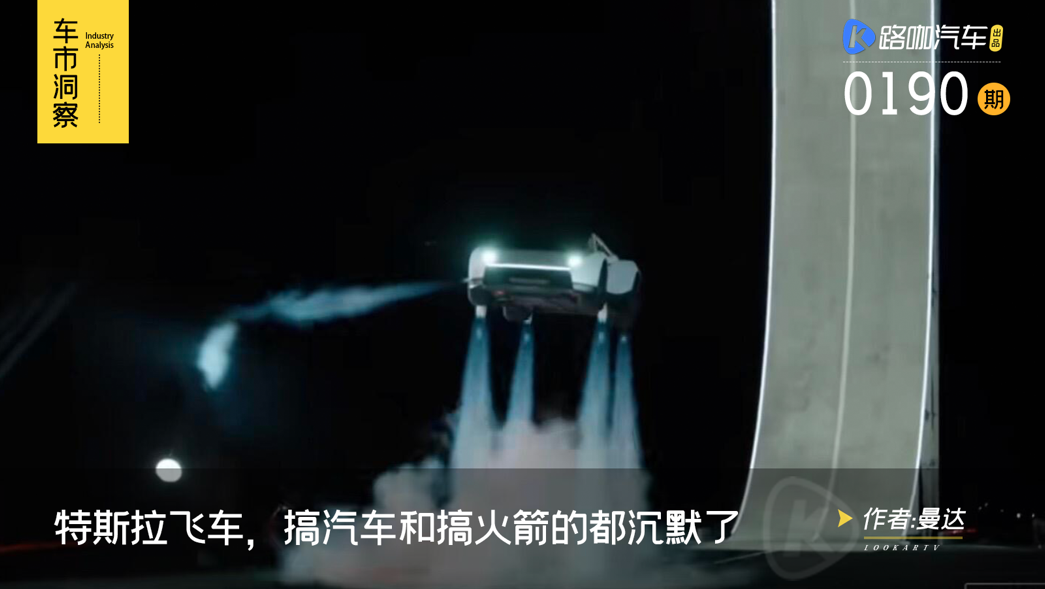
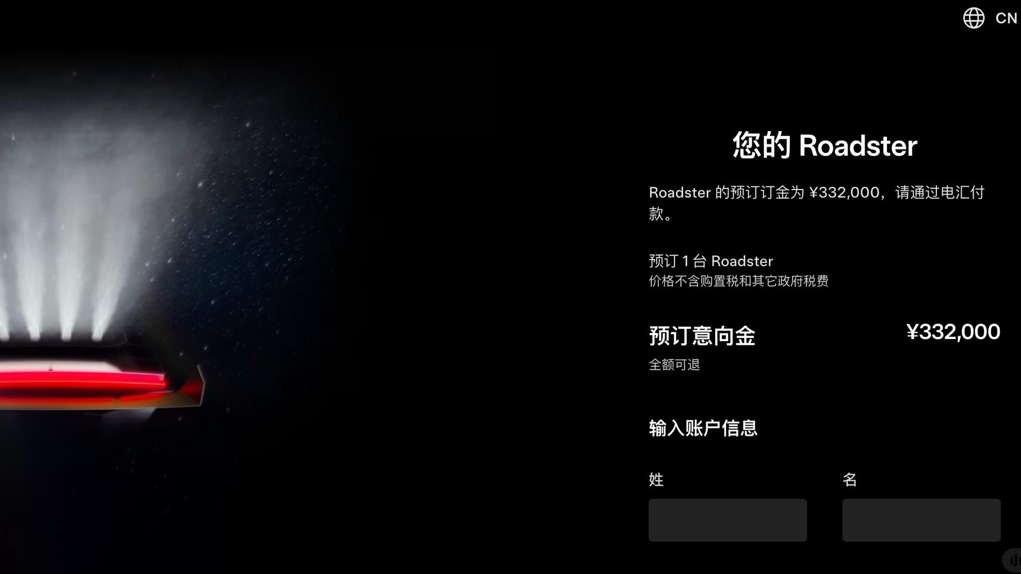
Tesla’s second-generation Roadster supercar has finally arrived in China, with a deposit of 332,000 yuan required and deliveries slated for 2028. Originally unveiled in 2017, this long-anticipated electric supercar has transformed into what some are calling Tesla’s “flying car” after several delays.
The second-generation Roadster will be offered in several variants, including a standard performance model, a thrust-enhanced version, and an exclusive, invitation-only Rocket edition. The performance versions can accelerate from 0 to 100 km/h in under one second and offer a range of 483 kilometers. Reservations for this version are now open in China, with a deposit of 332,000 yuan.
The final pricing for each version has yet to be announced, but during a livestream, Musk praised the new car as “the pinnacle of human-driven automotive engineering.”
Chinese netizens have shared their thoughts, with some questioning the practicality of the Roadster, but none doubting its legitimacy.
Rocket Technology Stuns Automotive and Aerospace Experts
To appreciate the revolutionary impact of the new Roadster, it’s essential to examine its key selling points. Musk succinctly captured the car’s innovative nature: on the ground, it uses multi-mode fans and active aerodynamics to maximize downforce, pushing the limits of tire adhesion; in the air, it leverages SpaceX’s cold gas thruster technology for attitude control and short-distance “flight.”
This development has left industry leaders in both fields astonished.
For traditional automakers and new energy companies, the unveiling felt like a game-changer. Tesla has shifted the competitive landscape from two-dimensional to three-dimensional.
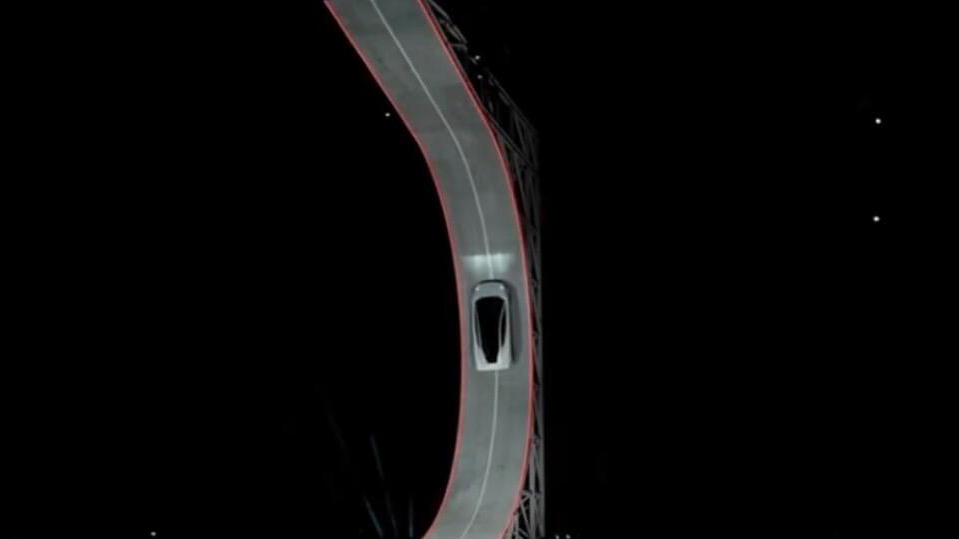
The concept of “ground adhesion via fans” brings to mind the banned “fan car” technology from F1 history, such as the Brabham BT46B, which used active negative pressure zones to “suck” the vehicle to the ground, achieving unprecedented cornering speeds and stability. This means the Roadster’s performance is no longer constrained solely by tire-ground friction but now includes active aerodynamic control.
Attitude control in the air via cold gas thrusters is not new. SpaceX already employs cold or hot gas thrusters for attitude adjustments and precision landings on its Dragon spacecraft and Starship, making this a proven technology. Now, Tesla has adapted this aerospace technology for a road vehicle.
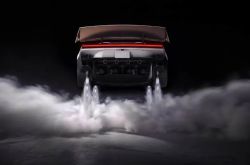
According to the unveiling, the rear-mounted attitude control thrusters and main thrusters allow the car to perform rocket-like maneuvers, including rolls, short hops, and even “kickflips” (a skateboarding trick). The optional “Rocket” package adds thrusters around the vehicle’s body, enabling aggressive forward, upward acceleration, and lateral rotation. Tesla’s official tagline, “So yes, it can fly” (with a disclaimer about regulatory approval), serves as both a technical demonstration and a bold statement about the future of mobility.
Automotive experts are speechless because they realize their traditional knowledge of chassis tuning, engine technology, and aerodynamics now seems “classical” compared to the raw physics of rocket propulsion.
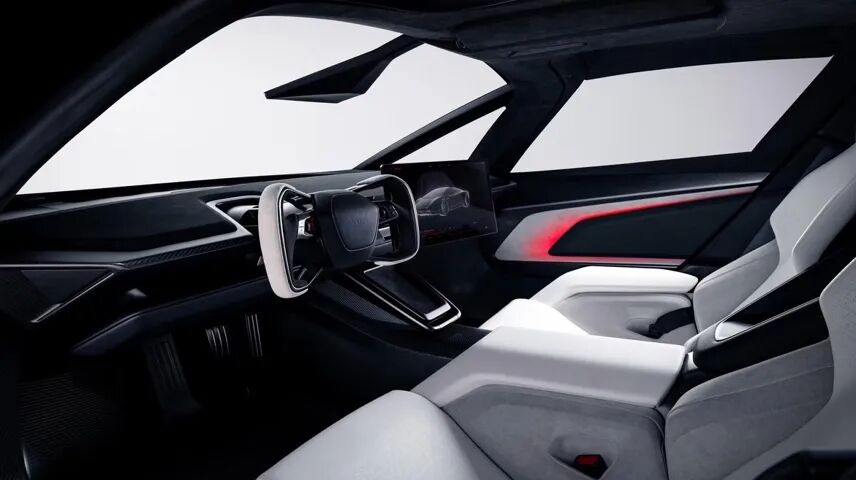
Aerospace and flying car experts are equally surprised. Their established approach focuses on eVTOLs—creating entirely new “air taxi”-like vehicles. This path is fraught with challenges: strict aviation safety certifications, high R&D and manufacturing costs, new air traffic management systems, and the “last-mile” connectivity problem. It’s an ambitious but slow-moving narrative.
Tesla’s Roadster offers a different solution: Why build a “flying vehicle” from scratch when you can add “flight” capabilities to a car?
After L4 Autonomy Falls Short, Flying Car Companies Face Disruption
To understand the Roadster’s impact on the flying car industry, we must revisit Tesla’s history in another field: L4 autonomous driving.
This September, Tesla unveiled its futuristic Cybercab, a bold vehicle without a steering wheel, pedals, or mirrors. This reflects Tesla’s long-standing “pure vision” approach to autonomy—relying solely on cameras and powerful neural networks to replicate or surpass human driving capabilities.
Before the Cybercab, global L4 autonomy primarily followed a “multi-sensor fusion” approach. Companies like Google’s Waymo and China’s Baidu Apollo (Apollo Go) equipped their robotaxis with expensive LiDAR systems, supplemented by millimeter-wave radar, cameras, and other sensors, using data redundancy to ensure safety. This path was seen as the technically “correct” and reliable way forward.
Tesla, however, took a “narrow path.” Musk insisted that humans drive with just two eyes, so true AI should as well. He dismissed LiDAR as a “crutch,” arguing that systems reliant on it could never achieve true general intelligence.
The result? Tesla not only achieved rapid iteration and mass deployment of its FSD (Full Self-Driving) system through pure vision but also successfully “shifted” the industry’s trajectory.
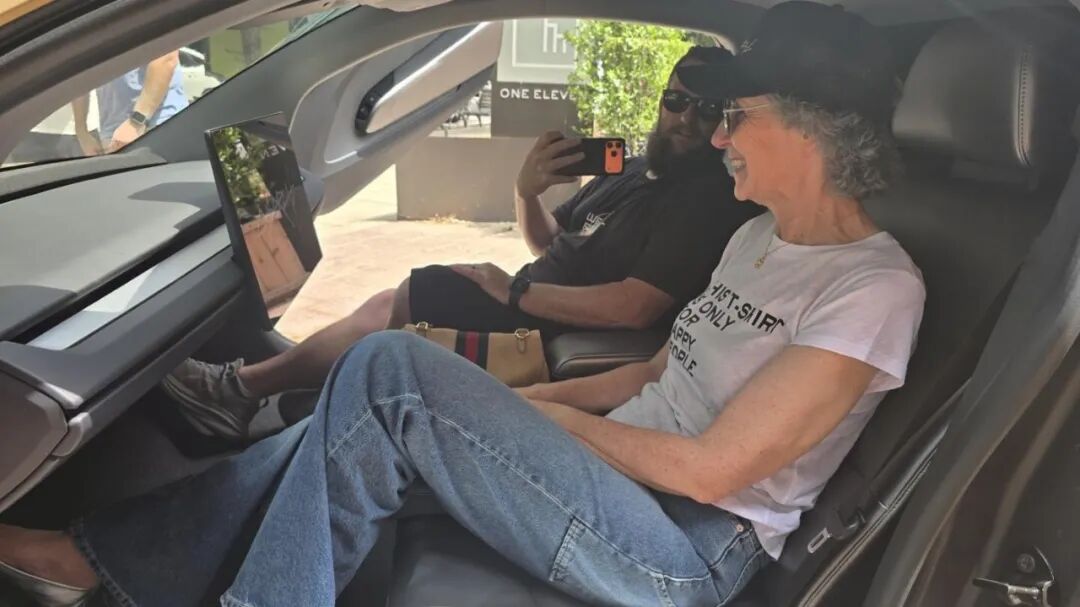
Following suit, Chinese automakers like Geely, IM Motors, and XPeng showcased steering wheel-free, pedal-free concept cars reminiscent of the Cybercab.
Notably, XPeng explicitly aligned with Tesla’s technical route, adopting a pure vision approach for its Robotaxi prototype. Built on the flagship G9 model, it features XPeng’s self-developed Turing AI chip with 3,000 TOPS of computing power and a second-generation VLA large model, targeting L4 autonomy.
This clearly shows that in the evolution of intelligent technology, Tesla has become the de facto “leader.” Its choices, no matter how unconventional initially, ultimately force competitors to react—or even follow.
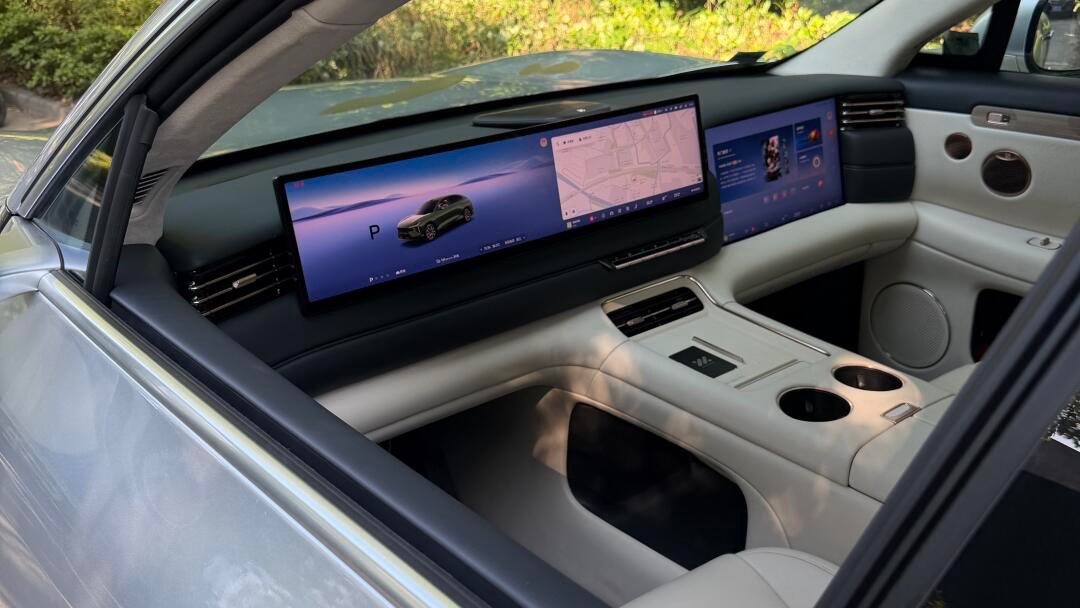
Now, a similar story appears to be unfolding in the flying car sector.
Traditional flying car (eVTOL) companies follow a “correct” path akin to the old “multi-sensor fusion” approach. They aim to solve urban air mobility (UAM)'s grand challenges, pursuing distributed electric propulsion, high-redundancy flight controls, low noise, and shared mobility or air passenger business models.
The Roadster, however, offers a “rule-breaking” solution. Instead of solving “how to make a plane as convenient as a car,” it flips the script: “how to make a car capable of brief flight.”
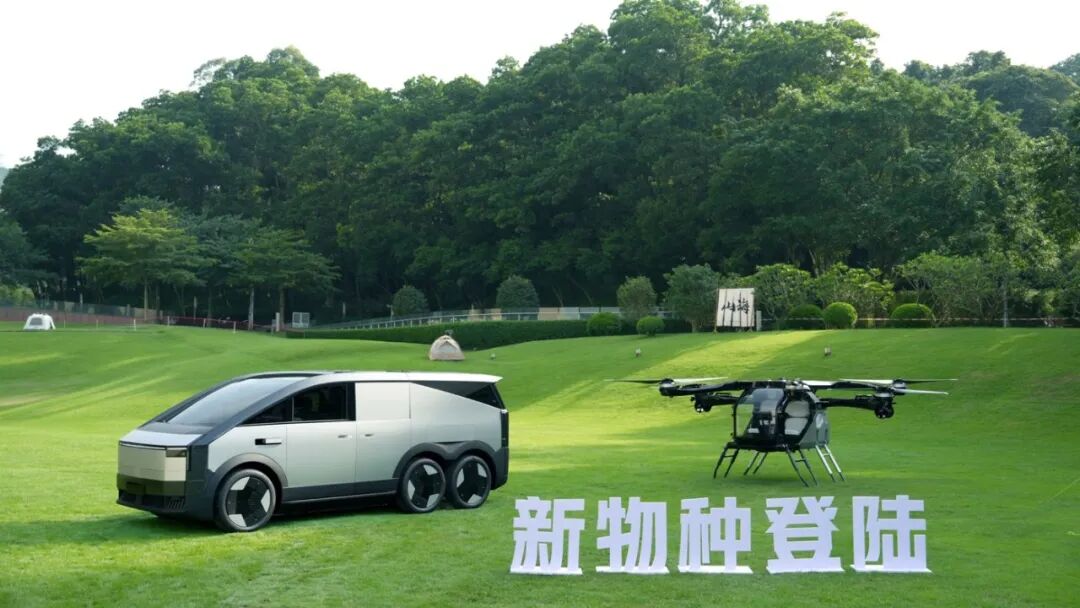
eVTOLs envision a future of urban commuting, but their demand remains unproven. The Roadster’s “flight” capability precisely targets supercar users' desire for ultimate performance and conspicuous consumption—a smaller but real, affluent, and immediate market.
eVTOLs require lengthy aircraft airworthiness certifications, while the Roadster remains fundamentally a car. Its “rocket kit” may be classified as a specialized performance modification, with initial use restricted to racetracks or private land, significantly lowering commercialization barriers and timelines.
Most importantly, eVTOL companies are still burning cash on R&D, with business models stuck on PowerPoint. Tesla, by charging hefty deposits (up to $250,000 for the Founders Series), not only locks in core users early but also has them “crowdfund” product development. This “product-as-futures” model is unimaginable in traditional manufacturing.
-
![]()
SAIC Volkswagen ID.ERA: The Art of Catching Up
-
![]()
Changan’s Leadership Overhaul: Zhu Huarong Relinquishes Chairman Role, Zhao Fei Ascends; Ye Pei Elevated to President | Mirror Pro
-
![]()
Elon Musk Actually Did It: This Car Can Soar
-
![]()
Auto Evaluators: The Impossibility of Being Both Players and Referees
-
Mobile Phone Screens: The Triumph of Domestic Collaboration and the Growing Pains of Reality
-
![]()
Commercial Aerospace Stocks Have Tesla to Thank for Today’s Surge! Give a Cheer if You See Why
-
![]()
How US Media Views Chinese Cars: Beloved by Americans, Yet Unattainable
-
![]()
Tesla’s “Flying Car” Stuns Automotive and Aerospace Experts