Elon Musk Actually Did It: This Car Can Soar
 10/19 2026
 454
Delivery Not Until 2028
”
Author: Wang Lei
Editor: Qin Zhangyong
This time, Elon Musk wasn't just engaging in idle boasts.
Tesla's second-generation Roadster has officially made its grand entrance at SpaceX's Texas McGregor site, with Musk himself taking center stage to unveil it.
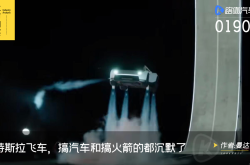
At the event, he truly demonstrated that the Tesla Roadster 2 could take to the skies:
However, mass production and delivery are slated for 2028...
Moreover, Musk didn't completely dismiss the possibility, stating, “Actually, 2028,” implying a high likelihood of delivery by then. Additionally, this flying version will be available by invitation only and will not be sold to the general public.
The event was brief, lasting less than half an hour, but the content it showcased was nothing short of explosive. The Roadster 2 was capable of driving upside down, flipping mid-air, briefly hovering, and even “leaping” over its own models, achieving a short flight effect.
In short, the on-site demonstration was on par with today's cutting-edge AI short films, refreshing everyone's perception of what cars can do. Musk also declared on-site that the Roadster will ultimately become “the only manually driven car produced by Tesla” and “the car that prioritizes fun over safety.”
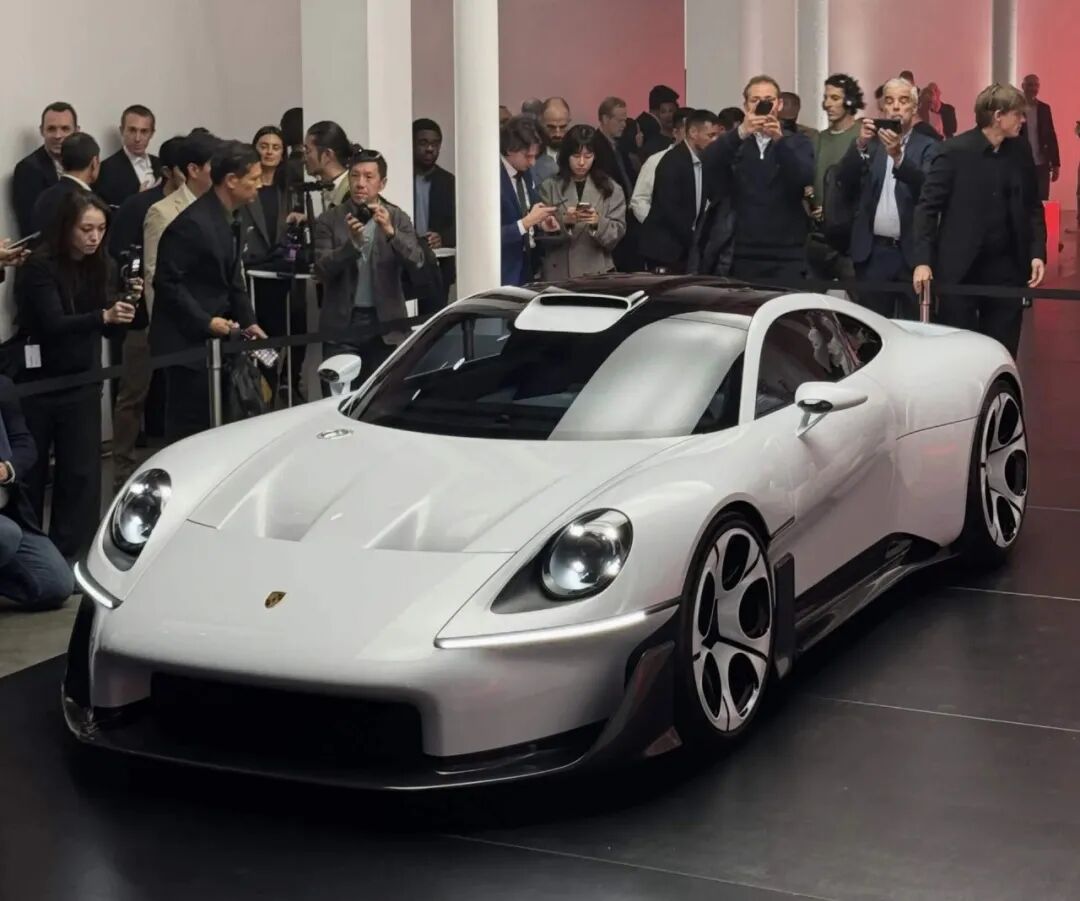
Notably, on the same day, Porsche also unveiled its new fuel-powered flagship supercar, the Mission S concept car, positioned above the 911. With its stunningly handsome body design, it managed to carve out a niche amidst the overwhelming buzz surrounding the Roadster 2.
The new car looks like this:
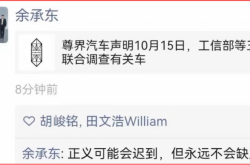
On the same day, the domestic auto market began to stir with the establishment of a joint investigation team by three departments to look into the Zunjie braking incident, as well as responses from Zunjie and Yu Chengdong.
October 16th was truly a “momentous day.”
Can Musk really make cars fly?
Let's turn our attention back to the Tesla Roadster 2.
Compared to the Porsche Mission S concept car, which perfectly blends classic and avant-garde design elements, the Roadster 2's appearance is somewhat “challenging to assess.”
Unlike the streamlined design of the first-generation Roadster, the Roadster 2 exudes an extreme sci-fi vibe, adopting a Cyberfied aesthetic that makes it look like a flattened Cybertruck from afar...
Here's the image:
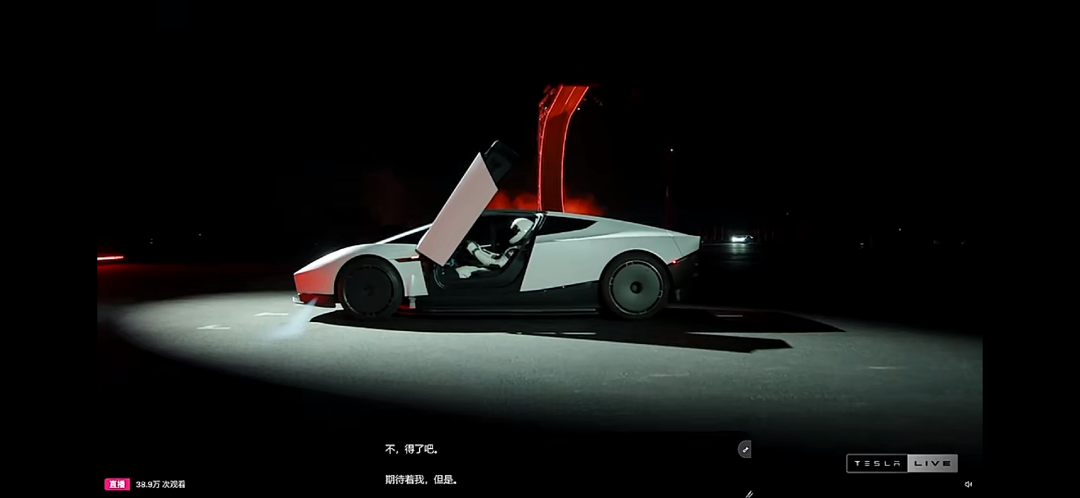
However, given its “it can really fly” label, such an appearance does align with the vehicle's positioning.
Next came the moment when Musk delivered on his bold claims. At the event, a Tesla Roadster 2 charged up a U-shaped suspended ramp on-site and, at the ramp's peak, achieved upside-down driving in a state that seemed to “defy physics.”
The Roadster then drove upside down off the ramp, performing mid-air flips and attitude adjustments before landing steadily.
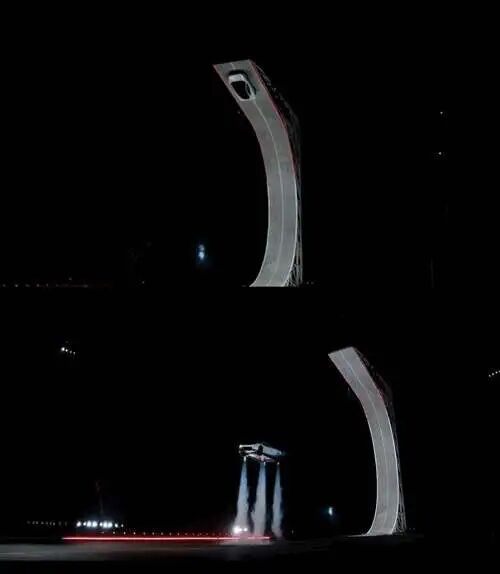
Live footage revealed that at the ramp's peak, the vehicle's pitch angle reached 170 degrees, at a height of about 21 meters, effectively appearing as if it were upside down on the ceiling.
Interestingly, Musk emphasized to the on-site audience that the footage wasn't AI-generated and encouraged them to share what they had seen with skeptics.
Subsequently, Tesla had the Roadster 2 take off directly from a normal road, flipping mid-air and leaping over obstacles composed of the Cybercab, Cybertruck, Semi, Model Y, and Model 3.
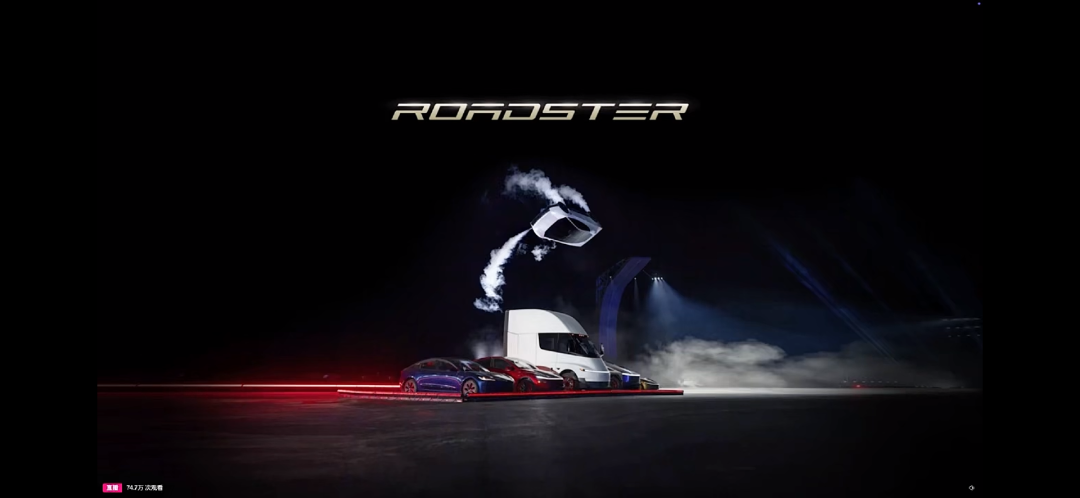
Reportedly, Tesla had even applied for a temporary no-fly zone around the venue from the U.S. Federal Aviation Administration for this demonstration.
The secret to making the vehicle fly lies in SpaceX's cold gas propulsion technology, internally codenamed A71. It features two carbon fiber-wrapped pressure vessels (COPVs) supported by SpaceX technology, with a total volume of 600 liters, capable of storing approximately 250 kilograms of high-pressure air, relying solely on physical reaction forces for propulsion.
Approximately 10 directional nozzles are arranged around the vehicle's body, ejecting high-pressure gas to lift the body, hover, and adjust its attitude mid-air.
In the live footage, it was also visible that when the Roadster 2 was in the air, a significant amount of high-pressure gas was ejected around the body. Moreover, as the vehicle's attitude changed mid-air, the nozzles at different positions would adjust the gas pressure in real-time to stabilize the body.
Not only that, but there's also an ultra-powerful suction adsorption system, which is why it can drive upside down. At low speeds, the chassis sucks in air to tightly adhere the vehicle to the ground for grip, while at high speeds, it automatically opens channels for the front and rear suction systems to generate even more massive airflow beneath the car.
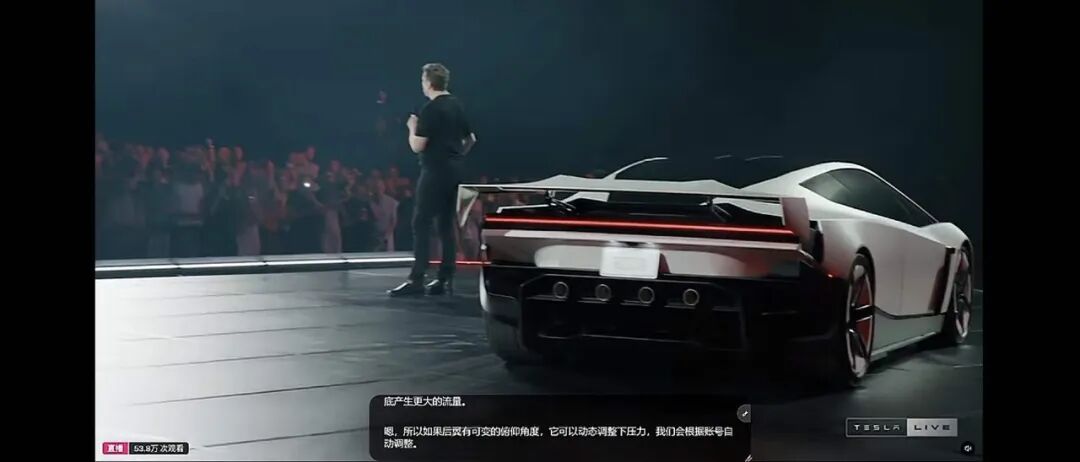
Paired with an active rear wing driven by the same actuator as Optimus, the downforce reaches F1 levels, or rather, adsorption force. This variable-pitch rear wing can also dynamically calculate and automatically adjust the downforce based on the track conditions, working in tandem with steer-by-wire yoke, brake-by-wire, and throttle-by-wire systems, enabling the vehicle to break through the traditional tire friction limit of 1.26g and achieve lateral acceleration exceeding 2G when cornering.
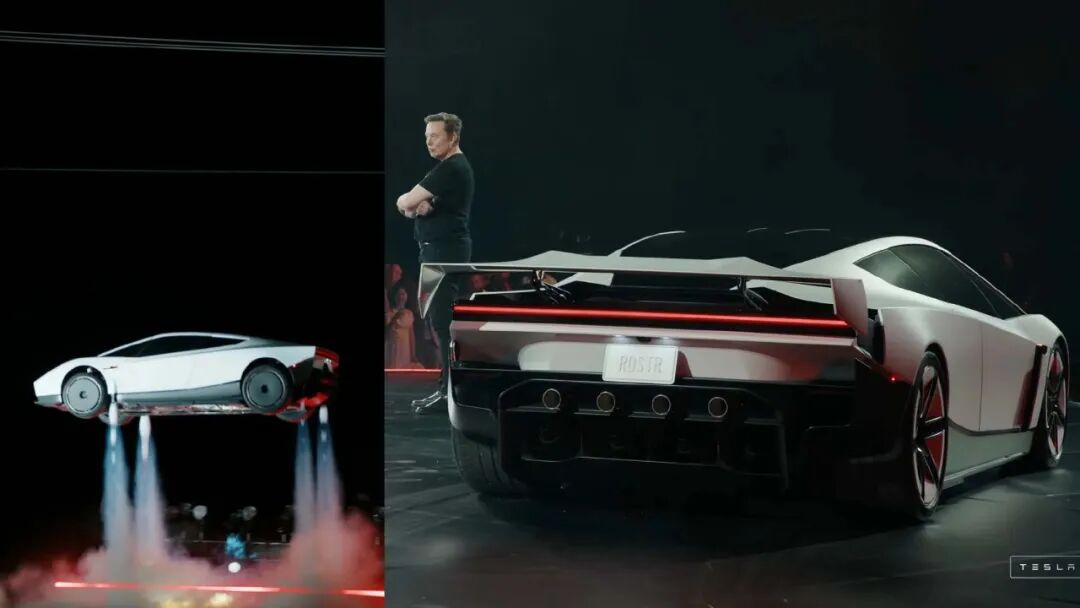
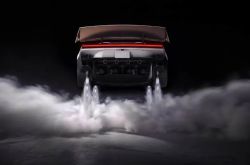
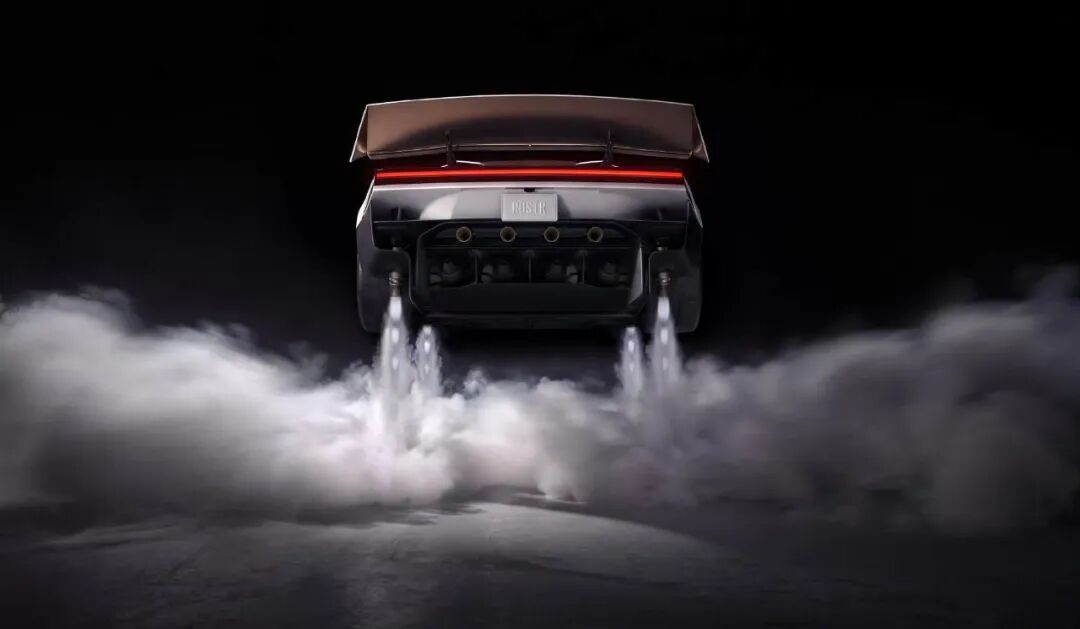
With even rocket thrusters on board, it naturally excels in conventional zero-to-60 mph acceleration. At the rear of the Roadster 2, four large exhaust pipes are prominently visible—or more accurately, four thrusters.
According to Lars Moravy, Tesla's head of automotive engineering, the thrust speed ejected from the rear has exceeded the speed of sound, allowing for the visibility of Mach diamonds and generating over 80,000 Newtons of thrust. This enables the Roadster 2 to accelerate from 0 to 60 mph (approximately 96 km/h) in less than 1 second.
However, in the on-site demonstration of 0-60 mph acceleration, Tesla only achieved a time of 1 second, though Musk emphasized that they could easily achieve less than 1 second.
However, not every Roadster 2 will possess such capabilities.
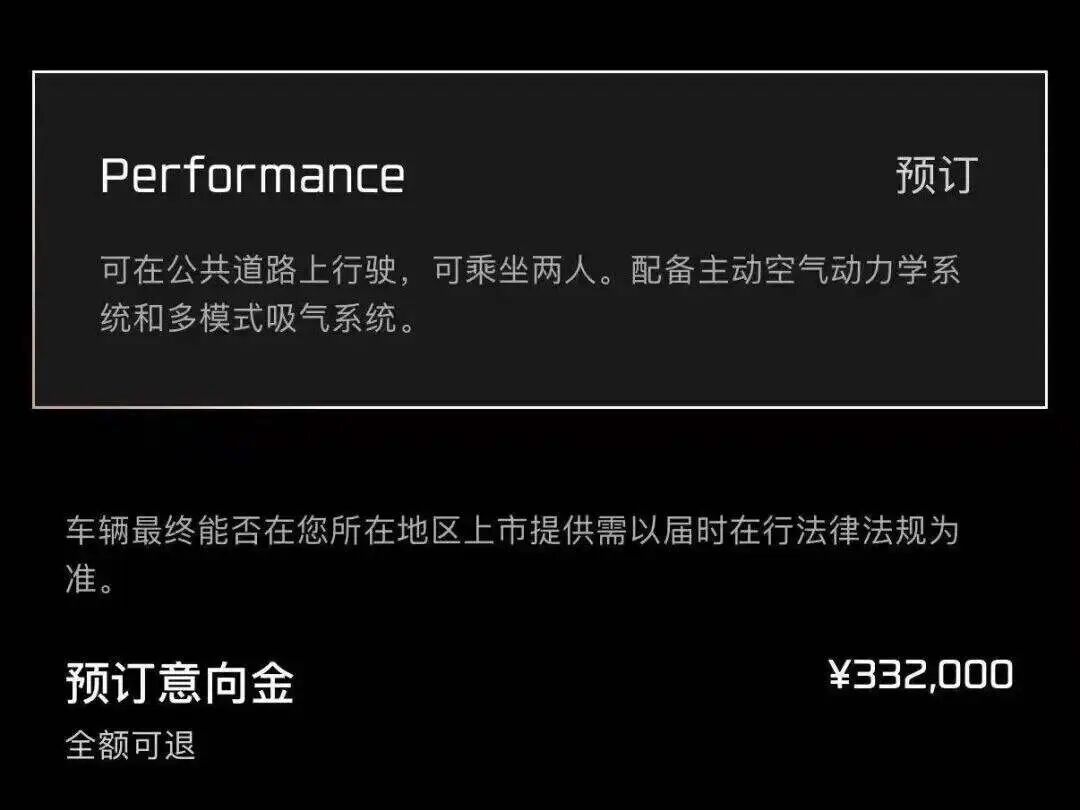
According to Tesla's announcement, the Roadster will come in three versions. The first is the Performance version, currently the only pre-orderable version in China, with a reservation deposit of 332,000 yuan.
This version only features an active aerodynamics system and a chassis suction cup and air extraction system, relying on powerful fans and chassis airflow sealing to adhere to the ground, likely also capable of achieving the iconic upside-down driving scene.
The next version up is the Thrust version, which, building on the Performance's chassis, further adds cold gas thrusters driven by high-pressure composite material-wrapped pressure vessels (COPVs) at the rear—those four “exhaust tubes”—reducing the zero-to-60 mph acceleration time to under 1 second.
This version is also available for pre-order on the U.S. website, but with a hefty reservation deposit of 250,000 USD.
Finally, there's the “flying” Rocket version, which switches from a dual-seat to a single-seat layout and is equipped with cold gas propulsion nozzles developed in-depth by SpaceX all around the vehicle, granting it true hovering and flight capabilities.
However, this version will not be sold to the public and is only available by internal invitation, with a clear statement that it cannot be driven on public roads.
The car is here, but the price and mass production date remain unknown. Now, it all hinges on 2028 and whether Musk can turn the madness from this live event into reality.
-
![]()
SAIC Volkswagen ID.ERA: The Art of Catching Up
-
![]()
Changan’s Leadership Overhaul: Zhu Huarong Relinquishes Chairman Role, Zhao Fei Ascends; Ye Pei Elevated to President | Mirror Pro
-
![]()
Elon Musk Actually Did It: This Car Can Soar
-
![]()
Auto Evaluators: The Impossibility of Being Both Players and Referees
-
Mobile Phone Screens: The Triumph of Domestic Collaboration and the Growing Pains of Reality
-
![]()
Commercial Aerospace Stocks Have Tesla to Thank for Today’s Surge! Give a Cheer if You See Why
-
![]()
How US Media Views Chinese Cars: Beloved by Americans, Yet Unattainable
-
![]()
Tesla’s “Flying Car” Stuns Automotive and Aerospace Experts