Commercial Aerospace Stocks Have Tesla to Thank for Today’s Surge! Give a Cheer if You See Why
 10/19 2026
 410
Source: Shenlan Finance
A sports car manufacturer just gave a significant boost to rocket-related stocks.
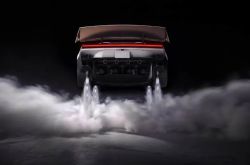
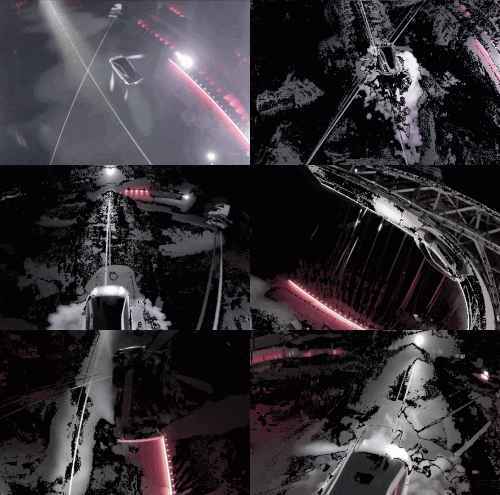
On October 16, during Tesla's unveiling of the second-generation Roadster, a vehicle featuring a cold gas thruster system, inspired by SpaceX technology, stole the spotlight. Suspended upside down along a curved ramp, the Roadster, with its white body, blasted into the sky. Its cold gas thrusters ignited, enabling it to hover and rotate before descending vertically, reminiscent of a rocket.
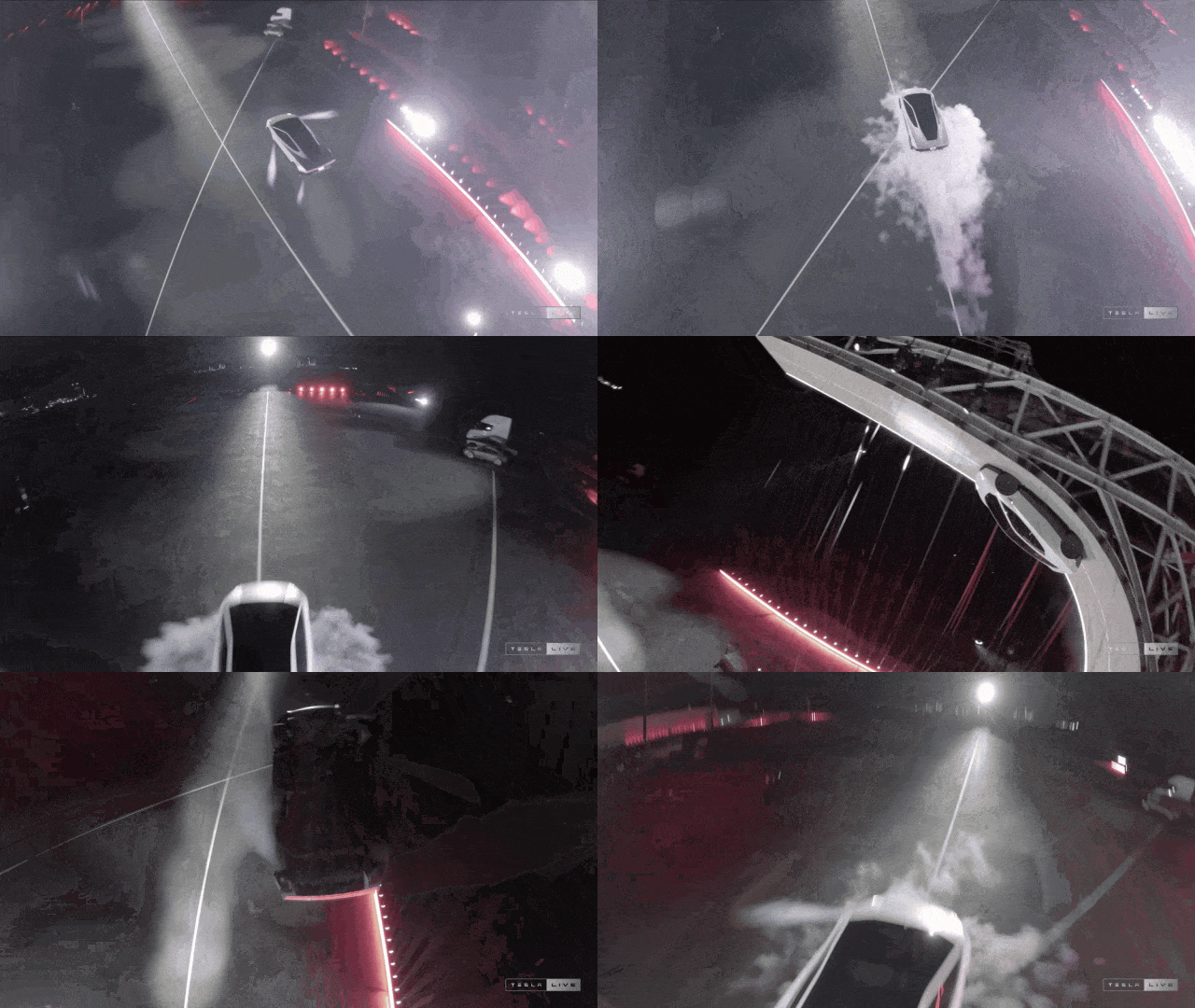
Musk proclaimed it as 'the greatest product demo in history' on stage. To quell any suspicions of CGI trickery, he urged the audience to rise collectively as witnesses, stating, 'This isn't AI.'
While the automotive world was abuzz, the commercial aerospace sector, which had been sluggish for much of the year, was jolted into action by Musk's spectacle.
1. A-share Aerospace Stocks Soar En Masse Today
Today's market opening witnessed the most intense wave of price surges, centered around the low-altitude economy. Over 20 component stocks, including Inovance Automotive, Guanglian Aviation, Wangzi New Materials, Ruima Precision, Joyson Electronics, CITIC Offshore Helicopters, Wanfeng Auto, and Zongshen Power, reached their daily price limits.
Meanwhile, the commercial aerospace sector experienced an explosive surge. Aviation equipment, aerospace gear, satellite navigation, and carbon fiber stocks collectively spiked, with dozens hitting their daily limits.
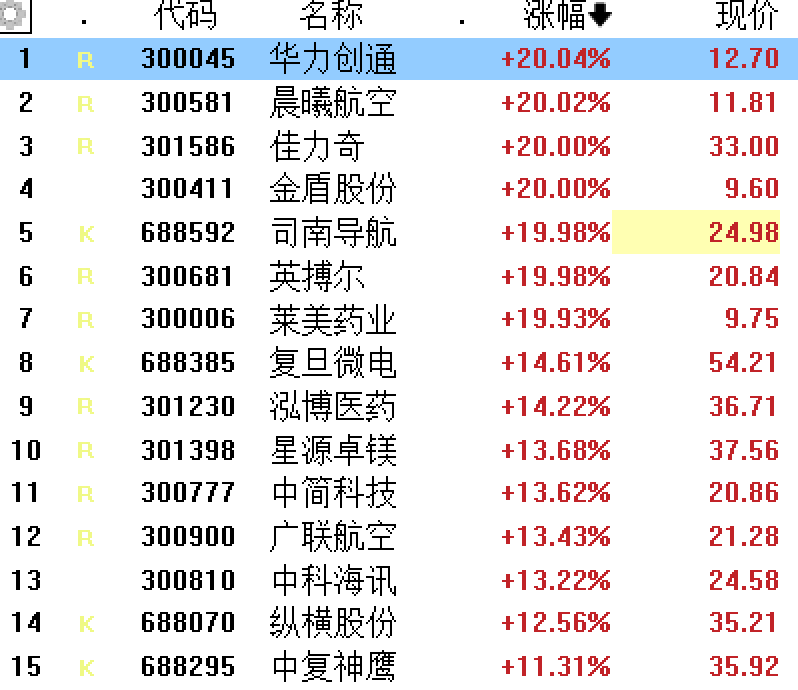
Take the carbon fiber sector as an example: Zhonjian Tech's stock nearly reached a 20% daily limit during intraday trading, while Guangwei Composites and Zhongfu Shenying surged by around 15%. Jilin Chemical Fiber sealed its limit up in the afternoon.
The catalyst is evident. Tesla's new Roadster utilizes lightweight, high-strength materials such as magnesium, titanium, and carbon fiber to reduce overall vehicle weight. However, what truly ignited investor enthusiasm wasn't just 'lightweighting'—it was the revolution concealed within the propulsion system.
The Roadster is equipped with 10 cold gas thrusters, derived from SpaceX's technological heritage, paired with a 600-liter compressed air storage system. These high-pressure gases must be stored in COPV (Carbon Fiber Overwrapped Pressure Vessel) ultra-high-pressure tanks capable of withstanding 10,000 PSI. Conventional metals cannot handle such pressure; carbon fiber composites are the only feasible solution. This represents not just automotive lightweighting but a new application scenario for aerospace-grade materials.
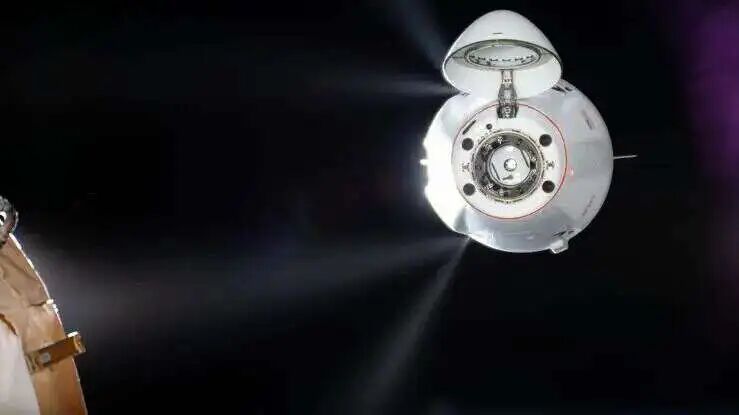
Key industrial chain participants include: Jilin Chemical Fiber (a domestic leader in large-tow carbon fiber), Zhonjian Tech (a pioneer in aerospace-grade high-performance carbon fiber), Guangwei Composites (providing high-strength carbon fiber for tank winding), Zhongfu Shenying (a core material supplier for T700/T800-grade COPVs), along with Beijing Tianhai Industrial and Yauplast, which possess technical reserves in COPV technology.
2. Aerospace Tech Remains 'PPT Ware' Without Real-World Applications
Certainly, one could dismiss this A-share rally as mere speculation. Tesla's Rocket-edition Roadster will have minimal production volumes, and the thruster version is unlikely to be street-legal—scaling up component orders is virtually unfeasible. That assessment is accurate.
However, my focus isn't on today's price surges. It's on a broader principle: Technology only realizes its true value through practical application.
Commercial aerospace epitomizes this concept. Before SpaceX, space exploration was a national endeavor. Launching a single rocket cost billions—scarce, expensive, and unsustainable. SpaceX revolutionized the industry with reusable rockets; Falcon 9 boosters can now fly up to 34 times, propelling commercial aerospace into a genuine boom phase.
By the first half of 2026, commercial launches accounted for 68% of China's total. Private aerospace firms began generating revenue, with carbon fiber rocket startup Weiguang Qihang securing 100 million RMB in funding. Its carbon fiber co-cured tank structure reduces weight by 30% and costs just 70% of traditional materials.
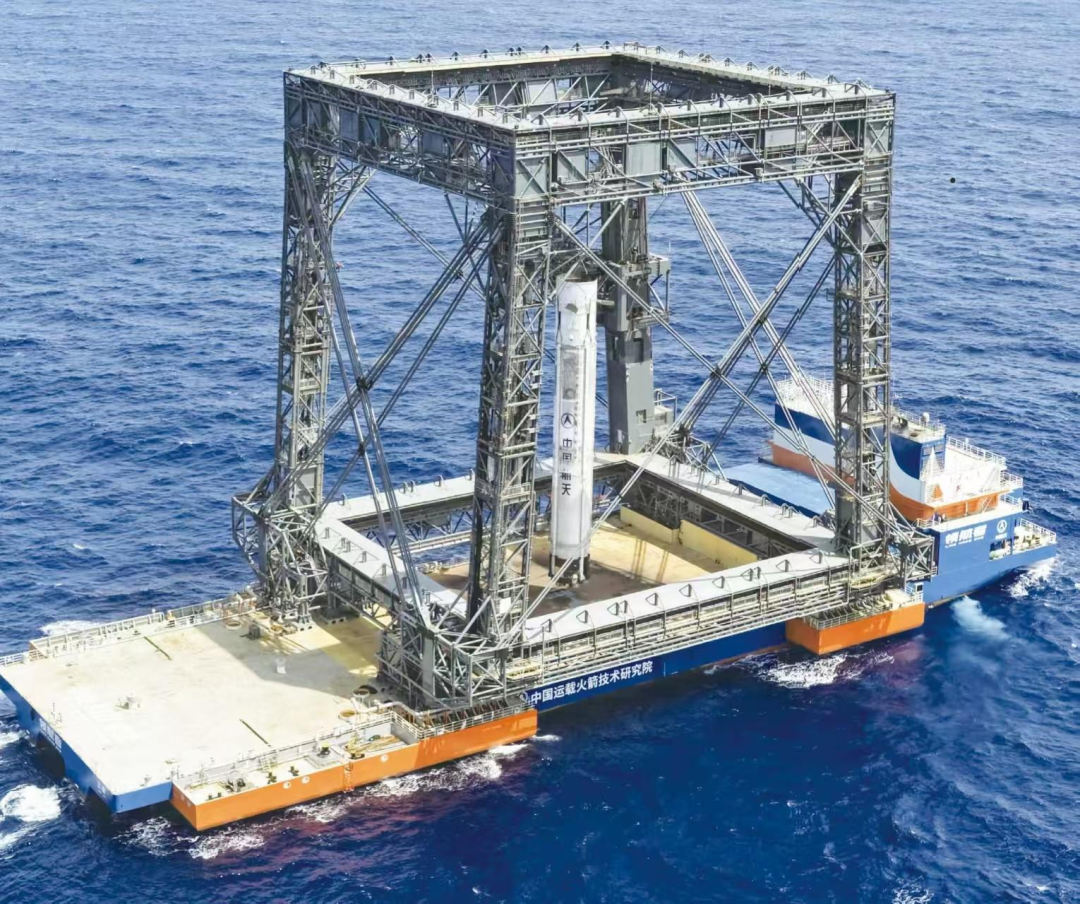
Following the same logic, the Roadster has now transported aerospace technology from launchpads to roadways.
Dubbed 'A71,' the cold gas thruster system borrows proven designs from Falcon 9's attitude control nozzles, utilizing directional compressed gas ejection for thrust. This technology once existed solely in rockets and satellites—now it's integrated into a sports car. It may be imperfect, non-mass-producible, and perhaps just Musk's latest spectacle. But it signals something crucial: the spillover path for aerospace technology is far shorter than imagined.
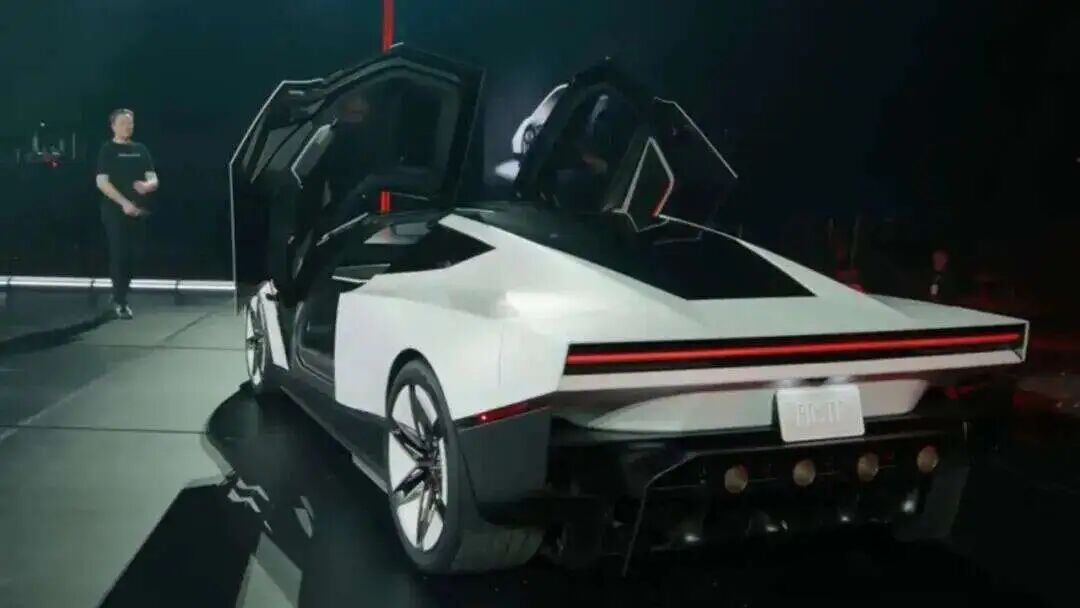
Carbon fiber migrating from rocket fairings to car gas tanks, cold gas thrusters evolving from satellite attitude control to automotive stability—this isn't science fiction. It's industrial migration happening right now.
3. Conclusion
Today's commercial aerospace stock surge reflects a blend of sentiment, speculation, and bandwagon effects. But beneath the euphoria lies a fundamental truth: An expensive, scarce, 'elite' technology only unleashes its commercial potential when forced into civilian applications.
SpaceX demonstrated this. Tesla's Roadster is attempting to replicate the path. What about domestic automakers? We're not lagging in specifications—Yangwang U9 already demonstrated jumping via active suspension, and XPENG AEROHT merged ground vehicles with detachable aircraft. But the Roadster's true scarcity isn't in specifications—it's in cross-domain technological integration.
That capability is far more challenging to master than shaving 0.81 seconds off 0-100 km/h acceleration.
*Disclaimer: The views expressed herein are solely those of the author. Markets carry risks; invest cautiously. Under no circumstances does this information constitute investment advice to any individual.
Shenlan Finance's media ecosystem originated from the Shenlan Finance Journalists Community 16 years ago. As a renowned domestic financial new media platform, its accounts focus on China's most valuable companies, cutting-edge industries, and emerging regional economies, delivering valuable content to investors, corporate executives, and the middle class. Welcome to follow.
-
![]()
SAIC Volkswagen ID.ERA: The Art of Catching Up
-
![]()
Changan’s Leadership Overhaul: Zhu Huarong Relinquishes Chairman Role, Zhao Fei Ascends; Ye Pei Elevated to President | Mirror Pro
-
![]()
Elon Musk Actually Did It: This Car Can Soar
-
![]()
Auto Evaluators: The Impossibility of Being Both Players and Referees
-
Mobile Phone Screens: The Triumph of Domestic Collaboration and the Growing Pains of Reality
-
![]()
Commercial Aerospace Stocks Have Tesla to Thank for Today’s Surge! Give a Cheer if You See Why
-
![]()
How US Media Views Chinese Cars: Beloved by Americans, Yet Unattainable
-
![]()
Tesla’s “Flying Car” Stuns Automotive and Aerospace Experts