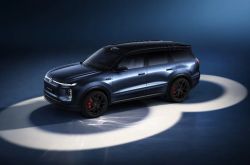
SAIC Volkswagen ID.ERA: The Art of Catching Up
 10/19 2026
 516
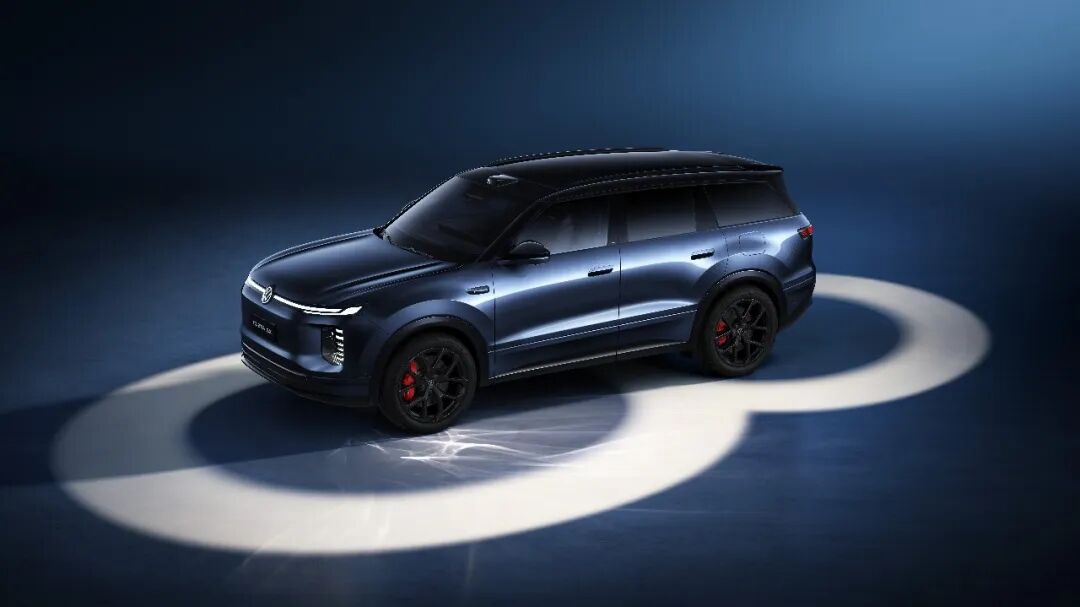
The 200,000-yuan 8X model fills the gap left by the 300,000-yuan 9X.
Original content from AutoPix (ID: autopix)
Six months ago, SAIC Volkswagen launched the ID.ERA 9X, setting its starting price at 299,800 yuan.
At the time, sales director Fu Qiang told us that the 9X, as the flagship and first model in the ID.ERA lineup, had to maintain its price to establish the brand's premium image for this new NEV (New Energy Vehicle) series.
Six months later, the ID.ERA 8X was launched, starting at 206,800 yuan.
This time, Chen Feng, in charge of Volkswagen brand marketing, avoided the term "maintain the price" and instead used "bayonet charge" to describe the strategy.
The price gap of over 90,000 yuan between the starting prices of these two similarly positioned SUVs is unprecedented among SAIC Volkswagen's mainstream products. This pricing shift reflects a reevaluation of SAIC Volkswagen's market position.
While the 9X aimed to uphold brand prestige, the 8X prioritized market recovery. For SAIC Volkswagen, rebuilding in the NEV market today, the latter approach may be more pragmatic.
01 First, Make Consumers Willing to Buy
Before the launch of the ID.ERA 8X, SAIC Volkswagen engaged in lengthy internal discussions about pricing, involving both Chinese and German stakeholders.
Chen Feng described the current pricing strategy as a "bayonet charge." The 200,000-300,000 yuan large five-seat NEV SUV segment is already crowded with brands like Li Auto, AITO, and XPeng. SAIC Volkswagen arrived late, so its pricing must ensure it enters consumers' comparison lists.
This contrasts sharply with the 9X's launch six months ago. As SAIC Volkswagen ID.ERA's inaugural product and the highest-positioned model in the new lineup, the 9X incorporated the best technologies from both shareholders and top Chinese suppliers to establish a tech-forward image.
A flagship model demands flagship technology and a price that reflects its status—hence the starting price of 299,800 yuan.
The 8X is simpler; it directly reflects SAIC Volkswagen's most authentic market assessment.
"Pricing starts with the market," said Chen Feng, listing the recently launched large five-seat extended-range models over the past two to three months. He noted that SAIC Volkswagen entered this segment relatively late, dominated by new forces, and the 8X must carve out its position.
For reference, the new Li Auto L6, launched in July, starts at 249,800 yuan for its standard configuration with four-wheel drive. The 8X's four-wheel-drive version starts at a limited-time promotional price of 229,800 yuan, while the rear-wheel-drive base model further lowers the entry barrier. Both versions are equipped with Momenta R7 assisted driving and LiDAR across all trims. It needs to give consumers a compelling reason to seriously consider this Volkswagen alongside familiar new-force products.
The 9X's pricing strategy retained some inertia from SAIC Volkswagen's past brand positioning or aspirations for its future stance. In contrast, the 8X's price reflects a clearer self-assessment as a market chaser in the NEV sector.
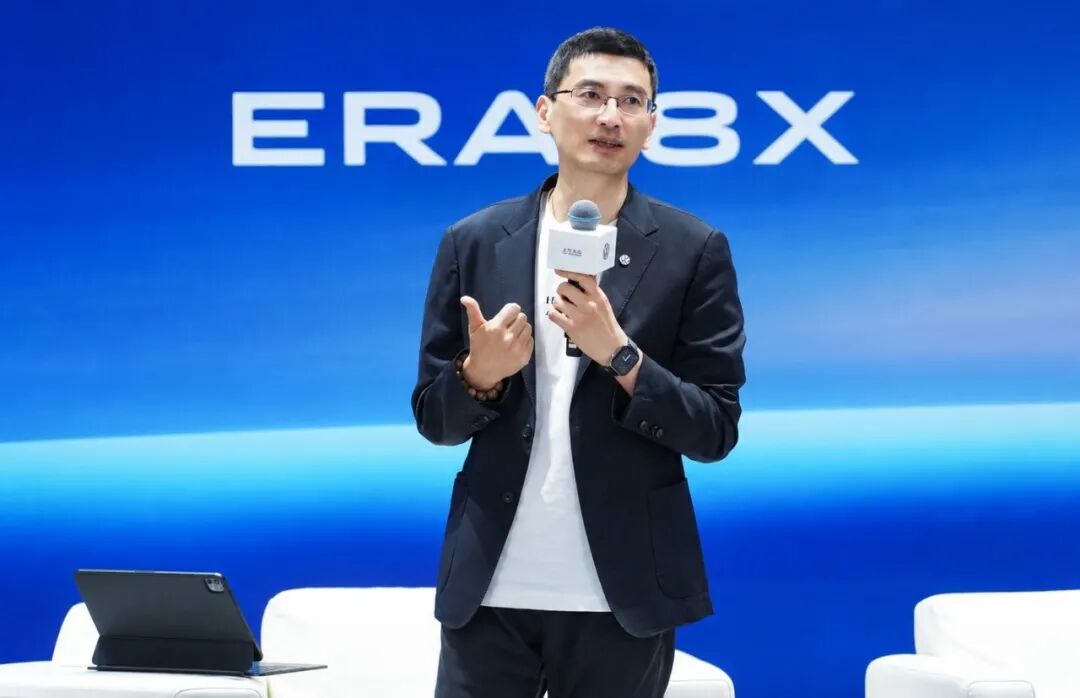 ▍Wu Yun
Wu Yun, SAIC Volkswagen's general manager who took office just two months ago, admitted that Volkswagen is a chaser in the NEV era. Regarding pricing, he said, "Products must have sufficient volume support, so prices must be consumer-acceptable." Fu Qiang also emphasized that each product must achieve a certain scale. Even flagship models tasked with shaping a tech image must ultimately pass the test of purchase and usage.
Specifically for the 8X, unlike many vehicles that use low-end trims merely to pull down the starting price, the Momenta R7 assisted driving and LiDAR are standard across all trims, with even the base model equipped with features like a refrigerator and dual screens.
Priced at 206,800 yuan, it aims to maximize efficiency for every SKU, eliminating the familiar hesitation consumers feel when facing joint-venture NEVs—choosing the brand often means compromising on configuration or price.
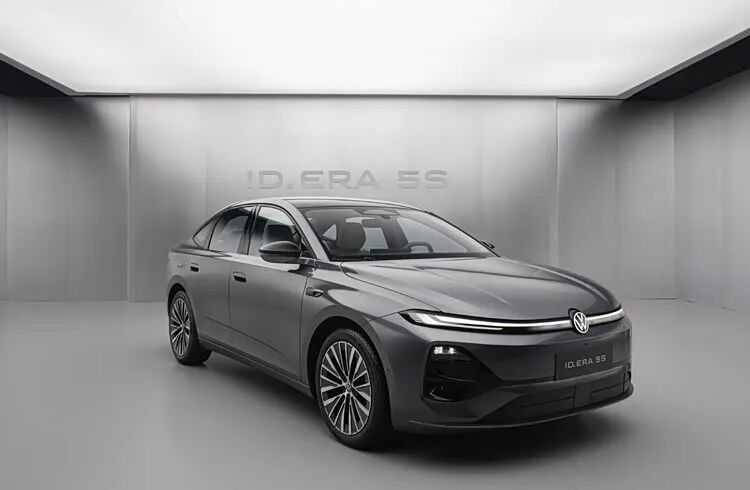
Before the 8X, this pricing strategy and configuration approach were validated by the 5S. Launched in August, it set a limited-time starting price of 89,900 yuan, bringing urban navigational assisted driving to the 120,000-yuan market segment. SAIC Volkswagen announced on October 13 that cumulative deliveries of the 5S exceeded 10,000 units, with another 17,000 orders pending delivery.
SAIC Volkswagen internally reviewed the 5S's success. Fu Qiang told us it offered most features available at its price point, plus Volkswagen's quality and intelligent configurations lacking in past joint-venture products.
Joint-venture quality, autonomous-level configurations, and prices no higher than comparable autonomous products—this combination provides Volkswagen NEVs with more compelling purchase reasons. The 8X applies this to the large five-seat extended-range SUV market. It retains the brand's original manufacturing credibility while incorporating intelligent and comfort features consumers value into a more competitive price.
The Volkswagen brand still holds value. It inspires trust in manufacturing, reliability, and after-sales service. However, when consumers are unsure if a company can deliver a smart NEV experience, this trust serves better as a finishing touch to product strength and cost-effectiveness rather than a substitute.
The 8X's starting price in the 200,000-yuan range can be understood in this light.
As Wu Yun said, SAIC Volkswagen is a chaser in the NEV era. A chaser's strategy must first increase its user base, allowing products to speak for the brand.
02 Sell Well and Sustainably
Fu Qiang cited two types of mismatches in interviews. The first is between marketing and manufacturing: market leads arrive, but production can't keep up; production scales up, but purchase leads dwindle. The second is a mismatch in responsibilities: departments participate from R&D to launch, yet supply and demand may not align.
To address these mismatches, SAIC Volkswagen now holds product project and launch operations managers jointly accountable for a vehicle's commercial results.
This is the most critical internal change at SAIC Volkswagen over the past two years. Wu Yun told us that previously, R&D, procurement, manufacturing, and quality assurance operated in silos, handing off responsibilities sequentially. Now, a dedicated function oversees a product from initial user needs understanding and definition to mid-stage commercial goals, remaining responsible until the product's discontinuation.
To implement this change, SAIC Volkswagen has continuously adjusted its internal organization.
Systemic iteration is the prerequisite for the 8X's accurate pricing. Achieving simultaneous alignment of configurations, quality, and competitive pricing requires R&D, procurement, production, and sales to make trade-offs around the same vehicle. Only when someone consistently oversees a vehicle's overall commercial results can interdepartmental issues be resolved earlier.
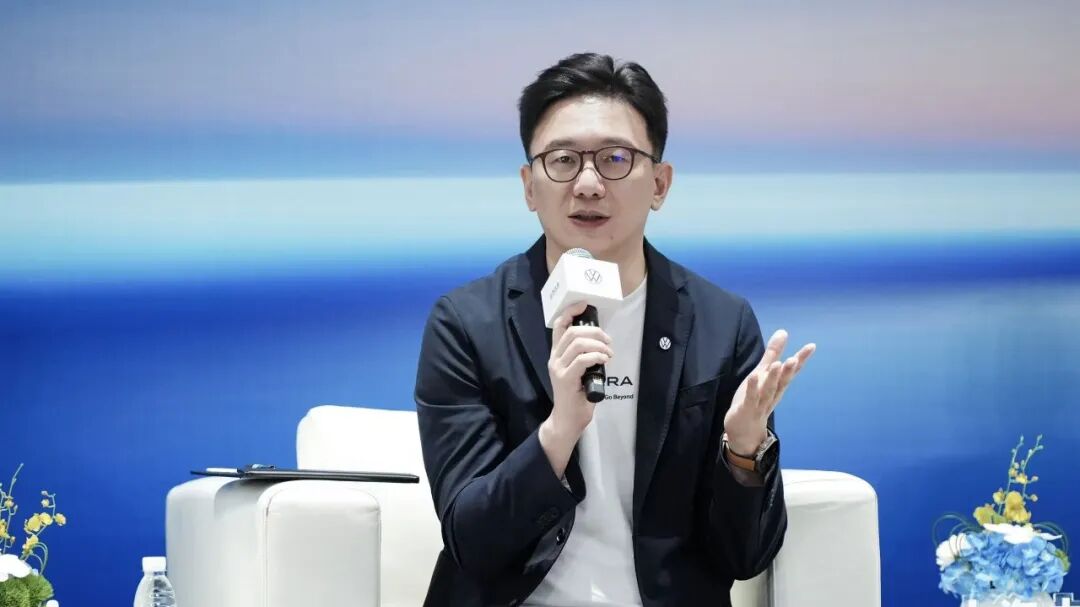 ▍Fu Qiang
This is a challenge joint ventures centered on engineering capabilities have struggled to solve.
Wu Yun reviewed how joint ventures traditionally developed products: overseas technologies and models were introduced and adapted domestically, "taking what's available and selling it as is." This approach once supported Volkswagen's success in China but now risks prioritizing existing products over market needs.
Changes began over two years ago. SAIC Volkswagen shifted from technology import to joint development, granting the Chinese team more product definition rights. User needs now enter the development process earlier.
This year, the 9X, 5S, and 8X launched in succession, showcasing these adjustments to consumers.
Joint development addresses product-R&D alignment, but the underlying technology pool for NEVs and intelligence still needs integration.
Regarding intelligent assisted driving, Wu Yun outlined a clear route and boundaries. SAIC Volkswagen won't pursue full self-development of underlying algorithms due to high investment and potentially insufficient data for a single brand. Instead, it seeks general-purpose technology partners, focusing development on vehicle application and integration while incorporating Volkswagen's familiar driving control requirements.
The 8X's choice of Momenta exemplifies this strategy. Adopting mature suppliers' leading solutions quickly addresses past shortcomings, achieving industry-leading performance. Meanwhile, as a Momenta shareholder, SAIC ensures technological controllability.
Volkswagen must also prove that the same technology, when matched and developed in-house, offers users something unique. Fu Qiang emphasized the 8X's focus on handling, aligning with this choice. As assisted driving becomes a purchasing threshold, companies still need distinct product personalities.
Iteration speed also requires redefinition. Wu Yun said traditional vehicle development often took three to five years, but many technologies now update annually. Products planned three years ago may lag by launch. SAIC Volkswagen's solutions include having Chinese and German teams work across time zones, parallelizing previously sequential processes, and increasing digital simulations.
However, accelerated development and "quick-fix" vehicles remain distinct.
Fan Bi'ou, deputy general manager of the sales company, drew a clear line: "Development can accelerate, but verification cannot reduce." This is the litmus test for whether joint-venture quality holds. Verification standards must consistently deliver on new products to remain a reason consumers trust the brand; if seen as an excuse for slowness, it will no longer aid sales.
With clear goals, adjustments continue.
Wu Yun admitted that while organization and awareness are in place, practical capabilities must still be built. Especially for user scenarios in smart cockpits, engineers accustomed to function-driven approaches must learn to prioritize human needs.
Pricing imposes operational constraints on all changes. Wu Yun said, "We cannot accept sustained losses through aggressive pricing." Fu Qiang confirmed the 8X is profitable, albeit with thinner margins than past fuel vehicle launches.
While the 8X's profitability compared to its fuel counterpart, the Touareg, remains unclear, their message is clear: SAIC Volkswagen aims to support prices through cost and organizational changes, sustaining this product lineup.
03 Rebuilding Brand Value
Regarding future product layout, Wu Yun cited the Lavida as an example. Past user demand met by the Lavida may now require an NEV equivalent, necessitating a "new energy Lavida" to inherit this demand. "Every fuel vehicle needs an NEV successor," he said.
This means demands previously satisfied by a vast fuel vehicle lineup must gradually find outlets in NEV products. After the 9X, 5S, and 8X, a battery-electric 5X is planned for November.
Fu Qiang revealed that next year's new models will primarily be battery-electric, with significant fuel vehicle updates also planned. Offering multiple powertrain options for a single model is under consideration. Current extended-range and plug-in hybrids are part of this product supplementation.
The tasks for these models remain heavy. According to SAIC Group's production and sales reports, SAIC Volkswagen's cumulative sales in the first three quarters reached approximately 492,600 units, making it challenging to maintain annual sales of one million units.
Wu Yun adopted a restrained tone regarding recovery, aiming to stabilize volume and pricing this year before gradually improving next year. These new models must also uphold Volkswagen's long-accumulated user relationships.
Existing owners are an easily reachable group. Fu Qiang acknowledged that past joint ventures lacked intelligent NEV products, causing some users to switch brands. However, he emphasized that relying solely on existing users won't suffice; attracting lapsed users and first-time young buyers is also crucial. The former yields short-term results, while the latter ensures long-term growth, requiring simultaneous efforts.
To attract these groups and sustain user interest, new approaches are needed.
Fu Qiang prioritized sustaining a product's performance as his top marketing concern. He introduced the "369 Plan," scheduling product actions at three, six, and nine months post-launch to keep marketing fresh. This marks a departure from SAIC Volkswagen's past practice of concentrating most marketing resources at a model's initial launch.
According to Fu Qiang, sustained product actions help maintain visibility, generating leads and sales. However, updates must respond to user needs to become purchasing reasons.
Post-delivery experience is equally critical. At the 8X's launch, Fu Qiang insisted on announcing a lifetime complete vehicle warranty. Regarding services, he emphasized their foundation on 4S dealers' healthy operations, as reasonable dealer returns enable continuous service improvements.
Whether SAIC Volkswagen can transition from price competitiveness to brand value depends on how these promises materialize for owners. Assisted driving usability, timely updates, and effective issue resolution will influence future choices.
SAIC Volkswagen's original manufacturing credibility helps secure initial users for new models. Renewed trust, however, must accumulate gradually through these vehicles' post-delivery performance.
This is the task for the 5S and 8X. By first lowering prices to consumer entry points and addressing past configuration shortcomings, they use real users to rebuild the perception that "Volkswagen can also excel in NEVs."
This endeavor will not unfold swiftly. The 9X model sought to elevate the brand's prestige by positioning itself as a flagship offering, whereas the 5S and 8X models opted for a strategy centered around scaling up production to facilitate a rebranding. For SAIC Volkswagen in the present context, the latter strategy might prove more pragmatic. As sales figures climb, the diligent efforts in product development can incrementally solidify into tangible brand value.
Original content sourced from AutoPix (autopix)
Reproduction without explicit authorization is strictly prohibited.
-
![]()
SAIC Volkswagen ID.ERA: The Art of Catching Up
-
![]()
Changan’s Leadership Overhaul: Zhu Huarong Relinquishes Chairman Role, Zhao Fei Ascends; Ye Pei Elevated to President | Mirror Pro
-
![]()
Elon Musk Actually Did It: This Car Can Soar
-
![]()
Auto Evaluators: The Impossibility of Being Both Players and Referees
-
Mobile Phone Screens: The Triumph of Domestic Collaboration and the Growing Pains of Reality
-
![]()
Commercial Aerospace Stocks Have Tesla to Thank for Today’s Surge! Give a Cheer if You See Why
-
![]()
How US Media Views Chinese Cars: Beloved by Americans, Yet Unattainable
-
![]()
Tesla’s “Flying Car” Stuns Automotive and Aerospace Experts