How Does Xiaomi's Intelligent Driving System Determine Whether Overtaking Is Worth It? A Look at OTA 1.18
 10/20 2026
 442
On October 19, Xiaomi Auto announced OTA Xiaomi HyperOS 1.18, which primarily optimizes the urban assisted driving experience for the SU7 and YU7, including performance in acceleration and deceleration, lane changes, detours, and intersections. One specific optimization for highway navigation mentioned in this update is the improved initiative for overtaking.
Why Does the Intelligent Driving System Need Special Optimization for Overtaking Initiative?
For highway navigation, overtaking does not simply involve changing lanes as soon as a gap is detected in the adjacent lane. The system must also assess how much traffic efficiency would be lost by continuing to follow the vehicle ahead, the potential benefits of overtaking, and whether the entire maneuver can be completed within safety constraints.
01 Why Does the Intelligent Driving System Sometimes Prefer to Wait for Certain Overtaking Opportunities?
Imagine a vehicle traveling on the highway with a slower vehicle ahead that is below its target speed, and there is temporary space available in the left lane.
A human driver might quickly decide to overtake, but the intelligent driving system must also compare the expected outcomes of continuing to follow the vehicle ahead versus executing an overtaking maneuver.
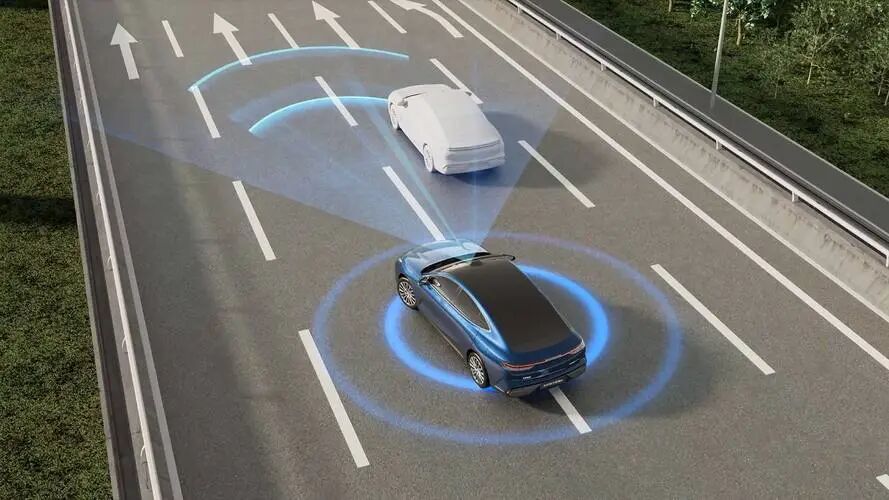
Image Source: Internet
Continuing to follow the vehicle ahead may result in sustained speed limitations, while overtaking requires a lateral lane change, adjustment of longitudinal speed, and re-establishing an appropriate following distance after entering the target lane.
Both actions may meet current safety requirements, but their impact on subsequent driving conditions differs.
Therefore, the system must evaluate not just the speed of the vehicle ahead but whether the overtaking maneuver will provide sufficient traffic efficiency benefits.
If the speed difference between the vehicle and the one ahead is small, overtaking may not significantly improve subsequent driving conditions even if completed.
If another slow vehicle is encountered soon after overtaking, the vehicle may need to decelerate again, limiting the benefits of the previous lane change.
In this case, even if there is a safe gap in the target lane, immediate overtaking may not be the better choice.
Conversely, if the vehicle ahead continues to limit the vehicle's speed and the target lane offers more stable driving conditions, timely overtaking may reduce the time spent following at low speeds.
It is also important to distinguish between speed benefits and time benefits.
An increase in speed after overtaking does not necessarily mean that travel time will be reduced proportionally. Actual benefits depend on the duration of the overtaking maneuver, how long a higher speed can be maintained afterward, and traffic conditions on the subsequent road.
From an algorithmic design perspective, this can be understood as evaluating candidate behaviors.
The system must compare the expected outcomes of different choices, such as continuing to follow, overtaking, or temporarily waiting, and select the most appropriate behavior while meeting safety constraints.
If the strategy is too conservative, the system may miss overtaking opportunities that are already feasible; if it overemphasizes traffic efficiency, it may result in frequent lane changes without corresponding speed or time benefits.
Therefore, improving overtaking initiative should not be simply understood as lowering the threshold for lane changes but rather focusing on improving the identification and evaluation of overtaking opportunities, enabling the system to execute valuable overtaking maneuvers more timely while reducing actions with limited benefits.
02 Why Can't the Target Lane Be Assessed Based Solely on Front and Rear Distances?
Even if the system determines that overtaking would be beneficial, it must still assess whether the target lane provides sufficient safety margins.
One often-overlooked detail is that the distance between vehicles represents only the current state, and their relative speeds determine how this distance will change over time.
Assume the vehicle is preparing to change lanes to the left, with the vehicle behind in the target lane 60 meters away but traveling 10 meters per second faster.
If both vehicles maintain this speed difference, the distance between them will decrease by 10 meters every second, shrinking from 60 meters to 30 meters in 3 seconds.
This example describes simplified longitudinal relative motion and does not directly determine whether 30 meters is safe.
Actual risk also depends on the absolute speeds of both vehicles, whether they accelerate or decelerate, the lateral position of the vehicle changing lanes, and whether their future trajectories may conflict.
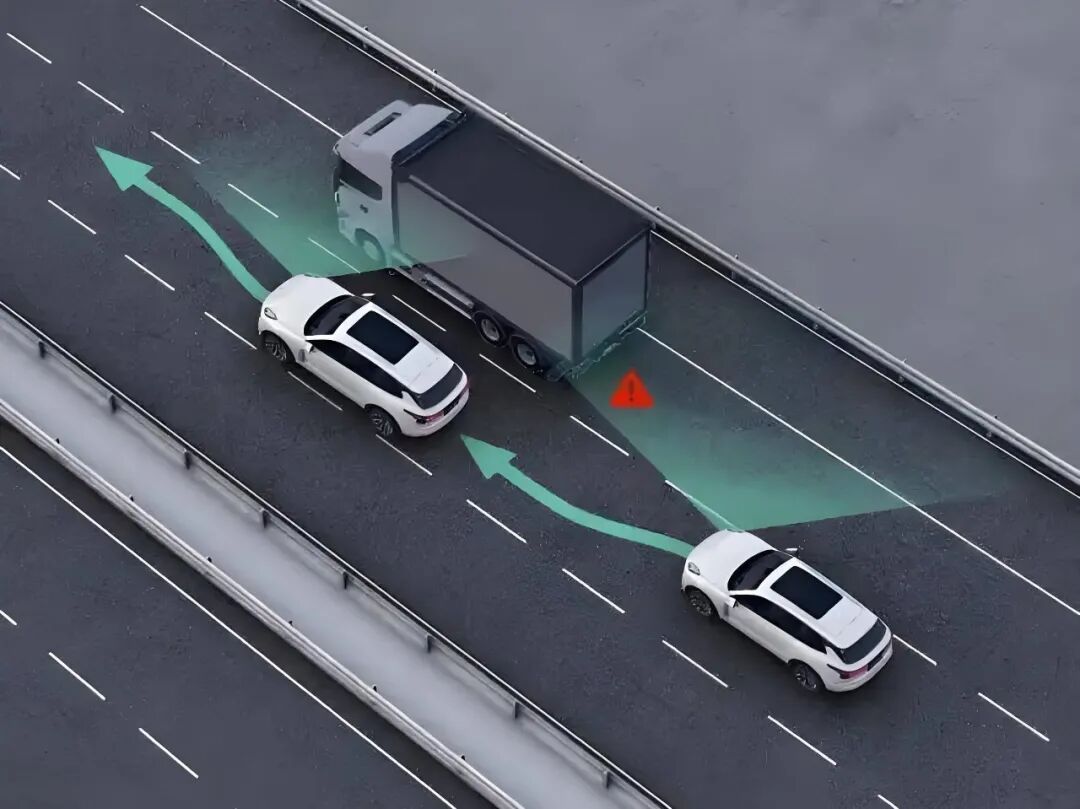
Image Source: Internet
This illustrates that the system cannot rely solely on determining whether there is a sufficiently large gap at present but must also assess whether this gap can maintain an acceptable safety margin throughout the entire lane change process.
This involves target tracking, motion prediction, and safety gap assessment.
The system must predict the future motion states of surrounding vehicles based on their positions, speeds, and motion trends, then evaluate whether the target lane can maintain sufficient safety margins throughout the lane change process, considering the vehicle's lane change trajectory and estimated execution time.
The lane change time itself is not a fixed value unrelated to the scenario.
Vehicle speed, lateral motion planning, steering response, and target trajectory all affect the duration of the maneuver. The longer the lane change takes, the more the system must account for motion changes in surrounding vehicles during this time.
Therefore, safety gaps cannot be determined solely by a fixed distance.
The same distance may correspond to entirely different risks under different speed differences and traffic conditions.
Even if the safety gap meets requirements, it only indicates that overtaking may be feasible, not that it is necessarily worth executing.
The system must still make a comprehensive judgment based on the speed loss caused by the vehicle ahead, traffic conditions after overtaking, and the execution cost of the entire maneuver.
Safety gap assessment primarily answers whether overtaking conditions are currently met, while benefit assessment determines whether overtaking is more appropriate now.
The former focuses on whether the maneuver can be executed safely, while the latter focuses on whether executing it has sufficient value. The two are interrelated but cannot replace each other.
03 Why Might a Beneficial Overtaking Maneuver Not Be Executed Temporarily?
Overtaking decisions face another issue: just because a maneuver is deemed worthwhile at the behavioral level does not mean a suitable execution plan can always be generated at the trajectory planning level.
Assume there is an available gap in the target lane, and the system determines that overtaking would improve traffic efficiency.
However, if the current speed is high and the available space is limited, the vehicle must coordinate steering and longitudinal speed changes while satisfying lateral motion constraints.
If the lateral movement lasts too long, the vehicle may interact with surrounding traffic participants for an extended period during the lane change; if the lateral action is too abrupt, it may cause significant lateral acceleration, affecting passenger comfort.
Therefore, trajectory planning must not only pursue smooth curves but also consider vehicle motion capabilities, lateral acceleration, longitudinal speed, and the relationship between the trajectory and the predicted motion of surrounding traffic participants.
This is why coordination between behavioral decision-making and trajectory planning is necessary.
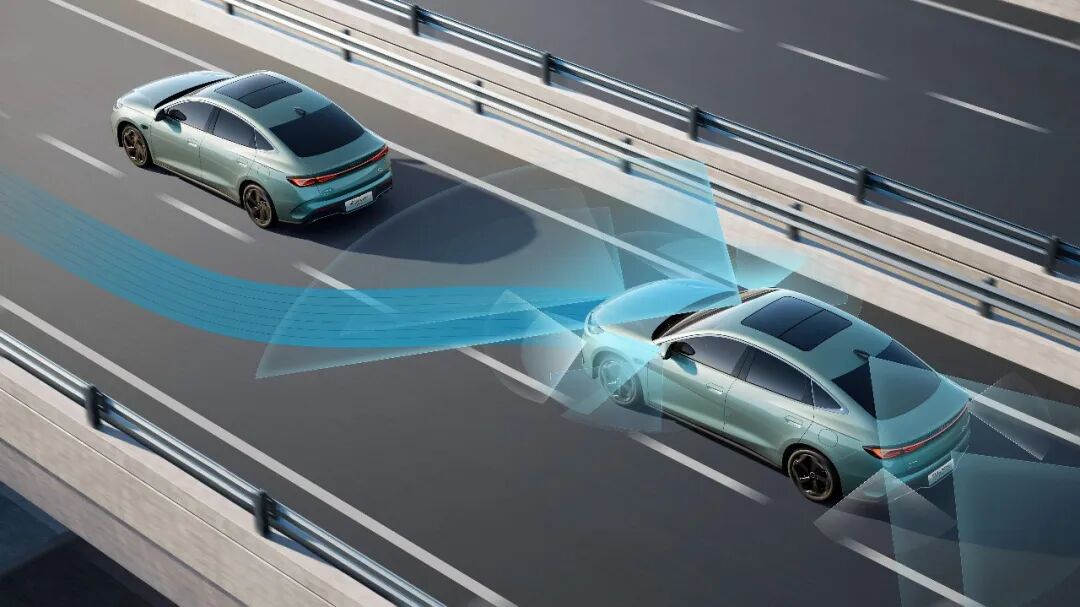
Image Source: Internet
Behavioral decision-making determines whether and when to overtake, trajectory planning generates a specific path that meets vehicle motion constraints and safety requirements, and the control system executes steering and speed adjustments based on the vehicle's actual state.
If the planned result cannot meet current conditions, the system cannot forcibly execute the original maneuver simply because it has decided to overtake. It must reassess feasible behavioral options and adjust the trajectory or timing when safety conditions allow.
Even after a lane change has begun, the assessment must continue.
The vehicle behind in the target lane may accelerate, the vehicle ahead may decelerate, and the originally feasible gap may change.
The system must continuously update the motion states of surrounding vehicles and determine whether the current trajectory still meets safety requirements.
This does not mean overtaking must be abandoned as soon as surrounding vehicles change; rather, subsequent actions must be reassessed based on the updated traffic conditions and the vehicle's position. Continuing, adjusting the trajectory, or taking other safety measures should all be based on what is practically feasible at that time.
Thus, overtaking initiative cannot be evaluated solely based on trajectory quality or execution capability. Initiating a lane change earlier does not necessarily mean greater efficiency, nor does completing an overtaking maneuver faster necessarily mean the entire action is more reasonable.
04 Final Thoughts
Evaluating the intelligent driving system's overtaking capability involves more than just counting how many overtaking maneuvers the vehicle completes. It requires observing whether the system can identify truly valuable opportunities, maintain sufficient safety margins in dynamic traffic environments, and ensure that decisions can be executed smoothly and reliably by the vehicle.
Progress in overtaking capability does not mean making the vehicle more eager to overtake the vehicle ahead but ensuring that each overtaking maneuver has sufficient justification, matching safety conditions, and an executable plan.
-
![]()
Settlement of Smart Horizon's 'Household Registration': First Independent Automaker Status Approved for Hongmeng Zhixing, Paving the Way for Listing
-
![]()
Why Not Opt for Price Reductions When Car Sales Are Sluggish?
-
![]()
Chang'an Automobile: Ushering in a New Era of 'Young Leaders'
-
![]()
What?! The Bumper is No Longer the First Line of Defense!
-
![]()
Who Can Achieve Big Results with AI During Double 11?"],"keywords":["Double 11, AI, Doubao, Qianwen, shopping recommendations"],"content":["During Double 11, Douyin and Alibaba attract users to use AI
-
![]()
The Enduring Wealth Empire of the Hilton Family: An $8.3 Billion Legacy and AI-Driven Family Office Fueling Financial Triumph
-
![]()
Cue One-Week Hands-On Test | AI Gets an ID Card, But Still Not “Always Available”
-
![]()
Musk's Masterstroke: Gifting SpaceX Shares—A Genius Calculation