The Data Centers of AI Giants Are Hitting a Wall Harder Than Chips
 10/20 2026
 535


Cloud Providers' Data Centers Are Being 'Revisited'
Image source | Internet (Please contact for deletion if infringing) Partially AI-generated
In the first half of 2026, a subtle shift emerged in the earnings calls of tech giants.
Analysts no longer solely inquired about “how much model capabilities have improved,” but repeatedly asked the same question: With money spent, when will computing power truly be delivered?
Behind this lies an undeniable fact: AI giants' data centers are struggling to meet surging demand for computing power, leading to a supply-demand imbalance.
Over the past two years, the industry's narrative has centered on “chip shortages.” GPUs were scarce, HBM capacity was strained, and CoWoS packaging backlogs extended beyond a year.
But by 2026, bottlenecks had shifted beyond semiconductors.
Power access required queuing, transformer deliveries faced delays, and liquid cooling systems transitioned from “optional” to “mandatory”—yet skilled personnel for bulk deployments remained insufficient.
JPMorgan noted in a research note: Modern data centers can be built in two to three years, but powering them takes five to seven years for natural gas, over a decade for nuclear, and two to four years for solar. Grid access queues in many U.S. regions already exceed five years.
The pace of construction and electrification is no longer aligned.

Diverging Demand and Delivery Curves
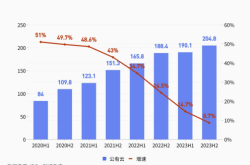
Jefferies estimates that in 2025, only 8.9GW of global data center capacity will be operational, while demand will approach 21.1GW, leaving a gap of ~12GW.
Critically, cumulative unmet capacity from 2021 to 2025 reached 20.4GW, with the deficit widening.
In other words, the industry has not spared expenses or construction efforts over the past five years—yet capacity growth continues to lag behind soaring demand.
Global AI data center power demand is projected to hit ~30GW in 2026, with North America alone accounting for nearly 19GW.
However, Jefferies' supply chain analysis reveals that labor shortages in engineering and construction, delayed cooling equipment deliveries, tight supplies of transformers and power components, and saturated backup generator production are slowing the transition from blueprints to powered servers.
This explains a seemingly contradictory phenomenon: Despite the four tech giants—Google, Meta, Amazon, and Microsoft—planning ~$750 billion in capital expenditures in 2026 (up 80% from $410 billion the previous year), anxiety over “insufficient computing power” is intensifying.
While financial decisions can be made within a quarter or two, grid expansion, substation construction, and cooling equipment manufacturing follow industrial, not financial, logic.
Chip-related pressures persist, albeit in transformed forms.
NVIDIA's GPU order backlog extends to 2027, totaling $1 trillion, with GPU and custom chip lead times nearing a year. All three HBM suppliers sold out their 2026 capacity, leaving a 50–60% HBM supply gap.
SEMI China's head provided a more specific forecast: Global AI infrastructure spending will reach $450 billion in 2026, with inference computing accounting for over 70% of capacity for the first time. Memory is replacing logic chips as the most constrained component in AI infrastructure.
While chip shortages can be alleviated through expansion, power access and grid stability cannot.
The North American Electric Reliability Corporation issued its highest-ever Power system reliability alarm (power system reliability alert) in May 2026, specifically targeting “computational loads” like AI training centers. If a load exceeding 1,000 megawatts unexpectedly disconnects, the impact on grid frequency is equivalent to a large generator tripping instantaneously—often faster than dispatchers can respond.
This means AI data centers are not just “power-hungry”; their load characteristics test grid safety boundaries.

Data Centers Are No Longer Just 'Server Rooms'
The crux of this crisis lies in acknowledging a paradigm shift: Data centers' functional roles have fundamentally changed.
In the cloud era, data centers were “warehouses” for storing data and serving it on demand, with availability and storage density as core metrics.
But as inference and agents become the primary drivers of computing power consumption, data centers have transformed into “factories”: They consume electricity to produce tokens, with cost structures directly tied to token throughput per watt.
NVIDIA's repeated promotion of the “token factory” narrative at GTC essentially conveys the same idea: Future data centers will not be containers for IT costs but production lines using electricity as feedstock and tokens as output.
When viewed through a manufacturing lens, many previously overlooked bottlenecks emerge.
First is cooling. Single-rack power has surged from kilowatts in the air-cooled era to hundreds of kilowatts, with next-gen AI racks targeting megawatt-scale designs. Traditional air cooling can no longer balance computational density and energy constraints physically.
Liquid cooling has shifted from “optional” to “mandatory,” but scalability bottlenecks lie not in principles but in delivery: Cold plate systems can achieve a PUE of 1.15–1.2, and immersion cooling can reduce it to 1.1 or even 1.04. However, ramping up a CDU production line to stable output while minimizing leakage risks requires manufacturing system ramp-up time.
Cooling systems have long accounted for 25–40% of total data center energy consumption. Transforming this from an engineering challenge to an industrial one is the most underestimated aspect of this infrastructure wave.
Second is talent. Uptime Institute's annual survey reveals that in 2026, over half of data center respondents struggle to fill operational, electrical, and monitoring roles, with employee poaching becoming commonplace.
Studies further indicate that up to half of data center engineers will retire within three years, while new hires remain insufficient, creating an experience gap.
Building a data center requires engineers; operating a high-density liquid-cooled cluster demands a different skill set—proficiency in both traditional infrastructure and GPU scheduling/distributed training environments. Such talent is extremely scarce in the market.
Capital can buy equipment but not experience curves.

The 'Alienation' of Capital Expenditures
Facing these structural shortages, giants are accelerating spending—and the nature of their expenditures is increasingly diverging from traditional “capital expenditures.”
Morgan Stanley estimates that by 2028, global spending on AI data centers and chips will reach $2.9 trillion, with ~$1.4 trillion covered by internal cash flows of hyperscale cloud providers and the remaining $1.5 trillion requiring external financing.
This indicates that internal cash flows are no longer the boundary for investment. By mid-September 2026, bond issuances by the five largest U.S. cloud providers (Google, Amazon, Meta, Microsoft, and Oracle) reached $186.1 billion, surpassing total 2025 issuances. Goldman Sachs expects their 2026 bond issuances to hit ~$250 billion and potentially $400 billion in 2027.
Domestic actions are similarly reshaping internet companies' financial profiles. Tencent's Q2 2026 capital expenditures surged to RMB 52.8 billion, nearly triple the year-ago figure, with most allocated to data centers, GPU servers, and intelligent computing clusters.
Notably, free cash flow turned negative by RMB 13.8 billion that quarter—its first quarterly negative figure since disclosing the metric in 2014—largely due to concentrated prepayments for computing power procurement.
ByteDance raised its 2026 full-year capital expenditure plan to RMB 200 billion, the highest domestic investment intensity. Alibaba's ~RMB 126 billion in capital expenditures for FY2026 focused overwhelmingly on AI servers, data centers, and GPU procurement.
Viewed through a traditional “return on investment” lens, these figures appear aggressive.
A more accurate interpretation is that capital expenditures are shifting from “investments” to “entry fees.”
The computing power supply gap is structural, with delivery cycles measured in years. Whoever locks in power, rack, and chip capacity in advance secures eligibility to compete in the next phase.
Blackstone's president captured the essence of this infrastructure wave: Demand for large language models among portfolio companies has surged sevenfold in the past six months, yet supplies of data centers, power, and chips lag far behind. Infrastructure itself is becoming an “asset with financing value.”
When infrastructure becomes a tradable asset class, data centers cease to be mere cost items in corporate financial statements and instead become strategic assets requiring careful valuation on balance sheets.

Computing Power as a 'Sovereign Asset'
Shifting focus to China, a common misinterpretation arises from comparing “$750 billion in U.S. spending vs. $100 billion in China.” While the numbers offer reference, the structural differences in bottlenecks are more revealing.
SemiAnalysis incorporated China into its global data center tracking model for the first time in September 2026, estimating China's delivered data center capacity at over 24GW—second only to the U.S. (56GW) and exceeding Europe, the Middle East, and Africa combined.
By vendor, ByteDance accounts for ~5.3GW (~1/5 of the national total), almost entirely leased. Alibaba (~3.9GW), Tencent (~2.4GW), and Baidu (~1.1GW) rely on a mix of self-built and leased facilities.
China's delivery cycle for 100MW+ hyperscale data centers has compressed from ~18 months in the cloud era to ~12 months for AI, with some projects reaching 100 days.
However, the same report highlights a critical constraint: Under advanced AI chip export controls, domestic chips deliver only 10–30% of the computing power per watt compared to imported chips. Nationwide, data center utilization rates stand at ~71.4%, with chip supply shortages remaining the key bottleneck.
This creates two distinct paths to “insufficiency.” In the U.S., bottlenecks center on physical grid capacity—chip shortages are easing, but electrification and grid integration cannot keep pace. In China, bottlenecks concentrate on chip energy efficiency and supply structure, with relatively greater flexibility in power capacity and grid expansion. Policy initiatives are also actively promoting “computing power following electricity,” directing capacity toward regions rich in renewable energy.
While the appearance (surface-level issue) of “insufficient computing power” appears similar, the underlying constraints differ, leading to divergent strategic priorities: Overseas giants are moving upstream, building power plants, signing long-term nuclear agreements, and even incorporating power assets into strategic portfolios.
Domestic players are focusing on domestic chip adaptation, computing efficiency optimization, and refined leasing models.
Viewing this data center arms race solely through a commercial lens overlooks a rapidly emerging dimension: Nations and regional blocs are treating computing infrastructure as strategic assets.
IDC statistics show that over 40 countries have launched and funded national AI infrastructure projects, with the Middle East most active and Western Europe/Asia-Pacific driven more by data sovereignty and security needs.
Saudi Arabia's sovereign fund-backed AI firm HUMAIN partnered with France's Mistral to deploy up to 600,000 AI chips and 1GW of computing power by 2030, aiming to keep “data, intelligence, and computing power in customers' own hands.”
The EU treats sovereign AI infrastructure almost as a doctrine, financing European data centers and chip capabilities through projects like InvestAI.
These moves signify that data center location and ownership are shifting from commercial decisions (“where electricity is cheap, close to users”) to political-economic ones (“whose territory retains computing power”).
When computing power is integrated into sovereign frameworks, supply elasticity tightens further.
Not all locations permitted to build data centers will be allowed to do so, nor will all willing investors secure equal access to chips and grid connections.
-
![]()
Bosch Secures Multi-Million-Unit Orders, Horizon Robotics' Chips Go Global: What Will Mobileye's Next Move Be?
-
![]()
Is Douyin Still Reliant on the 'Little Yang Brother' Phenomenon?
-
![]()
NIO’s Workforce Declines by Over 10,000 in a Year, with RMB 930 Million in Stock-Based Compensation in H1: Implications for 35,000 Employees
-
![]()
China's Brake-by-Wire Systems Start to Compete with Bosch's Market: Who Will Supply the Core Driver Chips?
-
![]()
Li Auto Cuts Workforce by 3,970 in a Year: Insights into Average Monthly Salary and the Dominance of Sales Staff (40%)
-
![]()
Ignite the Tokens! The Capital Efficiency Test for Cloud Providers in the Agentic Cloud Era
-
![]()
The Data Centers of AI Giants Are Hitting a Wall Harder Than Chips
-
![]()
What Happened to Those Companies Specializing in Selling Tokens?