Sales of Fuel Vehicles Drop Below One-Third for the First Time, Now It's New Energy's Turn to Face Intense Competition
 10/20 2026
 550
Produced by | Shi Tianhao Observer
Author | Chen Cong
On the morning of October 19, Li Xiang posted a long Weibo article. 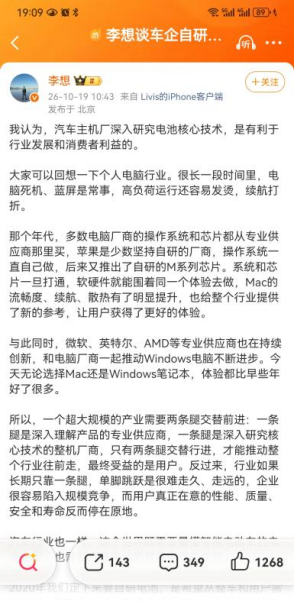
(Image source: Weibo)
He wrote that a massive industry needs to walk on two legs—the world needs both battery companies that best understand smart electric vehicles (EVs) and smart EV companies that best understand batteries.
He didn’t name names. But over a month earlier, Ningde Times' Chief Manufacturing Officer Ni Jun had said something else: 'Just because you can build a car doesn’t mean you can build a battery. Let professionals handle what they do best.'
Put the two statements together, and the message is clear.
That same morning, the State Council Information Office introduced the economic performance for the first three quarters. The domestic retail penetration rate of NEVs exceeded 60% for six consecutive months. From January to August, Chinese NEV passenger vehicles accounted for over 60% of the global market, meaning three out of every five NEV passenger vehicles sold globally came from China.
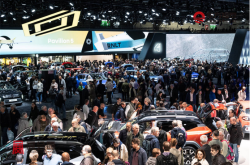
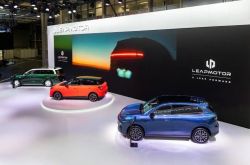
A few days earlier at the Paris Motor Show, the Leapmotor B10 officially began production at the Zaragoza factory in Spain, a joint venture between Leapmotor and Stellantis, catering exclusively to the European market.
A CEO talking about batteries, an automaker landing in Europe, and macro data hitting new highs—all three events occurred in the same week, piecing together a complete picture of China’s NEV industry in autumn 2026.
I. Two Sets of Numbers and One Curve
1. NEV Penetration Surges to 67%
Data from the China Passenger Car Association (CPCA) shows that in September 2026, retail sales of conventional fuel-powered passenger vehicles reached 530,000 units, a year-on-year decline of 43%. For the first time, fuel vehicles accounted for less than one-third of sales in the Chinese market, while NEV penetration surged to 67%, a record high. 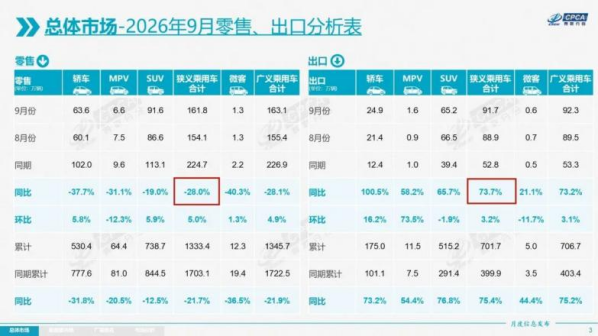
(Image source: CPCA)
The global market is passing the same inflection point. According to Mobility Global, in the first half of 2026, gasoline vehicles accounted for 49% of global new vehicle sales. This marks the first time since the widespread adoption of automobiles in the U.S. in the 1920s that gasoline vehicles' share fell below 50%. In 2021, that figure was still 73%.
The sales rankings offer a more intuitive (intuitive) window. In May, for the first time, the top ten retail sales of passenger vehicles were all NEVs, with fuel vehicles completely wiped out. In August, fuel vehicles once again failed to make the list, with the Leapmotor A10 ranking second with 30,652 units sold, surpassing the Tesla Model Y, and the Li Auto i6 ranking seventh.
Policy is also catching up. Hainan released plans to steadily advance a ban on fuel vehicle sales by 2030, becoming the first province in China to stop selling fuel vehicles.
Statements from the electrification camp are becoming increasingly direct. Elon Musk shared the data and commented that China’s dependence on oil is rapidly declining. He once famously said that driving a non-autonomous fuel vehicle is like using a flip phone while riding a horse. Li Ke, Executive Vice President of BYD, was even more blunt, stating that fuel vehicles have no future in China and that other regions will follow suit eventually. 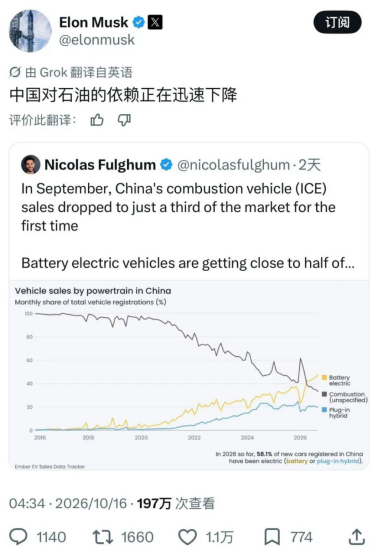
(Image source: Twitter)
Half the driving force behind this shift is fuel prices, and the other half is product competitiveness. Gasoline prices have risen by a cumulative 2,375 yuan per ton this year, and the weight of operating costs in consumers' purchasing decisions continues to increase.
2. The Inflection Point Is Not the Finish Line
It must be clarified that a 67% penetration rate does not mean fuel vehicles are 67% dead.
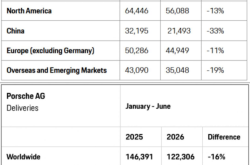
A gasoline vehicle share below 50% does not mean internal combustion engines are exiting the market. Hybrid and plug-in hybrid vehicles still rely on internal combustion engines, and in markets with inadequate charging infrastructure, fuel vehicles retain a solid foundation. Porsche has explicitly returned to fuel vehicles to improve profitability, while Ford has scaled back its electrification strategy due to financial reasons.
A more accurate description is that this is not a simple transition from fuel to electric but a long-term coexistence and gradual iteration of multiple powertrains. Treating the inflection point as the finish line is a misjudgment this industry repeats every year.
II. Li Auto Bets on Batteries, Leapmotor Bets on Europe
1. The Most Battery-Savvy Automaker Deserves a Seat at the Table
After penetration exceeds 60%, a counterintuitive phenomenon emerges: Consumers and evaluation agencies are even more stringent toward EVs than during the initial adoption phase.
When EVs were still novel, public opinion was forgiving. Range discrepancies could be blamed on winter conditions; autonomous driving errors could be chalked up to software updates. Now that EVs have become everyday products, evaluation standards have shifted back to those of conventional products. Range inflation, exaggerated autonomous driving claims, battery safety, and resale value are all measured against fuel vehicles.
So, the exam questions have changed, and so must the answers. At the capital level, Li Auto increased its investment in EVE Energy by 2.65 billion yuan, becoming its second-largest shareholder. At the product level, the L8, L6, and i8 already feature self-developed batteries, while the new-generation MEGA switches to self-developed 5C ternary lithium batteries. The 2026 i6 will simultaneously feature self-developed 5C batteries and self-developed Mach chips, with no plans to offer a CATL version. 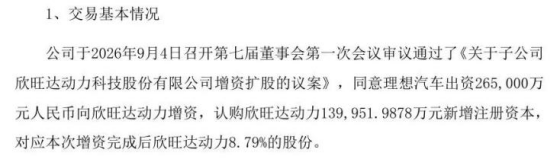
(Image source: EVE Energy announcement)
Li Auto’s approach can be summarized as follows: self-developed and self-manufactured battery packs, self-developed but outsourced cell production. Cell design and R&D are led by Li Auto, while production is outsourced to EVE Energy and CALB. The battery packs, BMS, and thermal management systems remain in-house.
Li Xiang is betting that among the most battery-savvy companies, automakers deserve a seat at the table. Ma Donghui explained the underlying logic clearly: Automakers integrate batteries with vehicle electrical components, thermal management, and control systems, designing them holistically from the vehicle architecture. Future battery innovations will shift from single-component performance to system-level integration between batteries and vehicles.
Ni Jun holds the opposite view: A vehicle’s range is determined not by the best cell but by the worst one. Both arguments hold merit.
Their disagreement isn’t about technology but power—who gets to define the next generation of batteries: automakers or battery manufacturers.
2. In Europe, Borrowing a Competitor’s Boat to Go Overseas
For the same exam question, Leapmotor has written its answer in a different coordinate system: going deeper and going global.
Domestically, Leapmotor has made lidar and high-level autonomous driving standard features in its 100,000-yuan-range A10 and B10 models, trading affordability for scale. In August, the A10 sold 30,652 units, surpassing the Tesla Model Y to rank second, proving this strategy works. 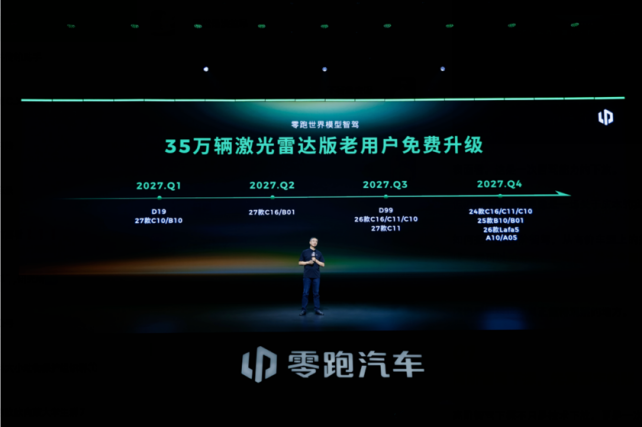
(Image source: Leapmotor)
Overseas, Leapmotor has changed its playbook entirely. Instead of simply exporting Chinese cars, it’s building for Europe in Europe. The Zaragoza factory reuses Stellantis’ manufacturing systems, allowing owners to directly access its charging ecosystem and over 1 million public charging points across Europe. In essence, Leapmotor is leveraging the very traditional giant that once posed the greatest threat to it.
One focuses on technological depth; the other on scale democratization. Their paths diverge, but their logic aligns: After the penetration rate dividend (dividend) is exhausted, survival depends on cost structure and system efficiency, not slogans from product launches.
The reverse operations of multinational automakers confirm this. Volkswagen has partnered with XPeng and Horizon Robotics, Stellantis with Leapmotor, and BMW with Momenta. Even the more conservative Japanese automakers are following suit: Honda has required tier-one suppliers to maximize the use of Chinese-made components, while Toyota plans to use Chinese parts in EV models at its Thai factory starting in 2028.
When former students begin supplying their former teachers, the industry’s power structure has shifted.
III. After Going Overseas, the Examiners Change
1. Foreign Buyers’ First Question Has Changed
At the 140th Canton Fair, the NEV exhibition area was packed.
One detail is worth remembering: Overseas buyers no longer asked how much a car cost when they sat inside. Instead, they inquired about battery range, safety performance, and after-sales service. Chinese EVs going overseas now face evaluations where the examiners have shifted from domestic media to overseas regulations, certification systems, and local users.
The data is clear. In the first three quarters, China exported 4.006 million NEVs, a 1.3-fold year-on-year increase, with NEVs accounting for over 50% of total vehicle exports for four consecutive months. By market, pure EV sales in Europe grew 32% year-on-year, Southeast Asia 81%, and Oceania doubled.
The nature of overseas expansion is also changing. BYD’s Hungarian factory plans an annual capacity of 300,000 units, with Phase 1 completing production line installation and debugging. Chery has revitalized Nissan’s former factory in Spain, while XPeng manufactures through Magna Steyr in Austria. The shift is from product exports to supply chain, technology, and ecosystem exports.
2. Thirteen Years: From 1 to 17
Beneath the surface lies another easily overlooked fact. In the 2026 Global Automotive Parts Top 100, 17 Chinese companies made the list, surpassing the U.S. and Germany in number for the first time, second only to Japan. In 2013, only one Chinese company appeared on the same list. Thirteen years: from 1 to 17. After the supply chain’s center of gravity shifts, the shift in evaluation and standard-setting authority is only a matter of time.
A Spanish automaker at the Canton Fair put it bluntly: Chinese NEVs are leading the world, and Europe must face this pragmatically. His plan has three steps: first, act as an agent for sales; second, introduce technology; and finally, cooperate to establish factories. The risks are clear: The EU, Brazil, and Southeast Asia are raising requirements for local manufacturing, and trade protectionism and geopolitical barriers exist. In the second half of going overseas, the winner won’t be the one who fills the most ships but the one who roots the deepest in foreign soil.
When the Tide No Longer Lifts All Boats
Returning to the juxtaposed scenes from that week:
On one side, macro data from the National Bureau of Statistics; on the other, the micro debate between Li Xiang and CATL. They tell the same story: With penetration at 67%, the industry’s hardest problem is no longer convincing consumers to buy EVs but proving irreplaceability in EV-versus-EV competition.
The International Energy Agency predicts that by 2035, there will be 510 million EVs globally, accounting for about 50% of new vehicle sales.
The story of penetration rates is over; what follows is decades of deep cultivation. Li Auto is betting on technological depth, Leapmotor on scale and globalization, and multinational automakers on open cooperation. No one has the standard answer.
The only certainty is that consumer attitudes toward EVs have shifted from forgiving curiosity to picky (critical) routine. The yardstick for evaluation is getting stricter, and the industry’s sieve is getting finer.
This isn’t necessarily a bad thing. When the tide no longer lifts all boats, it becomes clear who is truly building ships (che).
END
About the Author: Shi Tianhao is a columnist, co-founder of Beijing Five-Second Technology Co., Ltd., and an internet analyst. He has opened columns on multiple media platforms and has published articles in traditional outlets such as Southern Metropolis Daily, Computer Application Digest, Business Review, and Communication Information Report. Awards include 36Kr’s 2022 High-Quality Content Award; Everyone Is a Product Manager’s 2021/2020 Popular Author of the Year; Birdnote’s 2021 Top 50 Creators; Baijiahao’s Ingenuity Plan Creator; Baijiahao’s Kunpeng Plan Winner; Yidian Zixun’s Qinglang Plan Inaugural Author; 2018 Kanchai Network Annual Author; 2017 Geek Network Annual Author; 2017 Most Explosive Self-Media; 2016 Most Explosive Self-Media Award, among others. He has published over a thousand articles in total.
-
![]()
In the First Three Quarters, 8.2 Million Vehicles Sold: Overseas Markets Emerge as a Competitive Frontier for Chinese Automakers
-
![]()
China and the EU Both Achieve Success! Will the Export Volume of New Energy Vehicles to Europe Rise or Fall?
-
![]()
After a Year of Restructuring, WM Motor Encounters Fresh Hurdles in Production Restart
-
![]()
German Luxury Car Brands Encounter Group Pressure in Q3, with Porsche Seeing the Sharpest Drop
-
![]()
Sales of Fuel Vehicles Drop Below One-Third for the First Time, Now It's New Energy's Turn to Face Intense Competition
-
![]()
Why Hella's Automotive Lighting Business Earned Only €7 Million in Half a Year: Why Are Traditional Tier 1s Scrambling for Battery Electronics Orders?
-
![]()
Kling 4.0 Hands-On Review: Long Takes Shine, but AI Direction Still Has Room for Improvement
-
![]()
Jev Sparks the Era of Decision-Making Models: Large Models Dive into the Infinite Game