Will BMW China's Product Range See a Significant Overhaul Following the Withdrawal of Several Car Models?
 10/27 2026
 398
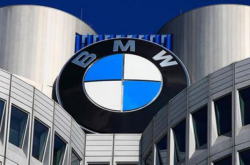
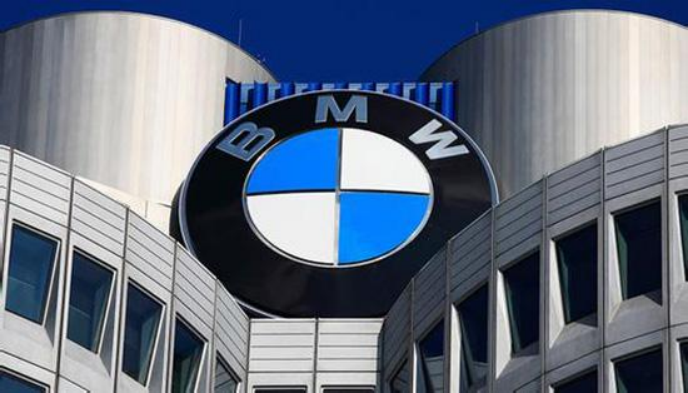
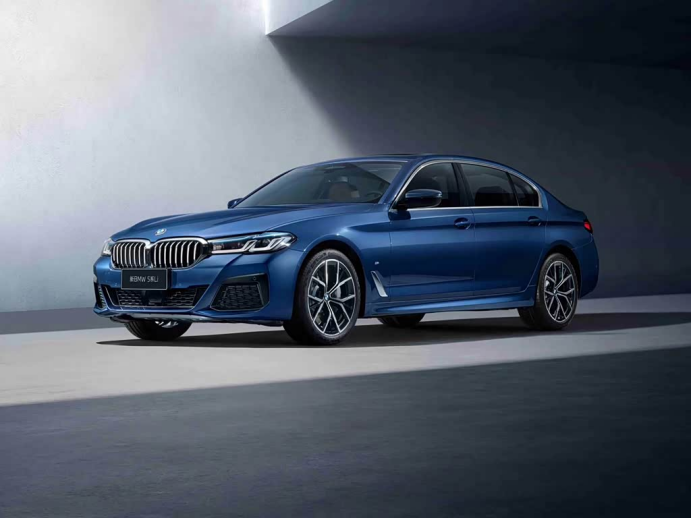
Recent media reports suggest that BMW may soon halt imports of the standard wheelbase version of its 5 Series into the Chinese market. The final batch of these vehicles was allocated and distributed at ports in September, with no further allocations planned. If accurate, this imported model, renowned for its authentic driving experience, could exit the Chinese market within its current product lifecycle.
This development can be partially understood within the current context of the Chinese automotive market.
In recent years, consumer demand for spacious and comfortable rides has surged. Domestic cars have responded by increasing in size, with long wheelbases and roomy interiors becoming key selling points for mid-to-high-end models. In the mid-to-large luxury sedan segment, where the BMW 5 Series competes, rear-seat space and ride comfort are crucial factors for consumers when making a purchase. Data indicates that in May 2026, only 484 units of the imported BMW 5 Series were sold, compared to 6,215 units of the domestically produced long-wheelbase version during the same period. Clearly, the long-wheelbase version, which better caters to the space preferences of Chinese consumers, is more popular in the market.
However, the limited appeal of the 5 Series standard wheelbase model is not the only challenge BMW faces.
In September of this year, the penetration rate of new energy passenger vehicles in China soared to 67%, while the market share of fuel vehicles plummeted to 33%. This shift is continuously squeezing the living space for traditional fuel vehicles.
For BMW, which has long relied on fuel vehicles as its primary sales driver, the pressure is mounting. In September this year, sales of the BMW 3 Series dropped to just 9,975 units, falling below the 10,000-unit mark. Meanwhile, sales of the 5 Series and X3 declined by 50.81% and 30.73% year-on-year, respectively. On one hand, the fuel vehicle market is shrinking; on the other, Chinese domestic brands are rapidly advancing into the high-end market, narrowing the gap with BMW in terms of intelligence and electrification. BMW is navigating through challenging times. Against this backdrop, niche models with limited sales are inevitably the first to be targeted for streamlining by automakers.
Nevertheless, BMW's focus should extend beyond its underperforming fuel vehicles. It has already made adjustments to its poorly selling pure electric models.
In June this year, BMW discontinued its domestically produced models i3, i5, and iX1, with i5 temporarily halting production. These models, often criticized as "retrofitted electric" vehicles, have struggled in the domestic new energy market. Data reveals that in the first half of this year, a cumulative total of 6,345 i3 units were sold, along with 4,638 iX1 units and only 1,742 i5 units. The persistent lackluster sales performance provides BMW with a compelling reason to expedite the transition between old and new electric models.
According to sources familiar with the matter, this adjustment is a routine part of product lifecycle management, primarily aimed at preparing production lines for the launch of Neue Klasse models.
In fact, BMW has been preparing for this transition between old and new models for several years. As early as 2021, BMW unveiled its "Neue Klasse" strategy, which encompasses the development of a dedicated pure electric platform, the introduction of 800V high-voltage architecture, sixth-generation eDrive electric drivetrains, and large cylindrical batteries. Unlike the previous "retrofitted electric" models, the Neue Klasse is designed with electrification as its core principle, freeing it from the constraints of fuel vehicle platforms.
Accompanying this technological shift, BMW is also intensifying its local R&D efforts in China. Its R&D team in China now exceeds 3,000 people. Approximately 70% of the source code for the Chinese version of the Neue Klasse models' operating system is written by the Chinese team. To address its shortcomings in intelligence, BMW has partnered with Momenta to develop an advanced driver-assistance system and collaborated with Alibaba to integrate the Tongyi Qianwen large language model into its vehicles, aiming to leverage the technological strengths of Chinese tech companies to enhance the competitiveness of its new models.
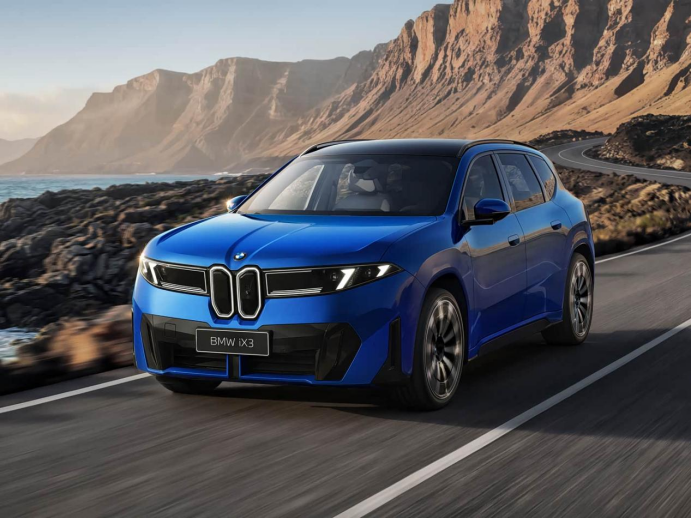
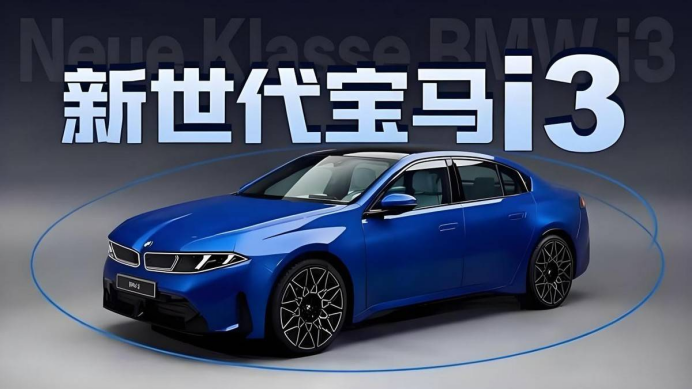
These strategic initiatives are gradually manifesting in specific models. At this year's Chengdu Auto Show, the first pure electric SUV under the Neue Klasse architecture—the BMW iX3 long-wheelbase version—was officially launched. The first pure electric sedan, the BMW i3 long-wheelbase version, is scheduled for production and launch in Shenyang in early 2027. Additionally, the BMW iX4, a sister model to the iX3, is also set to debut in 2027. With these new models gradually making their debut, BMW's new wave of product offensives is taking shape.
According to the plan, by 2027, BMW will introduce nearly 20 new and revised models in China equipped with Neue Klasse technologies and aims to increase the proportion of domestically produced models to over 95% by 2030.
From adjusting its existing model lineup to accelerating the rollout of the Neue Klasse, BMW is clearing the way for its new wave of products. The production adjustments for the domestically produced i3, i5, and iX1 are part of this process. As for whether the imported standard wheelbase 5 Series will also exit the Chinese market, official confirmation is still pending.
Today, Chinese consumers have a stronger preference for long-wheelbase, spacious vehicles, while the fuel vehicle market continues to shrink. The competitive landscape BMW faces is vastly different from before. Meanwhile, with the rapid advancement of Chinese new energy vehicles in intelligence and electrification, and the accelerated rise of domestic brands, consumers now have more choices, making it challenging for BMW to rely solely on its brand and driving dynamics to captivate the market.
In response to these changes, BMW has no alternative but to re-examine its existing product lineup and expedite the renewal of its old and new models. However, the phasing out of old models does not ensure the seamless succession of new ones. Whether BMW's Neue Klasse products can win back Chinese consumers and reverse the declining sales trend in China remains to be seen based on their future market performance.
(Images sourced from the internet, removed if infringing)
-
![]()
DeepSeek Secures Massive Second-Round Funding of 106.1 Billion Yuan
-
![]()
Will BMW China's Product Range See a Significant Overhaul Following the Withdrawal of Several Car Models?
-
![]()
Leapmotor’s Staff Increases by 9,732 in Just Over a Year. Can Zhu Jiangming’s ‘Mini BYD’ Outpace Geely and BYD?
-
![]()
Why Are AI Glasses So Popular, Yet Goertek's Q3 Sales Drop by 2.4 Billion Yuan with Inventory Reaching 22.4 Billion Yuan?
-
![]()
POLYVISION's IPO Review: Persistent Decline in Gross Profit Margin and Weakening Industry Outlook
-
![]()
Audi’s Strategic Split: SAIC-Audi’s Two-Year Plan Leads to Gasoline Vehicle Sales Until 2027 End | Mirror Pro
-
![]()
Racing to Become the "Pioneer Large-Scale Model Stock on the U.S. Stock Exchange": Anthropic Reports Over $80 Billion in Losses Within Half a Year
-
![]()
Wang Teng, Ex-Xiaomi Exec, Proves Prescient Half a Year Ago: Domestic Smartphone and Tablet Product Lines Face Discontinuation Wave