The Worst Thing About Selling Cars Isn't Being Criticized—It's Being Completely Ignored
 11/11 2026
 563
Introduction
In the new energy vehicle era, "reputation" matters more than ever!
"Single-mindedly chasing volume is not the way forward. I think we should truly pursue brand. In China right now, not enough people are paying attention to brand."
At the Automotive Night Talk of the 7th World Internet Conference Wuzhen Coffee Gathering, Chery's helmsman Yin Tongyue once again urged Chinese automakers to value brand building rather than single-mindedly chasing sales.
Automotive executives have been repeating similar statements for at least three years.
As early as 2024, Geely Holding Chairman Li Shufu stated: "Don't simply fight price wars; instead, persistently fight technology wars, quality wars, brand wars, and service wars—this is our basic business philosophy."
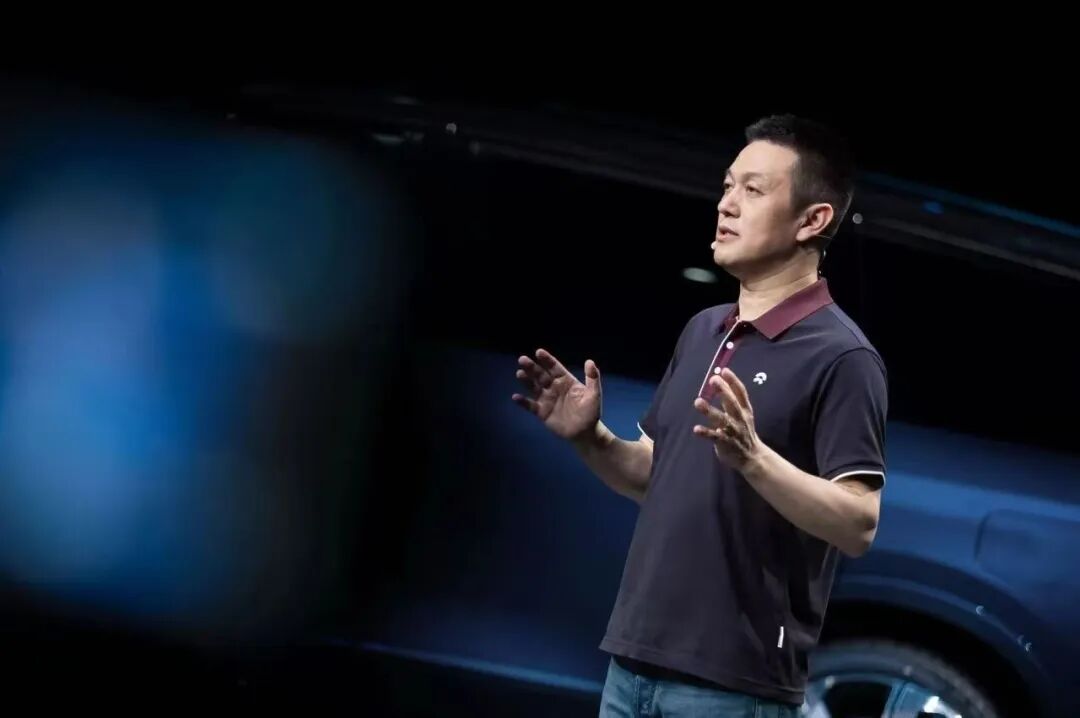
At the 2026 China Automotive Chongqing Forum, NIO Chairman and founder Li Bin repeatedly emphasized that the industry is moving from single-point competition to system competition, and is entering the "clarification period" from the "chaos period" of branding.
In fact, regarding brand building, auto industry leaders such as Wang Chuanfu, Wei Jianjun, and He Xiaopeng have all expressed their views. But when it comes to actual market competition, everyone returns to the starting point—price wars sweeping the field, cost-effectiveness involution.
Seizing the market with low prices and attracting consumer attention with sales volume is itself a survival strategy. Even if a brand persona ultimately cannot be established, having sales data as backing can still protect relevant automotive executives' "peace of mind."
This is the same nature as the current automotive marketing circle's pursuit of traffic.
Traffic KPIs are easy to obtain, especially some notorious traffic—clearly "stirring up drama" and "creating opposition"—yet automakers gladly accept it. They are not unaware that doing so makes it hard to sell cars, but only by inflating traffic data can they secure some people's jobs.
To say the least, in the eyes of many industry practitioners, compared to "being ignored," having people criticize you is a good thing.
After all, this is an era where attention is extremely scarce! And if you want to sell cars, the first thing you must do is attract consumers' attention, thereby facilitating transactions!
The problem here, however, is that many automakers only focus on reversing cause and effect, degenerating into traffic for traffic's sake, while neglecting the big matter of selling cars.
Those bottomless marketing tactics are not building brands but drinking poison to quench thirst.
01 Having controversy is better than "having no presence"
Bad reviews are not scary—if there's a mistake, fix it. The Chinese auto market has high tolerance for errors. But if no one cares, or even when consumers choose cars they simply never think of that name—that's the real trouble.
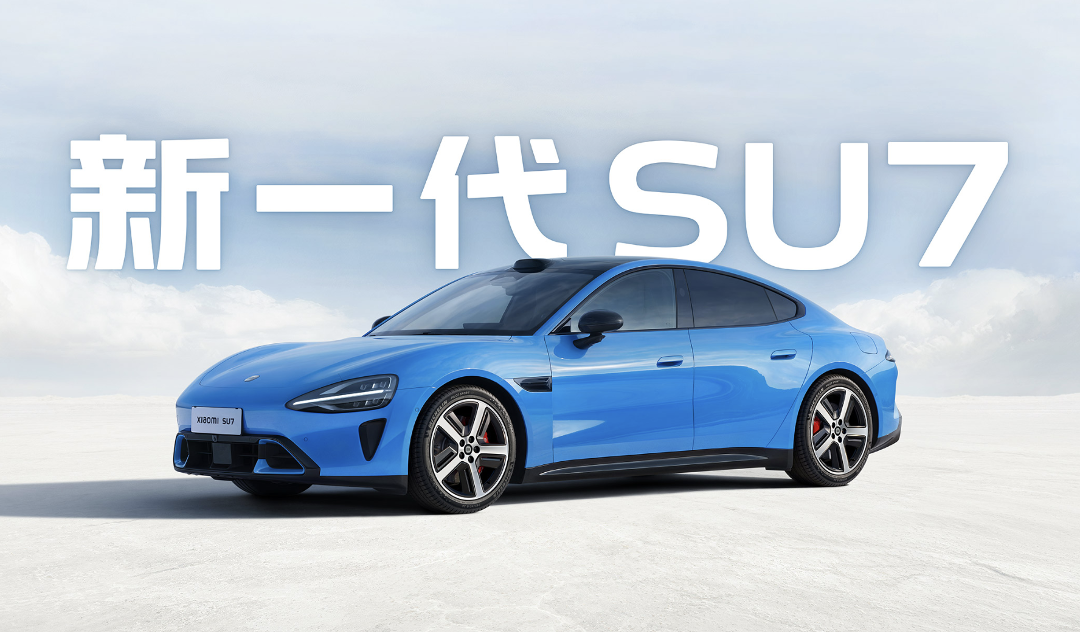
The early Xiaomi SU7 was a very typical controversial model.
Since its launch, the Xiaomi SU7's pricing strategy, chassis tuning orientation, boundaries of intelligent driving capability, delivery pace, and more have been perennial core topics in the automotive public opinion arena. Even Lei Jun "visiting auto shows" gets repeatedly dragged out and criticized.
As a result, as of today, the Xiaomi SU7 still has many controversies, and there remains a portion of users who do not recognize its premium logic and handling trade-offs.
But the fact is, in the 200,000 to 300,000 yuan coupe segment, the vast majority of prospective customers still put the Xiaomi SU7 on their candidate list when doing their homework.
You can say the Xiaomi SU7 is not a good car, but it's hard to deny the Xiaomi SU7's ecological niche. Previously, many "7-series" coupes clamored to besiege Tesla Model 3—and what happened?
In this case, the controversy itself brings exposure to the Xiaomi SU7, firmly occupying users' minds and entering the comparison pool.
Or rather, this is the correct operation of "notorious fame." Without this "notorious fame," Xiaomi's subsequent models might not have attracted so much attention.
In contrast, Skywell Auto had a different ending. Skywell Auto's predecessor, Dianka Auto, was founded in 2015, led by former SAIC Vice President and former LeTV Auto CEO Zhang Hailiang.
In November 2018, Dianka Auto pivoted to high-end and officially launched the "ENOVATE" brand name; that same year it acquired Quanzhou Xihu Auto and obtained new energy production qualifications.
Its ME7 and ME5 models both achieved mass production and delivery. The ME7 sold only 97 units in its first year on the market; the subsequent main model ME5 carried all sales—1,778 units in all of 2021 and 5,321 units in all of 2022, totaling just over 7,000 units delivered in two years.
Until March 2023, when Skywell Auto's internal work stoppage notice leaked, the Changsha base halted operations and no new vehicles were produced. Then Skywell quietly submerged into the tide of the times.
Skywell Auto had long lacked stable visibility in the public opinion arena; its brand narrative was intermittent, with no sustained topics or user discussions. Even when news of the factory shutdown came, most consumers' first reaction was that they had never heard of this brand.
How can an auto brand that people have never even heard of possibly sell cars well?
02 New forces have no silent capital
The elimination round in the new energy industry is a war of attrition over attention assets. Today's new energy vehicle purchasing follows an "information screening system"—all models must compete for limited attention slots.
Simply put, without visibility, you won't enter consumers' comparison lists; and without entering the list, no matter how good the paper specifications, they cannot be converted into orders.
It is precisely because they see this that new car-making forces spare no effort in "creating heat" and "stirring up topics." New car-making force brands start from zero; all brand awareness relies on rounds of new product narratives, user discussions, and sustained exposure slowly accumulating.
Once marketing breaks down and new products stall, public opinion heat quickly cools, and users' memories are washed away and covered by an endless stream of new models.
WM Motor once stood at the same starting line as NIO, XPeng, and Li Auto, with considerable delivery scale, offline stores, and an initial user base.
Obviously, what crushed it was likewise not any single major negative public opinion event. But it must be acknowledged that the sustained depletion of visibility over a long period was one of the fuses of WM Motor's collapse.
When product iteration stalls, discussions gradually fade, and people no longer mention that name, the cost of reawakening market awareness has long become unbearably high.
This is also one of the reasons why new car-making force brands such as WM Motor, Neta, and Jiyue find it so difficult to restructure after bankruptcy.
In addition, here's another point to make clear—new energy series and new force brands under state-owned enterprises equally have no "sunk capital."
Many people believe that state-owned new energy brands backed by groups and armed with state capital endorsement are different—they come with a buffer cushion, can slowly polish products, don't rush to break out, and don't need visibility.
This is a huge misconception.
State-owned background can provide support in funding, manufacturing, and supply chains, but it cannot be directly converted into a position in users' minds. If you don't believe it, look at those state-owned new brands today—which one isn't stuck long-term in the predicament of visibility disconnect? Their products themselves have no fatal flaws, yet users automatically ignore them when buying cars.
Group funding always has a cyclical limit; assessment pressure and profitability requirements will gradually tighten. Once stable awareness cannot be established in the public opinion arena over the long term, no matter how powerful the background, it cannot withstand continuous bleeding, and ultimately can only become "consumables" for "merger and restructuring."
03 Traffic is not wrong; what's wrong is having no bottom line
Finally, let's return to the topic at the beginning. Does brand power building really need traffic? I think the answer is yes.
Traffic itself has no right or wrong, but the source of traffic will "dye" the brand.
Striving for visibility absolutely does not equal actively creating opposition or recklessly stepping on competitors; a healthy brand never relies on piling up controversy, but continuously builds stable, recognizable value labels with a stable foundation for discussion.
Without exaggeration, exchanging provocative warfare and extreme opposition for short-term heat is a fast-acting poison with strong aftereffects. Yet the industry is not short of such negative examples:
Some brand official accounts directly clip competitors' promotional footage out of context, tamper with test conditions, and release one-sided comparison videos.
Some mass-post rhythm-leading copy on platforms, deliberately amplifying opponents' failure cases and magnifying technological route opposition, guiding fans to besiege other brands' comment sections.
Others forcibly bundle and benchmark models at different price points and positions, deliberately creating parameter traps, cherry-picking data favorable to themselves, concealing preconditions, and using misleading rhetoric to belittle competitors.
The infamous "black water army" originates precisely from this.
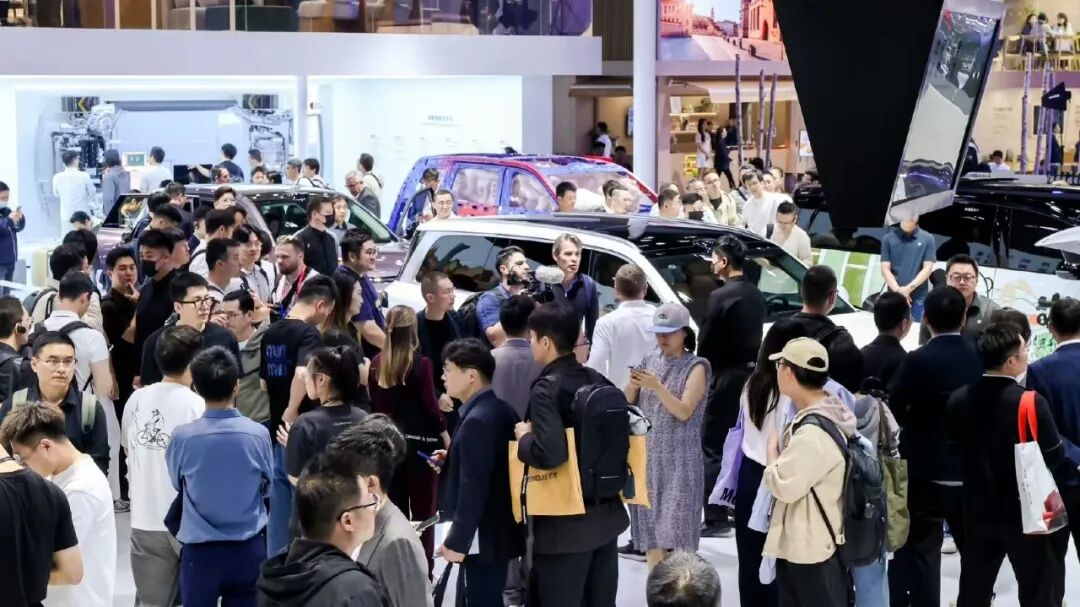
Such operations do indeed turn comment sections into a noisy mess in a short time, with views and interaction data beautifully completing KPIs.
But in users' minds, the brand label solidifies into "loves provoking fights" and "doesn't do proper work." As a result, even when people perceive the brand's existence, it's hard for them to build trust in it.
Frankly speaking, a car doesn't need everyone to like it, but at least target users should remember why it appeared and for whom it exists.
The essence of notorious fame lies in letting users see the product's trade-offs and shortcomings; benign brand visibility is about making users further remember the meaning of the product's existence.
From this perspective, a certain amount of controversy can exist; but it must still be emphasized that deliberate opposition and seeking only traffic must never become the underlying color of a brand.
The new energy vehicle track has never lacked products; what it lacks is long-lasting, stable, clear, and credible brand names.
Only by maintaining competitive bottom lines and deeply cultivating product value can a truly enduring good brand be built.
Responsible editor: Shi Jie Editor: He Zengrong

THE END
-
![]()
For the First Time in Audi's History, the "Engineering Sign-Off" Pen Is in Chinese Hands
-
![]()
The Worst Thing About Selling Cars Isn't Being Criticized—It's Being Completely Ignored
-
To My Surprise, Xiaomi Saw the World's Largest Phone Price Hike in 2026
-
![]()
How Are the New Forces Faring as the Auto Market Loses Its "Golden" Touch?
-
![]()
Tariffs Doubled, Yet Chinese Cars Sell Even Better in Mexico
-
![]()
Cars That Sell Well Will All Be Replaced by Cheaper Alternatives Eventually
-
![]()
The 'Golden September and Silver October' Phenomenon Has All but Vanished: The Auto Market Enters an Era of Pure Survival
-
![]()
Tesla Sold Just 8,817 Vehicles in October—But the Factory Didn't Build a Single One Fewer