Renesas: The Japanese Automotive Semiconductor Giant's Origins — When Toyota and Nissan Jointly Funded to Protect the Supply Chain
 11/13 2026
 564
In December 2012, Renesas announced a plan to raise 150 billion yen in third-party capital. The Innovation Network Corporation of Japan (INCJ) was the lead investor, joined by eight companies — Toyota, Nissan, Keihin, Denso, Canon, Nikon, Panasonic, and Yaskawa Electric — with funds paid in during 2013. Here was a chip company that makes microcontrollers raising capital, with two automakers putting in money alongside.
Automotive MCUs carry a low unit price, yet a single vehicle model uses many of them, from engine control to body electronics. The automakers on that capital increase list were thinking about their own development pace.
Before this round of capital raising, Renesas had only recently merged the semiconductor businesses of Hitachi, Mitsubishi Electric, and NEC — and integration costs, natural disasters, and market fluctuations had weighed on the company for several consecutive years.
Produced by Zhineng Zhixin
Japan's semiconductor industry once enjoyed a glorious period, with Hitachi, Mitsubishi, and NEC each running their own chip divisions, and microcontrollers, memory, industrial products, and automotive customers each forming their own ecosystems.
As manufacturing process investment rose and product complexity increased, the semiconductor businesses of the major groups required ever more R&D and capacity spending.
In 2003, the semiconductor businesses of Hitachi and Mitsubishi Electric were integrated to establish Renesas Technology. In 2010, Renesas Technology merged with NEC Electronics to form Renesas Electronics.
Three sets of technology systems, product lines, factories, and customer relationships were packed into one company, alongside a broad MCU portfolio. The costs came along with it.
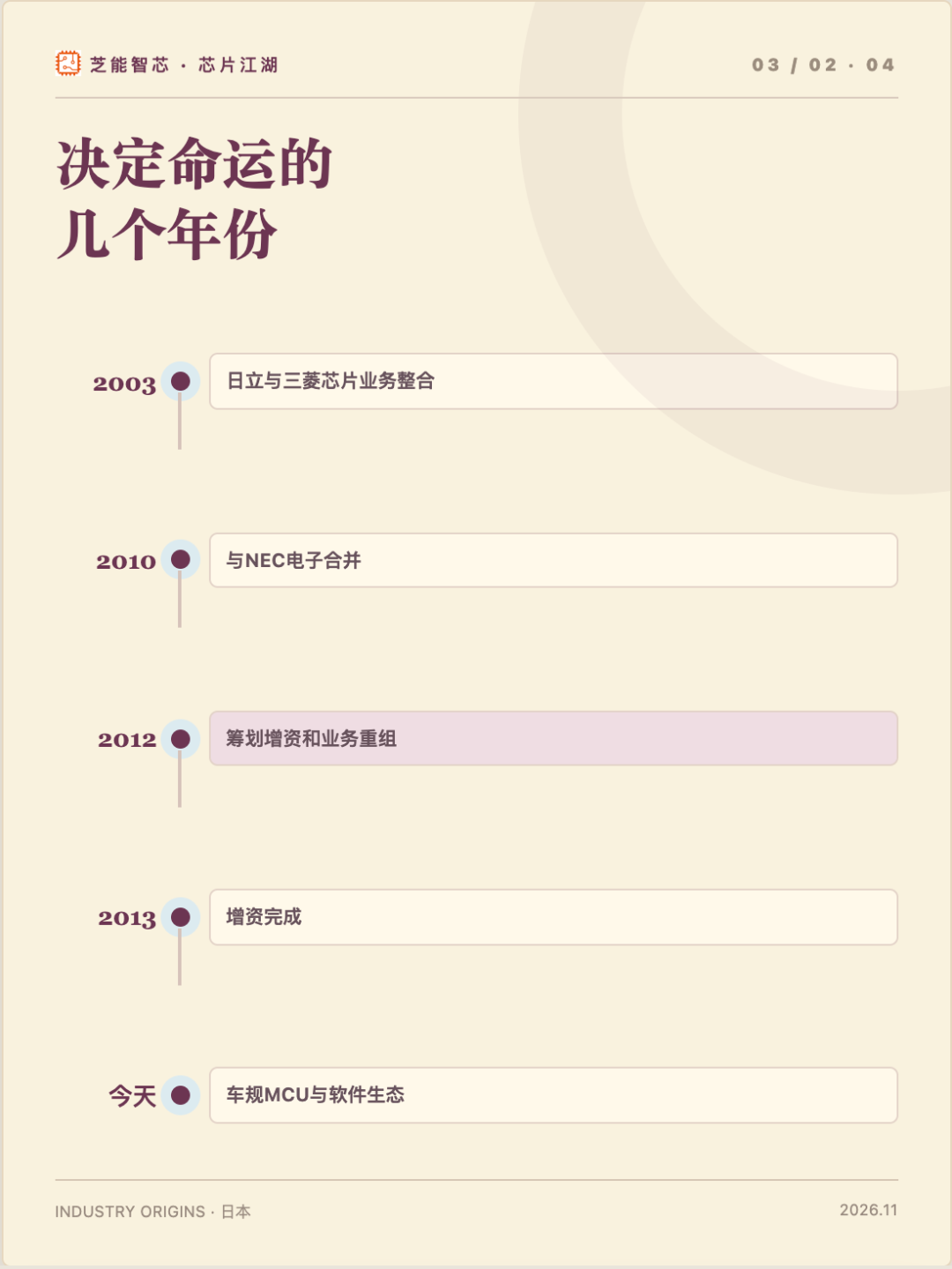
The natural disasters, market fluctuations, and restructuring pressures around 2011 dealt successive blows to Japan's chip production system.
By 2012, Renesas needed to shore up its financial structure, push forward with capacity and personnel adjustments, and concentrate funds on competitive businesses.
The list of eight companies emerged at precisely this point.
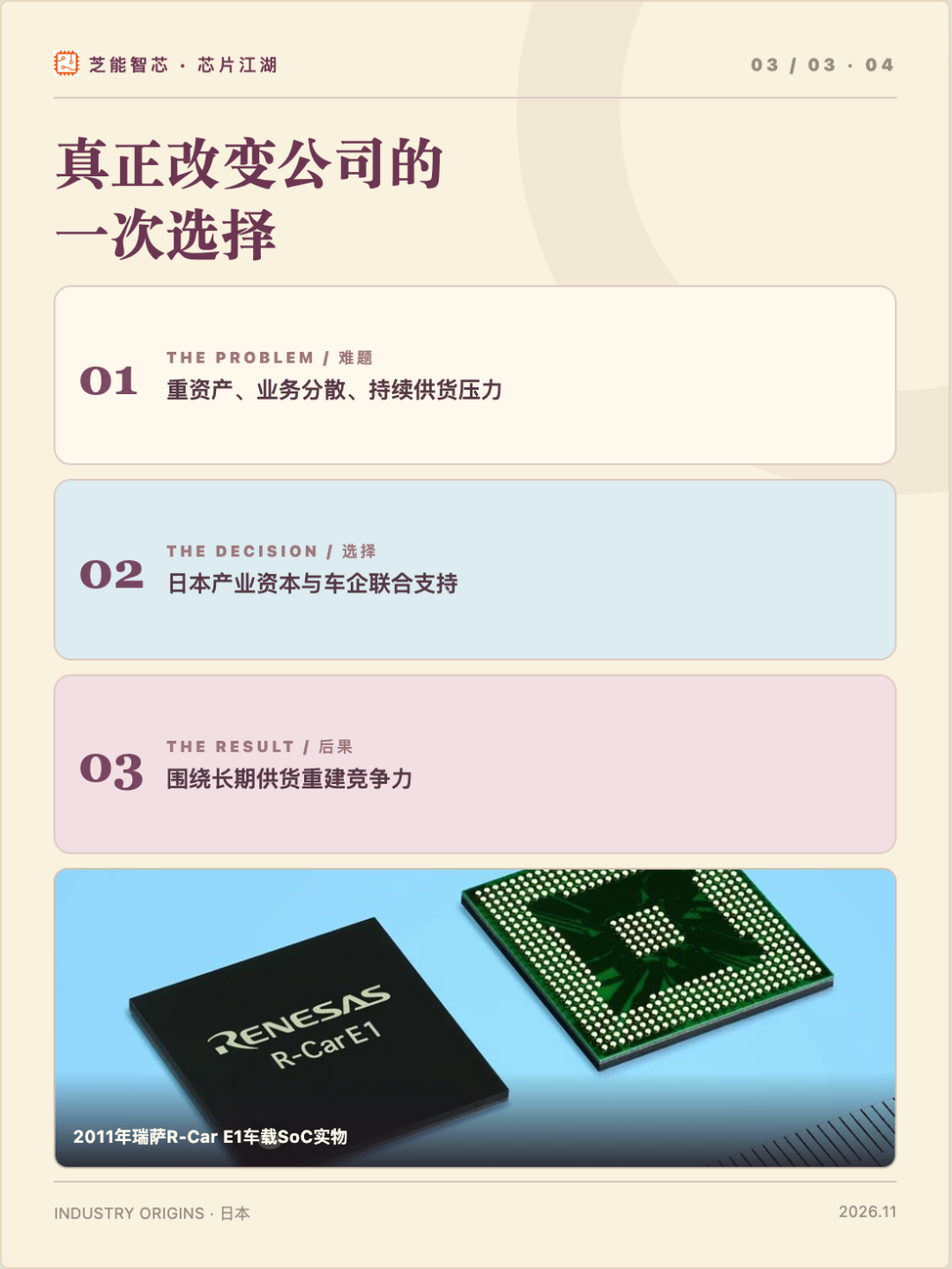
The presence of Toyota and Nissan on this list is directly tied to how difficult automotive MCUs are to replace.
A vehicle model's engine control, body electronics, chassis systems, safety control, and a host of auxiliary functions all depend on microcontrollers. Each controller involves hardware interfaces, low-level software, application programs, vehicle validation, and production testing.
If a supplier suddenly exits, it is extremely difficult for the procurement department to swap in another chip with similar performance within a few weeks.
Similar functional parameters are not enough. Pin layouts, electrical characteristics, registers, compilation environments, memory layouts, and software toolchains all fail to match, and revalidation involves multiple component suppliers and vehicle projects.
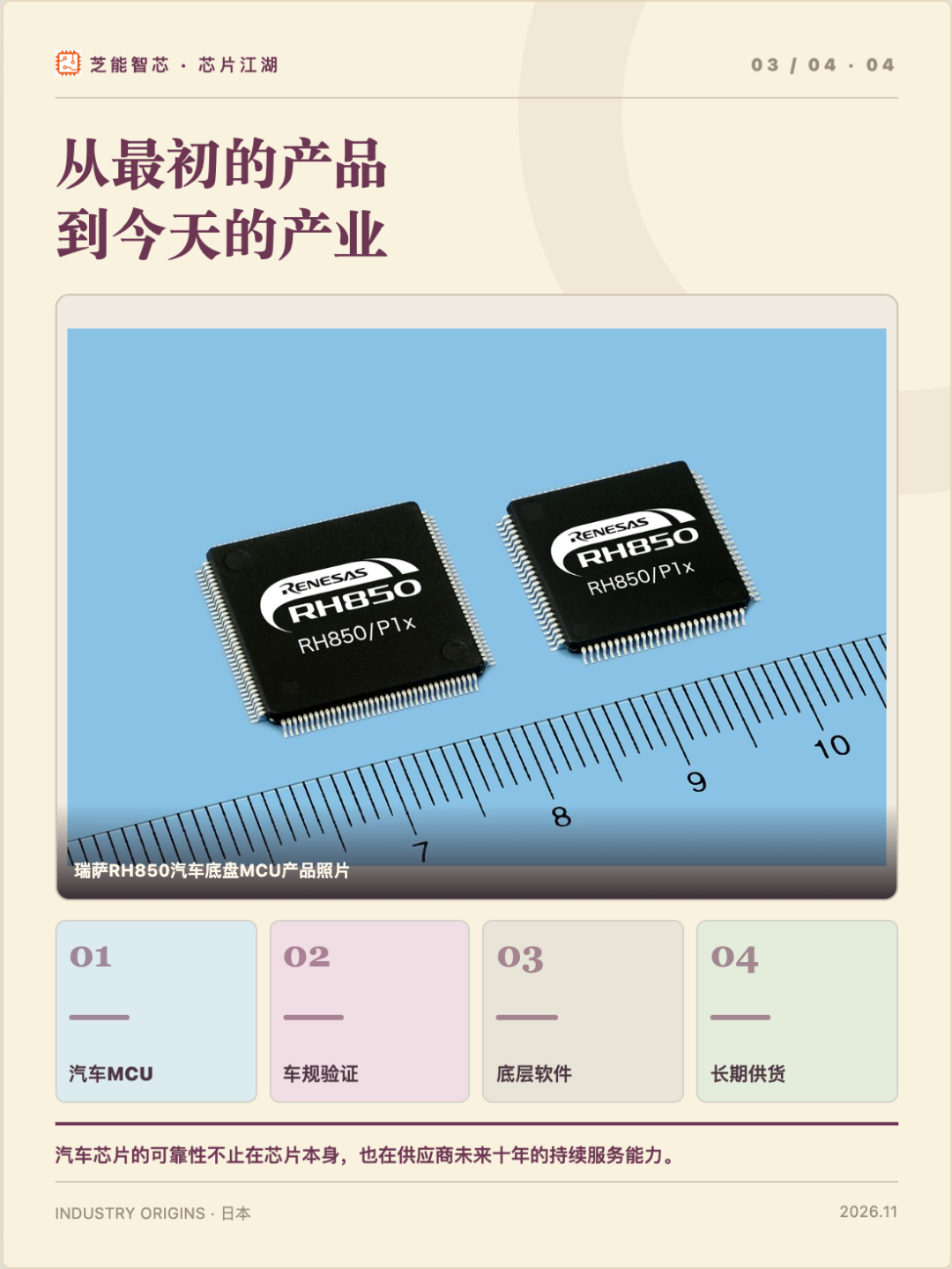
This capital increase was aimed at supply continuity; automotive and industrial customers need a group of semiconductor companies capable of continuous R&D, continuous production, and long-term supply.
A supplier's financial soundness, process continuity, software support capability, and product life cycle of more than ten years all get written into the selection criteria for vehicle development.
-
![]()
Can Honda Thrive Without Leaning on China?
-
![]()
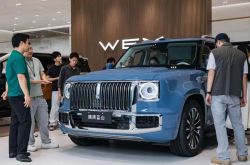
After Orders Exceed 10,000, It Suffers a Fierce Paid Poster Attack: Whose Turf Did the Second-Generation Blue Mountain Step On? | Mingjing Pro
-
![]()
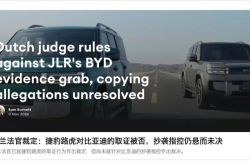
Land Rover Loses First Round: Dutch Court Rules BYD Raid Was a "Fishing Expedition," Ti7 Copying Allegations Still Unresolved | Mingjing Pro
-
![]()
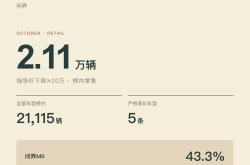
In October, AITO Sold 21,115 Units: Between the M6 and M9, Who Is Driving the Brand's Sales?
-
![]()
Changan Automobile's Domestic Terminal Sales Hit 104,000 in October: Qiyuan Begins to Drive Volume, Deepal at 20,000, Avatr at 2,858
-
![]()
Who in France Is Buying Chinese Cars?
-
Africa's Phone King Transsion, Pushed to a Transformation Crossroads by Memory Price Hikes
-
Apple Emerges as the Biggest Winner of Double 11, Crushing All Domestic Phone Brands, with Xiaomi Taking Second Place