Can Honda Thrive Without Leaning on China?
 11/13 2026
 401
Introduction
Honda appears to be raking in profits, but danger always lurks in the shadows.
Throughout 2026, it has become clear to all just how tough life has been for foreign automakers in China. Stale new models, relentless sales declines, and sharply shrunken profitability have left these companies genuinely unsure of how to proceed.
Under such circumstances, online sentiment has been anything but kind. Most people assume that automotive giants like Volkswagen and Toyota must now look to China's auto industry for direction. It is merely a matter of time before domestic brands defeat them.
Over the past two months, unlike the leading joint ventures that are still rolling out new products, news about Honda has been dominated by poor sales and dealer network reductions. As a Japanese automaker that has cultivated the Chinese market for more than 20 years—and even enjoyed several glorious periods when buyers paid premiums for its cars—Honda now seems to be facing as hard a time as one can imagine.
But interestingly, after Honda accrued subsequent operating costs in the previous fiscal quarter, its results for the first half of fiscal year 2027 (April 2026 to March 2027)—namely April to September—were not only not as bad as everyone imagined, but even somewhat enviable.
Thanks to U.S. tariff adjustments and yen exchange rate movements, Honda turned a profit this time. But regardless, Honda is indeed living quite comfortably.
In contrast, in the Chinese market—even with go-overseas momentum at full strength and everyone from inside to outside caught in fierce competition—industry interest rates are falling rapidly, and every link in the chain is lamenting its plight. This has almost become the norm, yet it still stands before us in a striking way.
These two completely different ways of living, and the colors they reflect—which one is actually what we want? In an era when everyone is talking down foreign investment, I suspect no one dares to step forward and give a clear answer.
Of course, in this world, it is not so easy for overseas automakers to rest easy relying on global markets. The rapid transformation of the Chinese market will certainly be reflected in the global market in the coming years. Before that, any global automaker that dares to underestimate China will surely have the boomerang hit itself.
However, for Honda, since it is full of confidence, the decline in the Chinese market may not necessarily bring it down. Backed by core markets such as the United States and Southeast Asia, Honda has a very clear choice between making money and losing money just to make noise.
01 Does North America Let Honda Rest Easy?
As a global automotive company, electrification transformation is naturally unavoidable for Honda. Although Honda adjusted its related timeline earlier, in essence, Honda is assessing how policy adjustments in major markets will affect its operations from various angles. After the assessment, it will then provide new strategies to adapt.
In North America, because the industry's electrification transformation has slowed and the government canceled tax incentives for electric vehicles, automotive-related policies are undergoing major changes. User demand for pure electric vehicles is not as aggressive as imagined, and Honda decisively halted research and development of three pure electric models in North America. This is the best example.
Likewise, when the Chinese market is not enthusiastic about foreign original electric vehicles and insists on localized products, Honda's reason for presenting a new China strategy is naturally the same.
After this series of adjustments, looking again at Honda's latest financial report data, in the first half of the fiscal year (April to September), Honda achieved revenue of 12.04 trillion yen, a year-on-year increase of 13.2%; net profit attributable to the parent company was 516.761 billion yen, a year-on-year surge of 65.7%, directly exceeding the company's full-year expectation of 400 billion yen. This is not something that can be achieved simply through accounting tricks.
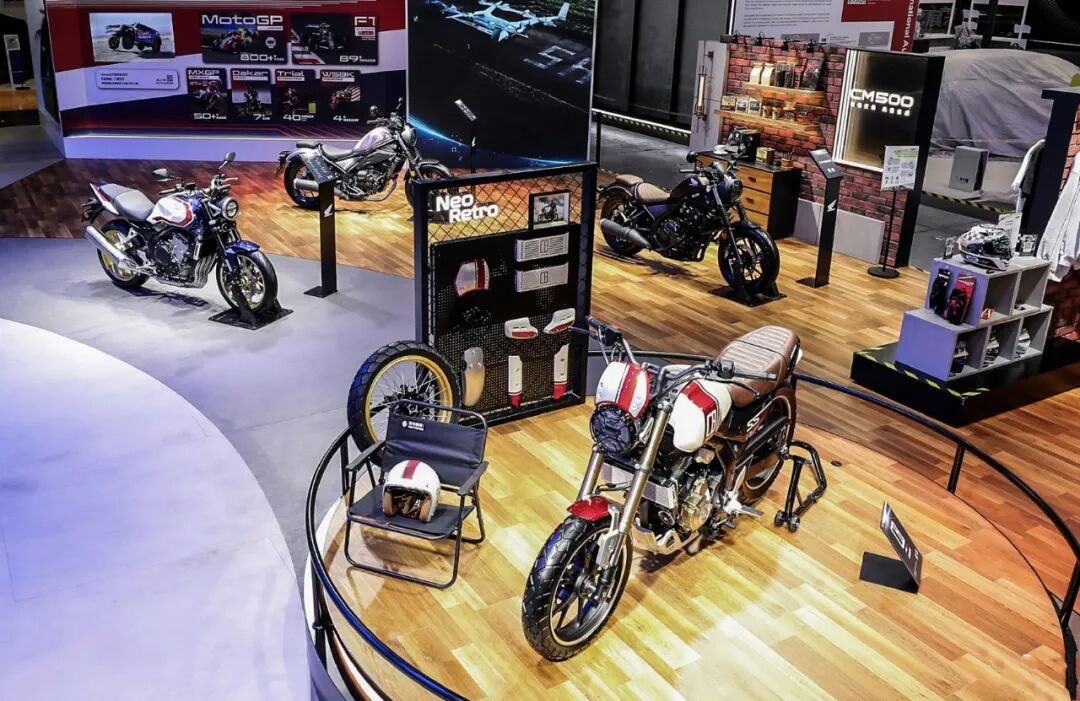
Furthermore, just in Honda's motorcycle business, first-quarter operating profit was 233.9 billion yen, with a profit margin of 20.5%; global motorcycle sales in the first half reached 11.9 million units, a year-on-year increase of 10.6%. Contributions from the Indian and Brazilian markets were indispensable.
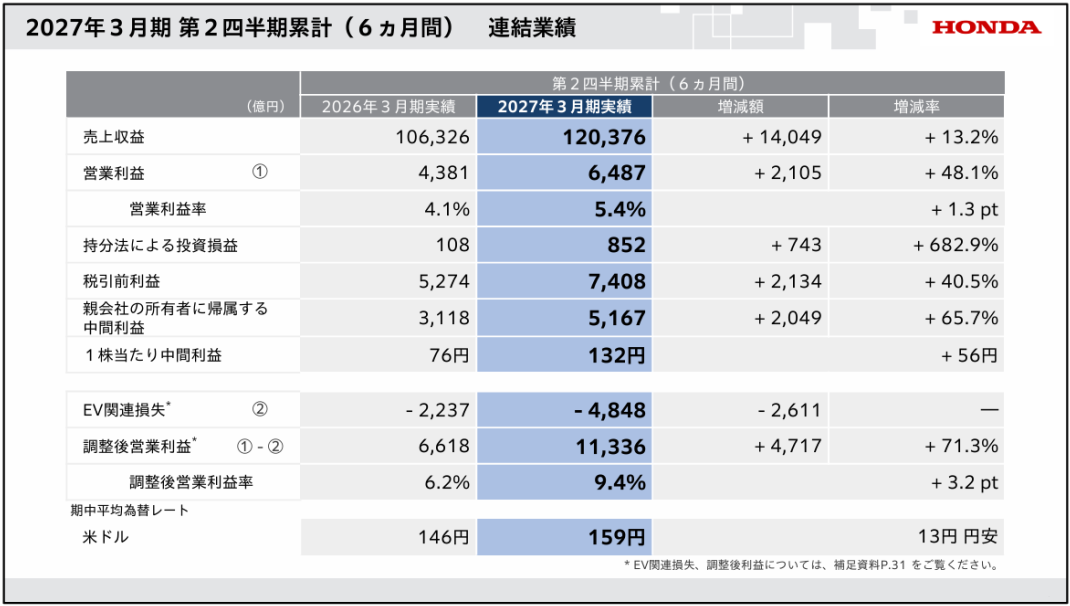
Therefore, even if the Chinese market successfully dragged down performance, causing Honda's automobile sales in the same period to fall 6.6% year-on-year to 1.569 million units, and even after excluding losses caused by EV strategic missteps as stated in the report, none of this can conceal the reality that Honda is living quite comfortably.
At this stage, if one uses the experience of foreign automakers in the Chinese market to summarize their situation, it is very likely impossible to see the full picture. To put it plainly, the reason Honda is so cautious about electrification is that, with this momentum of making money, being careful about its reputation amid the automotive industry's transformation is entirely normal.
Let's say Honda has achieved nothing notable in China this year, and even basic brand maintenance actions have been noticeably fewer. But as a multinational company, how could it put all its eggs in one basket?
In the first half of the fiscal year, sales in the North American market rose to 897,000 units, with strong demand for compact cars, energy-efficient cars, and hybrid models. While forming a sharp contrast with the Chinese market, this actually gave Honda itself a new determination.
The Chinese market is important, but compared with profit-rich North America, Honda is very clear about which matters more.
Now there is news that Honda will build a new plant in Ohio in the Midwestern United States. This move is intended to meet growing local demand for hybrid vehicles, with production planned to begin within 2029. Its purpose is undoubtedly clear.
According to the announcement, construction is expected to require about 3 billion U.S. dollars, equivalent to roughly 470 billion yen, and it is said to be able to flexibly respond to production of electric vehicles and other models. This also truly proves that Honda will expand aggressively in North America.
For a long time, the Chinese and U.S. markets have been battlegrounds that major automakers must contest. But by comparison, the competitive environment in China's auto market is simply too harsh. There is neither ample profit space to tap nor enough consumer power to support it. What Honda can do is separate governance between China and overseas markets.
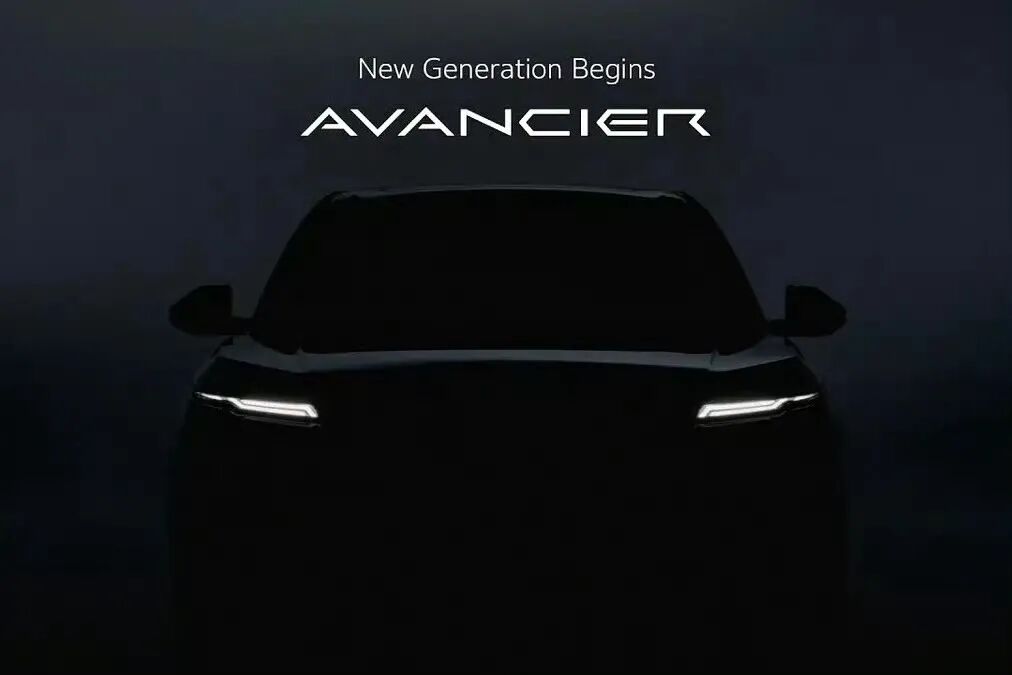
Within limited time, use resources earned from global markets to transfuse blood into China. In North America, Honda can only increase investment. By 2029, North American production capacity will increase from 1.67 million units to 1.91 million units. For Honda, even if something else goes wrong after the U.S. tariff on Japanese cars is cut from 27.5% to 15%, as long as it holds North America, Honda can defend its fundamental position in the automotive business.
Next year, Honda will launch its latest products in China to solve the problem of setbacks in its electrification transformation in China, but 2027 will certainly not be the year Honda gets back on track in China. If the high spirits of overseas markets are to be replicated in China, it still depends on whether Honda can get through all the bumps and obstacles in its transformation.
02 China Is Not a Marginal Role
The reason Honda can do so well in markets such as the United States and Southeast Asia, and can make money in both its automobile business and motorcycle business, is simply one reason: it has completely mastered the operating logic of local markets and built advantages that others do not have in its own way.
Soon, Honda's latest-generation Crown Road will make its overseas debut, not in China. The reason is also that, according to Honda's assessment of market demand, the surge in demand for hybrid vehicles overseas has prompted it to send new cars equipped with Honda hybrids to other markets.
Of course, no matter how bustling overseas markets are, Honda truly cannot be too neglectful of changes in the Chinese market. Just look: BYD's Seal has already reached Honda's doorstep this year, trying hard to grab business from its own N-Box. If Honda remains indifferent, it must still find a way to thoroughly understand the development playbook of the Chinese market.
Recently, Nikkei Automotive reported that in order to revive its sluggish business in the Chinese market, Honda clearly proposed a strategy to "expand the scope of adoption of Chinese standard parts," no longer sticking to supply relationships within the traditional system, and instead adopting lower-priced components that already have actual performance in the Chinese market.
The meaning of "to win in the Chinese market, the key lies in flexibly using local resources" is that Chinese manufacturers' strong cost competitiveness can help Honda create competitive models.
But to be honest, once this big move is released, Honda's already closed parts management system will be in a dilemma.
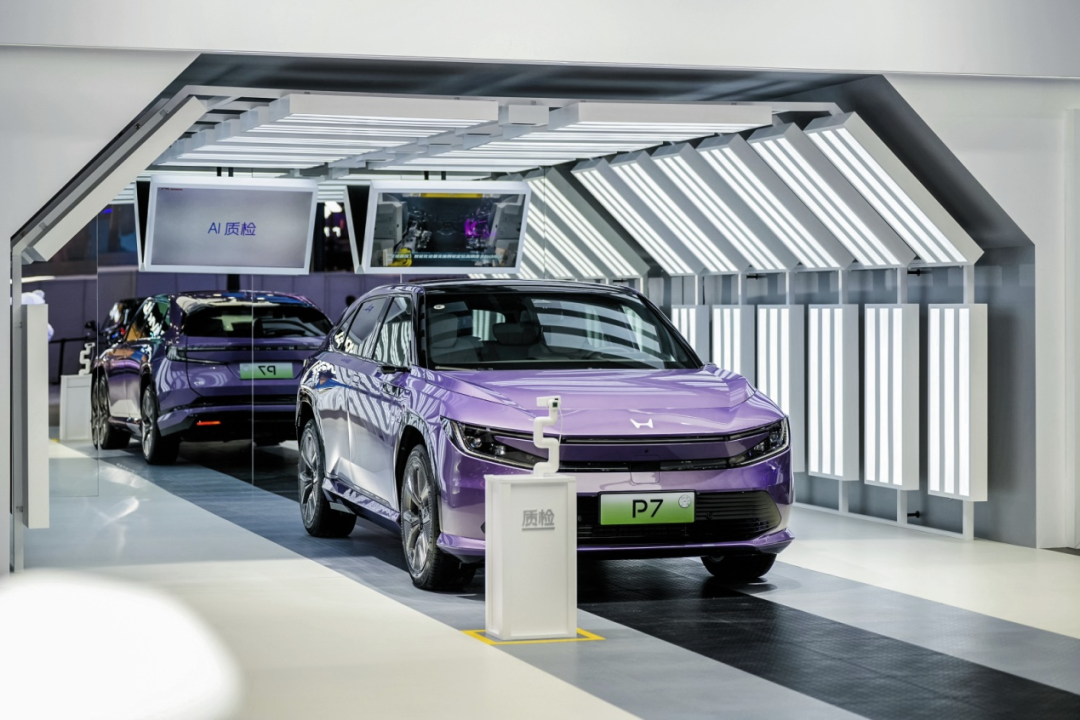
Honda stated that it does not intend to reduce the procurement share of Japanese parts manufacturers, and that the competitiveness of the parts themselves is the criterion for procurement decisions, regardless of whether they are Japanese-funded or local Chinese companies. But any normal person knows clearly that if Honda adopts platforms developed by Chinese manufacturers, the leading right to select parts may shift to the Chinese side, and the days of Honda's affiliated suppliers will inevitably not be as good as before.
You should know that in the past, Honda 4S stores always said that for selling just one Fit, if the terminal discount exceeded 5,000 yuan, it would not be worthwhile and would mean losing money. In the era of new energy vehicles, the large price gap between the Dongfeng Honda S7 and GAC Honda P7 when they were first launched was also caused by Honda's struggle over whether to sell cars at a loss.
However, today's Chinese market has already forced Toyota and Nissan to advance platform R&D localization and local parts procurement.
Toyota began promoting local development in China starting with the launch of the bZ3X in March 2025. Needless to say for Nissan: N7, N6, NX7, and NX8, which of them was not launched through this path? Therefore, if Honda is still struggling over whether to switch to the Chinese supply chain, then no matter what new cars it launches next year, I estimate that Honda can forget about making money in China.
If it really does not make money, Honda will certainly be unwilling. Moreover, when exchange rate adjustment gains account for a considerable proportion, maintaining a sense of crisis is what Honda must do at this stage.
That is to say, no matter how profitable the North American market is, the Chinese market still must be taken seriously. Now, Honda can accept a full-year automobile sales target cut from 3.39 million units to 3.16 million units, and the 230,000-unit difference in between is all because the Chinese market is underperforming. As for rewards, long-term consideration is inevitable.
You see, Korean cars have almost lost all their share in China, yet they still launch new electric vehicles, or add investment in China to set up new R&D institutions. Is this not because they believe simply withdrawing from China is unwise?
China can do without Honda, but Honda cannot do without China.
This is not alarmist talk. When the development direction of the global new energy industry is generated by China, and related technologies and industrial chains are gathered here, as long as Honda is not yet immersed in the existing benefits of overseas markets, how to proceed next has long been arranged for Honda in the dark.
Editor in charge: Shi Jie Editor: He Zengrong

THE END
-
![]()
Can Honda Thrive Without Leaning on China?
-
![]()
After Orders Exceed 10,000, It Suffers a Fierce Paid Poster Attack: Whose Turf Did the Second-Generation Blue Mountain Step On? | Mingjing Pro
-
![]()
Land Rover Loses First Round: Dutch Court Rules BYD Raid Was a "Fishing Expedition," Ti7 Copying Allegations Still Unresolved | Mingjing Pro
-
![]()
In October, AITO Sold 21,115 Units: Between the M6 and M9, Who Is Driving the Brand's Sales?
-
![]()
Changan Automobile's Domestic Terminal Sales Hit 104,000 in October: Qiyuan Begins to Drive Volume, Deepal at 20,000, Avatr at 2,858
-
![]()
Who in France Is Buying Chinese Cars?
-
Africa's Phone King Transsion, Pushed to a Transformation Crossroads by Memory Price Hikes
-
Apple Emerges as the Biggest Winner of Double 11, Crushing All Domestic Phone Brands, with Xiaomi Taking Second Place