Is Fewer New Cars at the Guangzhou Auto Show Actually a Good Thing?
 11/26 2026
 409
Introduction
Introduction
The sharp drop in the number of new cars on display—trading frenzy for a market that is returning to rationality—is the greatest sincerity automakers can offer consumers.
This year's Chinese auto market has been in utter chaos.
Fueled by surging demand for new energy vehicles, the Chinese market is racing toward the EV era. At the same time, because Chinese automakers enjoy a natural first-mover advantage in adopting new technologies, their pace of expansion into overseas markets has visibly accelerated. But problems have followed close behind. If Chinese automobiles are to truly become a global pole, then beyond ensuring steady overseas expansion, the industry must also reckon with the chaos unfolding at the level of competition.
Over the past year, the distressing stories we have heard far outnumber the inspiring ones. Industry profits have plunged to freezing point, public opinion wars keep flaring up one after another, the peak consumption season has all but vanished, and the artillery of the price war is aimed squarely at destroying market order.
To ease layer upon layer of difficulties and reignite consumer interest, the frequency of new car launches has accelerated. On some days, nearly 10 new cars hit the market at once. Seeing such a lineup, the number of people actually opening their wallets is indeed much higher than in previous years—but can the auto industry really withstand this kind of turmoil the way the consumer electronics industry does?
Everyone assumed the decline in the domestic auto market was simply because consumer incentives were insufficient. After subsidies for NEV trade-ins and scrappage were narrowed, new policies were expected to keep consumer enthusiasm from cooling. And if that approach cannot be sustained, then bringing consumers new cars with stronger product appeal is always a reliable fallback.
The fresh experiences brought by a flood of new cars have indeed let every potential buyer feel unprecedented pleasure—and we see that. But on the other hand, as time goes on, more and more people are beginning to take a wait-and-see attitude toward the entire auto market, and that is something we must face squarely.
So what does that mean?
"A new generation every year" may fit the current pace of technological iteration, but from the consumer's perspective, the configuration shock brought by each update—and even the price betrayal—is not something everyone can bear.
Tell me, who can accept—again and again—that right after buying a car, within a few months, a new model arrives and is even cheaper? "Buy early, enjoy early" has long since become self-comfort. What emotional value is left?
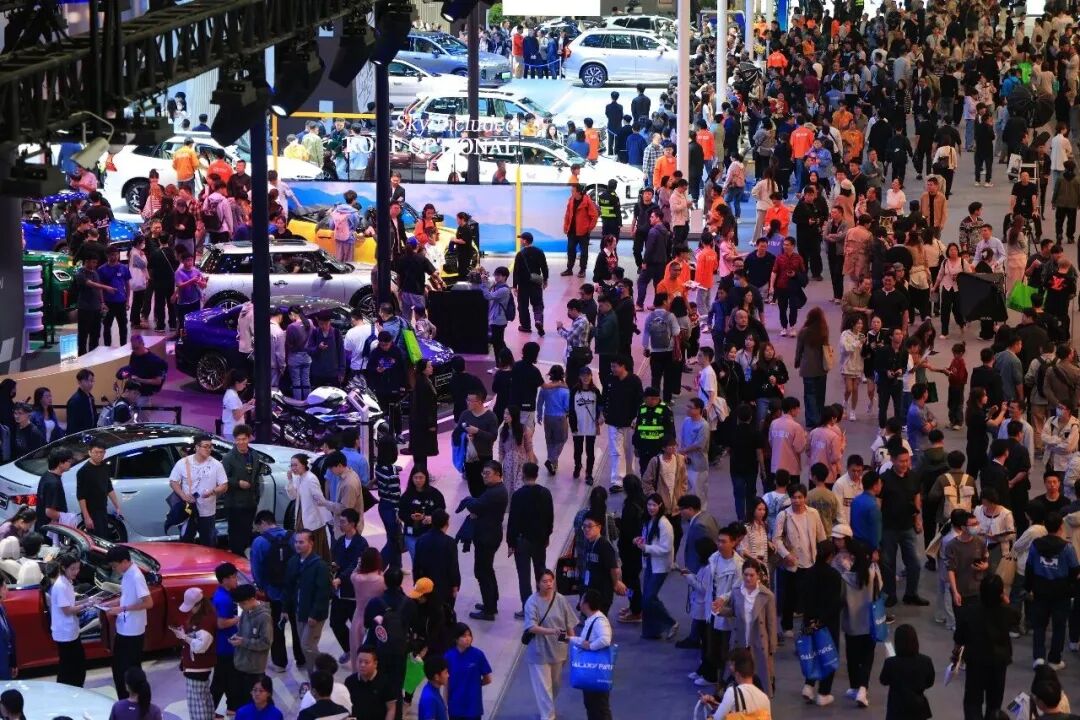
At this year's Guangzhou Auto Show, everyone feels there are no major heavyweight new cars to be released. This is not because automakers have nothing to unveil, but because "newness" itself has been overdrawn. The arms race of a few years ago—three new cars a day—has blunted the industry's sensitivity to new cars. Major automakers' participation in the show feels more like routine business.
But think from another angle: if the speed of product updates and iterations could really slow down a bit—if instead forward-looking technologies could evolve further, the quality of models on sale could be more carefully vetted, and details could be properly optimized—consumers might be happier to see these things than endless launches of new models.
01 Ineffective involution is coming to an end
Over the past six months, in addition to the perennial price war, discussion around "rushed cars" has never stopped. Traditional automakers have rushed to bring this topic to the table. What they want is not only to appear to have considered things thoroughly, but more to bring deviated thinking back on track in this chaotic era.
At the same time, multiple government departments have joined forces to intervene in the auto industry, attempting to use administrative means to cut into disorderly competition. In essence, this too is an effort to help auto consumption return to rationality.
At this year's Guangzhou Auto Show, so far I cannot really recall any new car appearing that would reshape the industry landscape.
Either they are models already launched previously—such as BYD's new Tang, the second-generation Blue Mountain, and Roewe Jiayue 07—or they are products released overseas and entering China for the first time, such as the Lexus TZ and Audi Q9. Products truly significant to a brand are only a few, such as the all-new Honda Guandao.
As for the new-force brands that used to love creating momentum the most, they too are much more cautious this time. They do not seek likes by flooding the market with new cars, nor do they seek to set the rhythm with founders' "enthusiastic" speeches. "Finding ways to sell more cars" has already become the top priority.
For several consecutive years, auto shows have been noisy for so many editions. Yet the market is becoming more and more chaotic.
Ever since the barbarians entered the arena, traffic has become something everyone pursues. Faced with the proposition of how to grab attention, traditional brands have lost their voice, and the rhythm of industry development has been disrupted—so chaotic that almost everyone has entered a strange circle of not knowing what they are even competing over.
The development cycle of fuel vehicles, once 36 months, has been compressed to 18 months, and some new forces are approaching 12 months. "Launch first, validate later, users as test drivers" has become an open secret. Tell me, does that make sense?
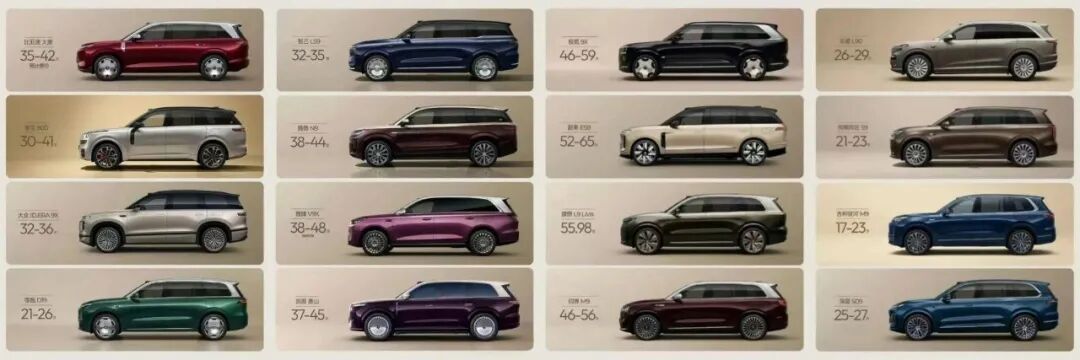
Back on the product side, all new cars released in 2026 have been lumped into the category of homogeneous competition. Is that not another way of saying that all of this looks extremely like ineffective involution?
Let me give a very simple example. When the concepts of color TVs, refrigerators, and large sofas have been copied everywhere and no longer show any concrete differentiation, arranging a "bed" in the car somehow became the go-to idea for most automakers.
Sleeping while riding, sleeping while driving, sleeping in the car when going out to play, sleeping in the car during lunch break at work. It seems all new technologies are aimed directly at how to sleep well in the car. Although in this era where every industry is exhausting, sleep is indeed very important, such a single-minded approach to vehicle use scenarios is really unnecessary.
The core thinking of technological development is to benefit consumers, but if you ask whether such a simple and crude product definition necessarily meets current market demand, that still needs a question mark.
Recently, the launch of the game GTA6 became a major event that drove young people around the world crazy.
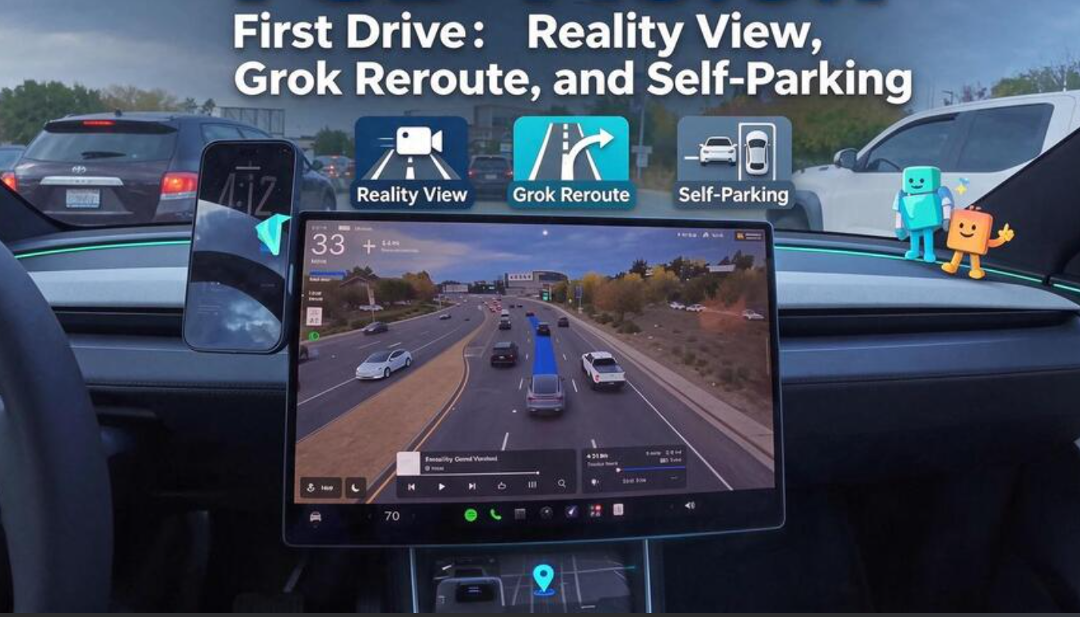
At the same time, while Tesla is laying out Robotaxi, building a Roadster that can go to the sky, and at this very moment officially pushing FSD V15.0.1 to users, completing the latest interpretation of Tesla Reality View—no matter how many people dislike Tesla's style of doing things, there is one thing China's auto market very much needs.
The original intention of technological development has never been cost-only, involution downward, and letting immature things become selling points that fool consumers into paying. So-called advanced productivity should be the anchor that forces the market to turn toward respecting technological innovation and effectively boosting product value.
If this is understood, then if the Guangzhou Auto Show, as inspiration for the development of the auto industry in 2027, were still to use traffic for gimmicks and formulate a car-sea tactic to confuse users' judgment of their own needs as before, that would be too outrageous.
In fact, from the list of new cars published by the Ministry of Industry and Information Technology at the beginning of this month, we already saw early on that the lineup of new cars is no longer as huge as in the past.
So today, when the Guangzhou Auto Show really is as expected—able to cast aside the noise and abandon restlessness, not to create momentum but to focus all attention on how to maintain the brand, user reputation, and product quality—is it not delightful that there are fewer and fewer new cars?
02 What we want is not quantity, but quality
Starting from 2027, what kind of Chinese auto market do we expect? In the last two months of this year, China's auto industry urgently needs to answer this question. This is not alarmism, but necessary insight into its own sustainable development based on the current situation.
How the market will develop next is difficult to describe with a clear answer. But no matter from which perspective, maintaining industry health is the top priority. Based on this idea, between developing more new cars and building cars well, how companies should choose should be clear.
In the first 10 months of 2026, national auto sales were 26.286 million units, down 5.1% year on year; in August, September, and October, retail sales of passenger vehicles fell 23.5%, 27.9%, and 26.9% year on year respectively, and the year-on-year decline in domestic sales has exceeded 20% for seven consecutive months. The once most stable "Golden September and Silver October" basically disappeared this year for the first time.
It is estimated that the entire auto market will see a 20% decline. That is to say, in 2026, compared with previous years, more than 5 million fewer new cars will be sold. Barring surprises, the market next year will continue to slide further on this basis.
With this situation, tell me, what is the point of launching a car-sea war? Moreover, do you really think that the internal resources of every automaker can support the overloaded promotion of an enormous new car lineup?
If you look at the sales proportion of each brand, when new cars are launched alternately, very few can ultimately achieve 1+1>2, let alone have the ideal result of 1+1≥2 arrive as scheduled.
"Under the siege of Li Auto and AITO, more than 90% of new cars in the mid-to-large home-use new energy SUV market are cannon fodder" is the judgment we heard most often this year, but in fact, this conclusion can hold true in almost every segment.
Even within companies, sales backlogs caused by overlapping product lines are actually very obvious. The most typical example is Xpeng, where the MONA series and the regular G series product line cannibalize each other, and it seems no one can solve it.
"The ones that sell well are always those few models," "You should thank heaven and earth if a new car's freshness period can exceed 3 months," "As soon as a new model launches, the 'old car' with the same positioning has no market"... All these evaluations from the market side are in fact telling the entire industry that following trends blindly does not pay off.
In the next stage, rather than going all out to further increase new car launches, it would be better to think of ways to restore consumer confidence and, by the way, improve that pitifully low profit margin. Given the current tense international trade situation, relying solely on profits earned from export business to subsidize the domestic market is not a long-term solution.
After more than 10 years of baptism in the new energy vehicle market, Chinese consumers have their own considerations when judging car-use needs, but it is inevitable that several new standards have also been established in this chaotic world. Blindly pursuing the speed of updates and iterations and engaging in inexplicable innovative designs are not good development directions at this stage.
At this Guangzhou Auto Show, it is known that traditional automakers including Toyota and Volkswagen will bring more China-specific products while putting the vehicle-use assurance issues users care about at the forefront. This releases a new signal.
In the face of the car-sea war, price war, and public opinion war, solving users' worries is the urgent priority for resolving the opposition between sales and profits. The era when "launching a new car can change your fate" is over.
For ordinary visitors, even if this Guangzhou Auto Show becomes an annual price-comparison marketplace, with all the cars that recently rushed to launch present, comparing configurations, benefits, and who is still alive in the same hall is much more practical than chasing some "global premiere." At least, beneath the bustling marketplace lies the underlying truth that the auto show has not yet gone cold.
Responsible editor: Yang Jing Editor: He Zengrong

THE END
-
Apple Is Very Proud: I Sold 710,000 Fewer Phones, Yet Revenue Increased by 55 Billion!
-
Does Xiaomi Need to Go All In?
-
![]()
Xiaomi, Seeking a "New Rhythm"
-
![]()
Only 3 Years Left Before China's Auto Export Boom Ends?
-
![]()
Two Central SOEs Swap Equity Stakes
-
![]()
Aston Martin Appoints New Asia-Pacific Head as Volume Cuts Aim to Protect Pricing
-
![]()
BYD Set to Acquire French Factory, Macron Announces Publicly
-
![]()
Those Who Need a Personal Agent Most Are Middle-Aged People Starting to Become Forgetful