2026 New Year's Eve Speech Scene: Diverse Perspectives, Unified Insights from Prominent Figures
 01/06 2026
 599
599
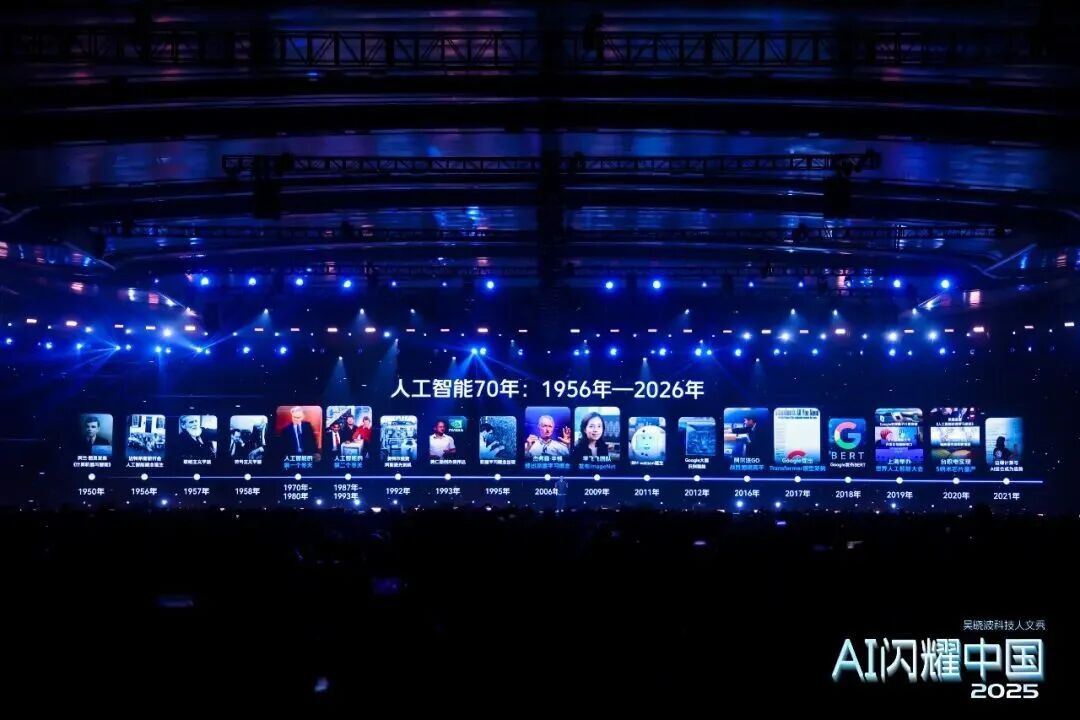
In recent days, the tech world's end-of-year celebrations have taken center stage, captivating audiences worldwide. Topics like #Luo Yonghao's Tech Extravaganza#, #Luo Zhenyu's New Year's Eve Oration#, and #Wu Xiaobo's Fusion of Tech and Humanities# have consistently topped trending lists. Reflecting on the tech innovation sharing sessions led by industry titans, a recurring theme for 2025 emerges: AI.
01
Our Bond with AI
As many recall, the 2014 live debate between ZEALER and Luo Yonghao on Smartisan phones was dubbed the "Century Showdown." Today, Luo engaged in a four-minute dialogue with AI Doubao, questioning, "Are Smartisan phones user-friendly?" When Doubao repeatedly responded with "OKs," leaving Luo Yonghao momentarily flustered, he quipped, "Arguing with it now gives me a sense of flow."
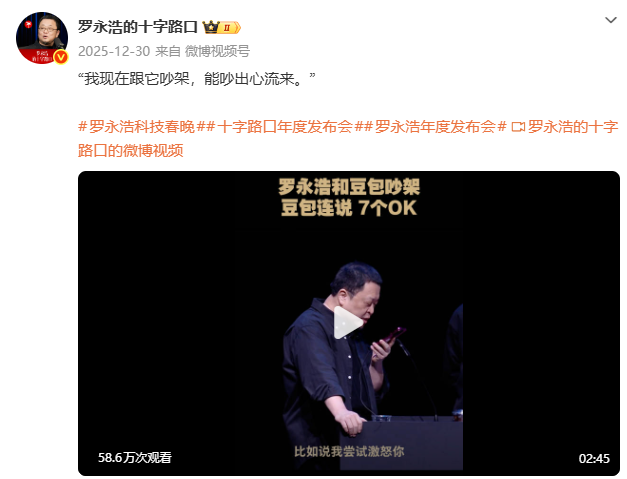
This debate, though seemingly a verbal duel, was actually a live demonstration of the new generation AI's real-time interaction capabilities before millions of viewers. The sense of "flow" – being fully immersed and even losing track of time – signifies a qualitative shift in the human-AI relationship. As Luo Zhenyu articulated in his New Year's Eve speech, "AI is not merely a tool; it's a partner."
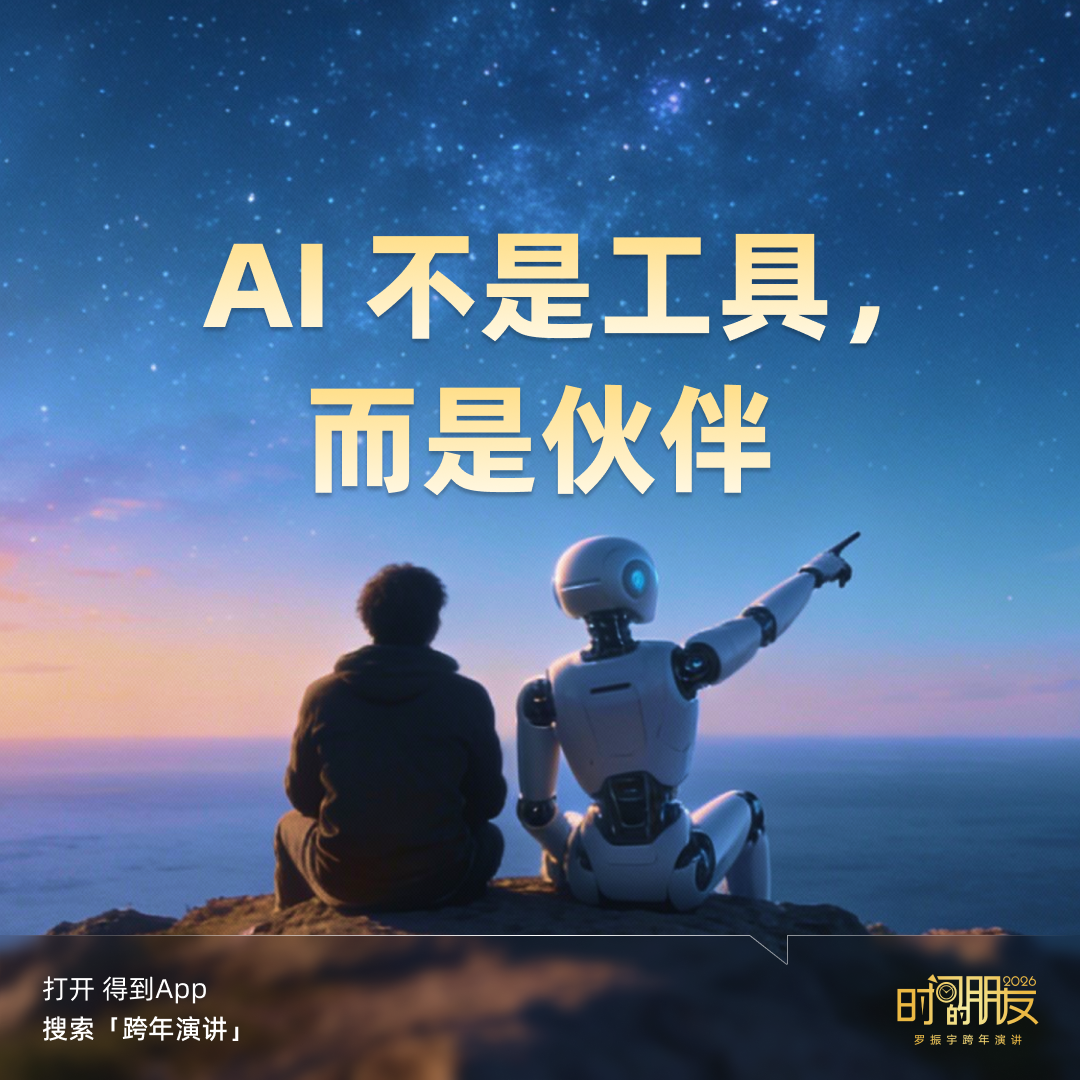
What does it mean to be partners? It entails emotional interaction and mutual respect. Disagreements can spark heated debates, and assistance received is genuinely appreciated with a heartfelt thank you. Luo Zhenyu shared that he sincerely thanks AI every time it delivers a brilliant response. Reflecting on ourselves, don't we silently give a nod of approval when AI swiftly helps us complete a report or generates a creative idea?
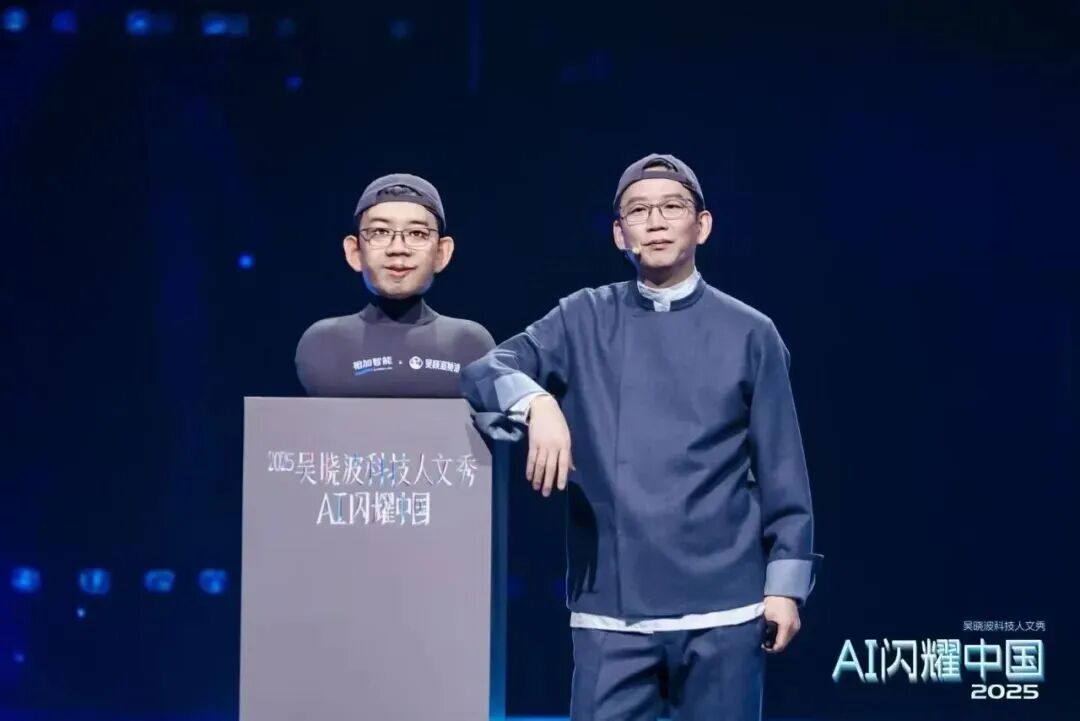
This "human touch" in interactions has seamlessly integrated into our workflows, often without our full realization. During the New Year's Eve event, Wu Xiaobo explored the boundaries of this relationship from a forward-looking perspective – he attempted to create his own "digital twin." Although the live demonstration had its flaws, the direction it points to is thought-provoking: Can we transfer our knowledge systems, thinking patterns, and even value judgments to AI, creating a digital avatar that represents us and can interact independently? This undoubtedly represents a deeper extension of the "partnership."
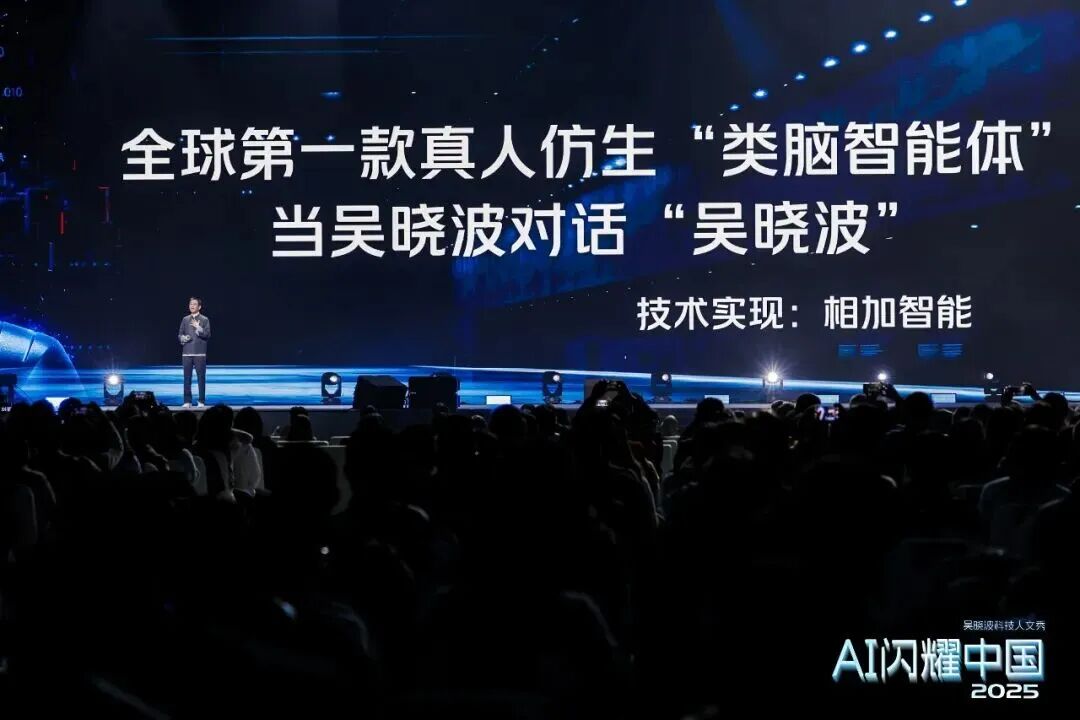
Ultimately, as we step into 2026, our relationship with AI has transcended the simple "command and execute" dynamic of the past. It's evolving into an equal dialogue, deep contemplation, and collaborative creation between two intelligent entities. More encouragingly, this dialogue full of possibilities is no longer confined to a select few tech elites. As Luo Yonghao joked, yet with pride, "A fifty-year-old man is still evolving in the AI field." Similarly, Luo Zhenyu, a liberal arts graduate, exclaimed, "I never expected that as a liberal arts student, I could use AI to 'handcraft' a 'human thought tracker.'"
02
Our Competition with AI
What can AI accomplish in an everyday supermarket? Create PPTs for internal meetings? Or generate a few images for the storefront poster?
Luo Zhenyu revealed that the answer far exceeds expectations. AI mini-models can automatically detect whether employees are operating correctly, promptly identify ground stains, and even provide decision support for store managers – from determining the quantity of bread to bake to managing stock levels of boxed meals for rainy days and devising promotional strategies when competitors open new stores. AI's intervention has shifted operations from "relying on experience and gut feelings" to "being data-driven and evidence-based."
Indeed, once AI enters a field, its potential is boundless.
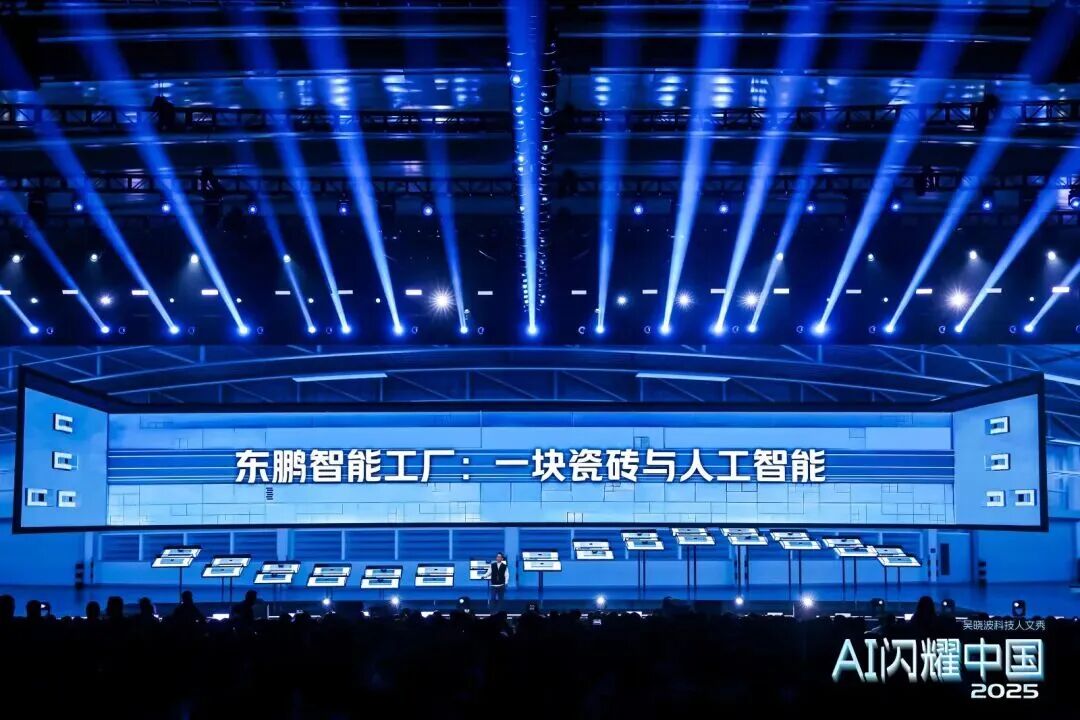
Wu Xiaobo mentioned that two or three decades ago, the tile industry was considered outdated and highly disliked, characterized by high energy consumption, material waste, and environmental pollution. However, during his visit to the Dongpeng factory, he discovered that while the overall production process for a tile remained unchanged, every production link had undergone significant technological innovations, many driven by artificial intelligence.
For instance, in the "slurry workshop," giant ball mills can now stir 100 tons at once. In the powder workshop, once a hotspot for "pneumoconiosis," full-process intelligent control now requires only two employees for the entire workshop. In the "kiln firing workshop," within Dongpeng's over 527-meter-long roller kiln, the "AI brain" can monitor 79 quality indicators throughout the entire process. In manufacturing, AI has reconstructed high-risk, labor-intensive, and experience-dependent production links, freeing humans from repetitive and dangerous tasks.
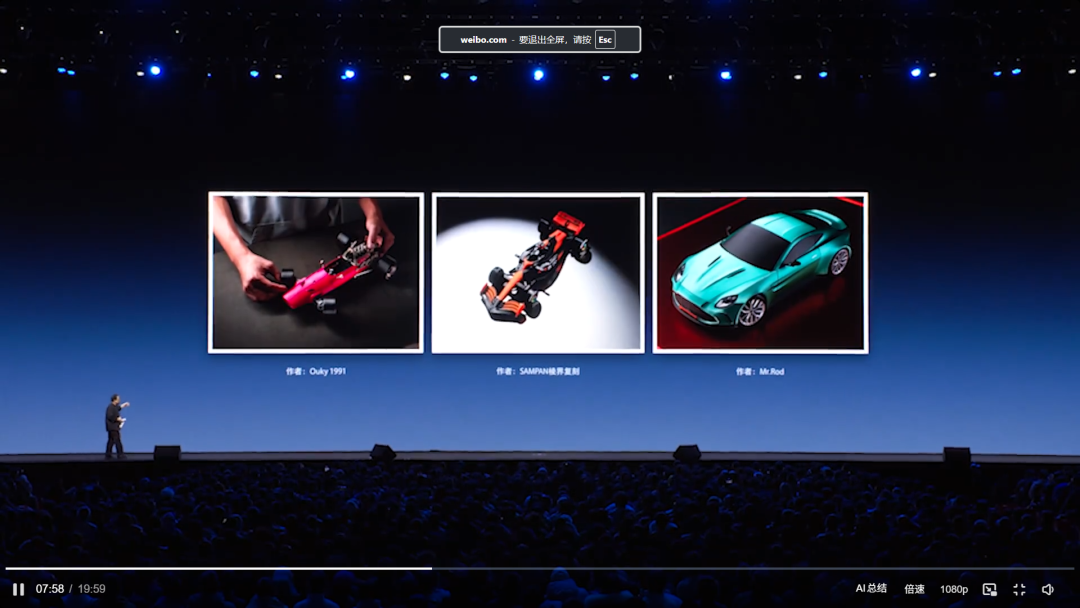
Simultaneously, on the product side, AI brings ultimate inclusivity. For example, the "user-friendly" AI drones and Bambu 3D printers demonstrated by Luo Yonghao during the New Year's Eve event can "one-click" and "template" complex aerial photography and professional modeling capabilities, transforming cutting-edge technologies from geek toys into accessible educational and creative tools for the masses.
Perhaps in the past year, most people instinctively asked themselves when facing AI, "If AI and robots can do everything, what's left for me?" However, the speeches by the three individuals today unanimously confirm one thing: AI does not bring us a brutal "job replacement" but a profound "logical reconstruction." It reconstructs processes, possibilities, and experiences. In the future, the essence of our competition with AI does not refer to a zero-sum game but whether we can leverage new intelligence to reshape the underlying logic of all industries and, in the process, create more dignified job positions and more inclusive social value.
This is the most profound transformation worthy of attention at present.
03
Our Coexistence with AI
Indeed, as AI takes over more standardized tasks, the value proposition for humans inevitably shifts.
Wu Xiaobo asserts that 2026 will mark the beginning of an entrepreneurial window period centered around "super individuals." Numerous examples abound: a 95-year-old operating an MCN platform alone, a four-person team building a global AIGC database, and an engineer in Baotou independently producing high-quality MVs using AI tools. However, this is not just about "one-person armies" empowered by technology; its deeper meaning lies in the fact that when standardized capabilities are quickly replicated by AI, uniqueness becomes the most precious professional asset.
So, what defines uniqueness?
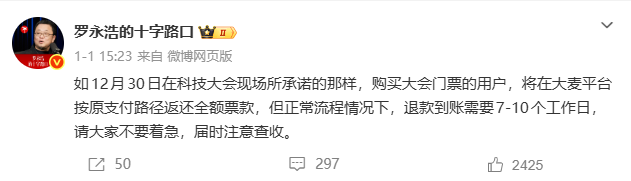
Reflecting on the details from these three New Year's Eve speeches can provide insights. Firstly, an unexpected event occurred when Luo Yonghao arrived 47 minutes late at the Tech Extravaganza this year. More surprisingly, he did not explain but directly announced, "All ticket prices will be fully refunded" – totaling 1.668 million yuan. The next day, Luo Yonghao revealed late at night that he suffers from ADHD and that "all my product launches are unrehearsed and improvised on the spot; my slides are always finished just before the event starts." This "imperfect" work style might be seen as a flaw in traditional efficiency-driven evaluations but becomes a unique imprint of authentic humanity in the new commercial logic that values diversity.
Similarly, Wu Xiaobo demonstrated a similar shift in logic in his speech. When his "Wu Xiaobo" digital avatar malfunctioned due to complex signal conditions at the venue, he did not conceal or defend it but openly admitted, "Every technical failure is a small step forward on the path." This honesty about technological limitations precisely highlights humanity's ability to transcend algorithms – humans understand how to find value in failure.
Finally, let's consider the story shared by Luo Zhenyu this year about a part-time cleaning aunt: To accompany her son during his college entrance exams, she decided to take a break from work for the first half of the year. From an algorithm's perspective, this is "uneconomical"; however, in the face of human emotions and commitments, it is irreplaceable.
The common trend revealed by the three speakers is clear: As AI pushes efficiency and standardization to their extremes, those "inefficient" human traits – sincerity, openness, emotions, commitments, unique aesthetics, and judgment – are becoming new scarce resources and core competitiveness. The path to future coexistence does not lie in becoming more efficient "humanoid AIs" but in fully embracing those unique human qualities that AI struggles to replicate.
-
![]()
Registered Capital Slashed to 372 Million Yuan! Yutong Optical Finalizes Industrial and Commercial Change Registration
-
![]()
Zhuque-3 Successfully Lands, and 'Time Traveler' Secures Another ¥100 Million in Funding: China's Commercial Space Industry Experiences a 'Dynamic August'
-
![]()
Autohome Faces a Shrinking Window of Opportunity
-
![]()
Even a Titan Like Musk Has Faced Setbacks in Fulfilling Promises
-
![]()
AI Office: The End of the Racing Era, Context Becomes the Key to Success
-
![]()
Domestic Vehicle Chassis Revolution ②: The Steering Wheel Remains, But Mechanical Connections in the Steering System Are Decreasing
-
![]()
Exploring MiniMax Design: Can Video Editing Be as Simple as Speaking?
-
![]()
Why Can SenseTime Achieve Profitability While CloudWalk Still Faces Challenges, Despite Both Adopting Large Models?