Autohome Faces a Shrinking Window of Opportunity
 08/24 2026
 481
481
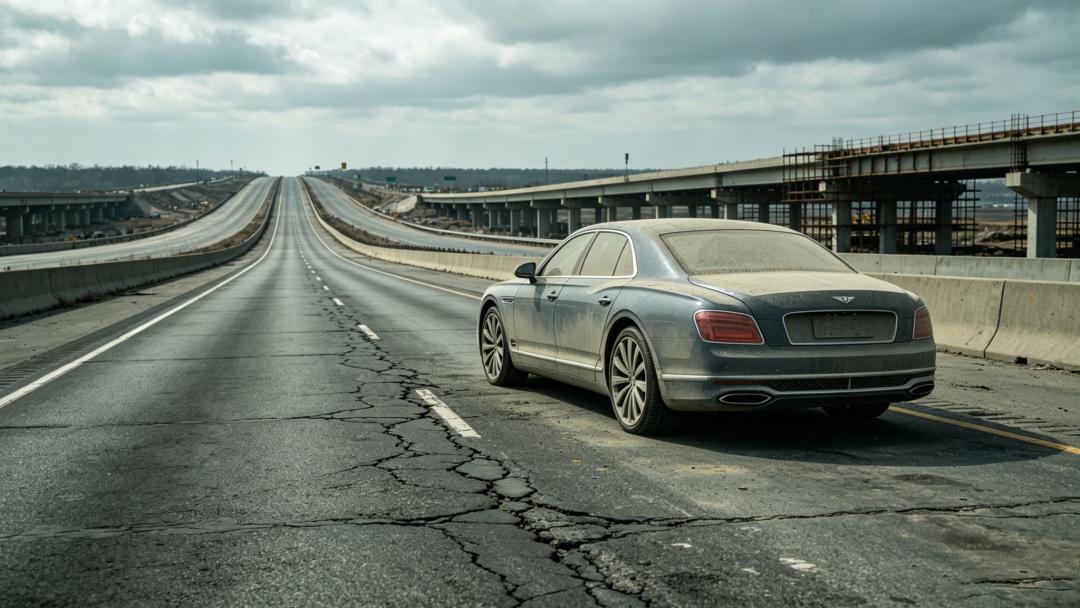
On August 20, Autohome released its semi-annual report for 2026, revealing that the company continues to face adjustment pressures based on its performance.
In the first half of the year, Autohome reported revenue of RMB 2.246 billion, a 30% decline year-on-year. Net profit attributable to shareholders was RMB 292 million, down 62.2% from the previous year. All three of its major business segments faced challenges, with the traditional business model that once fueled growth now being put to the test.
In the capital markets, particularly in Hong Kong, Autohome's trading volume remains sluggish, with limited liquidity.
Why is an industry leader with annual revenues nearing billions and nearly RMB 20 billion in cash on hand struggling to overcome downward performance pressures? Why is it no longer the center of attention?
I. Decline of Established Businesses: Industry Shocks and Internal Challenges
Autohome's business model over the past decade has been built on the automotive consumption chain. Automakers require marketing exposure, dealers need sales leads, and consumers seek vehicle purchase information, forming a business model spanning content traffic, advertising revenue, and lead generation services.
However, this model is now facing pressure from two fronts: deep adjustments within the automotive industry and the structural shift in how automotive consumption decisions are made.
Lead generation services currently account for the largest share of Autohome's revenue. In the first half of 2026, revenue from this segment was RMB 1.064 billion, a 22.8% decline year-on-year, representing 47.4% of total revenue.
The rationale behind this business is straightforward. Dealers purchase leads because they drive sales, and they are willing to invest continuously because selling cars remains profitable.
However, over the past two years, China's automotive distribution industry has faced sustained pressure. Price wars in the new energy vehicle sector have not subsided, traditional fuel vehicle profit margins have been continuously squeezed, and dealer inventory pressures have risen steadily. The automotive dealer inventory warning index has consistently remained above the 50-point threshold, indicating significant market contraction. In 2026, 79.5% of dealers failed to meet their semi-annual targets, with nearly half achieving less than 80% completion.
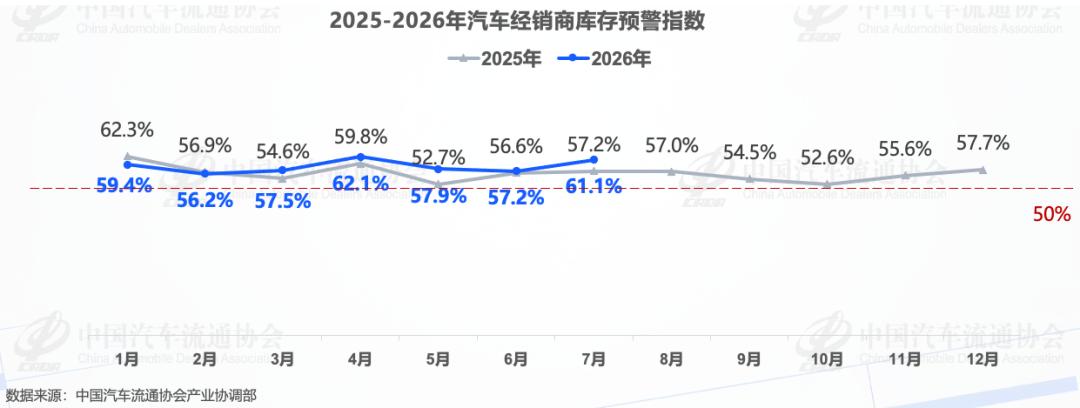
While platform traffic remains steady, the financial capacity of commercial partners has diminished, and some have even exited the market. Autohome's lead generation business now faces declining volume and pricing.
Autohome's heavy reliance on the dealer ecosystem means it cannot fully escape industry cycles. The pace of recovery for its lead generation business largely depends on improvements in dealer profitability.
Compared to lead generation, media services performed slightly better. In the first half of 2026, media services revenue was RMB 443 million, a 15.1% decline year-on-year. Notably, media services revenue in the second quarter increased by 0.4% year-on-year, showing signs of stabilization.
However, this does not mean pressures have disappeared.
On one hand, the second quarter benefited from auto show seasons and the 618 shopping festival, so the sustainability of improvements requires further observation. On the other hand, the entry points for automotive marketing traffic are undergoing profound shifts.
In the past, consumers relied heavily on vertical websites like Autohome to check specifications, prices, and reviews. Today, short videos and livestreaming are reshaping the vehicle purchase decision-making process. Users might encounter a vehicle's real-world test video on a short video platform, consult a livestream host for the best price, and leave contact information or even complete a reservation via a link.
These changes directly challenge Autohome's traditional strengths. While it still possesses a wealth of professional automotive content, user engagement duration and consumption entry points are being redistributed.
For Autohome, the future challenge lies in redefining its position within the new consumption chain.
Online marketing and other businesses experienced the steepest decline, encompassing data products, vehicle sales, transaction services for new and used cars, and automotive finance.
In the first half of 2026, revenue from online marketing and other businesses was RMB 740 million, a 43.7% drop year-on-year. Quarterly data shows a 52.1% decline in the second quarter, primarily due to contractions in vehicle sales.
In June, JPMorgan Chase noted that "the industry downturn cycle is deepening, with limited visibility for recovery," a judgment echoed by Autohome's own performance: pressure on old businesses is not a short-term fluctuation, and validation of new businesses will take time.
II. Transformation Strategy: Business Closed-Loop Awaits Validation
Facing pressure on traditional businesses, Autohome is pivoting toward a "one-stop automotive ecosystem service platform." The new strategic direction revolves around three keywords: new retail, used car exports, and AI.
In new retail, Autohome has developed a systematic online-to-offline layout.
In September 2022, Autohome opened its first offline store, the Autohome Energy Space Station (later renamed Autohome Space Station). In 2023 and 2024, it expanded its franchise network. Building on these offline efforts, the "Autohome Mall" online platform was officially launched in 2025. In June 2026, Autohome introduced the offline franchise brand "Jiajiahaoche," establishing a "self-operated + authorized + chain" channel system.
However, automotive retail has unique characteristics that differ from home appliances or smartphones. Cars involve higher unit prices, longer decision-making cycles, and more complex after-sales systems. Post-purchase, consumers require insurance, maintenance, servicing, and financing services.
The success of new retail transformations will require longer observation periods and more granular data, such as per-store sales volume and customer acquisition costs. Two indicators in the current financial report warrant attention.
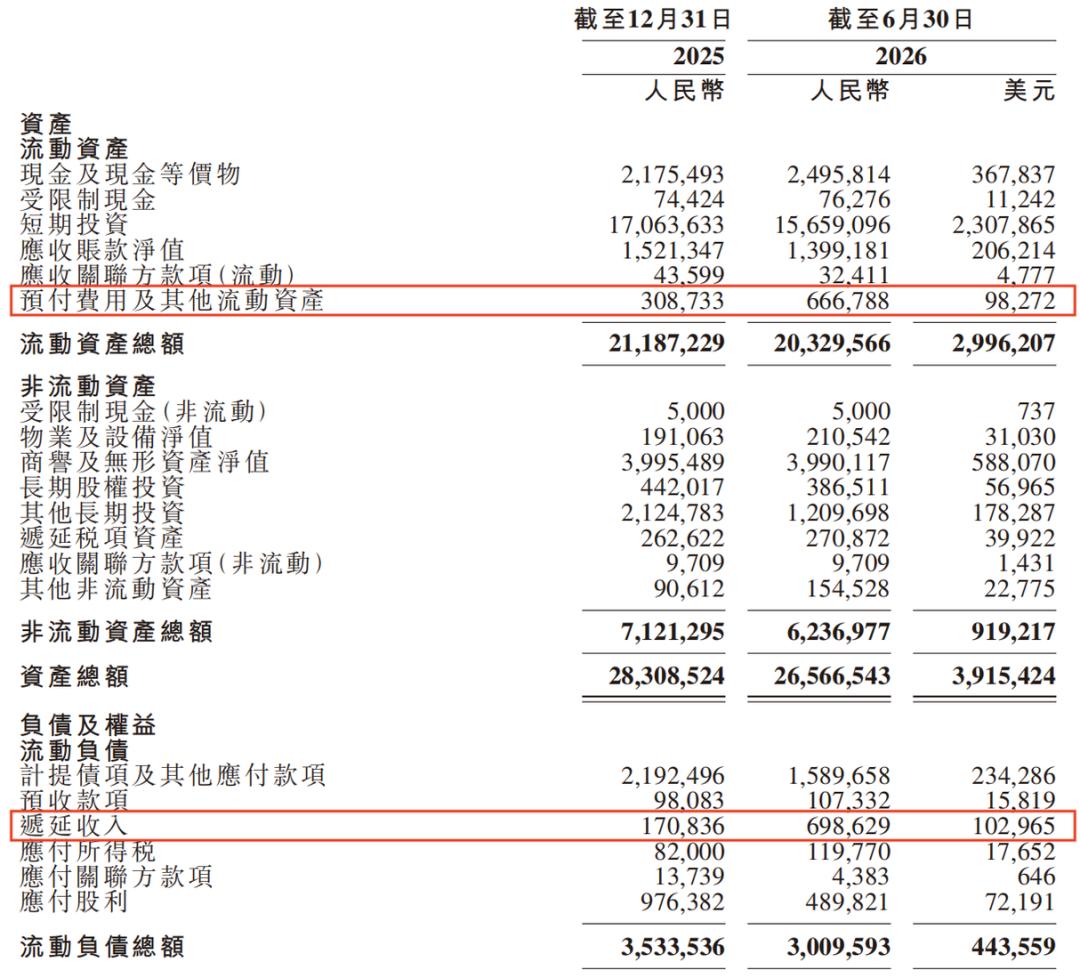
The first is deferred revenue. Autohome's deferred revenue grew from RMB 171 million at the beginning of the year to RMB 699 million, a 309% year-on-year increase. Deferred revenue arises from customer prepayments that the company will recognize as revenue in the future.
Historically, deferred revenue has been declining, primarily derived from dealer subscription services and prepayments for used car listings under lead generation services. This year's significant growth likely stems from retail operations. If true, it suggests new retail is forming a commercialization foundation.
The second indicator is prepayments. Autohome's prepayments and other current assets increased from RMB 309 million to RMB 667 million, likely reflecting increased resource allocation toward new retail operations.
The return on these investments requires further observation.
Used car exports represent another critical strategic move for Autohome. In July 2026, its cross-border export service platform completed its first transaction.
From a market perspective, global used car circulation presents opportunities. In 2025, China's used car exports are expected to surpass 600,000 units, a more than 100-fold increase over six years. In the first half of 2026, exports reached 325,000 units, a 61% year-on-year increase. Particularly in overseas markets with weak industrial foundations, Chinese used cars offer strong competitiveness due to their "low prices, good condition, and comprehensive configurations."
However, the used car industry is operationally intensive, requiring solutions for vehicle inspection, logistics, after-sales, and financing. The profitability of Autohome's used car subsidiary, Tian Tian Pai Che, remains unstable, indicating that scaling profits in this business is challenging.
The third strategic direction is AI.
In July 2026, Autohome launched the AI agent product "Cheese Car Butler," aiming to leverage AI across vehicle selection, usage, and maintenance. Autohome's Space Station also incorporates AI technologies, such as AI Smart Purchase Assistant and AI Comparative Test Drive functions.
AI's significance for the automotive consumption industry lies in its potential to transform how users obtain information and make decisions.
Traditionally, automotive media relied on users actively searching, browsing, and comparing information. AI, however, can proactively provide vehicle selection, purchase recommendations, and usage services based on user needs. If this model succeeds, it could redefine traffic entry points and business logic across the industry.
For Autohome, its long-accumulated automotive content, vehicle databases, and user behavior data are advantages. If AI can effectively utilize these resources, Autohome has an opportunity to reinforce its position in the automotive consumption decision-making chain.
However, AI remains in the investment and exploration phase.
On one hand, user scale, usage frequency, and commercial conversion paths for AI products have not been publicly validated. On the other hand, AI's core value in automotive consumption must be demonstrated through real transaction scenarios, including whether it can improve vehicle purchase conversion rates, increase user retention, or create new paid models.
Thus, Autohome's current AI layout primarily serves as a positioning tactic. The key future challenge is whether AI can evolve from an experience-enhancing tool into a new entry point connecting users, transactions, and services.
III. Dongchedi's IPO: Pressure and Resilience for Autohome
Autohome's pressure stems not only from declining operating revenues but also from capital markets' reevaluation of industry dynamics.
In late February this year, Bloomberg reported that Dongchedi is advancing plans for a Hong Kong IPO, with insiders suggesting financing could reach $1-1.5 billion. If successful, Dongchedi would gain further capital support for content development, transaction services, and commercialization infrastructure.
While Dongchedi is not immune to industry headwinds and needs to improve content credibility and service quality, its valuation reached $3 billion during its 2024 financing round. As of August 2026, Autohome's total market capitalization (U.S. shares) stood at approximately $2.56 billion.
Combined with IPO proceeds, Dongchedi's market value could significantly surpass Autohome's if it goes public.
Competition has extended from business operations to capital markets, making transformation for Autohome not merely about finding new revenue streams but redefining its value amid shifting industry dynamics.
Despite these challenges, Autohome is not without leverage. Beyond its massive user base and industry standing, it possesses substantial financial resources.
As of June 2026, the company held RMB 19.36 billion in cash and investments, accounting for about 73% of total assets, with most being cash and short-term investments. Importantly, the company carries no interest-bearing debt.
Greater financial resources provide Autohome with more options: it can sustain longer-term transformation investments, enhance shareholder returns through repurchases, and maintain strategic initiative during industry downturns.
However, reliance on cash for returns raises concerns. The company is generating significant income from cash holdings, with operating profits remaining limited.
In the first half of 2026, approximately 87% of the company's pre-tax profit came from interest and investment income. Due to the roughly 30% revenue decline and relatively rigid expenses (down about 10%), operating profit from core businesses was just RMB 96 million. This suggests Autohome currently resembles a "cash asset company" more than a high-growth platform enterprise.
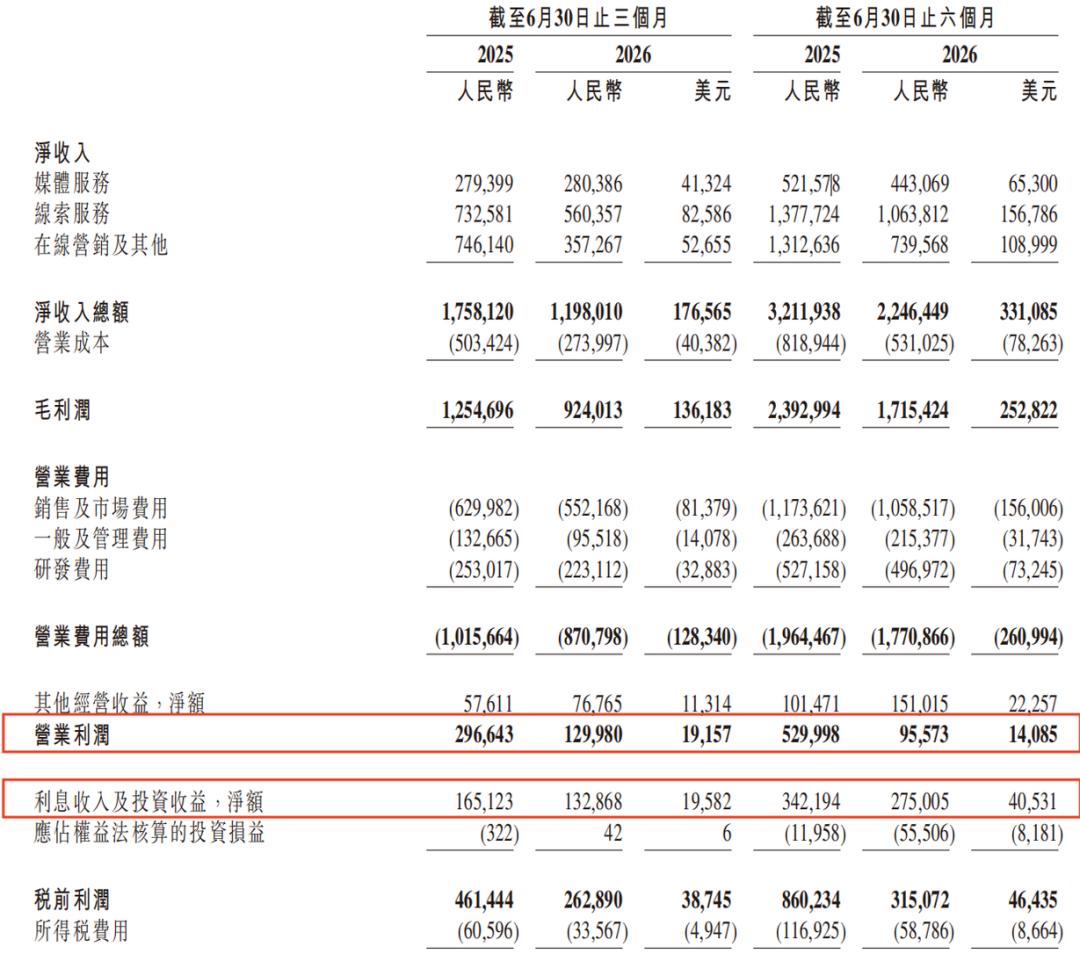
While cash-generated income supports profits, it cannot replace business growth. If interest rates decline or cash is continuously used for repurchases and dividends, investment income may gradually diminish.
Shareholder returns represent another notable strength for Autohome.
The company has consistently enhanced shareholder returns in recent years. In the first half of this year, it distributed RMB 500 million in cash dividends and completed approximately RMB 1.45 billion ($200 million) in share repurchases, totaling nearly RMB 2 billion in returns. In July, the company approved a new $400 million repurchase plan.
From a shareholder perspective, these are positive signals. However, capital allocation always involves trade-offs: cash used for repurchases boosts per-share value, while cash invested seeks new growth.
Autohome's greatest current test is whether its new businesses can deliver results. If they succeed, cash will serve as the strongest foundation for transformation; if not, cash will ultimately become merely an asset supporting valuation.
-
![]()
Registered Capital Slashed to 372 Million Yuan! Yutong Optical Finalizes Industrial and Commercial Change Registration
-
![]()
Zhuque-3 Successfully Lands, and 'Time Traveler' Secures Another ¥100 Million in Funding: China's Commercial Space Industry Experiences a 'Dynamic August'
-
![]()
Autohome Faces a Shrinking Window of Opportunity
-
![]()
Even a Titan Like Musk Has Faced Setbacks in Fulfilling Promises
-
![]()
AI Office: The End of the Racing Era, Context Becomes the Key to Success
-
![]()
Domestic Vehicle Chassis Revolution ②: The Steering Wheel Remains, But Mechanical Connections in the Steering System Are Decreasing
-
![]()
Exploring MiniMax Design: Can Video Editing Be as Simple as Speaking?
-
![]()
Why Can SenseTime Achieve Profitability While CloudWalk Still Faces Challenges, Despite Both Adopting Large Models?