ChatGPT Tries to Imitate Aifu, but Falls Short in Several Key Areas
 01/12 2026
 657
657
The fact that Aifu's homework is being copied is not merely Ant's success.

As Jensen Huang mentioned at CES a few days ago, the year 2025 just past witnessed the widespread adoption and rapid proliferation of Agentic AI across diverse fields. Agentic AI, which excels in reasoning, research, tool utilization, future planning, and outcome simulation, has started to tackle significant challenges.
This trend continues to gain momentum. Over the past few days at CES 2026, Leitech has observed that from smart wearables and home terminals, which Qualcomm CEO Cristiano Amon views as key personal AI devices, to smart cars, all are transitioning from generative AI to Agentic AI.
However, this is merely a concentrated display of the ongoing trend. During CES 2026, OpenAI unveiled 'ChatGPT Health,' a product specifically designed for health-related conversations. It can integrate medical and health data to offer more professional health consultations and planning. All files, conversations, and connected applications are stored separately and independently from other chat records, ensuring that conversations are not used for model training.
In simpler terms, OpenAI has introduced an independent health AI on ChatGPT.
This development is not surprising. Over the past two years, health has emerged as one of the most frequently utilized scenarios for AI. How should I interpret my medical report? Is it serious if this indicator is slightly elevated? How can I adjust my lifestyle if I've been sleeping poorly and exercising less lately? These questions may not be complex or highly professional, but they are frequent enough. OpenAI data also indicates that over 230 million people worldwide consult ChatGPT on health and fitness-related questions every week.
More significantly, Ant Aifu has already demonstrated the immense value of health AI. Its predecessor, AQ, attracted 15 million monthly active users within just half a year of its launch, becoming the first vertical native AI application to surpass 10 million users. After upgrading to 'Ant Aifu' at the end of last year, it doubled its user base in just one month, currently reaching 30 million monthly active users, with daily user questions exceeding 10 million.
The underlying logic behind Ant and OpenAI's development of health AI is straightforward:
Firstly, there has always been a substantial demand for health consultations, with no shortage of inquiries. However, in the past, people either relied on online searches or occupied doctors' time, making it challenging for ordinary individuals to receive professional and reliable explanations at any given moment.
Secondly, AI technology has advanced to a new stage over the past two years, with underlying models evolving from being generalists to specialists, truly capable of understanding and explaining complex health and even medical issues.
Thirdly, general AI faces challenges such as the need for rigor and professional capabilities. In highly sensitive scenarios like health, they must be approached with greater caution and treated separately.
When demand, technology, and boundaries are clearly defined, the emergence of health AI on the front stage becomes inevitable. However, the issue lies in the fact that 'doing or not doing' and 'succeeding or not succeeding' are two distinct matters. Few truly possess the capability to excel in health AI.
The sudden appearance of ChatGPT Health is akin to crossing the river by following the 'stones touched' by Ant Aifu.
ChatGPT Health remains a 'tool,' whereas Ant Aifu is more akin to a 'friend.'
The functions of ChatGPT Health are relatively straightforward. It can answer health questions, connect to electronic medical records and health data from platforms like b.well, Apple Health, and MyFitnessPal, and it also ensures separate information isolation.
Domestic users are undoubtedly familiar with these functions, as Ant Aifu introduced them earlier and more comprehensively.
Taking the integration of smart health devices as an example, Ant Aifu not only supports Apple devices but also includes mainstream hardware manufacturers like Huawei, OPPO, and vivo, as well as professional medical and health brand devices from Yuyue, Sanuo, and Omron. Health information scattered across smartwatches, blood pressure monitors, glucose meters, and other devices can be consolidated into each person's 'health information hub,' providing precise health answers, customizing health goals, and urging action at any time.
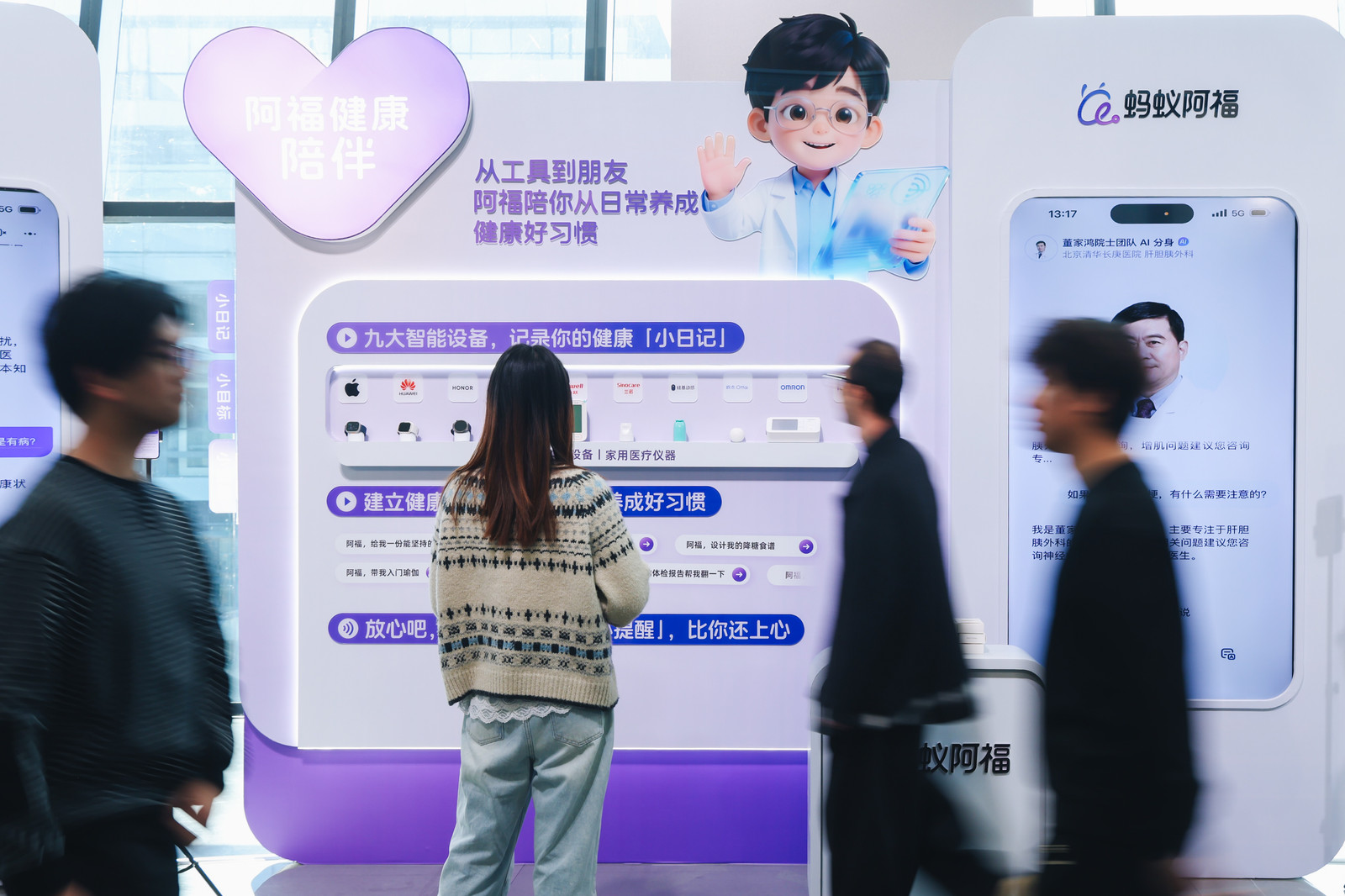
Ultimately, ChatGPT Health is essentially still an 'AI health tool,' with its core capability lying in applying the understanding and reasoning abilities of large models to users' health data, helping them interpret medical reports, understand health changes, and organize questions for doctors.
Ant Aifu, on the other hand, has taken a step further, embodying more of an 'AI health friend' attribute. It doesn't just wait for users to ask questions but actively reminds and continuously follows up on personal and family health status, truly serving as an AI health steward that responds to users anytime, anywhere in daily life, and reminds them to maintain healthy habits.
Of course, regarding the core demand for health Q&A, besides the support of professional health data, both ChatGPT Health and Ant Aifu have invested effort into their large models. According to OpenAI, they collaborated with practicing doctors from dozens of specialties, providing extensive professional feedback on model outputs in key areas to optimize ChatGPT Health's capabilities and response methods.
Ant, on the other hand, directly involved six academician experts and 500 doctors in the top-level design work for Aifu's Q&A thinking and standards during the construction of its professional medical large model. These 500 renowned doctors from across the country also opened 'agent avatars' on Aifu, allowing avatars of renowned doctors skilled in different disciplines to answer people's health questions around the clock.
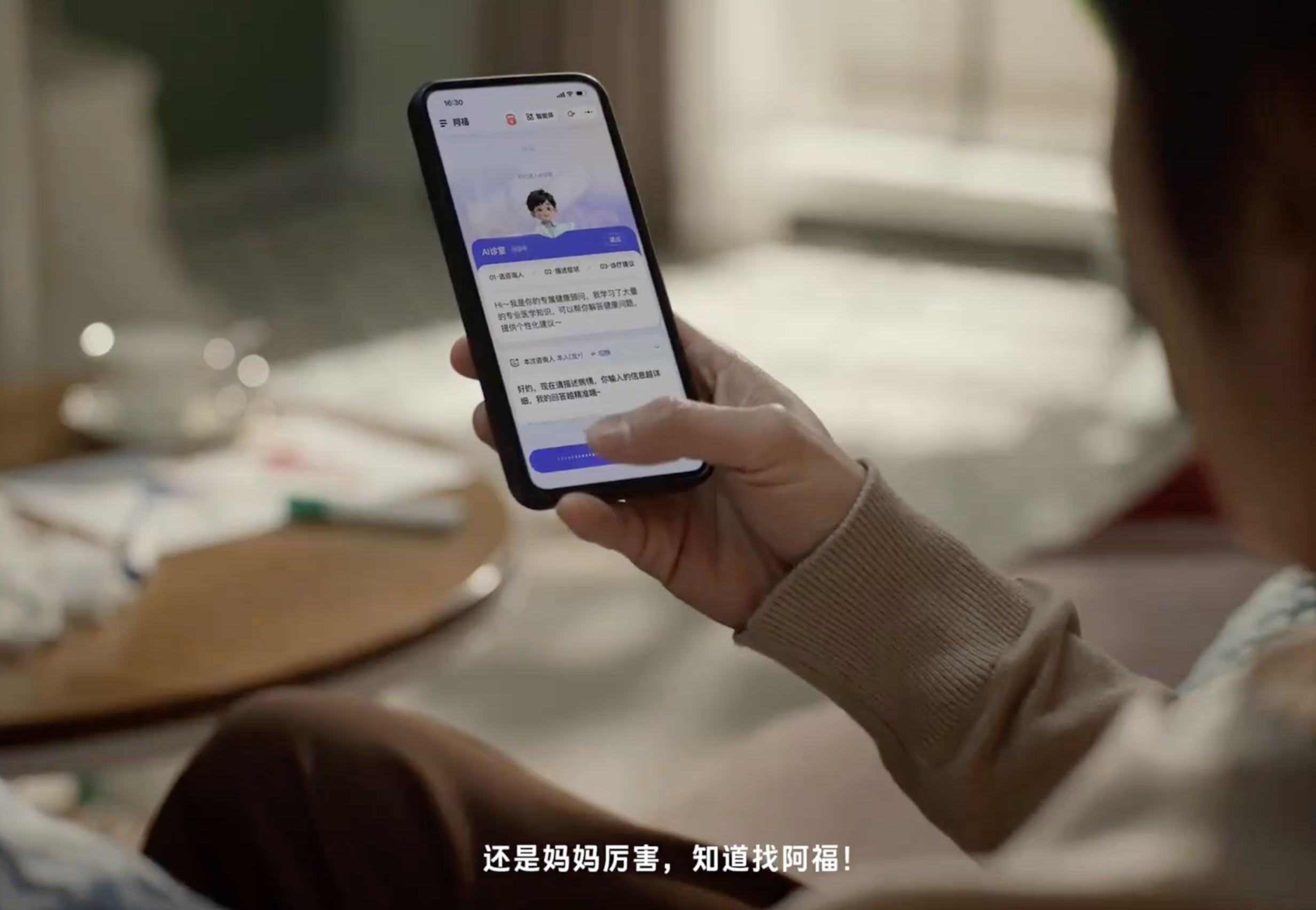
From this perspective, ChatGPT Health does not demonstrate a late-mover advantage. Although it is following in the footsteps of Ant Aifu, there is still a significant amount of work that ChatGPT may not be able to replicate successfully. After all, the competition in health AI has never been solely about model capabilities. What truly determines the upper limit lies in the open ecosystem of medical health and the service closed loop.
Ant has a more comprehensive layout in these aspects.
Ant Aifu is not just an application but also an open platform. It connects to mainstream wearable device brands, professional medical and health device brands, supports online consultations with 300,000 doctors, and links to 5,000 hospitals. If ChatGPT is still focused on the stage of 'telling you what to do,' Ant Aifu can already go further to 'help you do it.'
The complexity of medical and health services largely stems from the offline world. Based on Ant's long-term accumulation in the medical and health field, Aifu has facilitated a series of medical services, including registration, accompanying visits, medical insurance, payment, and report inquiries. These services may not seem 'flashy,' but they determine the boundaries that AI health management can extend to.
What truly determines how far health AI can go is not just the accuracy of its responses but also whether it can integrate with the real medical system and daily life. From wearable devices to hospitals, from medical insurance payments to doctor services, Ant Aifu has already established a closed loop. This makes it not just an AI health application but more like a fundamental pathway connecting users, AI, and the medical and health industry.
For OpenAI and other AI companies, this is the most challenging aspect to 'replicate.'
Trillion-Dollar Health Race: China's AI Applications Lead Globally
Public data indicates that China's total healthcare expenditure exceeded 9 trillion yuan in 2024, while in the United States, this figure surpasses 4 trillion US dollars, accounting for a long-term proportion of around 17% of GDP. Regardless of population size or expenditure structure, health is an application scenario that AI must conquer. Even if it only helps improve the overall health level of the population and reduce medical costs and barriers, the value generated is immeasurable.
This is why health is almost an inevitable application scenario for all general AI. Interpreting medical reports, managing chronic diseases, providing health consultations, and making medical decisions are not inherently 'highly difficult medical problems,' yet they have long occupied a significant amount of doctors' time and incurred high communication and decision-making costs for ordinary people. This is precisely where AI's advantage lies.
From this perspective, the launch of products from Ant Aifu to ChatGPT Health also signifies the 'vast potential' in the broad field of AI health. However, on the other hand, in the race of AI health, timing and path are equally important.
Ant made an early bet on the grand health race, and this strategic vision in AI layout is commendable. However, looking further, Aifu's popularity is not just Ant's success.
For a long time, mainstream discussions around AI have focused on model parameters, computational power scale, and algorithmic breakthroughs. However, in real-world problems, success is often not solely determined by the model being 'smarter' but also relies on long-term accumulated digital infrastructure, real service systems, and a profound understanding of user needs. These are precisely the capabilities that China's internet and medical health industries have repeatedly honed over the past decade.
In other words, Ant Aifu represents not just the success of a single product but also one of the markers of China's AI applications taking center stage in the global AI competition arena.
Source: Leitech
Image source: 123RF Licensed Image Library
-
![]()
Registered Capital Slashed to 372 Million Yuan! Yutong Optical Finalizes Industrial and Commercial Change Registration
-
![]()
Zhuque-3 Successfully Lands, and 'Time Traveler' Secures Another ¥100 Million in Funding: China's Commercial Space Industry Experiences a 'Dynamic August'
-
![]()
Autohome Faces a Shrinking Window of Opportunity
-
![]()
Even a Titan Like Musk Has Faced Setbacks in Fulfilling Promises
-
![]()
AI Office: The End of the Racing Era, Context Becomes the Key to Success
-
![]()
Domestic Vehicle Chassis Revolution ②: The Steering Wheel Remains, But Mechanical Connections in the Steering System Are Decreasing
-
![]()
Exploring MiniMax Design: Can Video Editing Be as Simple as Speaking?
-
![]()
Why Can SenseTime Achieve Profitability While CloudWalk Still Faces Challenges, Despite Both Adopting Large Models?