Trends | Anchoring the Essence: Top Ten AI Trends and Their Underlying Logic for the Next Five Years
 01/12 2026
 659
659
Preface:
We stand at a pivotal crossroads. Over the next five years, artificial intelligence (AI) will transcend the mere pursuit of increased parameter counts or isolated task breakthroughs. Instead, it will enter an era of profound integration, “anchoring its essence and returning to its core value.” AI is transitioning from a mere “technological marvel” to a genuine “source of value,” shifting from a “technology-driven” paradigm to a “value-driven” one, and evolving from “general intelligence” to “scenario-specific intelligence.”
Image Source | Network
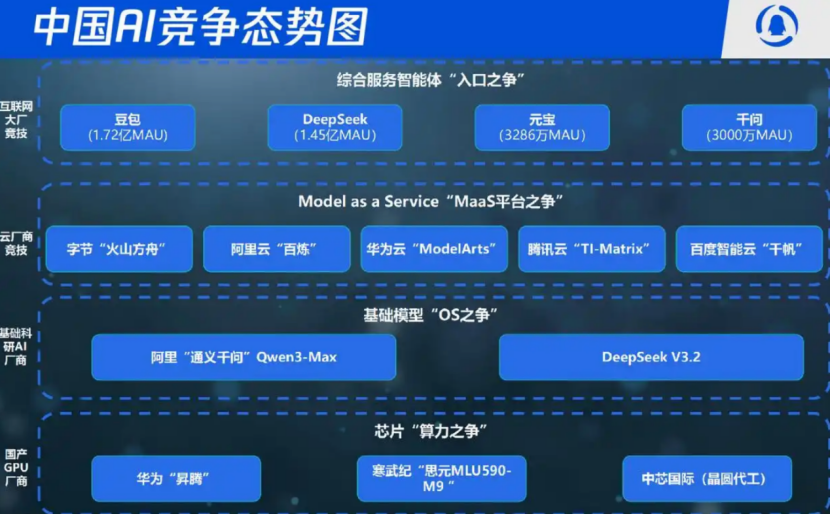
Trend 1: Computing Power Revolution
The bedrock of future AI development lies in the reconfiguration of the computing power landscape. A fundamental transformation is underway: the computing power required for running AI models in practical applications will surpass that needed for model training itself, becoming the dominant force. By 2026, the computing power consumed by AI models in practical applications (inference) is projected to account for roughly two-thirds of the total, fundamentally altering the training-centric computing power investment model. The integrated architecture of “general computing power + intelligent computing power + supercomputing power” will emerge as the mainstream. Simultaneously, nearly US$100 billion will be invested globally to establish local computing power infrastructures, safeguarding “computing power sovereignty” and ensuring supply chain security. This signifies a shift in computing power investment focus from “model forging” to “model utilization,” with economic efficiency and practicality becoming stringent constraints. The era of indiscriminate computing power accumulation has ended, replaced by scenario-oriented efficiency optimization.
Trend 2: Evolution of Generative AI
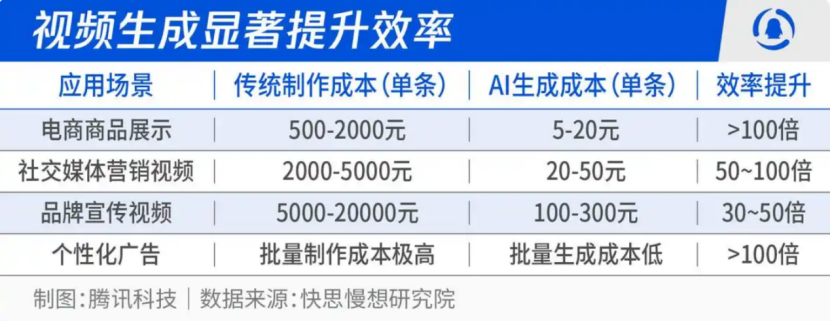
Parallel to the computing power revolution is the evolution of AI capabilities themselves. Generative AI is transforming from a mere “content creation tool” into a “workflow reshaping engine.” It no longer merely generates text or images but delves into the core aspects of knowledge work, assuming the role of a “digital employee.” These AI agents, representing the “silicon-based labor force,” can comprehend objectives, plan steps, invoke tools, and execute complex tasks ranging from market analysis to code writing.

Trend 3: Deep Coupling of AI and Scientific Discovery
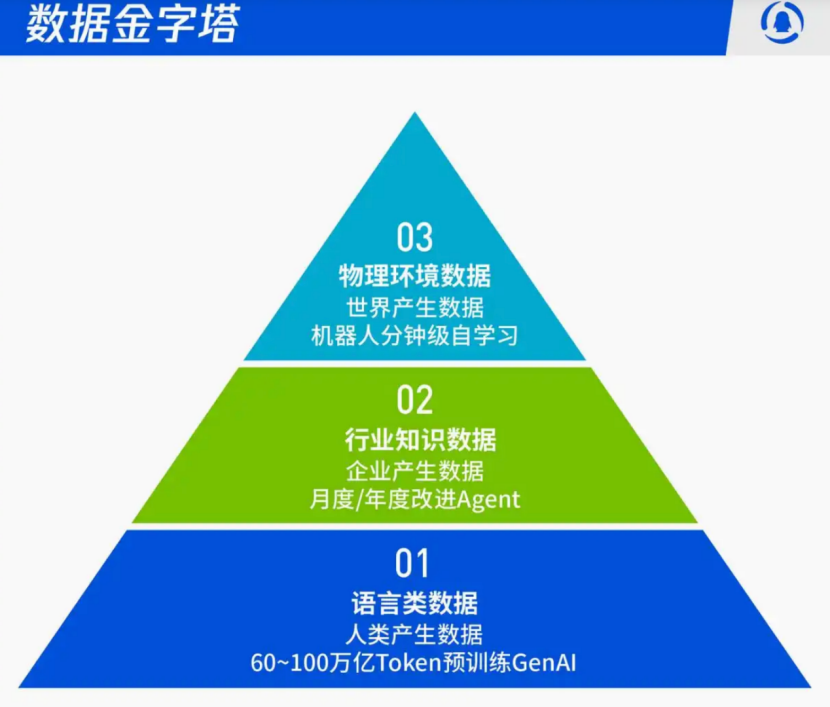
Concurrently, the deep integration of AI and scientific discovery is heralding a new paradigm of “AI for Science.” In life sciences, AI is significantly accelerating new drug development and protein structure prediction; in materials science, it aids scientists in achieving “on-demand design” of novel materials. In physics, chemistry, and other fields, AI assists scientists in uncovering new patterns from vast datasets and even formulating verifiable scientific hypotheses. AI’s prowess in processing high-dimensional complex data and identifying hidden patterns aligns precisely with the core challenges of cutting-edge scientific exploration, acting as an “accelerator” for transcending human cognitive boundaries.
Trend 4: Human-Machine Collaboration
The “silicon-based labor force,” represented by AI agents, will be scaled and seamlessly integrated into the economic system, fostering a novel production model of collaboration between “carbon-based” (human) and “silicon-based” (AI) entities. The “silicon-based labor force” encompasses AI entities capable of understanding objectives, invoking tools, and executing specific economic tasks, including software agents, industrial robots, service robots, etc. It does not merely replace human labor but reshapes job roles. Human work will increasingly focus on creative planning, ethical oversight, human-machine coordination, and complex decision-making. Driven by demographic shifts and the deepening of digitalization, AI, as a scalable and replicable “new factor of productive forces,” will systematically unlock its economic potential.
Trend 5: Business Reconstruction from “+AI” to “AI-Native”
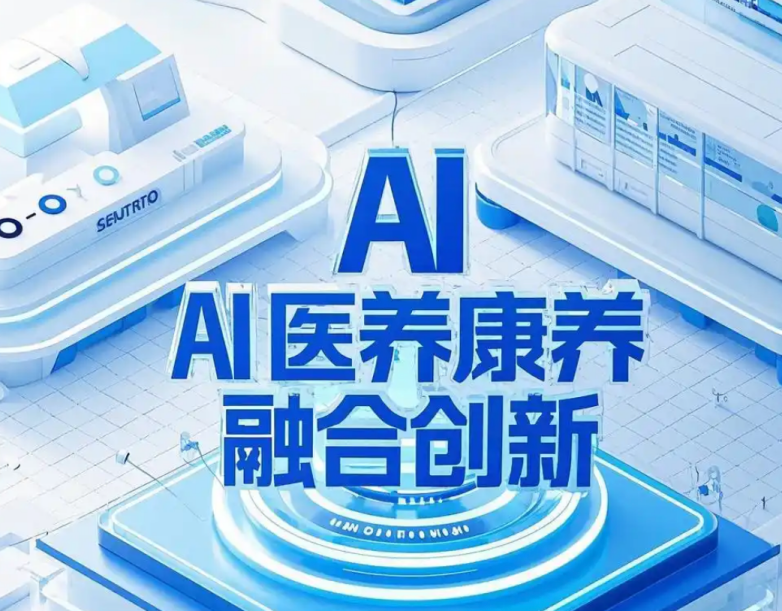
As technology matures, AI is transitioning from innovative pilot projects within enterprises to a transformative force reshaping core business systems, giving rise to truly “AI-native” business processes and products. In manufacturing, AI drives predictive maintenance and flexible production; in healthcare, it spans the entire lifecycle of “prevention-diagnosis-treatment-rehabilitation”; in the financial sector, intelligent risk control and personalized services become the norm. Success hinges not solely on possessing the most advanced AI technology but on deeply integrating profound industry knowledge (Know-How) with AI capabilities to systematically address core industry pain points.
Trend 6: Everything Moving from “Interconnected” to “Intelligently Connected”
This penetration extends beyond the industry level, permeating every corner of the physical space. Thanks to advancements in chip energy efficiency and model lightweighting technology, intelligence is continuously migrating from the cloud, and everything is transitioning from “interconnected” to “intelligently connected.” Real-time decision-making in autonomous vehicles, online quality inspection in industrial equipment, and seamless interaction in smart homes all rely on the proliferation of edge intelligence. The core rationale is that the physical world demands immediate and continuous responses, necessitating intelligence to be proximate to the data source, reducing latency, safeguarding privacy, and completing the “last mile” of AI integration into the real world.

Trend 7: Systematic AI Safety and Governance
As AI’s influence permeates every facet of the economy and society, its safety, fairness, and controllability have emerged as global concerns, propelling the rapid establishment and refinement of governance frameworks. This encompasses a broad spectrum, from data privacy and algorithmic bias to model safety and social impact. Nations are accelerating relevant legislation, while enterprises are initiating internal AI ethics committees and risk assessment protocols.
Trend 8: Naturalization of Human-Machine Interaction
Accompanying this is a fundamental shift in human-machine interaction modalities. Interfaces are gradually becoming “invisible,” enabling humans to communicate with machines through natural language, gestures, and even eye contact. The fusion of multimodal interactions and the enhancement of contextual awareness capabilities empower AI to proactively comprehend and anticipate user needs, achieving a leap from “passively responding to instructions” to “proactively providing tailored services.”
Trend 9: Open Ecosystem and Miniaturized Innovation
While developing in a standardized manner, the barriers to AI innovation are sharply declining, fostering an innovation ecosystem that transitions from centralization to prosperity. The emergence of high-quality open-source models, the convenience of accessing AI capabilities via cloud platforms, and the popularity of low-code/no-code tools collectively form a potent empowerment triangle. They enable small and medium-sized enterprises and developers to acquire robust foundational capabilities at minimal cost, allowing them to concentrate their efforts on innovation within business scenarios.
Trend 10: From Perceptual Intelligence to Cognitive Intelligence
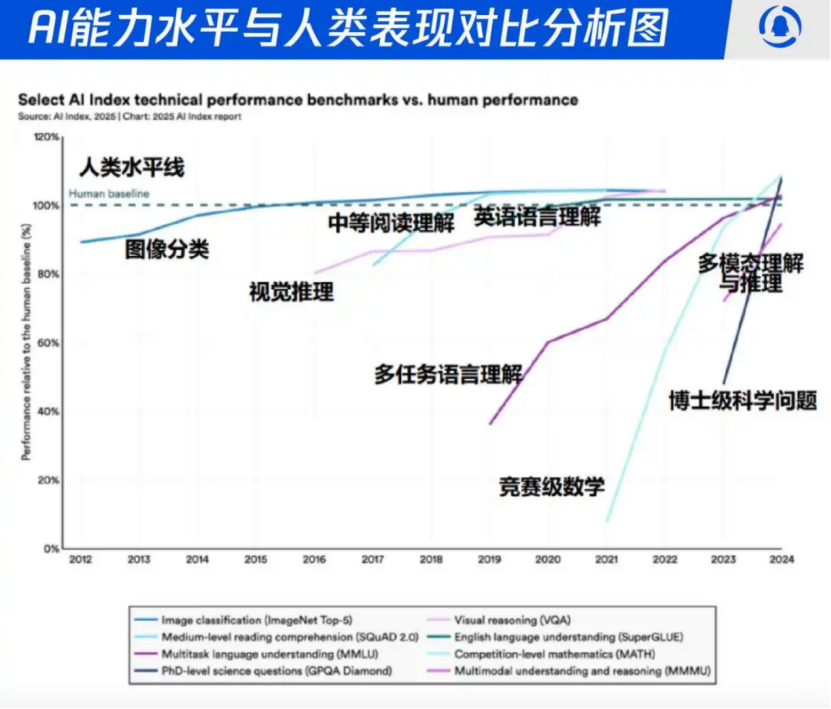
While celebrating AI’s achievements, we must remain acutely aware of its fundamental limitations. Despite remarkable strides in perceiving the world and pattern matching, AI remains at a rudimentary stage in “cognitive intelligence,” which necessitates deep understanding, causal reasoning, and the application of common sense. Current large models are essentially probabilistic “association masters” rather than true “causal understanders.” They still falter when confronted with tasks requiring multi-step logical reasoning and reliance on common sense from the physical world.
Conclusion
The next five years will be a transformative period for AI to shed its superficiality and anchor its essence. Those who deeply grasp the core of “value-driven” and lead the way in completing the AI value loop within their respective domains will ultimately emerge as the true definers and beneficiaries of the intelligent era.
Network Citations:
Wall Street See: “AI Investment Enters a Critical Validation Period, Autonomous Driving Travel Approaches… Goldman Sachs Predicts Top Ten Focal Industry Themes for 2026”
Elephant News: “Intelligent Revolution Sweeps Across the Nation: Top Ten AI Trends for 2026-2030”
Streaming Media Network: “Deloitte Report Reveals Three Core Battlefields of Technological Infrastructure for 2026”
-
![]()
Registered Capital Slashed to 372 Million Yuan! Yutong Optical Finalizes Industrial and Commercial Change Registration
-
![]()
Zhuque-3 Successfully Lands, and 'Time Traveler' Secures Another ¥100 Million in Funding: China's Commercial Space Industry Experiences a 'Dynamic August'
-
![]()
Autohome Faces a Shrinking Window of Opportunity
-
![]()
Even a Titan Like Musk Has Faced Setbacks in Fulfilling Promises
-
![]()
AI Office: The End of the Racing Era, Context Becomes the Key to Success
-
![]()
Domestic Vehicle Chassis Revolution ②: The Steering Wheel Remains, But Mechanical Connections in the Steering System Are Decreasing
-
![]()
Exploring MiniMax Design: Can Video Editing Be as Simple as Speaking?
-
![]()
Why Can SenseTime Achieve Profitability While CloudWalk Still Faces Challenges, Despite Both Adopting Large Models?