Market Value Soars to 46 Billion! Why is This Optical Firm the First to List on the Shanghai Stock Exchange in the Year of the Horse?
 03/26 2026
 671
671
On March 25, SeeYA Technology made its debut on the SSE STAR Market, marking its status as the first company to go public on the Shanghai Stock Exchange in the Year of the Horse. On its inaugural trading day, the share price closed at 46 yuan, surging by 102.82%, and the company's total market value skyrocketed to over 46 billion yuan in a single day.
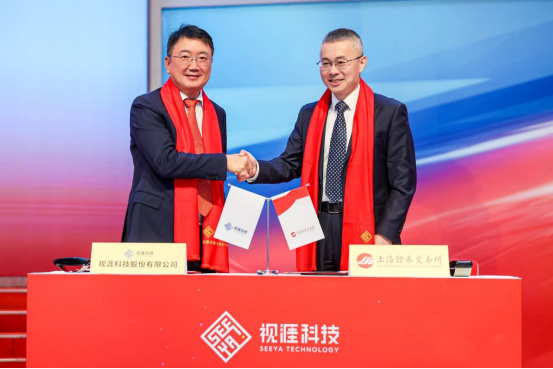
This milestone IPO is not just a significant event in the capital market; it also serves as a profound signal for the optical industry. Silicon-based OLED microdisplays, once considered a niche technology, are now proving through the capital market's pricing mechanism that they have become the central battleground for next-generation smart terminal optical solutions.
Since its inception in 2016, SeeYA Technology, led by a technology-driven team headed by Gu Tie, has consistently focused on the field of silicon-based OLED microdisplay devices. The company has taken a unique path in China by pursuing large-scale production of silicon-based OLEDs based on 12-inch wafer backplanes.
Compared to traditional 8-inch production lines, the 12-inch approach offers not only higher cutting efficiency but also better compatibility with advanced semiconductor processes. This provides systemic advantages in terms of resolution, power consumption control, and mass production yield. To date, SeeYA Technology stands as the first company globally to achieve large-scale production of silicon-based OLEDs on 12-inch wafer backplanes. It is also one of the few domestic companies with comprehensive capabilities spanning display chip design, microdisplay manufacturing, and optical system integration.
In AR, VR, and other XR devices, the optical system comprises two core components: microdisplays and optical imaging elements. For a long time, the matching and synergy between these two have been the primary bottlenecks restricting the thinness and lightness, as well as the immersion enhancement, of the entire device. The rapid ascent of silicon-based OLED as the preferred choice for high-end XR devices in recent years is fundamentally attributed to its combination of OLED's superior image quality with the high carrier mobility of single-crystal silicon backplanes. This enables resolutions exceeding 3000 PPI, microsecond-level response speeds, and power consumption far lower than traditional LCDs on extremely small display areas.
SeeYA Technology has developed proprietary technologies, including strong microcavity technology, crosstalk interception technology, and high-efficiency stacked OLED full-color technology, to address the most challenging process consistency issues in silicon-based OLED mass production. Among these, the strong microcavity technology optimizes the etching process with nanometer-level precision, achieving highly uniform ITO film formation. This improves luminous efficiency by approximately 80% compared to traditional solutions and significantly broadens the color gamut coverage.
This means that AR glasses equipped with SeeYA's displays can deliver brighter, more realistic full-color display effects while maintaining a thin and light form factor. This is crucial for consumer-grade AR glasses to overcome experience barriers. By establishing dual barriers in core technology and scalable production capabilities, SeeYA has forged deep partnerships with leading global clients. The prospectus reveals that SeeYA has established in-depth strategic collaborations with multiple global top-tier technology companies and received capacity deposits from strategic clients to secure future production capacity.
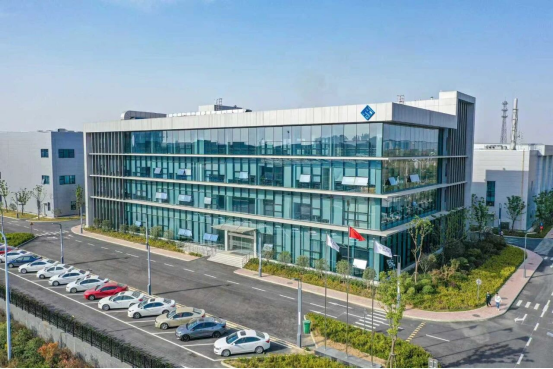
In this IPO, SeeYA Technology publicly issued 100 million shares at a price of 22.68 yuan each, bringing the total share capital to 1 billion shares post-issuance and raising a total of 2.268 billion yuan. The funds will be invested in expanding an ultra-high-resolution silicon-based OLED microdisplay device production line and constructing a research and development center.
According to the prospectus, the company's revenue reached 513 million yuan in 2025, up 83.19% year-on-year, with production capacity nearing saturation and a sufficient backlog of orders. However, behind the impressive share price surge and fundraising, SeeYA Technology also faces the common growth challenges of the industry. As of June 2025, the company's cumulative unrecovered losses had reached 1.162 billion yuan. The primary sources of these losses are annual production line depreciation of approximately 300 million yuan and a heavy investment model, with R&D spending once exceeding 80% of revenue.
Given its current loss-making state and the significant capacity expansion planned after the IPO project reaches full production, the listing committee explicitly raised concerns during the inquiry about the risks of overcapacity and the sustainability of revenue growth. For SeeYA Technology, raising funds through the IPO to expand production lines is essentially a strategic investment based on predictions about the pace of the future XR market explosion. If market adoption falls short of expectations or the yield ramp-up of new production capacity is unsuccessful, the company will face greater depreciation pressure and inventory risks.
Overall, SeeYA Technology's listing on the SSE STAR Market signifies that, for the first time, a Chinese optical company is standing on the global competitive stage as an independent listed entity in the crucial area of microdisplays.
For the optical industry, the significance of this event lies not only in a company's capital operation but also in the industrial trend it reflects. As AI and spatial computing drive the iteration of the next-generation computing platform, near-eye display optical systems are becoming a fiercely contested arena. Companies that master core optical device design and manufacturing capabilities will occupy an irreplaceable position in this transformation.
-
![]()
Internet Valuation Logic Shifts: From Scale Narrative to Profit Accountability
-
VOYAH Struggles to Find Its Niche in the Competitive Auto Market
-
![]()
Maxwell Technologies Gains Indirect Stake in Precision Optics via New Venture
-
![]()
Raising 1.8 Billion! This Domestic Optical Inspection 'Little Giant' is Going Public
-
China's AI 'Normandy Moment': The Explicit and Implicit Threads of BATL
-
![]()
Starting at 4999 Yuan! Nubia RedMagic Gaming Tablet 5 Pro Review: Impressive Performance, But Hefty Price Tag
-
![]()
ByteDance Initiates First Major Management Reform
-
![]()
AI is Quietly Destroying a Trillion-Dollar Industry