The New Generation Audi A6L Launches with a 'Massive' Price Drop of RMB 100,000: Has the Last Line of Defense for BBA Crumpled?
 03/26 2026
 593
593
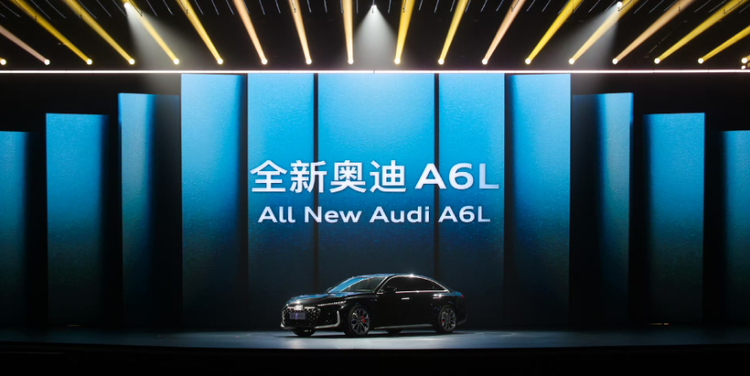
March 25, 2026, Beijing. FAW-Volkswagen Audi unveiled the all-new Audi A6L at an 'Era Elite Celebration.'
When the large screen displayed the price range of RMB 322,900 to RMB 435,900, there was little surprise in the audience. After all, this figure was even lower than the pre-sale price and represented a direct reduction of RMB 105,000 compared to the starting price of the previous model at RMB 427,900.
In 2025, relying on terminal discounts often exceeding RMB 100,000, the Audi A6L sold 172,000 units throughout the year, firmly outpacing the Mercedes-Benz E-Class and BMW 5 Series. However, this was a hemostasis (bleeding-stop) tactic of 'trading price for volume,' whereas this time, it marks a complete generational shift in its seventh year.
This is not only the end of Audi's C8 era but also a desperate counterattack attempting to strike back before the 'Nokia moment' arrives. The question is: When Audi brings its starting price down to the territory of the BMW 3 Series and equips it with Huawei's unprecedented Qiankun Intelligent Driving, can this combination of 'equal intelligence for both ICE and EV' still appeal to today's anxious luxury car consumers?
The Price Sword Cuts Into Itself
The all-new Audi A6L's biggest weapon is neither the still-rare 3.0T V6 engine nor the so-called five-screen cockpit but the RMB 322,900 entry ticket. 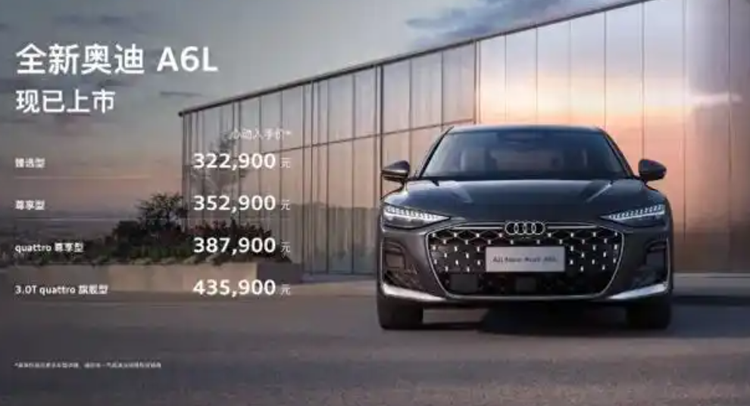
How dramatic is this price? It is a full RMB 105,000 lower than the entry-level version of the previous model. Five years ago, this figure merely represented the on-road price of a mid-spec Toyota Camry. Today, you can drive it into an Audi 4S dealership.
Such a 'self-depreciating' move is uncommon in the history of BBA (Mercedes-Benz, BMW, Audi). While the Mercedes-Benz E-Class and BMW 5 Series also offer discounts, their official suggested price (sticker prices) remain firmly above the RMB 400,000 psychological threshold. Audi has directly shattered this glass ceiling.
Data shows that even at the end of its lifecycle before the generational shift, the Audi A6L still sold 15,660 units in January 2026, outpacing the BMW 5 Series and Mercedes-Benz E-Class. However, by February, this figure had dropped to just over 7,000 units. While the market off-season is one factor, a deeper reason is that consumers' hesitation periods have lengthened. 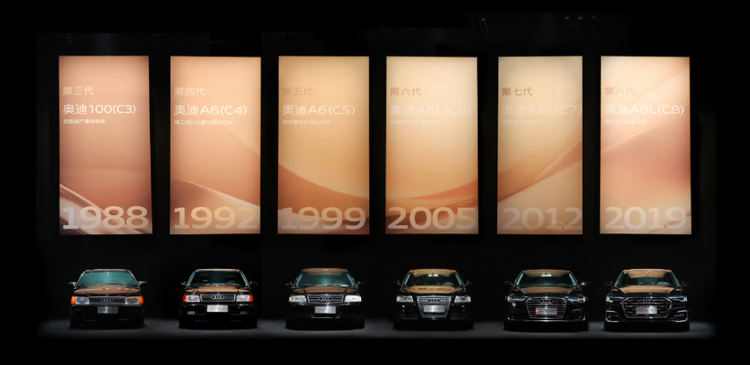
The Audi A6L was once synonymous with executive sedans and a hard currency for business receptions. Today, its competitors are no longer just Mercedes-Benz and BMW. The Xiaomi SU7, Zeekr 001, NIO ET7, and even Huawei-empowered Xiangjie S9 are eroding BBA's market share with entirely different product logics.
Audi has clearly recognized this. The price reduction aims to create more room for trial and error. However, with this cut, brand premium has also started to drain away.
Huawei 'Steps Into the Car': A Belated Catch-Up
If the price reduction is defensive, then intelligence represents Audi's most expensive offensive move this time.
The all-new Audi A6L's biggest highlight is its deeply customized Huawei Qiankun Intelligent Driving technology, equipped with rare dual-lidar sensors in its class.
This is a bold gamble by Audi on its internal combustion engine (ICE) base. It acknowledges that in the era of software-defined vehicles, the coding speed in Wolfsburg, Germany, may not match the iteration speed in Shenzhen, China. Huawei's intelligent driving solution supports urban NOA (Navigation-Assisted Driving), highway NOA, and cross-floor memory parking.
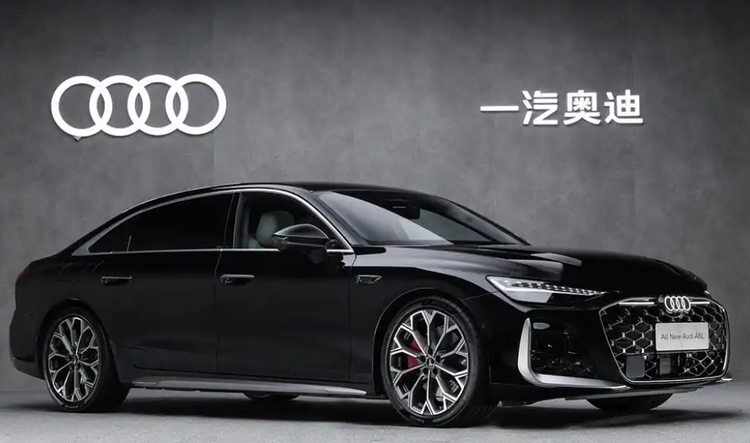
The fusion of 'German mechanical charm' and 'Chinese cutting-edge intelligence' sounds appealing. However, upon closer inspection, it is actually a pragmatic move born out of necessity.
When you sit in the cockpit, gazing at the triple-screen setup consisting of an 11.9-inch instrument cluster, a 14.5-inch central display, and a 10.9-inch front passenger screen, while operating a system based on the Android underlying layer, you realize that Audi has finally caught up with new forces in terms of intelligent cockpit interaction logic.
However, for ICE enthusiasts, intelligent driving is merely icing on the cake; for believers in new forces, a vehicle without lidar is unimaginable. Audi attempts to use Huawei's technology to silence critics who claim 'ICE vehicles are not intelligent.' Whether this move succeeds depends on whether consumers are willing to accept an ICE mechanical structure for the sake of Huawei's algorithms.
The Last V6: The Final Stubbornness
In 2026, amid the rapid advancement of electrification, Audi still retains the 3.0T V6 engine in this C-segment vehicle and adds 2.0T hybrid and 3.0T hybrid versions. 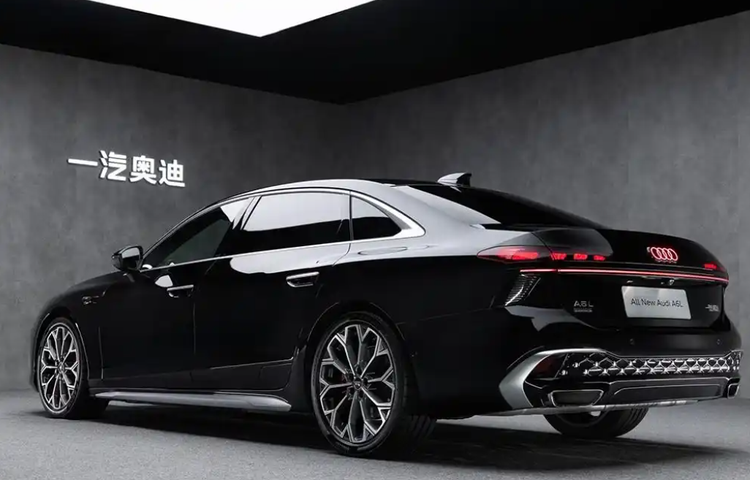
This is noteworthy. While the BMW 5 Series and Mercedes-Benz E-Class are fully compromising with four-cylinder engines, Audi positions the six-cylinder engine as the 'unique in its class' selling point, prominently displayed.
This is both a product strategy and an emotional strategy. For high-end users still enamored with the smoothness and sound of internal combustion engines, the V6 remains an untouchable totem that cannot be replicated by electric motors. Paired with HDI dual-motor all-domain intelligent hybrid technology, Audi attempts to strike a balance between fuel economy and power smoothness. 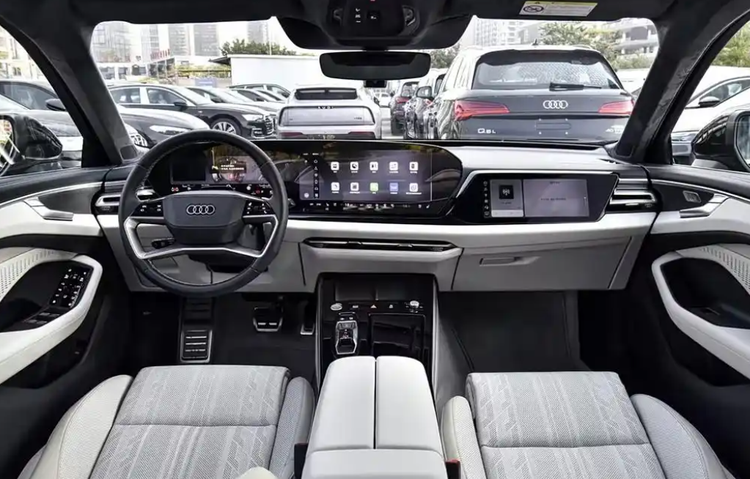
However, how long can this 'stubbornness' last? When pure electric models at the same price point can already achieve sub-2-second acceleration and over 1,000 kilometers of range, the A6L's top-spec 4.6-second zero-to-100 km/h acceleration and around 7L fuel consumption seem more like a dignified farewell.
Who Is Buying the Audi A6L?
Observing the subtle signals in the market, behind the sales data lies a complete reconstruction of consumer mindset.
Reviewing the sales rankings in February 2026, the top three in the mid-to-large sedan segment remain BBA models. This seems to indicate that the moat around ICE vehicles is still wide. However, upon closer inspection, a severe disconnect has emerged in this market: the fourth-place model sells only half as many units as the third-place model.
This means the luxury car market is polarizing. On one side are the extremely pragmatic ICE adherents who need a respectable, reliable, and value-retaining vehicle for daily use—Audi A6L's price reduction precisely targets this group. On the other side are the tech-savvy early adopters who have unhesitatingly embraced new energy vehicles. 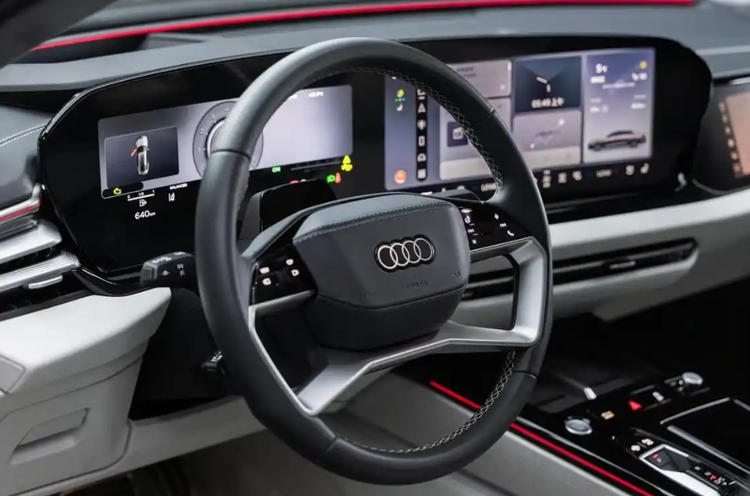
So, who is the user profile for the all-new Audi A6L? Most likely, it includes northern users still anxious about the range of new energy vehicles, small and medium-sized business owners who need to balance business receptions but have tightened budgets, and middle-aged consumers upgrading from joint-venture B-segment vehicles who still hold a strong attachment to the Audi brand.
They may not necessarily need the exhilarating power of the 3.0T V6 or fully trust urban NOA, but they need the four-ring logo, the elongated and thickened rear seats, and a fail-safe answer that straddles the line between ICE and electric vehicles.
Conclusion: The Last Dignity of ICE Vehicles
Objectively speaking, the all-new Audi A6L represents an extremely mature product iteration. It has repositioned itself with a RMB 105,000 price reduction, addressed its most glaring shortcoming (shortcoming) with Huawei's intelligent driving, and upheld its final sentimental value with the V6 engine.
However, at this juncture in 2026, the all-new Audi A6L faces not just a simple competition of 'which BBA is stronger.' It stands at a crossroads of an era: When the charging infrastructure gradually improves, when solid-state batteries enter mass production, and when autonomous driving truly becomes a reality, can the 'mechanical qualities' that ICE vehicles rely on for survival still serve as a moat?
Audi A6L's generational shift resembles a precise defensive move by the ICE camp (camp) at its peak. With extreme cost-effectiveness and localized intelligent configurations, it attempts to prove that ICE vehicles are not yet obsolete.
But is this the final glory of ICE luxury vehicles or merely a temporary resurgence before a new era begins?
The answer may not lie in the lights of the launch event but in the bills where every consumer votes with their feet. For Audi, the A6L's mission remains to stabilize its market base, exchange profits for time, and await the true fruition of its electrification transformation.
However, amid the sweeping tide of intelligence, the time left for traditional luxury brands to turn around gracefully is truly running out.
-
![]()
The Unstoppable Rise of 'Optical Progress and Copper Decline': Sunny Optical’s Strategic Vision for the Next Decade
-
![]()
AI + Going Global in the Second Half: No Intermission for Robot Vacuum Cleaners
-
![]()
The Suffering Endured in E-commerce, Walmart Doesn't Want to Repeat in AI
-
![]()
What Does the Doubling of New Energy Vehicle Exports Mean?
-
![]()
Ghosn: 'Only I Can Save Nissan'
-
![]()
Volkswagen Lays Off 100,000 Employees, The Elephant Sits Down
-
![]()
Expanding Production Capacity! Yutong Optics Acquires Approximately 1.5 Hectares of Industrial Land in Chang'an, Dongguan
-
![]()
Why Is Nokia Making a Comeback in the AI Era?