AI Industry in 2026: Application Explosion, Architectural Breakthroughs, and Physical AI
 01/13 2026
 699
699
The year 2025 stands as a watershed moment in the new era of artificial intelligence (AI) technology and its applications. AI has evolved from iterative algorithms confined to laboratories to real-world implementations across diverse industries, profoundly reshaping economic frameworks, social dynamics, and even geopolitical landscapes.
During this year's Spring Festival, DeepSeek's emergence not only shattered the AI "iron curtain" forged in Silicon Valley but also dispelled the ambiguity surrounding AI technology and commerce that had lingered over the previous two years. Since then, AI has surged forward with rapid product iterations. By the end of the year, the launch of the Doubao mobile AI agent brought the competition for the gateway to the AI era to the forefront.
Looking ahead to 2026, the AI wave will no longer be content with mere technological breakthroughs and conceptual validations. As the competition for gateways settles into an initial pattern, the industry's focus will inevitably shift to deeper questions: How can technology be effectively transformed into productivity and reshape the real world with unprecedented breadth and depth? Therefore, 2026 is widely anticipated to be a banner year for the sustained explosion of AI applications.
01. AI Applications Such as Agents, Embodied AI, and Autonomous Driving Will Flourish
After years of technological accumulation and pilot explorations, AI will make a crucial leap in 2026, transitioning from being "usable" to "user-friendly" and from "pilot projects" to "standard configurations."
The core driver of this transformation is the maturation and practical application of the technology itself. The focus of competition among large models has shifted from mere parameter races to practical optimizations that prioritize cost, efficiency, and scenario adaptation. Meanwhile, cutting-edge technologies like multimodal AI, AI agents, and embodied AI are moving out of laboratories and entering industrial-scale validation stages. This signifies that AI is no longer just a tool for dialogue or text generation but an intelligent entity capable of understanding complex instructions, collaborating in tasks, and even controlling physical devices. This clears technical barriers for its deep integration into real economy sectors such as healthcare, manufacturing, and logistics.
Against this backdrop, the breadth and depth of AI applications will undergo a qualitative change. AI will transition from scattered, single-point tools to being deeply embedded in the core production processes of various industries, becoming a fundamental production factor akin to electricity and water. Industry forecasts indicate that hardware innovations at both the consumer and industrial ends, ranging from smart glasses and humanoid robots to autonomous driving, will surge simultaneously, enabling AI to truly "step out of screens" and into daily work and life. Corporate investment in AI has also generally risen, with goals shifting from efficiency improvements to creating measurable business value, driving AI applications from demonstration projects to large-scale implementations.
Therefore, the term "banner year" for 2026 essentially signifies the end of AI's phase of aspirations and experiments, marking the official start of a profound revolution that reshapes production relationships and value creation methods across industries.
02. Transformer Architecture Bottlenecks Emerge, Model Architectures May See New Breakthroughs
However, the comprehensive explosion of applications is not built on thin air; it relies on the continuous evolution of underlying foundational models. While the industry is busy deploying existing technologies, research frontiers have keenly detected the ceiling of the current technological paradigm, and an exploration into next-generation model architectures is quietly underway.
After driving explosive growth in artificial intelligence, the limitations of the Transformer architecture are becoming increasingly apparent, prompting research institutions and enterprises worldwide to actively explore entirely new technological paths. Therefore, 2026 may witness a period of diversified breakthroughs in AI model architectures.
Currently, almost all mainstream large models are built on the Transformer architecture. However, this architecture experiences a sharp increase in resource requirements for training and inference when processing extremely long texts or data sequences, posing a significant efficiency bottleneck. Simultaneously, industry analyses point out that the marginal gains in performance from traditional development models relying on increased data, parameters, and computational power are rapidly diminishing. These fundamental challenges are prompting the industry to look beyond Transformer architectures.
Several highly promising directions have emerged in the exploration of new architectures. First is the brain-inspired spiking model. For instance, the "Shunxi 1.0" model developed by the Institute of Automation, Chinese Academy of Sciences, draws inspiration from the working principles of brain neurons to construct a non-Transformer architecture from the ground up. This model achieves orders-of-magnitude efficiency improvements in processing ultra-long sequences compared to traditional architectures and requires only minimal data for efficient training. Second is the recursive model, where research from the Massachusetts Institute of Technology proposes a new paradigm enabling models to recursively call themselves by writing and executing code to handle ultra-long context tasks, effectively breaking through the physical limitations of traditional models on context length. Third are new training methods like "Manifold-Constrained Hyperconnections" (mHC) proposed by DeepSeek, which aim to train larger-scale models at lower computational and memory costs by optimizing internal model connections, representing a systematic exploration into next-generation foundational model architectures.
Overall, whether through brain-inspired paths mimicking biological intelligence, recursive methods innovating in computational paradigms, or deep optimizations of existing architectures, multiple technological routes are advancing in parallel in 2026. These efforts collectively point to a future where Transformer will no longer be the sole cornerstone for building powerful artificial intelligence, and a more diverse, efficient, and specialized model architecture ecosystem is taking shape.
03. From Large Language Models to World Models, Laying the Foundation for the Development of Physical AI
Architectural innovations aim to make AI more powerful and efficient, but the ultimate vision of artificial intelligence extends far beyond processing symbols and information. There is a growing consensus in the industry: To achieve general intelligence capable of seamless interaction with the physical world, AI must transcend textual statistical patterns and establish a fundamental understanding of the operational laws of the real world. This leads the development focus towards the next critical stage.
Current large language models have also encountered bottlenecks. They are essentially pattern-matching systems based on statistical learning from massive texts, excelling at generating fluent text but incapable of truly understanding the operational laws of the physical world. This renders them difficult to accurately simulate physical phenomena, prone to being misled by irrelevant information in complex reasoning, and unable to reliably distinguish objective facts from subjective beliefs. Therefore, relying solely on iterating large language models may not achieve artificial general intelligence (AGI).
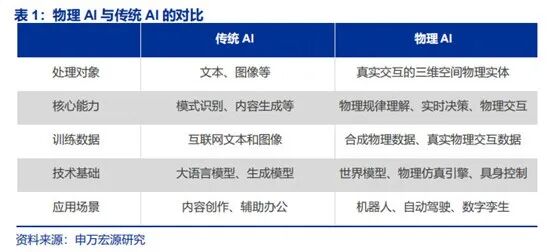
The rise of "world models" aims to break through this bottleneck. Their core goal is to enable AI to internally construct a "simulator" capable of understanding and predicting the dynamic changes in the physical world. For example, such models can not only predict the trajectory of a basketball after being thrown but also understand physical laws like gravity and collision. This equips AI with the ability for causal reasoning, counterfactual thinking, and "sandbox simulations" before taking actions, laying the foundation for realizing intelligent agents capable of safe and effective interactions with the real world.
Recognizing this fundamental advantage, global tech giants and top research institutions have intensively deployed resources from 2025 to early 2026, accelerating this transformative shift. For instance, NVIDIA launched the Cosmos world model platform, focusing on generating high-fidelity synthetic data for robots and autonomous driving. Google DeepMind constructed interactive virtual environments through the Genie series of models, supporting long-term memory and complex physical simulations.
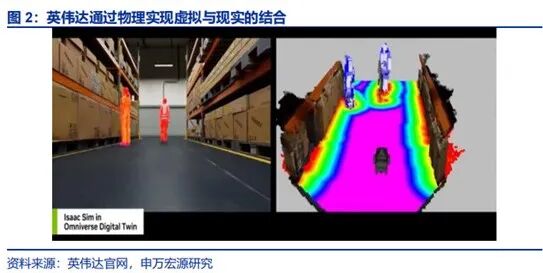
Therefore, 2026 is regarded as a critical turning point not just for technological iterations but because the core objective of AI development is undergoing a shift: from "linguistic intelligence" centered on generation and dialogue to "physical intelligence" and "embodied intelligence" aimed at understanding and transforming the world. This marks a crucial step forward for artificial intelligence towards general goals.
04. Conclusion: The Future Is Here
In summary, the development wave of artificial intelligence in 2026 may achieve a critical shift—from a technology competition under the spotlight to a profound reshaping of the fabric of various industries. With the proliferation of intelligent agents, architectural innovations, and the rise of world models, AI is stepping out of screens and code to reshape production logic and physical interactions. This transformation is not just about efficiency improvements but a subversion of cognitive and creative paradigms. The future is here, as an AI-driven industrial and social paradigm revolution accelerates from imagination into reality.
- The End -
-
![]()
Registered Capital Slashed to 372 Million Yuan! Yutong Optical Finalizes Industrial and Commercial Change Registration
-
![]()
Zhuque-3 Successfully Lands, and 'Time Traveler' Secures Another ¥100 Million in Funding: China's Commercial Space Industry Experiences a 'Dynamic August'
-
![]()
Autohome Faces a Shrinking Window of Opportunity
-
![]()
Even a Titan Like Musk Has Faced Setbacks in Fulfilling Promises
-
![]()
AI Office: The End of the Racing Era, Context Becomes the Key to Success
-
![]()
Domestic Vehicle Chassis Revolution ②: The Steering Wheel Remains, But Mechanical Connections in the Steering System Are Decreasing
-
![]()
Exploring MiniMax Design: Can Video Editing Be as Simple as Speaking?
-
![]()
Why Can SenseTime Achieve Profitability While CloudWalk Still Faces Challenges, Despite Both Adopting Large Models?