U.S. Congress to Debate Unlocking the 'Gate' for Autonomous Driving: 90,000 Exemption Ceiling Clashes with State Bans; 'Western Rule-Centric' vs. 'Eastern Scenario-Centric' Approaches Compete in a 'Du
 01/13 2026
 465
465
Introduction
On Tuesday (January 13) Eastern Time, a U.S. House of Representatives committee is set to convene a hearing to deliberate on legislation aimed at streamlining the deployment process for autonomous vehicles.
This development, akin to a stone cast into a tranquil lake, is poised to send reverberations across the globe.
While China's industry is making rapid strides in 'scenario implementation' and 'engineering realization' through urban open testing, university contests, and product rollouts, the U.S. is brewing a 'regulatory breakthrough,' endeavoring to dismantle the most formidable obstacle to technology commercialization from the policy summit.
This heralds a new chapter in the global autonomous driving competition: a 'dual-track race' between the 'Eastern scenario-centric' and 'Western rule-centric' paradigms.
(For further reading, please click:
'He Xiaopeng's Latest Insight: 2026 Will Mark the True Dawn of Full Autonomous Driving in China and the U.S.! From Incremental Progress to the Dream's Brink?')
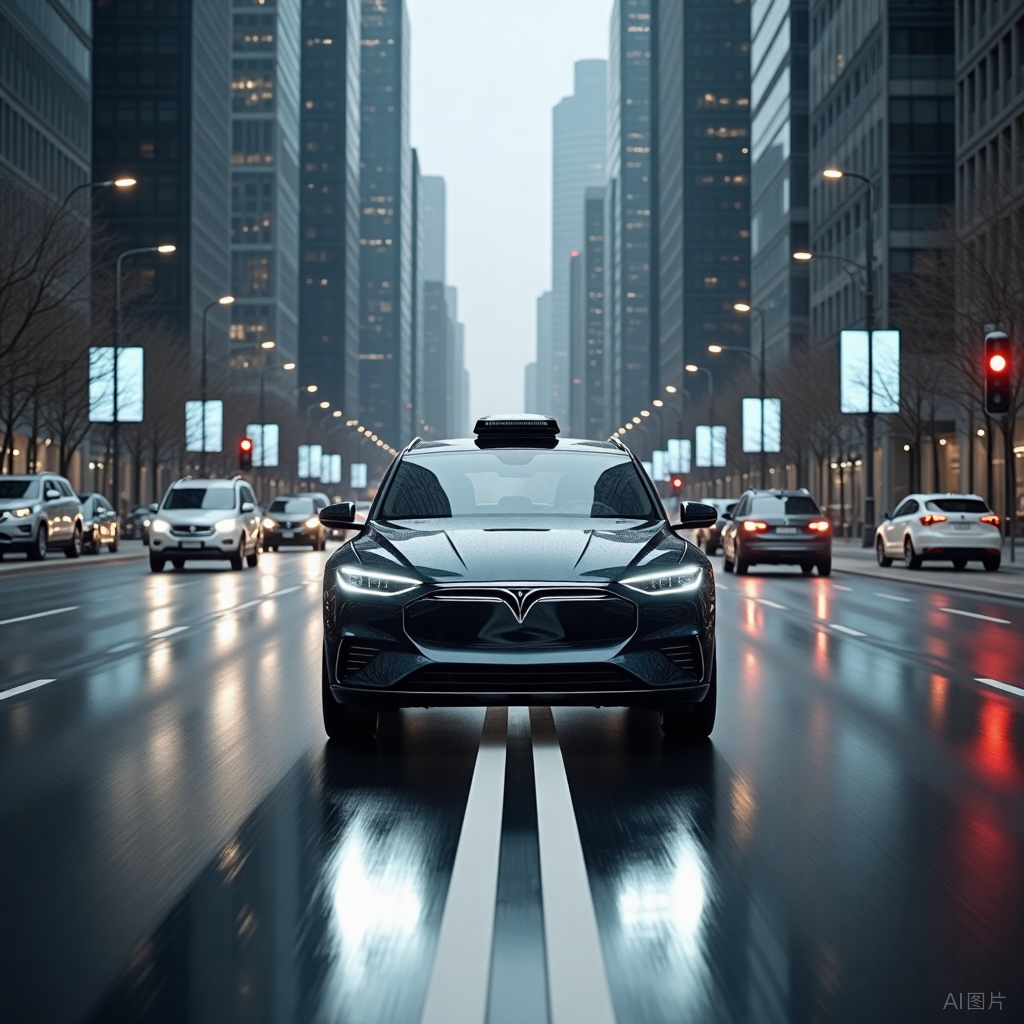
I. United States: Pursuing a 'Regulatory Big Bang' to Secure Industrial Leadership Through Institutional Easing
The crux of the U.S. Congress's deliberation lies in its bid to orchestrate a 'regulatory big bang' via legislation, directly dismantling the legal barriers that impede the large-scale deployment of fully autonomous vehicles (particularly Robotaxis devoid of steering wheels or driver seats).
The linchpin proposal—raising the exemption ceiling from 2,500 vehicles per company annually to 90,000 and barring states from imposing additional regulations—would be revolutionary if enacted.
The underlying rationale is both clear and pressing:
1. Responding to Chinese Competition:
As articulated by the U.S. Secretary of Transportation, the new framework is designed to aid U.S. automakers in 'competing with Chinese counterparts.'
This underscores that China's swift industrialization in the intelligent connected vehicles sector is perceived by the U.S. as a pronounced strategic challenge.
2. Unifying Market Regulations:
Federal legislation takes precedence, aiming to eradicate the fragmented market landscape caused by inconsistent state regulations and pave the way for nationwide fleet operations.
(For further reading, please click:
'The Pioneer in Autonomous Driving Across the U.S. Completes a 4,397-Kilometer Journey with Tesla FSD 'Zero Handover'! Musk's Promise, Delayed by 8 Years, Finally Realized')
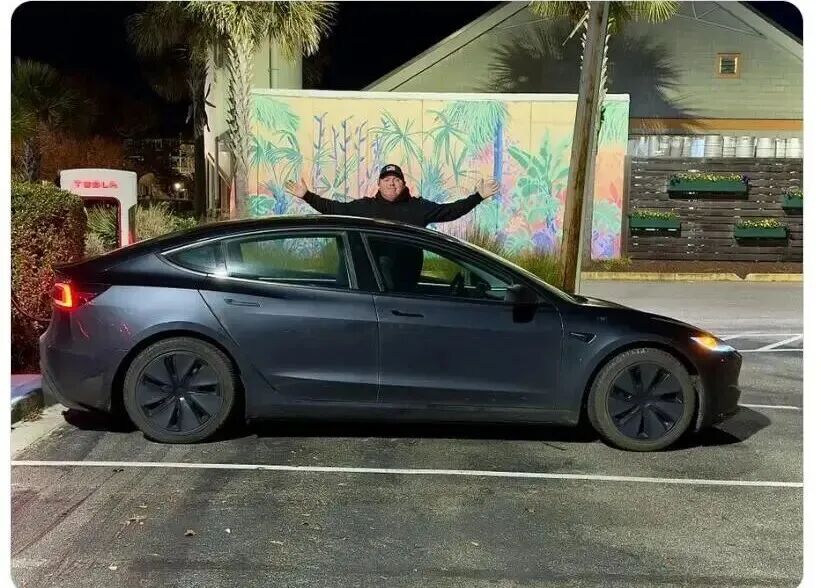
3. Addressing Industry Demands:
Directly tackling fundamental queries regarding the applicability of traditional safety standards, such as 'steering wheels and rearview mirrors,' to autonomous vehicles, and greenlighting the next generation of vehicle designs.
However, this path is fraught with challenges.
The specter of General Motors' accidents, multiple NHTSA investigations, and staunch opposition from consumer groups and truck driver unions pose significant political and social hurdles.
The legislative process itself has been mired in stagnation for years, indicating the difficulty in achieving consensus.
The U.S. endeavor represents a high-stakes institutional gamble aimed at creating the most lenient 'testing ground' for technological leaps.
II. China: Leveraging 'Engineering Prowess' to Achieve Scenario Breakthroughs Through Incremental Integration
In stark contrast to the U.S.'s 'top-down design, legislation-first' approach, China adopts a 'pilot-first, scenario-centric, incremental integration' model. Its core strength lies in robust engineering implementation capabilities and flexible policy adaptation.
1. Policy Characteristics: City-Level Pilots, Flexible Regulation.
China has not (and does not currently necessitate) seeking nationwide, disruptive legislative breakthroughs. Instead, it empowers local governments (such as Xiamen, Beijing, Shanghai, Wuhan, and Changsha) to conduct open road testing and demonstration operations in designated regions.
This fosters an 'innovation sandbox' with 'multiple points of success,' where policies accommodate technological innovation while upholding safety standards (e.g., Xiamen opting for off-peak hours and designated routes for testing).
2. Industrial Logic: From Logistics to Mobility, Prioritizing Scenario Closure.
China's autonomous driving development is intricately linked to the burgeoning demand for e-commerce logistics and urban delivery.
JD's warehouse-to-hub testing, Geely Remote's Robovan offerings, and the tenfold surge in unmanned vehicles from companies like Jiushi, Neolix, and Bai Niu all prioritize commercial closure in the commercial logistics sector, where the imperative for 'cost reduction and efficiency enhancement' is most pronounced.
(For further reading, please click:
'The 'Traffic Lever' of Unmanned Freight: Didi Leverages Cainiao, Neolix, and Others to Accelerate Commercialization of Light-Asset Unmanned Vehicles, Making Strategic Moves in the Intelligent Logistics Sector')
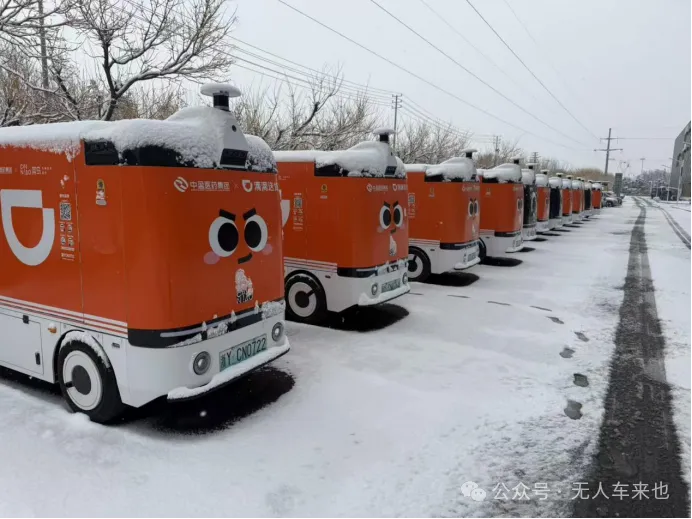
This provides a clear business model and potential cash flow, circumventing the initial predicament of Robotaxis being purely cash-intensive and challenging to monetize.
Automakers like Xpeng adopt a gradual strategy of 'mass-produced vehicles + data iteration' to amass L4 capabilities while enhancing L2 penetration.
3. Social Foundation: Heightened Public Acceptance of Technology and Talent Supply.
Relatively fewer union impediments and a heightened public willingness to embrace new technologies foster a conducive social environment.
Meanwhile, China's expansive and high-caliber engineering education system, exemplified by the Harbin Institute of Technology competition, continuously nurtures relevant talent.
(For further reading, please click:
'Among 366 Teams, Harbin Institute of Technology (Weihai) Students Clinch First Prize in the National College Student Intelligent Vehicle Competition's Outdoor ROS Unmanned Vehicle Category')
III. Reshaping the Global Industrial Landscape Through a 'Dual-Track Race'
The 'dual-track race' between the U.S. and Chinese approaches will profoundly shape global technological trajectories and the industrial landscape:
1. Potential Divergence in Technological Routes:
If U.S. regulations are significantly relaxed, it may incentivize more 'leapfrog' (straight-to-L4) radical solutions and vehicle form innovations (fully driverless cabins). Conversely, China's 'incremental' integration within the existing transportation system may focus more on vehicle-road coordination and mixed traffic flow efficiency optimization.
2. Supply Chain and Standards Competition:
The competition extends beyond automakers to encompass the entire intelligent vehicle supply chain (chips, sensors, software, high-precision maps) and the international discourse power over future autonomous driving data standards, communication protocols, and safety certifications.
3. Business Model Validation Race:
Whether U.S. companies like Waymo and Cruise can swiftly achieve scale and profitability for Robotaxis post-policy breakthroughs, and whether Chinese companies like JD, Meituan, and Xpeng can validate L4-level experience and cost models in complex urban delivery and private vehicle scenarios, will be pivotal tests of both paths' success.
IV. Conclusion: Key Moves in Observing the Global Autonomous Driving Chess Game
The U.S. Congress's hearing represents a pivotal move in observing the global autonomous driving chess game.
It underscores that this competition, which pertains to the future of mobility and even the commanding heights of artificial intelligence, has evolved from a mere technological R&D race among enterprises into a comprehensive contest involving national industrial policies, legal frameworks, social consensus, and engineering capabilities.
China's strength lies in its vast application scenarios, efficient engineering implementation, and flexible policy adaptation, which are solidly 'paving' technology onto the roads.
The U.S.'s potential resides in the possibility of opening the 'ceiling' for disruptive innovation if it attains a 'regulatory breakthrough.'
In any case, the 'Unmanned Vehicle Is Coming' (WeChat public account: Unmanned Vehicle Is Coming) posits:
This 'dual-track race' has no simple victor or vanquished. Instead, it is more likely to spawn multiple successful paths tailored to diverse social cultures and market environments.
What is certain is that every major policy and industrial advancement in both nations is pressing the crucial 'accelerator' for the global advent of autonomous driving.
What are your thoughts, dear reader?
#UnmannedVehicleIsComing #AutonomousDriving #SelfDriving #UnmannedVehicle
-
![]()
Enflame Tech's IPO Journey: Navigating Over 5.9 Billion Yuan in Losses and Soaring Debt in Q1 This Year
-
![]()
Trillion-Yuan Giant Li Shufu 'Streamlines': Could Levc Be the Casualty?
-
![]()
AI Competes for Electricity and Generates Power in the Gobi Desert
-
![]()
The First Batch of Victims of the AI Bubble: Programmers
-
![]()
ByteDance, DJI, and Xiaohongshu Secure Top Three Positions Among China’s Fastest-Growing Unicorns
-
Tesla's in-car voice system in China is finally learning to 'understand human language'
-
![]()
Foreigners Are Amazed: Chinese Electric Vehicle Drive Systems Unveil Innovative 'Poses'
-
![]()
700,000 Brothers and the Future of Robots: Behind JD.com's 'Nirvana Plan'