Google Snatches the 'Soul' from Apple
 01/16 2026
 768
768
Written by | Wu Kunyan
Edited by | Wu Xianzhi
Over the past two decades, Apple and Google have maintained a close partnership.
Since 2002, the majority of search queries made by Apple users have been directed to Google. In many regions, iPhone models come pre-configured with Google as their default search engine. Google pays substantial sums to secure access to this highly valuable distribution channel in the mobile internet landscape. This long-standing agreement has evolved alongside the internet and Apple's business model, yet collaboration has consistently remained the cornerstone.
The default agreement between these two tech giants has undergone several modifications over the years but has fundamentally established the standard for the mobile search ecosystem. Now, a new paradigm shift is occurring, moving from traditional search boxes to intelligent 'assistants'.
According to multiple media reports, Apple and Google have delved deeper into their collaborative framework surrounding Gemini. Siri's new capabilities are expected to be gradually rolled out starting in spring, with a full-scale launch anticipated around the Worldwide Developers Conference (WWDC). Notably, Apple retains the ability to fine-tune Gemini's adaptability and make necessary adjustments, while Google's branding will remain absent from the interface. Users will continue to interact with Siri, not Gemini.

We can draw parallels from the retail industry's 'white label' concept to understand this collaboration better. Apple treats Gemini as 'contract manufacturing capacity,' integrating it seamlessly into Siri's 'brand.' Users are solely concerned with the 'experience' delivered by Apple, without needing to know the underlying source of intelligence.
Under this framework, Gemini is viewed as a procurable and replaceable component, with Siri serving as the front-end brand and maintaining the user relationship. For Google, even though its brand is concealed, securing a default system-level integration ensures widespread distribution and ecological positioning.
This collaborative model separates 'capability supply' from 'user relationships.' The former is managed by model companies, while the latter remains the domain of system platforms. A similar approach could serve as a reference for domestic smartphone manufacturers and model service providers.
The Battle for AI-Era Entry Points
Discussing Apple and Google's latest collaboration necessitates a fundamental premise: AI assistants are poised to become the central hub for next-generation information and service distribution.
Unlike the default search of the past two decades, AI-era intelligent entry points aggregate more than just traffic. Users no longer receive a list of links from assistants but instead receive organized answers and direct triggers for subsequent actions.
Based on this vision, two multinational giants are strategically positioning themselves through a competitive-collaborative approach. Breaking down this collaboration reveals at least three layers.
The first layer is the user experience layer, represented by Siri. Apple's decision to conceal Google's branding is a strategic move in the entry-point war. If the brand were visible, user perception would shift, leading to questions like, 'Why not just use Gemini directly?' For Apple, Siri is not merely a functional button but an integral part of a closed-loop ecosystem's intelligent narrative—a narrative that must be defined by Apple itself.
Next is the capability layer, primarily handled by Gemini. After enhancing Siri's intelligence, Apple will further refine its adaptability and adjustments. On the surface, this maintains the familiar 'Apple flavor,' such as ensuring the AI understands system status, adheres to interaction styles, and avoids overstepping on sensitive issues.
In reality, Apple's unique tuning can also be seen as a form of discipline, ensuring that Siri, powered by Gemini, remains a controllable intelligent component. After all, at the ecological level, Siri is still part of iOS.

Since Manus sparked the general-purpose agent trend early last year, the industry consensus on AI's value has shifted from 'asking' to 'doing,' such as replying to messages, planning trips, and selecting products. These 'action chains' are embedded within system applications like payments, photos, mail, and third-party apps.
Understanding these three layers helps answer two key questions: Why must Apple collaborate now? Why is Google willing to act as a 'behind-the-scenes brain' under white-label conditions?
Apple's pressure stems not just from AI capabilities but from delivery expectations. Under global scrutiny, every Apple event and ecosystem conference is dissected by various industries, and promises made in previous releases must be visible and tangible in the next major version cycle. Otherwise, public opinion will quickly dismiss them as 'conceptual.'
More importantly, Apple's choice to collaborate does not mean abandoning self-research. Introducing external capabilities under controllable conditions is a typical platform strategy. When you control the entry point, you don't need to be the strongest at every layer.
This may stem from historical lessons learned from Apple and Google's earliest 'search agreement.'
As early as 2002, Apple—then still perceiving itself as a hardware company—made Google its default search engine for the long term. At the time, Apple had not yet conceptualized 'service revenue.' By 2007, the iPhone emerged, not only leaving behind the phrase 'iPhone moment' but also becoming the core traffic gateway for the mobile internet. This collaboration gradually evolved from a technical choice into a mutually beneficial partnership.
Google paid substantial ad revenue shares for its default status, which Apple counted as a key source of service revenue. The subtlety lay in the fact that users barely noticed this transaction but were gently steered in the same direction with every search.
Looking back, Siri and Gemini's 'white-label collaboration' is not surprising. It resembles an upgraded version of the old contract, simply replacing 'default search' with 'default intelligence.' However, since intelligent entry points have a more direct impact on user behavior, Apple emphasizes the Siri brand, adaptability, and unified narrative.
Google is not acting out of charity. Even with Apple emphasizing sovereignty, Gemini still participates in the intelligent-era iOS ecosystem distribution chain. Similar to early default search, securing a spot with Siri allows Gemini to achieve a historic leap in call volume, data feedback, and ecological expansion.
The competition and collaboration between these two platform giants are merely timely updates to platform agreements. Apple safeguards its entry narrative with white-labeling and controllability, while Google exchanges model capabilities for default positioning and scalable integration.
China's Unique Dynamics
Shifting our focus back to China, the 'entry-point war' takes on a different form.
In December of the previous year, Doubao teamed up with ZTE to launch an engineering prototype equipped with Doubao's AI assistant capabilities, emphasizing 'one-sentence cross-app execution.' Once activated, Doubao can directly read screen content, interpret images and pages, and automatically complete various actions. Such products align more closely with intuitive notions of an 'AI assistant'—not just answering questions but completing tasks on behalf of users.
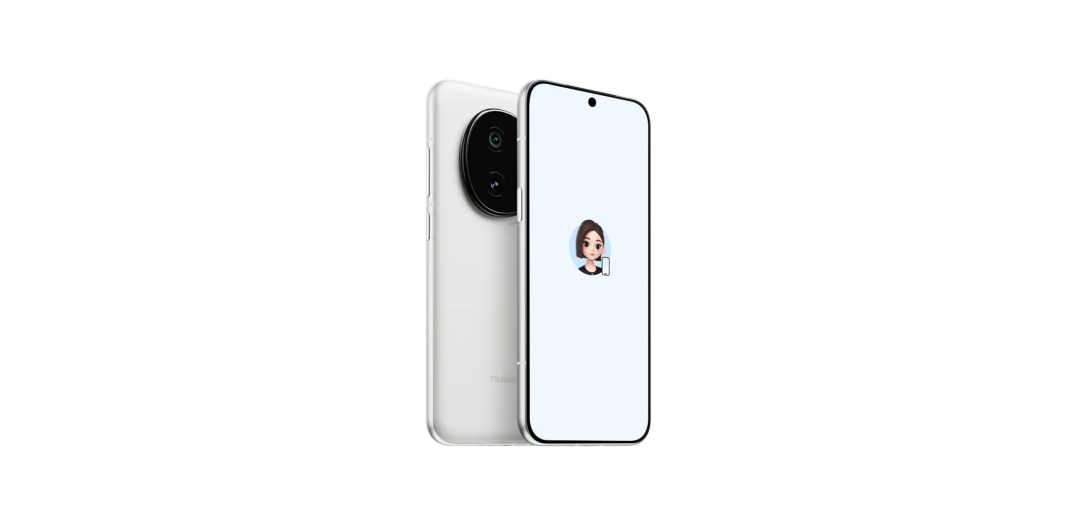
Compared to Apple's need to seek external help under delivery pressure, the domestic market appears more buyer-driven. Smartphone manufacturers either develop their own AI capabilities or integrate existing ones, while model service providers focus on 'getting on devices.'
Smartphone manufacturers are not short of model service providers or 'AI stories' to tell. Against a backdrop of slowing hardware innovation and prolonged replacement cycles, AI serves as a new packaging for manufacturers to compete for existing users. Whether it becomes a hit is secondary, but new stories are essential for spec sheets and launch events.
Several smartphone manufacturers have developed their own AI. Honor introduced its Magic Large Model, emphasizing 'self-evolving AI native smartphones' with the Magic 8 released last year, upgrading its operating system MagicOS 10 with numerous AI agents. Vivo released OriginOS 6 late last year, integrating an upgraded AI assistant, 'Blue Heart Small V.'
These examples are notable because they both involve collaborations with cloud providers, yet the front-end and back-end are powered by the manufacturers' self-developed models. For instance, Blue Heart Small V distributes commands to Volcano Engine's connected Q&A agent after recognizing user intent. However, before command distribution, user intent and demands are fully analyzed by the self-developed Blue Heart Large Model, with Volcano Engine only receiving processed instructions and call volumes.
Model service providers, however, are the truly anxious parties. They possess models, capabilities, and platform-level intelligent agent development systems but consistently face the hurdle of 'getting on devices.' Only by integrating with smartphones can AI achieve high-frequency touchpoints and establish a foothold on devices.
In other words, in China, 'getting on devices' is not merely a channel collaboration but a fierce battle for distribution supremacy.
The brutality of this battle lies in the fact that smartphone manufacturers are not eager to cede entry points. They can treat models as interchangeable components—today integrating with you, tomorrow with someone else. This is a classic buyer's market stance: supply is not scarce; what's scarce is positioning.
Moreover, in the domestic context, 'cross-app execution' immediately encounters three barriers: permissions, ecosystems, and liability. The covert rivalry between WeChat and Doubao's engineering prototype serves as a case in point.
Frankly speaking, the competitive-collaborative relationship between smartphone manufacturers and model service providers is far more complex than 'API access.'
For smartphone manufacturers, AI is not just a new hardware selling point but a new system moat. They aspire for assistants to become a 'second interaction system,' thereby anchoring users within their OS's organizational framework. For model service providers, smartphones represent the most cost-effective distribution carrier. As long as they are pre-installed or set as default, models gain stable integration and user mindshare. However, their goals do not always align.
Manufacturers fear model brand spillover, while model providers worry about becoming 'behind-the-scenes computing power.' Doubao's foray sparked discussions precisely because it touched on system scheduling, inevitably entering the gray zones of ecosystems and liability.
Rewriting Search, Advertising, and Distribution
Beyond mirroring domestic dynamics and providing reference models, the collaboration between Google and Apple also signifies the importance of entry points in the AI era.
Compared to the mobile era, where entry points focused on information distribution, AI-era entry points center on information organization and how organized information directly influences user behavior. This so-called default intelligence layer no longer hands users off to individual apps but first digests demands into tasks before deciding whom to delegate them to and through what pathway.
Late last year, Merriam-Webster announced its word of the year, 'slop,' referring to 'low-quality digital content typically mass-produced by AI.' Additionally, the increasingly discussed GEO (Generic Experience Output) in recent months implicitly reflects the logic of AI entry points—they distribute not links and apps but answers and influence over user decisions.
This is precisely where the 'default search agreements' of the old era provide a reference. New entry points will also become the most stable yet sensitive negotiation targets among giants.
On the other hand, AI assistants that organize and present information to users also gain the ability to organize user intent. If default search sold user clicks, the default intelligence layer sells user decisions and actions guided by generated content after intent recognition—a deeper power that sparks greater controversy. Along this chain, new 'revenue-sharing rules' will emerge: model providers, system providers, app developers, and content creators all want a share, leading to disputes more complex than the in-app purchase commissions of yesteryear.
Overseas, the advanced collaboration between Apple and Google is driven by an unignorable factor: the superposition of their ecosystems covers the daily lives of most users. Google offers local life services like maps and reviews, along with ad distribution networks; Apple, through pre-installed apps within its ecosystem, controls system-level productivity tools.
As a result, when Siri takes over user intent, it naturally has enough components to call upon, enabling a closed-loop delivery.
In contrast, China presents a near-mirror image. The domestic service ecosystem is highly fragmented; for AI to accomplish tasks, it must constantly navigate across apps, payment systems, and account frameworks—the longer the path, the greater the friction.
Additionally, two contrasting cases stretch far enough to serve as references. Alibaba pursues a 'reverse integration' approach, prioritizing closed loops by integrating its ecosystem (Taobao, Gaode Maps, DingTalk) with Qianwen instead of knocking on individual manufacturers' doors. ByteDance, meanwhile, adopts a dual strategy: alongside its Doubao engineering prototype that attempts to bypass apps, it also chooses hardware like earphones closely tied to user usage for gradual expansion.
From this perspective, Apple and Google's Siri collaboration represents a transition from old to new agreements and a starting point for securing future negotiation leverage. Extending this judgment to the domestic market, it collides with multiple ecological walled gardens. In the AI era, we may witness the rise of new 'hardcore alliances,' but the prerequisite is a schedulable service ecosystem behind them.
-
![]()
Registered Capital Slashed to 372 Million Yuan! Yutong Optical Finalizes Industrial and Commercial Change Registration
-
![]()
Zhuque-3 Successfully Lands, and 'Time Traveler' Secures Another ¥100 Million in Funding: China's Commercial Space Industry Experiences a 'Dynamic August'
-
![]()
Autohome Faces a Shrinking Window of Opportunity
-
![]()
Even a Titan Like Musk Has Faced Setbacks in Fulfilling Promises
-
![]()
AI Office: The End of the Racing Era, Context Becomes the Key to Success
-
![]()
Domestic Vehicle Chassis Revolution ②: The Steering Wheel Remains, But Mechanical Connections in the Steering System Are Decreasing
-
![]()
Exploring MiniMax Design: Can Video Editing Be as Simple as Speaking?
-
![]()
Why Can SenseTime Achieve Profitability While CloudWalk Still Faces Challenges, Despite Both Adopting Large Models?