Witnessing the True Deployment of China's Automotive Intelligence at CES 2026
 01/21 2026
 530
530
In early January 2026, a hint of chill still lingered in the morning breeze of Las Vegas, yet the atmosphere at the Las Vegas Convention Center was already sizzling with excitement.
If you ventured into the heart of automotive technology at CES during this period, you'd notice a subtle yet significant transformation: the booths of traditional international automakers retained their refined elegance, restrained sophistication, and a sense of historical weight. However, it was the booths showcasing Chinese brands that truly captivated the crowds and garnered repeated attention.
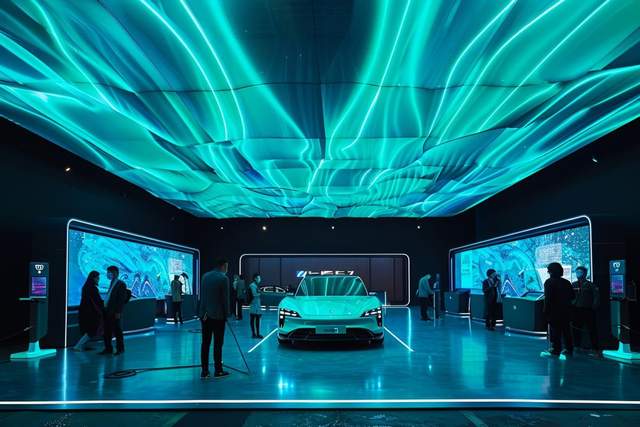
Rewinding two or three years, discussions on automotive intelligence always revolved around questions like, 'Is the screen large enough?', 'Does voice recognition respond promptly?', and 'Does highway NOA operate smoothly?' Back then, intelligence seemed more like a checklist of features—the more items and higher parameters, the easier it was to turn them into selling points.
But by 2026, this narrative had clearly shifted. Automotive intelligence was delving into a more challenging and authentic systems-level exploration.
So, at this pivotal moment where the focus transitions from showcasing technology to real-world deployment, how far has China's automotive industry progressed? The answer may be further than many anticipate.
From Showcasing Features to Competing on Systems
Several years ago, competition in automotive intelligence remained superficial, focusing on 'visibility and tangibility.' At major auto shows and product launches, manufacturers were eager to flaunt intuitive, quantifiable technological highlights: Could voice assistants engage in multi-round natural dialogues? Were center console screens larger and more dazzling than competitors'? Had urban NOA coverage extended to thousands of kilometers?
Simply piling on features and pushing parameters to new heights could swiftly attract media attention and consumer interest. Back then, intelligence was more of a marketing label—a quick way to differentiate products. Automakers assembled the latest and flashiest intelligent configurations like a jigsaw puzzle, aiming for short-term exposure and sales conversion.
However, by CES 2026, this feature-centric discourse had clearly taken a backseat. Booths were no longer filled with repetitive emphasis on single technical metrics; instead, keywords like 'system architecture,' 'full-domain collaboration,' 'intelligent agents,' and 'central computing'—terms with greater engineering depth and strategic significance—took center stage.
Among these shifts, the actions of China's leading automakers stood out prominently.

Geely unveiled a technology system dubbed Global AI 2.0 at this year's exhibition, centered around a World Behavior Model (WBM). While the name may sound abstract, it points to a very specific goal: creating a unified decision-making hub for the entire vehicle. Previously, intelligent driving, cabin interaction, and chassis control operated on separate computing units with disconnected data and fragmented logic.
WBM aims to dismantle these barriers, utilizing a multimodal large model to comprehend users' vague intentions and then, through a lower-level action derivation module, coordinating intelligent driving route planning and energy system range assessment to form a coherent set of services. Around this model, Geely constructed a collaborative framework centered on the Vehicle Intelligent Agent Eva (VIA Eva), linking intelligent driving and cabin systems as two main branches and extending to multiple subsystems like chassis and thermal management, truly achieving a transition from single-point feature breakthroughs to system-driven innovation.
Great Wall Motors opted to reconstruct the human-vehicle relationship from a service logic perspective. Its ASL Intelligent Agent System aims to transform vehicles from passive tools executing commands into partners capable of actively understanding needs. Traditional interactions require users to specify commands like 'increase air conditioning temperature,' whereas ASL hopes to handle vague yet genuine expressions like 'I feel cold.' To support this capability, Great Wall deployed an upgraded VLA large model on the vehicle side and clearly delineated responsibilities between cloud and vehicle: the cloud handles extreme scenario simulation for training, while the vehicle focuses on safe and efficient real-time decision-making. It is reported that mass-produced models equipped with this system will hit the market in June 2026, once again demonstrating Chinese automakers' ability to rapidly commercialize technology.
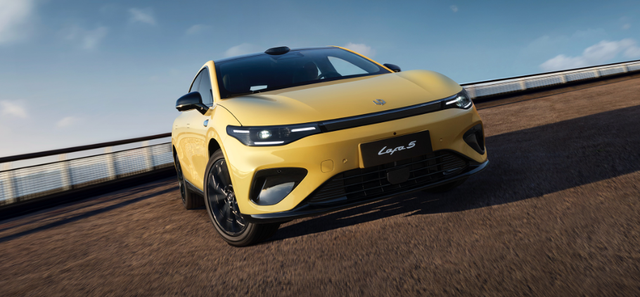
On another front, Leapmotor chose to collaborate with Qualcomm to further drive integration of the electronic and electrical systems at the hardware architecture level. Its central computing platform, developed in partnership with Qualcomm, consolidates functions previously dispersed across different controllers—such as intelligent cabin, intelligent driving, body control, and vehicle gateways—into a single hardware unit powered by dual Snapdragon 8797 chips. On this platform, the cabin's interaction model and the intelligent driving's perception model can run in parallel without interference. Meanwhile, through a service-oriented software architecture, it opens up over 200 combinable capabilities, providing a foundation for personalized experiences. This platform is confirmed to debut on Leapmotor's upcoming D19 model, becoming one of the earliest mass-produced vehicles globally to adopt such a cross-domain integration solution.
It can be said that China's automotive intelligence has transitioned from showcasing features to competing on systems, with intelligence being redesigned as an integral part of the vehicle's capabilities. This is a natural evolution as technology returns to rationality and ventures into deeper waters.
From Concept to Application
If 'systems' was one keyword at CES 2026, then 'implementation' was another. Unlike previous years, which focused on showcasing cutting-edge technology prototypes and emphasizing 'disruptive innovation,' this year's exhibition repeatedly mentioned pragmatic terms like 'mass production,' 'compliance,' 'overseas availability,' and 'cost control.' Multiple exhibiting companies, alongside product displays, provided details on model integration ranges, launch timelines, and commercialization paths. This means that more and more technologies have moved from laboratories or concept demonstrations to the broader real world.
In the field of autonomous driving, Geely's G-ASD system, iterated through data from 8.5 million intelligent vehicles, has been deployed across 16 models from brands like Zeekr and Lynk & Co, covering over 300,000 vehicles. It is reported that Geely is simultaneously advancing Robotaxi operational testing, planning to cover highway autonomous driving Level 3 and low-speed autonomous driving scenarios Level 4 by 2026, preparing for large-scale commercialization.
Around system-level intelligence, software and cabins have become another clear path for implementation. BOE's global debut of HERO 2.0 Intelligent Cockpit at CES achieved a 98% recognition rate for complex instructions; Geely Automobile's EVA hyper-realistic emotional intelligent agent, driven by the Xingrui large model, boasts a 99.8% wake-up success rate, 0.2-second response speed, and supports six-zone interaction, already mass-produced in the Galaxy M9.
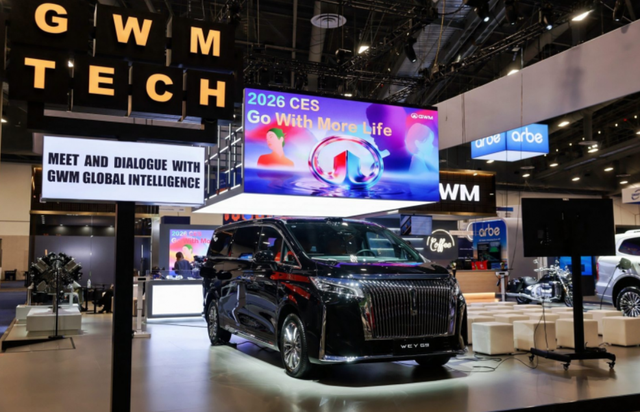
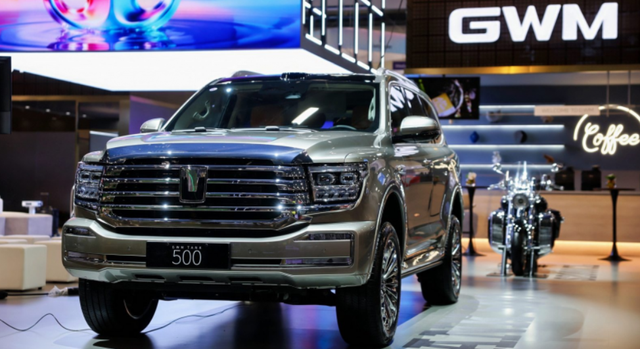
The implementation of intelligence cannot be separated from the fundamental support of vehicle platforms and energy systems. At the vehicle and powertrain level, Great Wall Motors chose to let its products speak, demonstrating a full-stack implementation path from underlying hardware to complete vehicles. Its exhibited semi-solid-state batteries, hydrogen fuel cell engines, and Hi4-Z architecture constructed a diversified energy matrix covering hybrid, pure electric, and hydrogen energy. The debut of models like the Wey High Mountain 9, Tank 500 Hi4-T Intelligent Edition, and Soul Motorcycle S2000 CL further illustrated its implementation capabilities. Among them, the Tank 500 Hi4-T Intelligent Edition integrates a non-decoupled four-wheel-drive structure with full-scenario NOA, balancing off-road capabilities with high-level intelligent driving.
Similarly, the maturity of the upstream industrial chain provided solid support for vehicle implementation. Chinese LiDAR supplier Hesai Technology premiered its ETX/FTX dual-radar combination at CES 2026, simultaneously announcing that it would double annual production capacity to 4 million units in 2026. Moreover, Hesai's new-generation L3 automotive-grade LiDAR solution has secured its first mass-production fixed point (designated production) for passenger vehicles, with plans to start mass production in late 2026 or early 2027.
From autonomous driving and cabin systems to perception hardware, these real industrial plans collectively reflect a trend: intelligent vehicles are beginning to leave laboratories and enter a mature stage truly oriented toward users and markets. This integrated capability of edge-cloud unity gives Chinese automakers significant advantages in handling complex urban scenarios, addressing long-tail problems, and enabling continuous OTA evolution.
The Voice of Intelligent Driving Is Shifting Eastward
A subtle yet easily overlooked detail is that at CES 2026, the influence of China's automotive intelligence is quietly changing.
For a considerable period, the narrative of innovation in automotive intelligence was almost entirely dominated by European and American countries. Whether it was the route of high-level assisted driving relying on high-definition maps or the cabin experience paradigms led by luxury brands, the industry's default premise remained: technology definitions came from the West, and Chinese automakers were mostly followers and appliers.
But on the CES 2026 show floor, this long-entrenched perception was quietly loosening. China's automotive intelligence began to be incorporated into broader technical discussions as a referable and replicable solution.
One of the most frequently mentioned directions was the 'perception-heavy, map-light' autonomous driving technology route. For a long time, European and American premium brands generally relied on high-definition maps to support high-level assisted driving, but these maps faced challenges like long update cycles, limited coverage, and high maintenance costs. Today, Chinese automakers such as Huawei and Geely have successfully implemented map-free solutions in China's complex urban road conditions, with high-level intelligent driving systems like ADS 4.0 even being introduced into overseas premium models like Audi's. It can be said that the 'perception-heavy, map-light' or even 'map-free' technology routes explored by Chinese automakers are no longer seen as compromises due to resource constraints; instead, they have become new references for global intelligent driving evolution due to their stronger generalization capabilities and lower operation and maintenance costs.

Similar reversals have also occurred in the intelligent cabin domain. Previously, experience paradigms like HUD and human-machine interaction were mostly pioneered by German or American overseas luxury brands. But today, some overseas luxury models have begun incorporating software architectures, interaction systems, and computing platforms dominated by China's supply chain, designing cabins as vehicle-level intelligent systems. Chinese supply chain enterprises like BOE, Desay SV, and Foryou Group have moved beyond component supply, beginning to participate in early definitions as designers of vehicle-level intelligent systems.
This upgrade in influence means that Chinese automakers have broken free from Western-dominated technological frameworks and begun competing in automotive intelligence with their own architectures.
For the automotive industry, CES 2026 may not represent a cross-generational singular moment or decisive victory, but it served as a periodic showcase, clearly presenting China's accumulated progress in automotive intelligence over the past few years on the international stage.

It is foreseeable that as Level 3 autonomous driving becomes officially legalized in China and Robotaxi commercialization pilots accelerate, China's advantages in automotive intelligence will further amplify. CES 2026 may well mark a critical juncture in the reshaping of the global automotive industry's power dynamics.
-
![]()
Registered Capital Slashed to 372 Million Yuan! Yutong Optical Finalizes Industrial and Commercial Change Registration
-
![]()
Zhuque-3 Successfully Lands, and 'Time Traveler' Secures Another ¥100 Million in Funding: China's Commercial Space Industry Experiences a 'Dynamic August'
-
![]()
Autohome Faces a Shrinking Window of Opportunity
-
![]()
Even a Titan Like Musk Has Faced Setbacks in Fulfilling Promises
-
![]()
AI Office: The End of the Racing Era, Context Becomes the Key to Success
-
![]()
Domestic Vehicle Chassis Revolution ②: The Steering Wheel Remains, But Mechanical Connections in the Steering System Are Decreasing
-
![]()
Exploring MiniMax Design: Can Video Editing Be as Simple as Speaking?
-
![]()
Why Can SenseTime Achieve Profitability While CloudWalk Still Faces Challenges, Despite Both Adopting Large Models?