In 2026, Autonomous Driving Steps into the "Accounting Era"
 01/21 2026
 755
755
For an extended period, the autonomous driving sector has been predominantly propelled by the imperative to "prove its mettle."
This involves showcasing the intelligence of algorithms, demonstrating vehicles' prowess in navigating intricate road conditions, and proving the system's capability to respond accurately in extreme scenarios. Technical papers, testing protocols, and demonstration initiatives have formed the core narrative of autonomous driving devices in recent years.
However, a markedly different signal has recently begun to surface prominently.
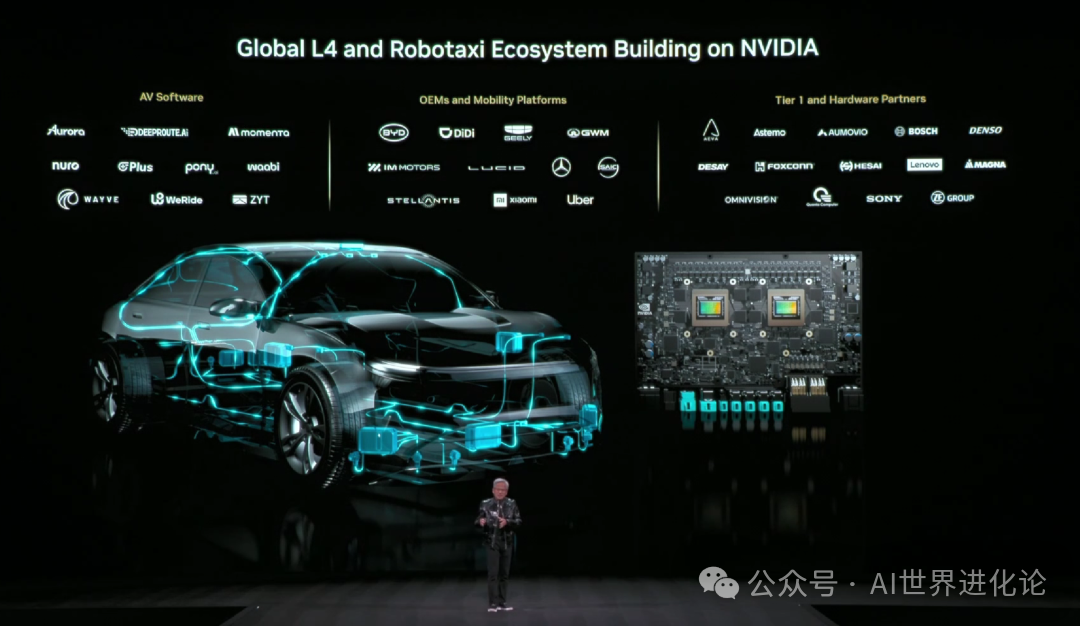
NVIDIA has embarked on a full-scale integration into the autonomous driving ecosystem at both the computing power and platform levels. Several cities in China have explicitly signaled a speed-up in the commercialization of Level 3 autonomous driving. Autonomous driving buses have commenced fee-based operations within public transportation networks. The industry's discourse has also subtly shifted.
The question has evolved from "Can it operate?" to "Can it operate sustainably and profitably?"
This indicates that autonomous driving is transitioning from the "technical validation phase" to a more pragmatic and demanding stage—the commercial validation phase.
1
Technical Validation Focuses on "Possibility"; Commercial Validation Questions "Inevitability"
During the technical validation phase, the industry's emphasis lies on exploring the boundaries of possibility.
As long as the system can function in specific scenarios, demonstration projects avoid major mishaps, and the technical approach is theoretically sound, it suffices to sustain continued financing and expansion for enterprises.
However, the commercial validation phase centers on an entirely different set of considerations:
Does the cost diminish with scale?
Is the system sufficiently stable for long-term operation?
Is there a sustained willingness to pay for this service?
Can it be seamlessly integrated into the public system, rather than remaining a theoretical concept?
This transition demands not just a simple enhancement of technical capabilities but a systemic advantage.
Consequently, numerous approaches that excelled during the technical validation phase are naturally weeded out during the commercial validation phase.
A notable shift is that autonomous driving is now expected to "shoulder real-world responsibilities." This means autonomous driving systems are no longer solely evaluated by engineers but also by:
Urban planners
Public financial considerations
Real revenue streams
Long-term risk management
When autonomous driving integrates into public transportation systems, particularly in RoboBus scenarios, this profound change becomes evident.
Public transportation systems demand not just "occasional success" but "consistent long-term stability"; cities prioritize not "how technologically advanced it is" but "whether it is manageable and sustainable." This distinction marks the fundamental divide between commercial and technical validation.
2
Why Has RoboBus Emerged as the Pioneering Site for Commercial Validation?
Observing the global deployment pace of autonomous driving, an intriguing trend emerges: RoboBus is leading the charge into the commercial validation phase.
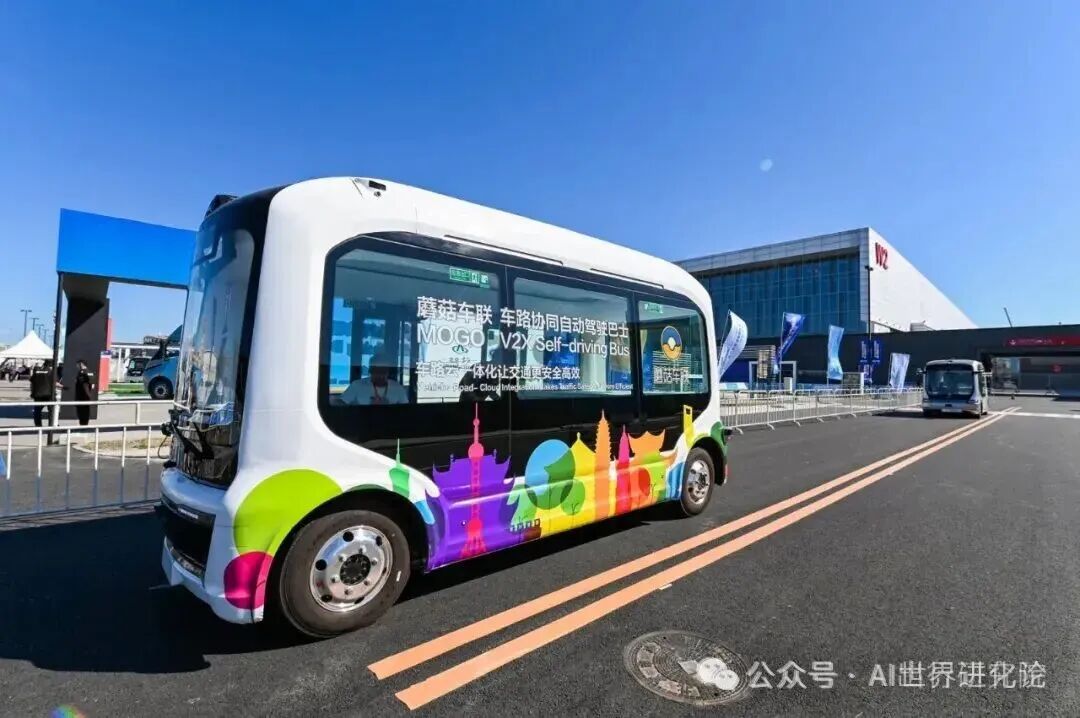
Fu Qiang, President of Mushroom Auto Link, stated in an interview with Times Weekly that, regarding commercial pathways, autonomous driving "will exhibit characteristics of 'vertical scenario breakthroughs + full-domain expansion,' meaning it will first achieve profitability in scenarios like RoboBus and trunk logistics before gradually expanding to more complex scenarios like Robotaxi."
The reasons are straightforward.
Firstly, RoboBus naturally integrates into the transportation system, with a clear service target and relatively stable public operation routes, facilitating its incorporation into institutionalized management.
Secondly, the value proposition in public transportation scenarios is unambiguous—whether it enhances efficiency, reduces costs, and improves services, all of which can be quantified and audited.
More crucially, RoboBus does not aim to "replace private cars or taxis" but to address long-standing structural issues in public transportation: driver costs, insufficient revenue during nighttime and low-density periods, and inadequate services in remote areas.
In this context, autonomous driving is for the first time required to operate as a viable business.
3
The Shift from "Rule-Driven" to "AI Reasoning-Driven" is an Inevitable Requirement of the Commercial Phase
Technological advancements also support this transition. In the rule-driven era, systems heavily relied on manually set logic. However, as autonomous driving progresses towards the commercial validation phase, systems necessitate stronger generalization capabilities, reduced reliance on external manual intervention, and a deeper understanding of complex realities.
This backdrop has paved the way for AI reasoning-driven approaches to gradually supplant rule-driven ones.
The objective is not to be "smarter" but to be more cost-effective, maintainable, and suitable for long-term operation.
Another notable feature of the commercial validation phase is that possessing a single technological advantage is no longer adequate. For autonomous driving to be truly implemented, three aspects must be simultaneously addressed:
Is the technology mature?
Is the vehicle reliable?
Can local operations be successfully executed?
This is why the integrated model of "autonomous driving technology + vehicle manufacturing + local operations" has started to gain industry consensus.
Commercial validation does not reward the "smartest company" but the one that can most effectively deploy and operate the system.
When an industry transitions from technical validation to commercial validation, it often signifies two concurrent developments:
Some players will be eliminated; others will finally find their niche.
Autonomous driving is reaching this pivotal juncture.
In the coming years, the keywords of industry discussions may shift from "how advanced" or "how cutting-edge" to "how long it has been operational," "whether it has generated profits," and "whether it is sustainable."
And this, perhaps, marks the true dawn of autonomous driving's maturity.
-
![]()
How Can Embodied AI Overcome the Data Challenge of 'Being Able to Work'? Solutions from Five Leading Players
-
![]()
Half-Year Pre-Tax Loss Hits 4.5 Billion, Full-Year Net Cash Outflow Reaches 16.2 Billion! GAC Incurs 8,000 Yuan Loss per Vehicle Sold
-
![]()
In a Bid to Propel Towards a $10 Billion IPO, Jieyue Xingchen Weaves a Hardware Fairy Tale: A 'Chinese Version of Apple + OpenAI'?
-
![]()
REDMI Note 17 Pro First Impressions: Built to Last and Waterproof, Who Cares About Cost-Effectiveness?
-
![]()
MiHoYo’s AI Companion BSide is Here! I Tried It Out—Great Aesthetics, But Needs Work
-
![]()
A Token Cloud Drifting in the Winds of Change
-
![]()
A Token Cloud Looms on the Horizon
-
![]()
Qualcomm, NVIDIA, and Horizon Robotics: Pioneering Similar Paths in Automotive Tech