The SaaS Revolution in the AI Wave: The Impact on Seat-Based Pricing Models and the Industry's Moat
 02/24 2026
 635
635
The future of the SaaS model has been repeatedly discussed in recent times. And all of this is closely related to Anthropic.
Previously, after U.S. AI startup Anthropic released a plugin for corporate legal services, stocks of some SaaS companies facing the risk of AI replacement were sold off.
Moreover, Anthropic is accelerating its pace. After announcing the latest version of its flagship large model, Claude Opus 4.6, the company boldly declared that now is the time to expand into the broader workplace after AI has thoroughly transformed the way software programming operates.
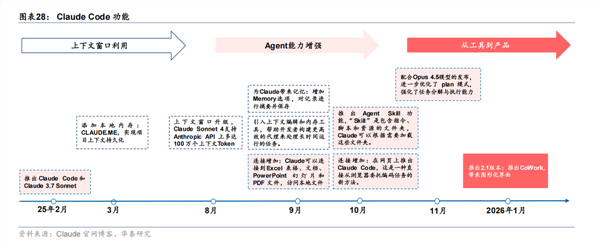
Against this backdrop, some argue that AI agents are destroying SaaS companies. Others believe that while AI agents will impact SaaS firms, they won't destroy the entire industry.
01. The First Layer of AI's Impact on SaaS Enterprises: Seat-Based Pricing
The debate over whether AI agents will destroy SaaS centers on the direct challenge AI poses to traditional software business models. This challenge first touches the foundation of 'seat-based pricing,' which has been deeply tied to human resources in the SaaS industry for years. When software efficiency surges due to AI, its pricing logic must inevitably be restructured.
In the Software-as-a-Service (SaaS) industry, the seat-based pricing system has long been regarded as the core business model, with companies paying fees based on the number of employees using the software. This model, linked to workforce size, provides suppliers with stable revenue expectations.
However, the rise of artificial intelligence is rewriting these rules. Through automation and intelligence, AI technology can take over many tasks that previously required manual operation, significantly boosting software efficiency. For example, in customer support or data analysis, AI systems can autonomously handle inquiries or generate reports, reducing reliance on dedicated personnel.
This means companies may no longer need to purchase software seats for every employee, as a small number of users or even automated agents can accomplish tasks that once required an entire team. A deeper impact is that AI shifts software value from 'tool usage' to 'outcome delivery,' spawning new outcome-based pricing models, such as charging based on data volume processed, business goals achieved, or automated tasks executed by the system. This shift directly undermines the foundation of seat-based pricing, forcing SaaS companies to rethink their pricing strategies.
02. The Second Layer of AI's Impact on SaaS Enterprises: Budget Allocation
Beyond dismantling traditional pricing models internally, the AI wave is also squeezing SaaS companies externally by altering budget allocations. As tech giants pour massive capital into AI infrastructure, the IT budget priorities of enterprise clients are dangerously shifting. This is not just a battle of business models but a struggle over budget allocation priorities.
While tech giants invest hundreds of billions in AI infrastructure, traditional SaaS companies face unexpected budget squeezes. This impact comes not from direct competition but from a fundamental shift in corporate capital flow.
Take recent earnings reports as an example: Amazon announced that its capital expenditures for 2026 are expected to reach approximately $200 billion, a significant increase from the previous year. CEO Andy Jassy made it clear that the vast majority of this funding will go to AWS cloud services, particularly AI-related data centers and chips. Similarly, Google's parent company, Alphabet, released capital expenditure guidance for 2026 ranging from $175 billion to $185 billion—nearly double the previous year—with the core focus on building AI computing infrastructure.
These astronomical figures don't appear in a vacuum. Corporate IT budgets are relatively fixed, and when building in-house AI capabilities becomes an overriding priority, resources naturally reallocate. Giants are racing to expand data centers and acquire chips to meet 'still-tight' computing demand. In this context, budgets for purchasing external SaaS software and services are likely to be strategically reduced or delayed. Markets have begun to worry that this 'anti-software sentiment' and shift in budget priorities are rippling across the entire tech sector. Ultimately, when large enterprises choose to invest in their own servers rather than software licenses, niche SaaS providers feel the chill.
03. What Moats Remain for SaaS Enterprises Amid AI's Onslaught?
Despite impacts on business models and budget allocation, long-established SaaS companies are far from defenseless. In an era of increasing technological accessibility, their true barriers often lie in 'soft' assets that cannot be quickly replicated by code and computing power. Examining these moats reveals the key to standing firm in the AI era.
In today's environment of constant technological change, the true moats of deeply rooted SaaS companies do not lie solely in technology itself. They are often built on a more complex, human-centric combination of barriers.
The most critical of these is a profound understanding of specific industries, gained through long-term immersion. This goes beyond data—it's the 'tacit knowledge' accumulated over years about processes, pain points, and even industry unwritten rules. While AI can process information, it struggles to absorb the wisdom embedded in specific contexts quickly. When combined with products, this knowledge forms highly tailored and difficult-to-replicate solutions.
Second is the deep trust and complex collaborative relationships built between companies and their clients. Many SaaS services are deeply embedded in clients' core business processes, where even minor changes can have systemic impacts. The cost of migration involves not just technical switching but also organizational habits, data security, and long-term commitments. Trust, accumulated through countless problem-solving sessions and shared growth, transforms client relationships beyond simple tool transactions into stable symbiotic bonds.
Additionally, exceptional service and a sustained client success framework form another flexible barrier. When products become homogeneous, the immediate responsiveness, strategic consulting, and thoughtful service provided by professional teams offer humanized warmth and security. While AI can answer standard questions, it struggles with emotional connections and creative support in complex, non-standard situations.
Finally, a complete ecosystem built around core products—including rich third-party integrations, customization capabilities, and partner networks—creates powerful network effects and switching costs that cannot be established overnight.
Therefore, faced with AI, SaaS companies should focus on amplifying these existing strengths through technology, transforming industry depth, trust thickness, and service warmth into stronger fortifications.
04. Conclusion
In summary, AI's dual impact on the SaaS industry—shaking the foundations of seat-based pricing while competing for limited corporate IT budgets—paints an urgent picture of industry transformation.
However, this does not signal the end of traditional SaaS companies. Instead, it reveals that in an era of technological democratization, true moats will increasingly rely on elements that algorithms cannot easily replicate: deep vertical industry insights, high trust with clients, complex relationships embedded in business processes, and the comprehensive ability to provide humanized services.
Faced with disruption, SaaS companies' path forward lies not in resisting technological waves but in actively integrating AI to amplify their existing strengths. Future successful SaaS providers will likely be those who skillfully balance 'intelligent efficiency' with 'humanized depth,' becoming not just tools but indispensable intelligent partners in clients' digital ecosystems. Only then can they build lasting, agile new competitiveness amid budget reallocations and technological iterations.
- End -
-
![]()
Doubao Work Unveiled! Domestic AI Leaders Fully Commit to the 'Work' Sector
-
![]()
Who’s Sounding the Alarm on ‘Rushed Vehicles’?
-
![]()
Over 5.3 Billion Yuan in Losses Over Three and a Half Years! Can Yonyou Reverse Its Fortunes Through Streamlining and AI Transformation?
-
![]()
Baidu AI Adopts Free Model: A Strategic Maneuver in Traffic and Monetization
-
![]()
Silicon-Based OLED Pioneer Unveils Financial Results: H1 Shipments Outpace Entire 2025 Volume
-
![]()
AI's First "Lost Summer"
-
![]()
Zeiss Makes Another €2.2 Million Bet: Will Eye Tracking Be the Next Big Thing in the Smart Glasses Industry?
-
![]()
RUNTO Ranking | Global Top TV ODM Factories' Shipment Figures for July 2026