Can Chinese Independent Automakers Secure a Lasting Position in the Premium Market?
 02/24 2026
 518
518
The journey for independent Chinese automakers to transition from having a few successful models to elevating brand value, from increasing product prices to achieving full maturity in service and after-sales capabilities, and from building global brand influence to establishing themselves firmly in the high-end market, is still a long one.
The Chinese automotive market underwent significant transformations in 2025, with independent brands achieving several key milestones. A notable highlight was their performance in the premium segment. According to the China Automotive Data Research Institute's ranking of the top 60 luxury vehicles (priced above RMB 400,000) by sales from January to November 2025, while joint-venture fuel-powered vehicles continued to dominate, independent new energy vehicles (NEVs) were making significant inroads. Brands such as AITO, Li Auto, Tengshi, and Voyah not only secured over ten spots on the list but also ranked highly, marking their first real steps toward brand premiumization.
For independent brands that have already broken into the high-end market, the next hurdle is even more formidable: securing a lasting position. The path to premiumization involves not just having successful models but also elevating brand value, increasing product prices, achieving comprehensive maturity in service and after-sales capabilities, and building global brand influence.
The Market Landscape is Being Rewritten
On January 6, 2026, the China Automotive Data Research Institute released a ranking of the top 60 luxury vehicles (priced above RMB 400,000) by sales from January to November 2025, based on retail data from the China Passenger Car Association (CPCA). Traditional luxury joint-venture brands like BBA (BMW, Benz, Audi) continued to hold the top positions, but their sales generally declined. The Audi A6L led the list with 151,700 units sold, remaining the top choice in the RMB 400,000 luxury sedan segment, though its sales dropped 3.8% year-on-year. Mainstay models like the Audi Q5L (119,600 units), Mercedes-Benz E-Class (117,600 units), and Mercedes-Benz GLC (117,220 units) all saw year-on-year declines exceeding 8%.
In contrast, independent brands performed exceptionally well, with several models ranking highly. For example, the AITO M8 secured the second spot with 133,300 units sold annually, becoming a “dark horse” among independent high-end SUVs. Models like the Voyah Dreamer (up 62.8% year-on-year), NIO ES8 (up 198.9% year-on-year), and Xiangjie S9 (up 802.4% year-on-year) all achieved year-on-year growth exceeding 60%. New energy models from brands such as Zeekr, Li Auto, and Tengshi occupied over ten spots on the list.
In response, the China Automotive Data Research Institute noted that the RMB 400,000-plus automotive market is no longer the “exclusive domain” of joint-venture fuel-powered vehicles. Independent NEVs have not only ranked among the top sellers but also achieved “overtaking on curves” in segments such as MPVs and mid-to-large SUVs. With continuous iteration of new models, the market share of independent high-end brands is expected to further increase in 2026.
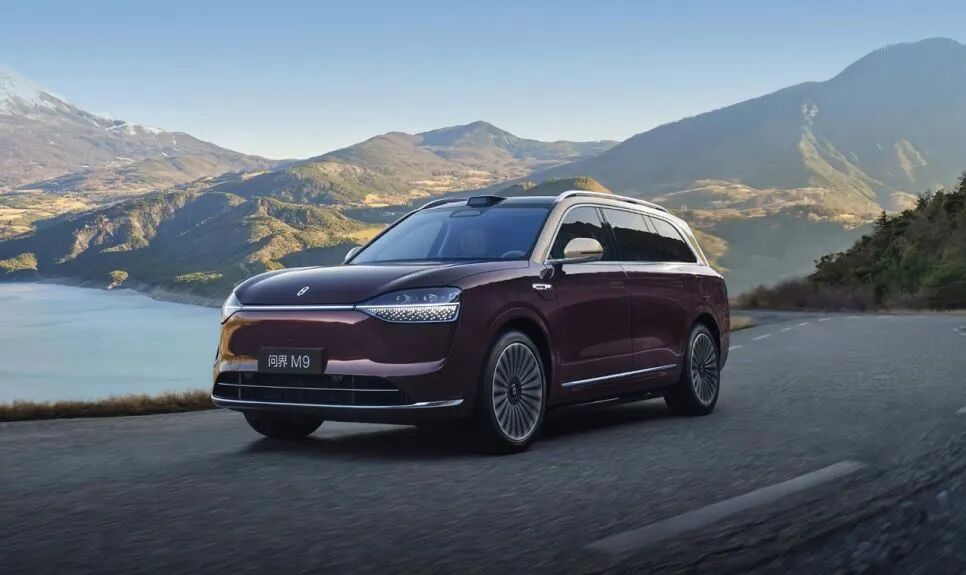
Compared to previous “trial runs,” independent brands in 2025 not only began “capturing territory” in the high-end market but also achieved “comprehensive success” across multiple products. On the aforementioned list, the AITO M8 and M9 ranked second and sixth, respectively. According to the 2025 Hongmeng Intelligent Vehicle Annual Report, the AITO M9 held the top sales spot among RMB 500,000 models for 20 consecutive months, while the AITO M8 claimed the top sales spot among RMB 400,000 models for six consecutive months. Meanwhile, Li Auto's L9/L8/L7 series formed a solid “Iron Triangle” in the RMB 300,000–500,000 family luxury SUV market, with the Li Auto L9 averaging around 4,000 units sold per month in 2025, becoming one of the preferred models for high-end family users.
Notably, independent brands also achieved remarkable success in the even higher-priced luxury automotive market. The Zunjie S800, priced between RMB 708,000 and RMB 1,018,000, received over 5,000 firm orders within 19 days of its launch and exceeded 18,000 firm orders within 175 days. In November 2025, the Zunjie S800 sold 2,205 units, surpassing some traditional luxury brands in the same segment.
As a result, BBA faced challenges. BMW Group recently announced its global sales data for 2025, with total sales reaching 2.4637 million units, up 0.5% year-on-year. While its global performance remained stable overall, regional markets showed significant disparities. Both Europe and the United States saw growth, but China, BMW's largest global market, recorded only 625,500 units sold, down 12.5% year-on-year, making it the single market with the largest decline globally. Mercedes-Benz sold 2.16 million units worldwide, down 10% year-on-year, including 575,000 units in China, a 19.5% decline. Audi sold 617,500 units in China, down 5% year-on-year.
New Energy and Intelligent Connectivity as Breakthrough Points
It is widely acknowledged that Chinese brands have long aspired to premiumization as a key development goal. However, they faced numerous obstacles in the past due to market positioning and product quality limitations. Their recent successful breakthrough and initial establishment in the high-end market can be attributed not only to improvements in their own strength and overall capabilities but also to the emergence of new energy and intelligent connected vehicle technology trends.
According to media statistics, in the first three quarters of 2025, cumulative sales of high-end models in the domestic market reached 4.06 million units, up 3.4% year-on-year, with high-end products from NEV manufacturers contributing the largest incremental growth. In November 2025 alone, total sales of luxury vehicles in China reached 612,000 units, up 14.8% year-on-year and 12.2% month-on-month. Among them, luxury NEV sales reached 390,000 units, up 33.4% year-on-year and 13.4% month-on-month, with luxury NEV products contributing the primary growth. According to data released by the CPCA, in December 2025, the NEV penetration rate among independent brands reached 72.8%, while the NEV penetration rate in the luxury market reached 42.5%.
As NEVs gained traction, intelligent connected vehicle technologies also accelerated their adoption in luxury vehicles. By the end of 2025, companies such as BAIC Arcfox and Changan Automobile had received approval from the Ministry of Industry and Information Technology (MIIT) for their applications to launch intelligent connected vehicles equipped with Level 3 conditional autonomous driving capabilities in designated regions for road testing. In terms of mass-produced models, over 20 Chinese-brand vehicles were already equipped with LiDAR, accelerating the large-scale application of features such as urban Navigation on Autopilot (NOA).
“In recent years, domestic high-end models have made significant progress in intelligence and electrification, with their product strength surpassing that of some traditional luxury brands,” wrote the Huaxi Automobile Research Institute. With outstanding performance, innovative technologies, and higher cost-effectiveness, domestic high-end models have won over an increasing number of consumers, beginning to rise strongly and capture market share. This trend is expected to become even more pronounced with the launch of more luxury NEV models.
In contrast, some analysts pointed out that while traditional luxury brands possess deep expertise in fuel-powered vehicle technologies and brand equity, they have been slow to adopt advanced features such as urban autonomous driving navigation, failing to meet high-end users' expectations for smart mobility.
On the other hand, the target audience for luxury vehicles has undergone significant changes. A report by the China Automotive Technology & Research Center (CATARC) noted that the primary consumers in the high-end automotive market have shifted from the “first-generation wealth creators” of earlier years (mostly engaged in construction and manufacturing) to young, highly educated elites primarily in the internet, IT, and finance sectors. Unlike their predecessors, who valued social status symbols, their core driving force for purchasing vehicles is intelligent functionality, driving pleasure, and comfort, with their consumption logic more closely resembling that of buying tech products. Their definition of luxury has shifted from brand admiration to the pursuit of verifiable technological superiority and scenario fit.
Previously, the premium logic for luxury brand vehicles was built more on brand heritage, social value, and a sense of irreplaceable identity. However, with changes in the core user base and market consumption trends, Chinese brands, which had long been absent from the “luxury automotive” segment—the most heavily fortified area for brand protection—have finally been able to launch a direct offensive and secure a foothold.
From Cross-Tier Competition to Peer-to-Peer Competition
Brands new to the high-end automotive market often establish a foundation by relying on one or several phenomenal products, whether through equipping them with higher-tier technologies, precise scenario positioning (e.g., “family travel center,” “mobile reception hall”), or offering innovative energy replenishment experiences. However, when automotive brands attempt to extend this success to a more core challenge—getting users to continuously pay for a complete brand narrative—they essentially need to achieve a difficult transition from “breaking through” to “establishing a position,” from “product victory” to “system maturity.”
Industry experts pointed out that, based on the current product strategies of Chinese brands in the luxury market, they still largely follow a “cross-tier” approach, offering higher-tier features and quality at the same price point to break into the luxury automotive market. However, “cross-tier substitutes” are not a sustainable strategy in the long run. What matters more is changing consumers' perceptions and understanding of the brand.
Some analysts noted that automotive consumers' perception of luxury is a complex value reconstruction. Traditional luxury brands did not achieve their status overnight. They built a solid cognitive barrier through technological milestones, iconic design heritage, and the resulting social consensus over a long period. In contrast, emerging Chinese brands use new energy powertrains, intelligent cockpits, and advanced driver-assistance systems as breakthrough points. However, to truly establish a “luxury” brand perception, they must tell a compelling, long-term story that endows users with a sense of identity. This is why some independent brands, even when offering fully equipped, “peer-exceeding” models at higher price points, still receive a lukewarm market response.
“Today's Chinese automotive market has seen some changes in consumers' perception of luxury brands,” said an industry expert. No matter how much these perceptions evolve, some domestically produced models with luxury configurations still struggle to command high prices due to their lack of historical and cultural heritage. Even some models priced at over RMB 1 million are not considered luxury brands. In his view, a luxury automotive brand represents not only exceptional quality, advanced technology, and elegant style but also carries profound historical heritage. Many luxury automotive brands have histories spanning over a century, which is precisely what some Chinese automotive brands, especially new energy vehicle startups, currently lack. Besides historical heritage, luxury automotive brands also have distinctive design styles. For example, Mercedes-Benz is perceived as steady, sophisticated, high-end, and luxurious, while BMW focuses on driving pleasure and handling performance. Audi's design features clean, flowing exterior lines and exquisite, luxurious interiors, reflecting the precision and sophistication of German automotive engineering.
Additionally, the expert noted that compared to ordinary brands, luxury automotive brands exhibit exquisite craftsmanship, with unique sophistication in both overall vehicle configuration and interior materials. Luxury vehicles are considered luxury consumption, adopting a high-premium positioning with strong brand premium capabilities, commanding prices far exceeding functional needs.
These are essential “lessons” that Chinese brands urgently need to learn.
Marching Toward a Broader Overseas Market
In recent years, Chinese brands have gained increasing recognition and acclaim in overseas markets. According to the latest data released by the China Association of Automobile Manufacturers (CAAM), China's automotive exports reached 7.098 million units in 2025, up 21.1% year-on-year, including 2.615 million NEV exports, marking a new milestone in export scale. However, building a truly Chinese luxury automotive brand on the global stage still presents numerous challenges.
First, they face cultural differences and brand perception issues. Consumers in developed markets have deep historical sentiments and unique aesthetic philosophies toward automobiles. Their understanding of luxury leans more toward heritage, driving texture, design aesthetics, and sustainability, which differs from the current domestic emphasis on screen quantity, voice interaction, and scenario innovation. Of course, cultural differences also have a positive side. If Chinese brands can successfully tell a brand story infused with “mysterious” Eastern culture that resonates with and is appreciated by the European cultural context, it will undoubtedly enhance their luxury brand-building efforts.
Secondly, when venturing into mature markets like Europe and the United States, Chinese high-end brands need to prioritize enhancing product performance and quality, along with complying with more stringent environmental standards. These standards range from data security and carbon emission regulations to the utilization of recycled materials and adherence to specific vehicle certification criteria. Only by mastering these “core elements” can the establishment of a luxury brand be built on the most solid “groundwork.” Otherwise, even an abundance of “cutting-edge technology” or “cultural elements” will fail to ensure long-term viability. To achieve this, Chinese brands must be ready to shoulder higher R&D and certification expenses, as well as devise appropriate strategies to tackle challenges such as data processing at the technological infrastructure level and supply chain traceability.
Finally, the construction of a service system is of paramount importance. Analysts contend that the essence of the high-end automotive brand experience hinges significantly on service quality. Setting up a comprehensive sales, delivery, charging/battery swapping, and after-sales service network that spans major countries in overseas markets is a process that demands both time and substantial capital investment. Establishing a proprietary network is expensive, while collaborating with local dealers may lead to management challenges (loss of control) and inconsistent customer experiences. Therefore, figuring out how to swiftly construct a service network that ensures brand consistency while maintaining cost-efficiency presents a significant operational hurdle.
In conclusion, forging an international luxury brand is a protracted journey that tests strategic determination, systemic resilience, and cultural acumen. It's not merely about crafting a high-end brand image; it also signifies a pivotal step for China's automotive industry to transition from being a “manufacturing powerhouse” to a “brand powerhouse.” Chinese brands must comprehensively elevate their strategic positioning, technology and user experience, brand storytelling, deeply localized global operations, and the systemic capabilities that underpin all these aspects. Only then can they cement their position in the luxury market, shift from transient product success to enduring brand success, and achieve steady and sustained growth on the global automotive industry's premium stage.
Note: This article was initially published in the “Hot Topic Tracking” column of the February 2026 issue of Auto Review magazine. Stay tuned for more insights.
Image: Sourced from the Internet
Article: Auto Review
Layout: Auto Review
-
![]()
Depreciation Rate on Par with Mobile Phones: Just 40% Value Retention After Three Years—Why Do Battery Electric Vehicles Lose Their Worth?
-
![]()
Clearing Bugatti Stock Worth 7 Billion: Why is Porsche 'Cutting Ties'?
-
![]()
Don’t Dismiss Huawei’s Potential in Sedans Just Because the Shangjie Hasn’t Hit It Big Yet
-
![]()
Unsold Cars in China Find Success Overseas
-
![]()
Ghosn: Only I Can Save Nissan, Shareholders Beg Me to Return
-
![]()
Expanding Automobile Consumption: It's Time to Address the High Cost of Electric Vehicle Repairs
-
![]()
Luna Ultra Entangled in 'National Subsidy Fraud' Controversy, Insta360 Pushed to the Brink by DJI
-
![]()
People have long suffered from splash ads. Will the 'temporarily disappeared' traffic behemoth make a comeback?