"Linear Reasoning and Human Constraints Behind the '2028 Global AI Crisis'"
 03/02 2026
 527
527
The research institution Citrini Research recently published a hypothetical report on the economic risks associated with artificial intelligence, titled 'The 2028 Global Intelligence Crisis – A Financial History Thought Experiment from the Future'. This report has attracted significant attention and sparked widespread discussion in the market.
The reason for such a stir is that it has touched upon the market's most sensitive nerve: Are we creating a force that will eventually deplete the economic foundation we rely on? However, once the initial panic subsides, we need to take a calm look and scrutinize: Is the reasoning in this 'thought experiment' about 2028 overly simplistic and linear?
01. The Rising 'AI Panic Narrative' in the U.S. Stock Market
It is important to note that the core logic of this report is not to deny AI but to provoke disruptive reflections: What if the economic benefits of AI turn negative? The scenario it outlines for 2028 suggests that AI will trigger a 'human intelligence replacement spiral': AI capability enhancement → corporate workforce reduction → massive white-collar unemployment → decline in consumption capacity → increased AI investment by corporations to sustain profits, creating a negative feedback loop without any brakes. By then, productivity will skyrocket, and GDP will show 'phantom growth,' but the human-centered consumption economy will continue to shrink, and currency circulation will stagnate.
Recently, various sectors in the U.S. stock market, ranging from software and wealth management to logistics, have experienced sell-offs. Investors are increasingly alarmed by the potential impact of agent-based AI tools like Claude Cowork and OpenClaw on future performance, entering a 'shoot first, ask questions later' selling mode.
Regarding the sensational effect generated by their report, James Van Gillon, the founder of Citrini Research, pointed out, 'The market is clearly sensitive to this.' He said, 'This report has undoubtedly become the focal point of investors' attention – they were already concerned about the secondary impact of artificial intelligence on traditional businesses, and when our article revealed the worst-case scenario, this anxiety peaked.'
02. The Report's Reasoning May Be Overly Simplistic
However, anxiety and panic should not be the endpoints of our thinking. We must ask: Does this reasoning about the 'human intelligence replacement spiral' truly reveal the inevitable path of technological development?
First, we must acknowledge that AI will undoubtedly eliminate a significant number of repetitive and standardized white-collar jobs, but it is also giving rise to entirely new professions, such as prompt engineers, AI safety researchers, and AI trainers.
Historical experience also tells us that the trajectory of technological revolution has never been a simple downward slope. Behind every anxiety about machines replacing human labor, there has been the emergence of new professional forms and the reconstruction of social adjustment mechanisms. From the rumbling machines of the Industrial Revolution to the information wave of the Internet Revolution, this has consistently been the case. Today, artificial intelligence is following a similar path, ushering in an era of employment full of new possibilities.
Looking back at the Industrial Revolution, the spinning jenny caused countless craftsmen to lose their spindles but gave rise to a massive factory system and entirely new professions, such as engineers and maintenance technicians. The Internet Revolution was no different; it impacted traditional postal services and offline retail but created millions of new jobs, such as programmers, e-commerce operators, and new media content creators, fundamentally transforming information flow and business models. The evolution of artificial intelligence follows the same logic. It excels at efficiently handling repetitive mental labor and replacing some programmed tasks, but this precisely frees humans from tedious matters to engage in more creative and emotionally valuable tasks.
New job scenarios are emerging: for example, 'prompt engineers' who are skilled at communicating with AI and precisely guiding its output; 'AI ethics governance experts' who set boundaries for the technology's benevolent development; 'AI content creators' who use AI tools for artistic creation; and 'smart learning designers' who utilize AI for personalized teaching. In various industries, such as healthcare, finance, and manufacturing, new models of human-machine collaboration will give rise to a significant demand for compound skills.
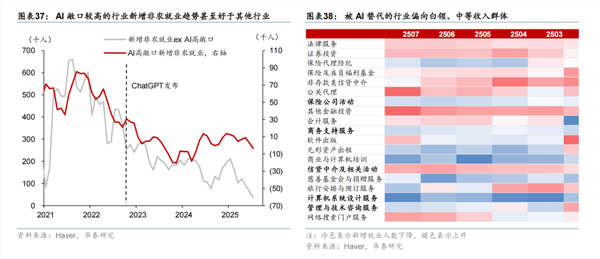
Secondly, regulation will set boundaries on AI's capabilities and scope. On the one hand, through data privacy regulations, AI is restricted from indiscriminately scraping personal information; through algorithm filing and review, models are prevented from making irresponsible judgments in critical areas (such as healthcare and finance). On the other hand, in terms of 'scope,' regulation clarifies what AI should and should not do. For example, it prohibits the use of deepfake technology for fraud and restricts discriminatory applications of algorithms in recruitment and credit.
03. The Unique Human Aesthetic Ability That AI Currently Lacks
Furthermore, some argue that the key difference between the AI revolution and the Industrial and Internet Revolutions is that AI makes human intelligence no longer scarce. Therefore, we need to ask a more fundamental question: In areas that cannot be quantified by rules, such as aesthetics and creativity, can AI truly completely replace humans? The author believes that, at least so far, AI does not possess independent aesthetic ability.
Human aesthetic judgment always carries a sense of warmth. You may find a piece of music melancholic, while he finds a painting warm – there are no standard answers, only genuine feelings. When we judge beauty, we are actually seeking resonance with our inner selves. AI has no heartbeat, no experience of tossing and turning at night; its 'aesthetic' is ultimately just an arrangement and combination of data.
More fascinating is that aesthetics change with experience. Music that seemed noisy in youth may suddenly bring tears in middle age; paintings that were once incomprehensible may suddenly seem stunningly beautiful one morning. This dynamic, evolving aesthetic ability, closely tied to the journey of life, is difficult to replicate with algorithms.
Ultimately, aesthetics is one of the ways we exist. It records the unique vulnerability, affection, and confusion of being human. AI can imitate styles but cannot possess an aesthetic soul. The reason is that AI's so-called 'aesthetic ability' is essentially generated through learning from vast amounts of human works and probabilistic predictions, producing 'human-like' output. It has no soul, no desires, no questioning of existence. The 'art' it generates requires humans to imbues meaning – it is humans who project their emotions and understanding when viewing AI paintings, giving these images 'beauty.' In other words, AI is the mirror, while humans are the ones looking into it.
04. Conclusion: Optimists Forge Ahead
In conclusion, the torrent of technological revolution never yields to fear nor changes course due to panic. Looking back at human civilization, every technological leap has been accompanied by the dual symphony of pain and rebirth. The steam engine of the Industrial Revolution did not end labor but liberated humans from the limitations of muscle power; the wave of the Internet did not eliminate communication but allowed information and ideas to collide on an unprecedented scale.
Today, artificial intelligence stands at this historical juncture – the author believes it will not become the grave digger of the human economy but will become a driving force in reshaping labor forms. Those repetitive jobs that are replaced are precisely the necessary cost of liberating creativity; the emerging map of new professions is precisely the footnote of human wisdom leaping to a higher dimension.
Facing this ongoing intelligence revolution, what we need is not a pessimistic doomsday narrative but sober optimism and resolute action. When 2028 truly arrives, we may find that those panic predictions about an 'intelligence crisis' are just another false alarm in the long river of history. And the real crisis has never been that technology advances too quickly but that humans stop thinking and moving forward in the face of change.
- End -
-
![]()
Doubao Work Unveiled! Domestic AI Leaders Fully Commit to the 'Work' Sector
-
![]()
Who’s Sounding the Alarm on ‘Rushed Vehicles’?
-
![]()
Over 5.3 Billion Yuan in Losses Over Three and a Half Years! Can Yonyou Reverse Its Fortunes Through Streamlining and AI Transformation?
-
![]()
Baidu AI Adopts Free Model: A Strategic Maneuver in Traffic and Monetization
-
![]()
Silicon-Based OLED Pioneer Unveils Financial Results: H1 Shipments Outpace Entire 2025 Volume
-
![]()
AI's First "Lost Summer"
-
![]()
Zeiss Makes Another €2.2 Million Bet: Will Eye Tracking Be the Next Big Thing in the Smart Glasses Industry?
-
![]()
RUNTO Ranking | Global Top TV ODM Factories' Shipment Figures for July 2026