February Proved Challenging! Many Firms Withheld Sales Data, with Xiaomi Barely Hitting 20,000+, Yet Some Witnessed a 100% Surge? | Mirror Pro
 03/02 2026
 458
458
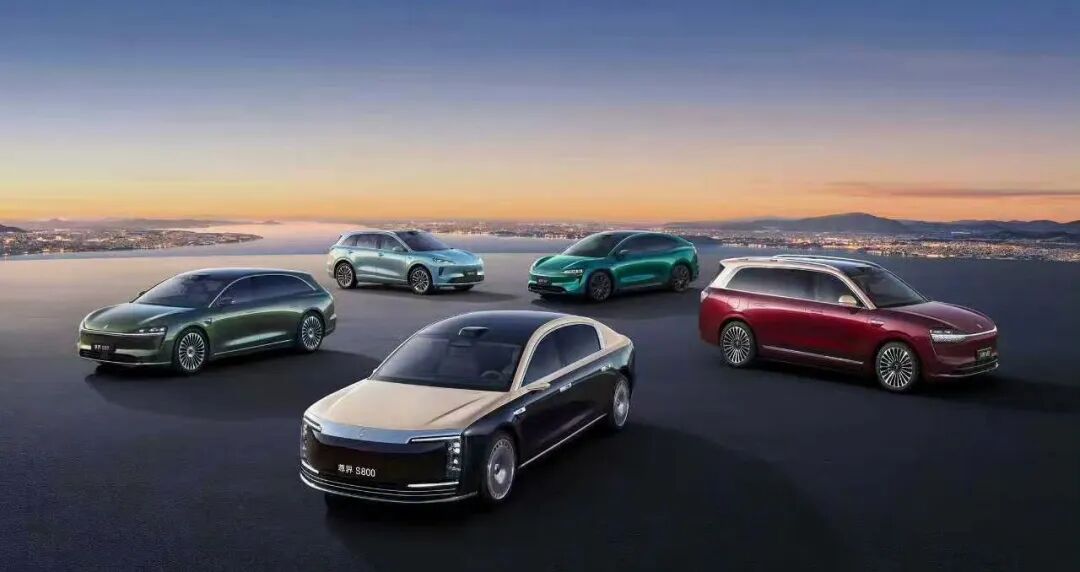
Impacted by factors such as the phase-out of purchase tax incentives and the Spring Festival holiday, the auto market experienced a uniform downturn in February sales. Notably, no new automotive player managed to sell over 30,000 units in a single month during February. Leapmotor, Li Auto, NIO, and Xiaomi each surpassed the 20,000-unit mark, whereas XPeng and Aito dipped below this threshold, with Luxeed struggling to reach even a thousand monthly sales.
Among the new brands launched by traditional automakers, only two exceeded 20,000 units in February. Previously, brands like Voyah, IM Motors, and Denza, which had consistently sold over 10,000 units monthly, all saw their sales figures drop below this benchmark. Due to the lackluster sales performance, numerous brands postponed the release of their sales data; some even opted to announce combined sales figures for January and February to present a more favorable image on their sales posters.
01 New Car-Making Forces: The Pinnacle Reached Just Over 20,000 Units
In February, Leapmotor, Li Auto, NIO, and Xiaomi each sold over 10,000 units, with Xiaomi choosing not to disclose specific figures, making a precise ranking of the four impossible.
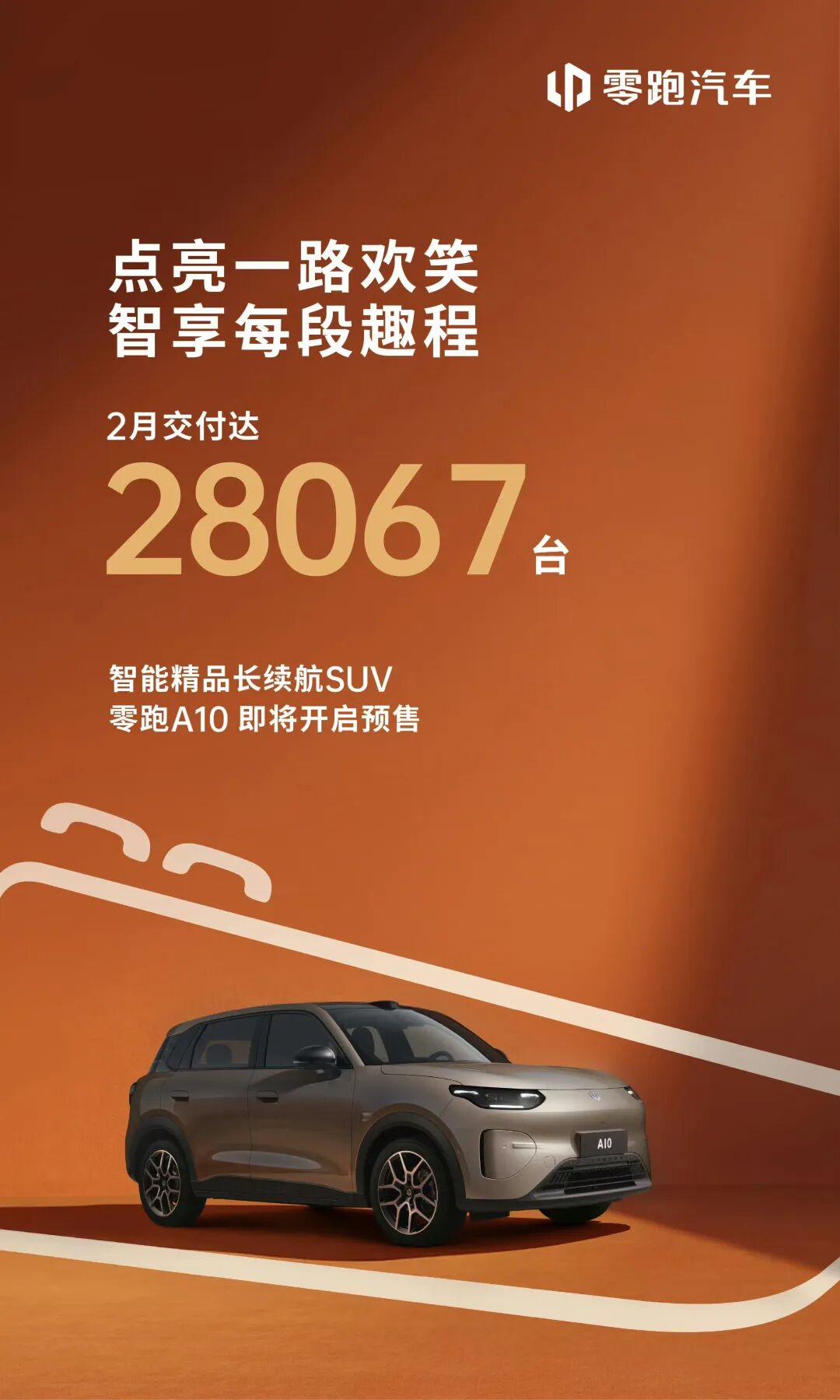
First up is the leader, Leapmotor, which sold 28,067 units in February, marking an 11% year-on-year increase but a 12% month-on-month decrease. From January to February, Leapmotor's cumulative sales reached 60,126 units. Recently, Leapmotor unveiled new purchase incentives, offering comprehensive benefits of up to 46,000 yuan across all models, marking the first price reduction among new forces post-Spring Festival. Some models also introduced a lifetime free vehicle warranty (vehicle quality assurance) for the first owner. Through terminal price discounts, this move partially offsets the impact of rising purchase taxes and enhances product competitiveness within the same segment. At the product level, Leapmotor's inaugural model in the A series, the A10, is set to commence pre-sales in March, becoming a new driving force for Leapmotor's sales growth.
Li Auto delivered 26,421 units in February, showing a 6% year-on-year increase but a 4.5% month-on-month decrease. From January to February, Li Auto's cumulative sales reached 54,089 units. The overall market sales decline in February narrowed the gap between Li Auto and its competitors, underscoring its robust sales resilience. Li Auto's latest major product, the all-new L9, will feature a large-battery extended-range solution. Its "ultimate version," the L9 Livis, will incorporate cutting-edge technologies such as two self-developed 5nm process "Mach 100" chips and a steer-by-wire chassis. Internally, Li Auto has set an ambitious annual sales target of 100,000 units for the new L9, positioning it as a pivotal product for Li Auto's sales rebound this year.
NIO delivered 20,797 units in February, marking a 57.6% year-on-year increase but a 23% month-on-month decrease. Among these, the NIO brand accounted for 15,159 units; Onvo, 2,981 units; and Firefly, 2,657 units. From January to February, NIO's cumulative deliveries reached 47,979 units. February's performance revealed that NIO brand sales were primarily driven by the all-new ES8, while Onvo's performance surprisingly matched that of the high-end compact car brand Firefly. Moving forward, Onvo's sales recovery will hinge on the facelifted models of the L60 and L90, as well as the all-new model L80. Additionally, the NIO brand will introduce the all-new ES9 in April, joining the "9-series battle."
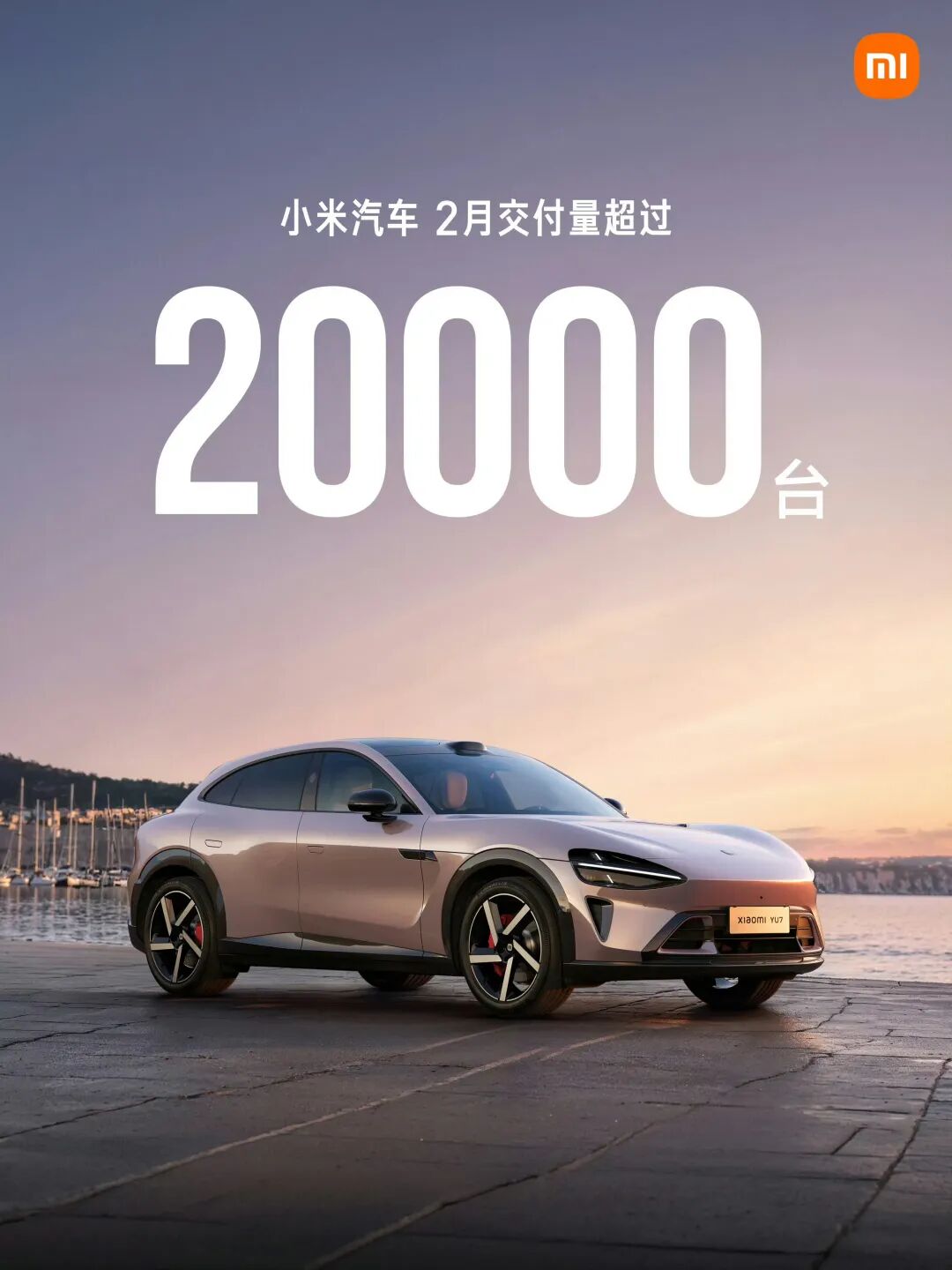
Xiaomi delivered over 20,000 units in February, a notable decline from over 39,000 units in January of the previous year. The sharp decrease in Xiaomi's February deliveries can be attributed partly to factors such as the Spring Festival and purchase tax incentives, and partly to the impending discontinuation of old models as the SU7 is set to be replaced. It is reported that Xiaomi is gearing up for large-scale mass production of the new generation SU7; in the latter half of the year, Xiaomi will also unveil the all-new model YU9. Moreover, due to recent incidents last year, Xiaomi has been under intense scrutiny, posing a significant challenge for the company.
XPeng's February deliveries fell below 20,000 units to 15,256 units, showing a 49% year-on-year increase but around a 24% month-on-month decrease. From January to February, XPeng's cumulative sales reached 35,267 units. In January, XPeng launched four models: the 2026 P7+, 2026 G6, 2026 G7, and 2026 G9, marking the first wave of product launches in 2026; on March 2, the 2026 XPeng X9 all-electric version will officially go on sale. Simultaneously, the second-generation VLA will also commence rolling out in March. Additionally, XPeng will introduce extended-range products such as the G01 and GX this year. With market enthusiasm picking up post-Spring Festival and new products hitting the market, XPeng is poised to return to a normal product sales rhythm soon.
HiPhi released its February sales report as early as the afternoon of February 28. In February, HiPhi delivered 1,298 units, showing a 200% year-on-year increase and a 7% month-on-month increase. HiPhi's sales were able to grow against the trend during the Spring Festival because its primary market is overseas, experiencing less impact from the domestic market.
As of now, Harmony Intelligent Mobility has not disclosed its overall February sales. However, Harmony Intelligent Mobility announced Aito's sales data for January and February, which exceeded 58,000 units. Based on January's 40,016 units, Aito's February sales are estimated to be around 18,000 units. Additionally, according to Chery's data, Luxeed's February sales were a mere 945 units, somewhat surprising given that Luxeed's sales had once surpassed 10,000 units. Apart from this, the other three brands, Xingjie, Zunjie, and Shangjie, have yet to release any sales data.
02 New Brands from Traditional Automakers: Only 2 Surpassed 20,000 Units, Many Below 10,000
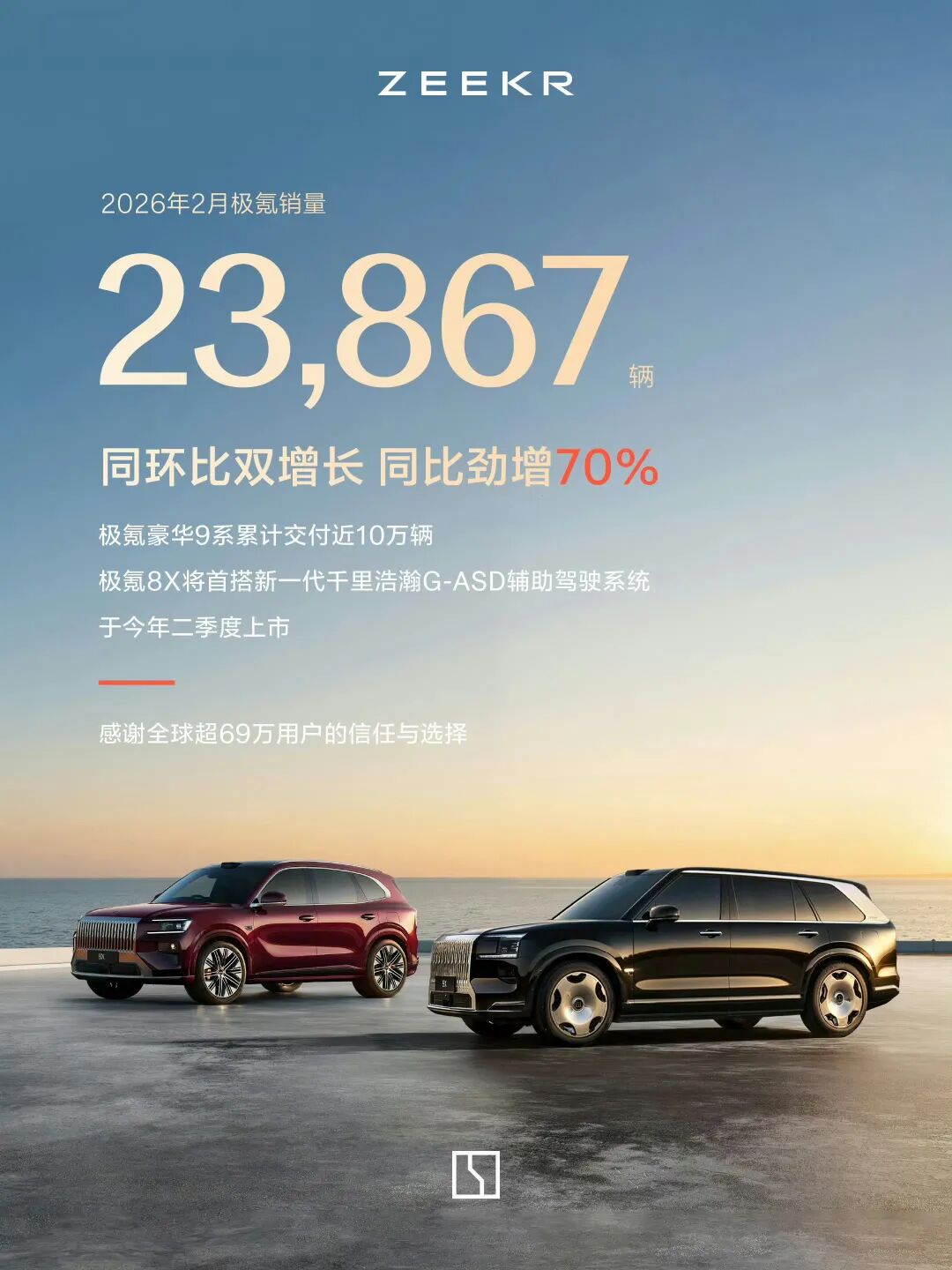
Among the new brands launched by traditional automakers, Geely's Galaxy and Zeekr secured the first and second positions, respectively. Geely Galaxy sold 73,125 units, showing an 11% month-on-month decrease. This brand represents Geely's foray into the mainstream new energy market, currently leading other traditional automakers' new brands by a substantial margin in sales. Zeekr sold 23,867 units in February, showing a 70% year-on-year increase and remaining flat month-on-month, making it one of the few brands that managed to sustain sales during that month.
Following closely is Fangchengbao, which sold 17,036 units in February, showing a 21% month-on-month decrease. With the launch of the Titanium series models, this brand experienced rapid growth last year, becoming BYD's brand with the highest sales growth rate. This year, Fangchengbao will also introduce products like the Titanium 9 to further diversify its product lineup. Additionally, another new brand under BYD, Denza, sold 5,501 units, showing an 8.35% month-on-month decrease; while Yangwang sold 232 units.
Next is eπ Tech (encompassing Aeolus, eπ, and Nanomi), which sold 14,936 units in February, showing a 29.78% month-on-month decrease; cumulative sales from January to February reached 36,205 units, showing a 37% year-on-year increase. This year, eπ Tech will continue to foster collaborative efforts between the Dongfeng eπ and Dongfeng Aeolus brands, launching five all-new strategic models throughout the year, catering to diverse scenarios such as family travel, mainstream home use, and urban commuting. Its sales performance this year remains highly anticipated.
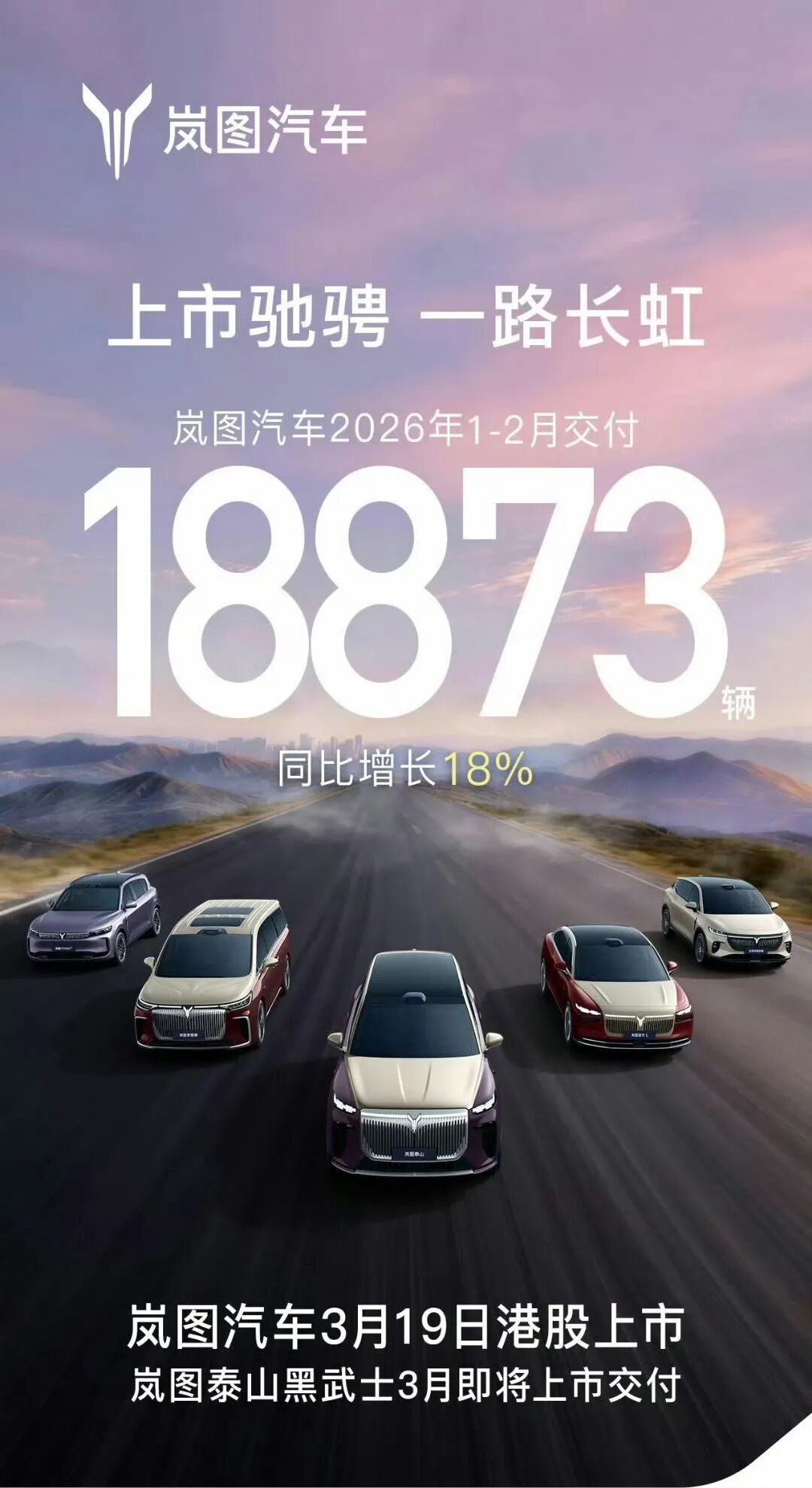
Voyah announced cumulative sales of 18,873 units for January and February, showing an 18% year-on-year increase. Based on Voyah's January sales of 10,515 units, its February sales were 8,358 units, falling below 10,000 units. With the launch of models like the Voyah Taishan Ultra, Taishan X8, FE (code name), and Everest (code name) this year, Voyah's overall sales are still noteworthy.
IM Motors also experienced a sales decline, with 2,017 units sold in February, showing a 77% year-on-year increase but nearly a 60% month-on-month decrease. However, after IM Motors adopted a dual route of pure electric + extended-range last year, its market sales and visibility both achieved breakthroughs, with monthly sales once exceeding 10,000 units. To stimulate sales, IM Motors recently introduced promotional policies such as 7-year zero down payment + 3-year zero interest. Next, with the launch of the LS9 Hyper and the all-new model LS8, IM Motors' sales are expected to rebound swiftly.
Additionally, as of the time of writing, brands like Seres, Avatr, Hyper Haobo, Aion BU, Avatr, Arcfox, and Aion have not announced their February sales.
Overall, the sharp decline in sales for many automakers in February can be attributed to seasonal sluggishness and does not warrant overinterpretation. With the introduction of preferential policies in the market, such as 7-year low-interest loans, the commencement of a new round of terminal discounts by some automakers, and the intensive launches of new products, sales are anticipated to start rebounding this month.
Moreover, from the perspective of automaker groups, SAIC, Geely, Chery, Great Wall, and BYD have announced their sales figures thus far. Among them, SAIC sold 269,465 units, ranking first. Geely sold 206,160 units, ranking second. BYD sold 190,190 units, ranking third. Chery sold 160,765 units, ranking fourth. Great Wall sold 72,594 units, ranking fifth.
This ranking order may not have been anticipated by everyone at the beginning of the year.
-
![]()
AI Predicting the World Cup? It’s Time to Stop Insulting AI
-
![]()
iPhone 18 Pro Memory Costs Soar Threefold! Apple Seeks Trump Administration Approval for CXMT Memory Chips
-
![]()
AI Tutoring: A Crack in the Intense Competition of East Asia
-
![]()
Weekly Stock Review | Li Bin Sounds Alarm on 'Toughest' Year, Casting a Shadow Over Lei Jun's Noodle Moment
-
![]()
Car Manufacturing Paused, Yet Dreame’s Automotive Dream Marches On
-
![]()
Can the Brand-New Hongqi H7 Forge Its Own Identity in the Hybrid Vehicle Market?
-
![]()
Challenges in Redeeming Certificates for New Cars: Mercedes-Benz Dealership Group Grapples with Operational Hurdles Once Again
-
![]()
Porsche Returns to Volkswagen, Ending the 'Electric Ferrari' Story