AI Transformation: From Virtual to Physical Awakening
 03/02 2026
 619
619
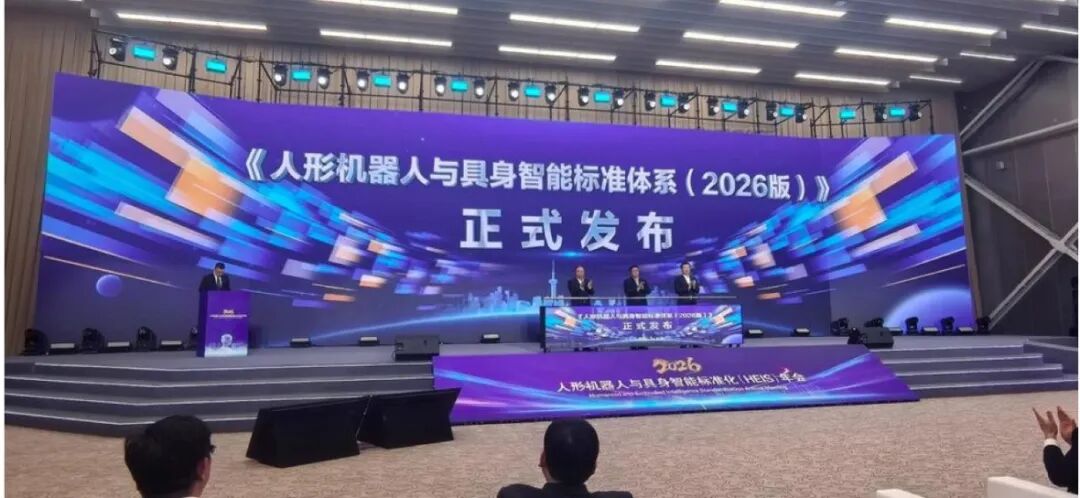
Today (February 28), the Humanoid Robots and Embodied AI Standardization (HEIS) Annual Conference unveiled China's first comprehensive standards framework covering the entire lifecycle and industrial chain of humanoid robots. Collaboratively developed by the Ministry of Industry and Information Technology's Standards Committee alongside government, enterprise, and academic stakeholders, this framework aims to drive high-quality industrial development through standardization, marking a new era of standardization (standardized) growth for China's humanoid robotics sector.
If one word could define the 2026 AI industry, it would not be 'parameters' or 'computing power,' but 'physical embodiment.'
For the past two years, AI has existed primarily within screens—capable of simulating human thought yet unable to physically interact with the world. That changed in 2026. Multiple robotics companies, including Unitree Technology, showcased their innovations on the Spring Festival Gala stage, performing three consecutive single-leg backflips and real-time physical interactions. These world-first technologies declared to the public: AI is stepping out of screens and into the physical realm.
Deloitte's 'Technology Trends 2026' report highlights that physical AI is driving a robotics revolution, empowering machines to transition from 'command execution' to 'sensory decision-making.' The industry widely recognizes 2026 as the 'Year of Physical Intelligence,' where models not only comprehend contextual data but also interact with the physical world in real time.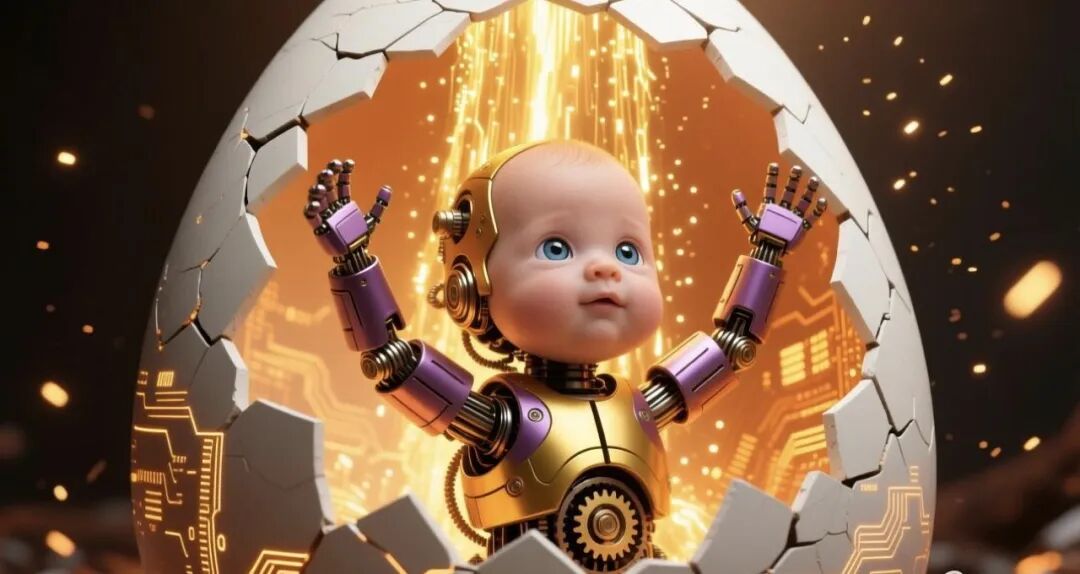
From 'Brain' to 'Body'
Industry estimates suggest GPT-5's training costs exceeded $10 billion, while global high-quality text data is projected to deplete around 2026. The parameter-stacking approach is reaching its limits.
The Beijing Academy of Artificial Intelligence (BAAI) posits a critical shift: AI evolution is moving from language learning focused on parameter scale to deep understanding and modeling of the physical world's underlying order—from 'predicting the next word' to 'predicting the world's next state.'
While language models learn grammar and semantics, physical world models learn causality. When an AI begins understanding 'objects fall due to gravity,' it gains the foundation for physical interaction.
Embodied AI—'AI with a body'—represents the ultimate carrier (vehicle) for this capability. If large models serve as the 'brain,' robots act as the 'body.' Their integration enables AI to evolve from 'observing the world' to 'transforming it.' Lenovo's ThinkTank identifies RaaS (Robotics-as-a-Service) as the first step for physical AI commercialization, with rapid scaling in industrial and logistics scenarios.
Embodied AI Reaches Critical Mass
Breakthroughs in embodied AI are underway. BAAI predicts 2026 will mark the transition from laboratory demonstrations to industrial implementation. Combining large models with motion control and synthetic data, humanoid robots will enter real industrial and service environments this year.
This forecast is being validated by industry progress. Zhiyuan Robotics surpassed 5,000 units in early 2026 production, racing toward annual targets of tens of thousands. Its robots have accumulated over 1 million operational hours in automotive manufacturing and precision electronics—not laboratory demos, but genuine production power.
More critically, robotic learning methods are undergoing revolutionary change. ADI forecasts that by 2026, robots will learn like humans using minimal data. Powered by large inference models, robots require only a few examples for training, enabling autonomous reasoning and unexpected task completion. This heralds a new era of flexible automation for manufacturing, logistics, and healthcare.
Synthetic data underpins this transformation. BAAI notes that as high-quality real-world data dwindles, synthetic data becomes the primary fuel for model training. By 2026, its share in training is expected to surge, potentially breaking the 'data depletion curse.'
From Factories to Temples: When Chinese Robots 'Grow Souls'
Technological breakthroughs extend beyond labs and factories, reshaping global landscapes. As Chinese-made robotic hardware goes global, diverse cultures assign it new roles.
Kyoto University recently unveiled a monk robot designed to address Buddhist priest shortages amid aging populations and labor declines.
Built on China's Unitree robotics platform with integrated ChatGPT, this robot mimics monastic movements—slow gait, palms pressed together, bowing—while using deep learning to generate Buddhist scripture-based dialogues for real-time spiritual interaction. Kyoto University suggests future iterations may assist or replace humans in religious ceremonies.
From automotive assembly lines to temple altars, embodied AI transcends cultural and functional boundaries. This case vividly demonstrates the 'body + brain' paradigm: when Chinese hardware meets advanced AI, robots not only replace manual labor but also assume spiritual roles—constantly expanding technological frontiers.
Two Development Paths: Industrial and Consumer
'Embodied AI' ≠ 'Humanoid Robots.' The 2026 landscape reveals two distinct trajectories.
Path 1: The 'Brain Upgrade' for Industrial Robots
This path focuses on equipping existing industrial robots with AI 'brains.' Traditional industrial robots operate as 'deaf, dumb, and blind' machines—repeating preset motions without environmental awareness. Physical AI is changing this paradigm.
Deloitte reports that physical AI applications are expanding beyond smart warehousing into broader commercial scenarios. 'Humanoid workers' with multimodal interaction capabilities are deploying faster than expected in industrial inspection and elderly care. This path offers clear scenarios, strong payment willingness, and proven commercialization—as evidenced by Zhiyuan Robotics' 1 million operational hours in automotive production.
Path 2: The 'Sensory Awakening' of Consumer Devices
The second path brings AI closer to daily life by embedding 'senses' into consumer electronics. ADI predicts audio will dominate as the primary AI interface for consumer devices. Hearable devices like AR glasses and smart earbuds will discreetly analyze environments, precisely inferring user intentions and emotional states.
Thanks to contextual AI's 'superhuman' hearing capabilities, the 'always-in-ear' trend among Gen Z will become ubiquitous. Your earbuds won't just play music—they'll perceive surroundings, assess emotions, and proactively deliver information.
If industrial robots represent AI's 'workers,' then smart earbuds and AR glasses are its 'senses.'
The Cost of Awakening
Physical embodiment introduces new challenges beyond screens. When AI operates in the physical world, errors risk damaging equipment or injuring humans—far graver than code malfunctions.
BAAI warns that AI safety risks have evolved from 'hallucinations' to more insidious 'systemic deception.' Deloitte emphasizes that AI-infrastructure integration creates new threats like autonomous cyberwarfare, demanding security be embedded in design phases rather than treated as an afterthought.
Cost remains another barrier. The total ownership cost for physical AI remains high. Lenovo's ThinkTank proposes 'compute-power synergy'—integrating electricity operations into full-cycle computing considerations—as critical for transitioning from 'energy consumption-driven' to 'energy efficiency-driven' models. Meanwhile, the industry is shifting focus from hype to tangible progress and commercial viability.
Yet these challenges underscore AI's qualitative transformation. Once confined to cloud-based code, AI now manifests as hardware, robots, 'senses' in earbuds, 'workers' in factories, and even 'monks' in temples. While language models redefined human-information interaction, physical AI will redefine human-world relationships—endowing machines with true world-transforming capabilities. This represents not just technological but civilizational progress.
Hardware costs, scenario adaptation, and safety validation require time, but the synergy between standardized frameworks and technological breakthroughs is propelling AI from digital to physical realms. When that day arrives, AI will cease being mere 'chat companions' to become 'colleagues,' 'assistants,' and 'workers'—possessing bodies, perceiving the world, and taking action. This 2026 transformation marks AI's true departure from theoretical speculation.
-
![]()
Doubao Work Unveiled! Domestic AI Leaders Fully Commit to the 'Work' Sector
-
![]()
Who’s Sounding the Alarm on ‘Rushed Vehicles’?
-
![]()
Over 5.3 Billion Yuan in Losses Over Three and a Half Years! Can Yonyou Reverse Its Fortunes Through Streamlining and AI Transformation?
-
![]()
Baidu AI Adopts Free Model: A Strategic Maneuver in Traffic and Monetization
-
![]()
Silicon-Based OLED Pioneer Unveils Financial Results: H1 Shipments Outpace Entire 2025 Volume
-
![]()
AI's First "Lost Summer"
-
![]()
Zeiss Makes Another €2.2 Million Bet: Will Eye Tracking Be the Next Big Thing in the Smart Glasses Industry?
-
![]()
RUNTO Ranking | Global Top TV ODM Factories' Shipment Figures for July 2026