Xiaomi's robot achieves 99.2% operational accuracy on automotive production lines, positioning the entire automotive industry as a training ground for embodied AI.
 03/12 2026
 549
549
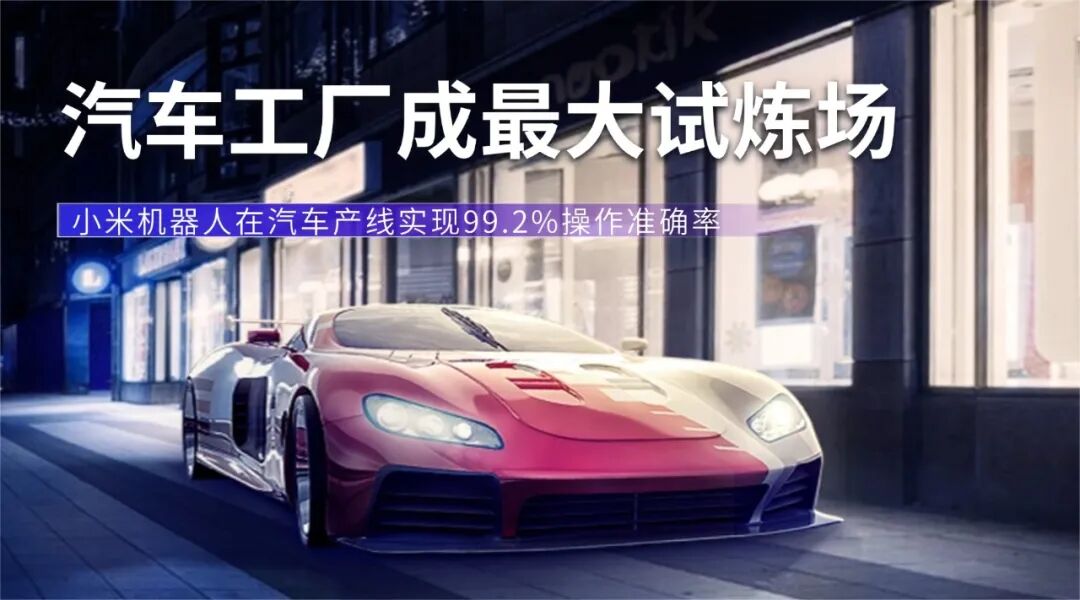
From Xiaomi's CyberOne achieving 99.2% operational accuracy on automotive production lines to Tesla transforming vehicle factories into humanoid robot production lines, and Li Auto and XPENG repurposing autonomous driving teams for robot R&D, automakers are becoming core players in the embodied AI sector at a pace exceeding industry expectations.
Automotive factories are no longer just vehicle manufacturing sites but have evolved into the first training grounds for humanoid robots transitioning from laboratories to commercialization. Behind automakers' cross-border layout (translated as "cross-border layout " to "cross-border layout " with explanation as "strategic layout " or "deployment") lies a triple imperative of technological homology, supply chain reuse, and market expansion. This transformation is redefining the boundaries between the automotive and robotics industries.
01 Production Line Validation: The Starting Point for Automakers' Technological Ascension
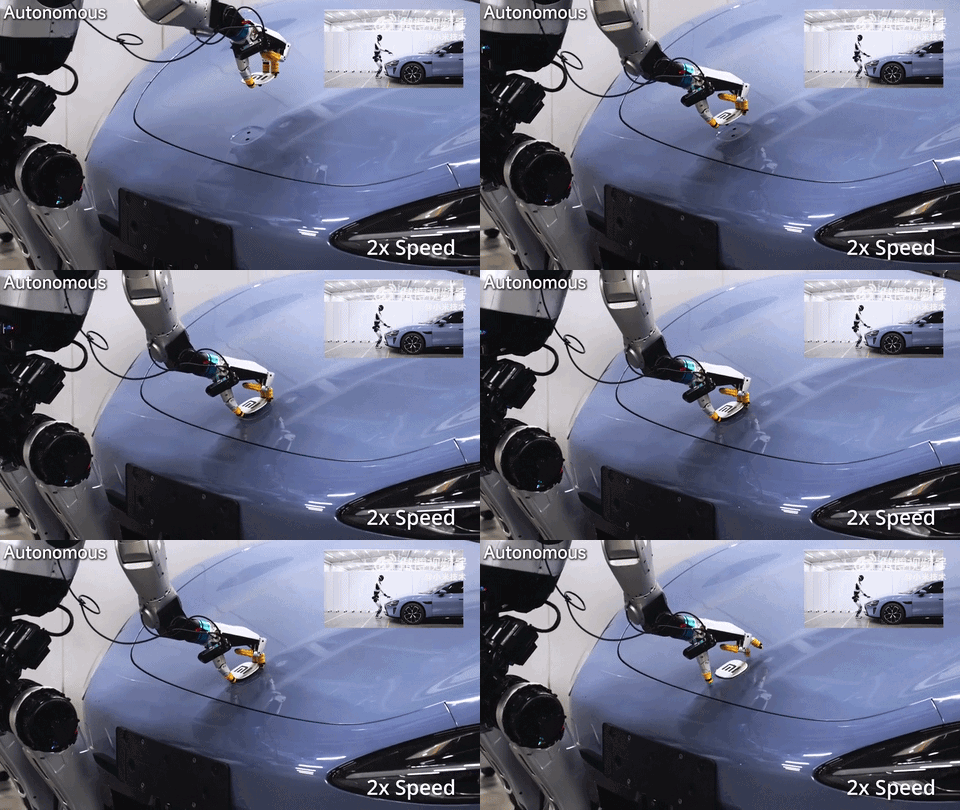
The deployment of Xiaomi's CyberOne at the self-tapping nut assembly station is not merely a case of robotic industrial application but a successful validation of transferring automotive manufacturing technologies to the robotics domain.
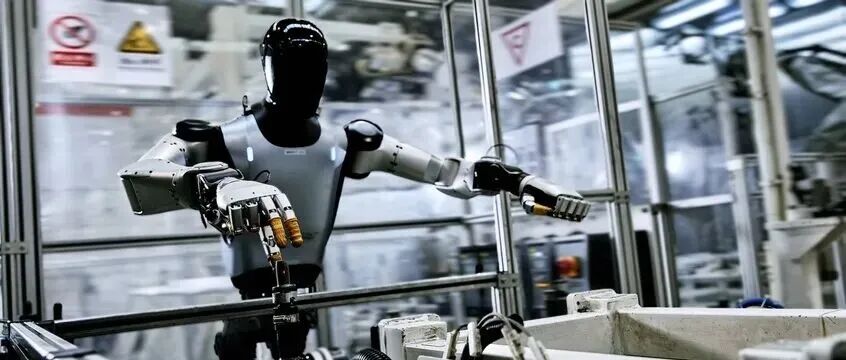
This workstation, challenging even for skilled workers, presents difficulties due to the nut's spline structure lacking fixed grasping postures and interference from positioning shaft magnetism. CyberOne's solution essentially represents Xiaomi's cross-scenario reuse of multimodal perception and AI large model decision-making technologies from mobile phones and automotive sectors. Its 90.2% overall installation success rate and 99.2% core operational accuracy not only prove the practicality of humanoid robots in automotive production but also reveal to automakers the transferability of their technological systems to the embodied AI field.
This technological transfer is not unique to Xiaomi. Tesla's Optimus directly reuses Autopilot's FSD visual algorithms, completing factory environment modeling validation in just months. XPENG's Iron robot's "AI Hawk Eye Visual System," derived from its XNGP intelligent driving visual perception technology, achieves 720° deadzone-free production line environment recognition.
The perception-decision-execution technological architecture accumulated by automakers in vehicle R&D precisely matches the core technological needs of humanoid robots. The real production line scenarios in automotive factories provide optimal debugging and iterative environments for these technologies, forming a closed loop of "technological reuse - production line validation - algorithm optimization."
02 Global Automakers' Collective Bet: Two Paths to Seize Embodied AI Opportunities
Current automaker layout (translated as "strategic layout " or "deployment") in humanoid robots has formed two clear paths: independent R&D and ecological collaboration, both prioritizing automotive factories as initial implementation scenarios. The choice between these paths reflects differences in enterprises' technological reserves and strategic layout s.
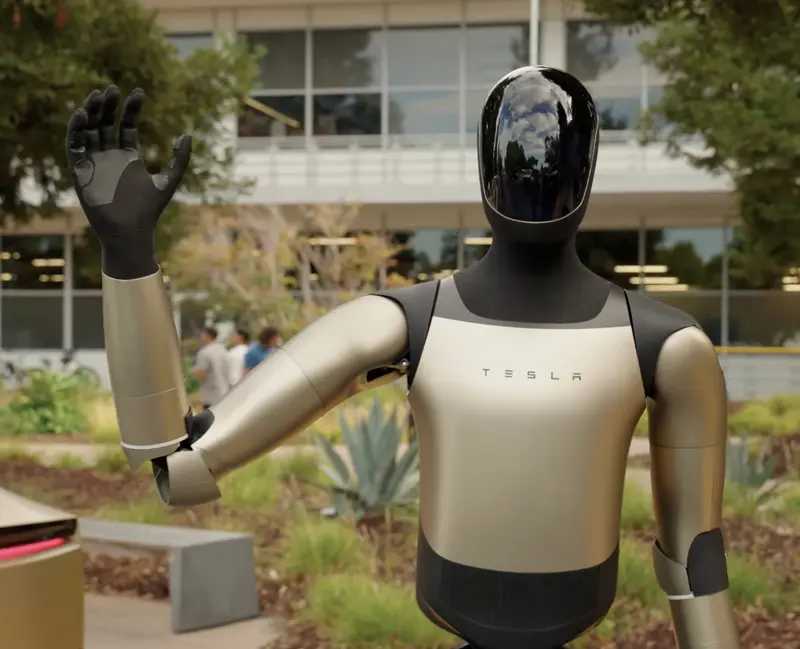
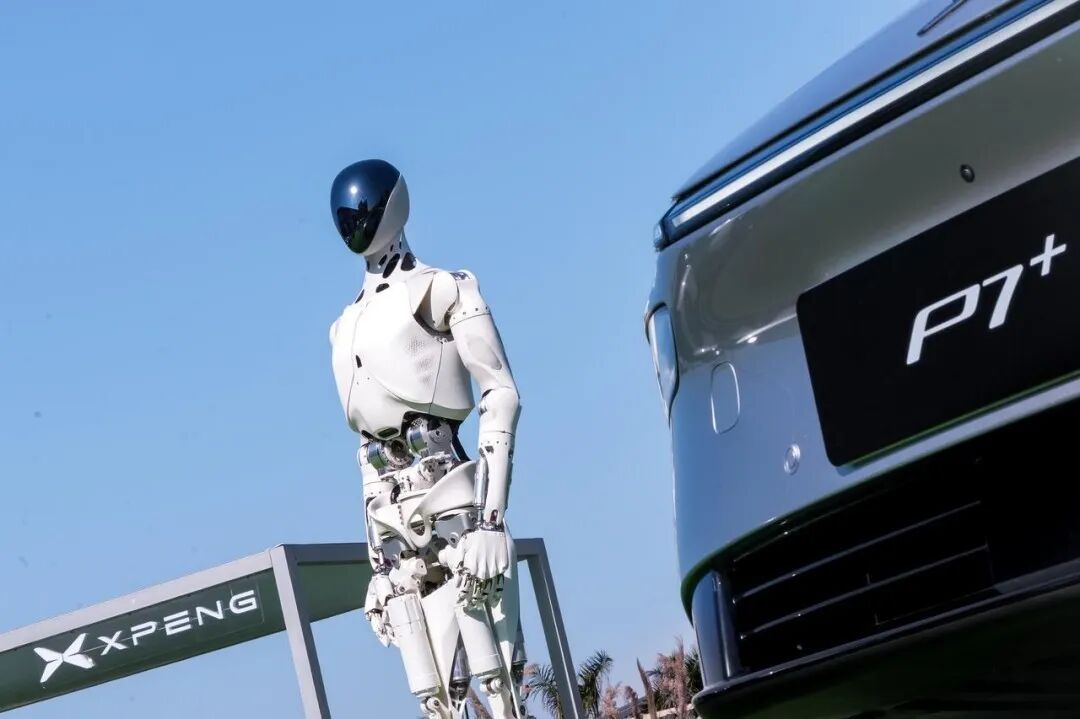
The independent R&D camp, represented by Tesla, Xiaomi, and XPENG, comprises companies with complete intelligent hardware R&D systems and AI algorithm capabilities, integrating robot R&D into their core strategies. Tesla directly halted Model S/X production, transforming its California factory into an Optimus production line with a planned annual capacity of 1 million units. Its robots already undertake battery assembly tasks in the factory, operating 3x more efficiently than manual labor. XPENG has been layout ing in robotics since 2020, with its new-generation Iron robot participating in P7+ vehicle production at the Guangzhou factory, performing multi-link operations such as screw tightening and material sorting. Xiaomi proposes a factory "7:2:1" production model, planning to introduce large numbers of CyberOne robots into production lines over the next five years, transforming automotive factories into "internship bases" for robotic technologies.
The ecological collaboration camp, represented by BMW, Toyota, and Hyundai, comprises companies leveraging the technological strengths of professional robotics firms for rapid on-site testing of robots in production lines. BMW collaborates with Figure, Hexagon, and others, with Figure 02 accumulating 1,250 operational hours in its factories, participating in the production of 30,000 BMW X3 units. Toyota deploys Agility Robotics' Digit robot at its Canadian factory, focusing on material handling. Hyundai, through acquiring an 80% stake in Boston Dynamics, gains core technologies for the Atlas robot, planning to deploy it at its US electric vehicle factory by 2028 with a planned annual production capacity of 30,000 robots.
While the paths differ, their core objectives align: using automotive factories as starting points to rapidly achieve technological validation and scalable applications of humanoid robots, thereby seizing opportunities in the embodied AI sector.
From a broader perspective, most domestic automakers rely on independent R&D, while foreign automakers predominantly opt for ecological collaboration, indirectly reflecting China's robotics development momentum and core potential.
03 Automotive Factories as Optimal Training Grounds: Four Irreplaceable Core Advantages
While humanoid robots' application scenarios once held promise for home services, commercial services, and more, why have automotive factories become the first large-scale implementation sites?
The answer lies in automakers' unique four core advantages, which make automotive factories the optimal solution for embodied AI technology implementation and automakers the largest clients in the humanoid robot sector.
Technological homology reduces R&D costs. The underlying technological architectures of intelligent vehicles and humanoid robots both consist of perception, decision-making, and execution layers. Automakers' technological accumulations in intelligent driving, batteries, and motors can be directly reused. Tesla's chassis control technology, XPENG's chip computing power, and Xiaomi's multimodal perception technology can all seamlessly transfer to robot R&D, significantly reducing R&D cycles and costs.
Controlled environments meet initial technological demands. Automotive factories are among the most automated manufacturing sites globally, with long-established work areas, operational procedures, and material placements. Robots' operational scopes and motion trajectories can be predefined, and factories' safety systems and personnel management norms effectively avoid random interferences encountered in home or commercial scenarios, providing stable testing environments for early-stage robots.
Supply chain reuse achieves cost efficiency. Over 50% overlap exists between automotive and humanoid robot supply chains, with highly consistent suppliers for core components like chips, sensors, motors, and batteries. RoboSense's LiDAR and Sanhua Intelligent Control's joint modules have both achieved product transitions from automotive to robotic applications. Automakers' scalable procurement capabilities also drive rapid cost reductions for robotic core components.
Real demand provides commercial closures. Tasks like material handling and component assembly on automotive production lines, which traditional mechanical arms struggle to perform due to their inability to achieve spatial mobility and flexible grasping, have long relied on manual labor. Humanoid robots' limb flexibility and autonomous decision-making capabilities precisely match these demands, with clear ROI paths for labor replacement, enabling rapid commercial value realization and funding technological iterations.
04 Automakers' Transformation into Embodied AI Entity Manufacturers
Automakers' concentrated layout in humanoid robots fundamentally represents not mere business diversification but a profound insight into the automotive industry's endpoint: the ultimate form of vehicles is embodied AI entities, and the industry's future lies in the large-scale popularization of embodied AI.
The core value of traditional vehicles lies in mobility efficiency, while intelligent vehicles in the era of intelligence are evolving from "transportation tools" into "mobile intelligent spaces" with autonomous perception, cognition, and decision-making capabilities. Li Auto's concept of an "automotive robot" aims to create intelligent entities capable of autonomous charging, car washing, and child transportation. XPENG positions itself as a "physical AI explorer," with its robots and automotive products sharing the same AI brain. When vehicles possess autonomous mobility, their distinction from humanoid robots lies merely in executor morphology, with both sharing unified intelligent cores as carriers of embodied AI.
This transformation also implies exponential market expansion. While the electric vehicle market reaches trillions of yuan, Goldman Sachs predicts the global humanoid robot market will exceed $7 trillion by 2050, with Elon Musk even forecasting demand reaching the billion-unit level.
For automakers, layout ing in the robotics sector represents a leap from a "trillion-yuan market" to a "ten-trillion-yuan market." Against the backdrop of stagnating automotive sales growth, the robotics business emerges as a new growth curve.
Currently, humanoid robots' applications in automotive factories remain concentrated in basic tasks like handling and simple assembly, with room for improvement in operational success rates and working durations. However, automakers' collective entry has significantly accelerated the commercialization pace of the embodied AI sector.
As automotive factories serve as the first training grounds for humanoid robots, their large-scale applications will drive rapid technological maturation. Once robots attain higher capability levels, this automaker-led transformation will extend from factories to broader scenarios like homes and commerce, initiating an era of all-scenario embodied AI applications. Those automakers first completing technological validations in automotive factories will become the core leaders of this industrial transformation.
-
![]()
Doubao Work Unveiled! Domestic AI Leaders Fully Commit to the 'Work' Sector
-
![]()
Who’s Sounding the Alarm on ‘Rushed Vehicles’?
-
![]()
Over 5.3 Billion Yuan in Losses Over Three and a Half Years! Can Yonyou Reverse Its Fortunes Through Streamlining and AI Transformation?
-
![]()
Baidu AI Adopts Free Model: A Strategic Maneuver in Traffic and Monetization
-
![]()
Silicon-Based OLED Pioneer Unveils Financial Results: H1 Shipments Outpace Entire 2025 Volume
-
![]()
AI's First "Lost Summer"
-
![]()
Zeiss Makes Another €2.2 Million Bet: Will Eye Tracking Be the Next Big Thing in the Smart Glasses Industry?
-
![]()
RUNTO Ranking | Global Top TV ODM Factories' Shipment Figures for July 2026