Post-2000s Whiz Kid Raises $1.6 Billion: Gen Z Transforms AI Venture Capital
 03/30 2026
 613
613
Author | Chuan Chuan
Editor | Dafeng
In March 2026, a funding announcement sent ripples through the venture capital community: 25-year-old Hong Letong’s AI firm, Axiom, had just secured $200 million in a Series A round, valuing the fledgling company at $1.6 billion (approximately RMB 11 billion) post-investment. This milestone was achieved just over a year after the company’s inception.
This is hardly an isolated incident. Guo Hangjiang, a senior at Beijing University of Posts and Telecommunications, developed an AI prediction engine in a mere 10 days, attracting RMB 30 million in investment from Chen Tianqiao. Chen Yuanpei, a graduate of Peking University and Stanford, raised RMB 2 billion in just over a year of entrepreneurship, focusing on robotic dexterous hand technology. Meanwhile, Yale Ph.D. Yang Fengyu, yet to launch a product, has already secured hundreds of millions in funding for his nanny robot project...
While debates rage over "Gen Z’s workplace revolution," these young visionaries have quietly assumed the spotlight in AI. No longer content with being mere implementers, they aspire to define the rules and set new paradigms. A golden age of AI entrepreneurship for Generation Z is well underway.

The Chaoshan Prodigy's "Dropout Entrepreneurship": Reconstructing AI Reliability Through Mathematical Proof
Hong Letong’s story epitomizes the "child prodigy" archetype.
Born in 2001 to a working-class family in Guangzhou, she exhibited extraordinary mathematical prowess from a young age. During her high school years at the Affiliated High School of South China Normal University, she was one of the few females in the provincial math Olympiad team. At 17, she gained admission to the Massachusetts Institute of Technology (MIT), earning dual degrees in mathematics and physics in just three years, with a publication record that far surpassed her peers. She then secured the prestigious Rhodes Scholarship, studying at Oxford and University College London before pursuing a Ph.D. at Stanford.
By this trajectory, she seemed destined for a career in academia. However, a pivotal conversation in a Stanford café in late 2024 altered her course.
That day, Hong spent hours discussing a single question with Shubho Sengupta, then Meta’s AI research director: Can AI truly master mathematical reasoning?
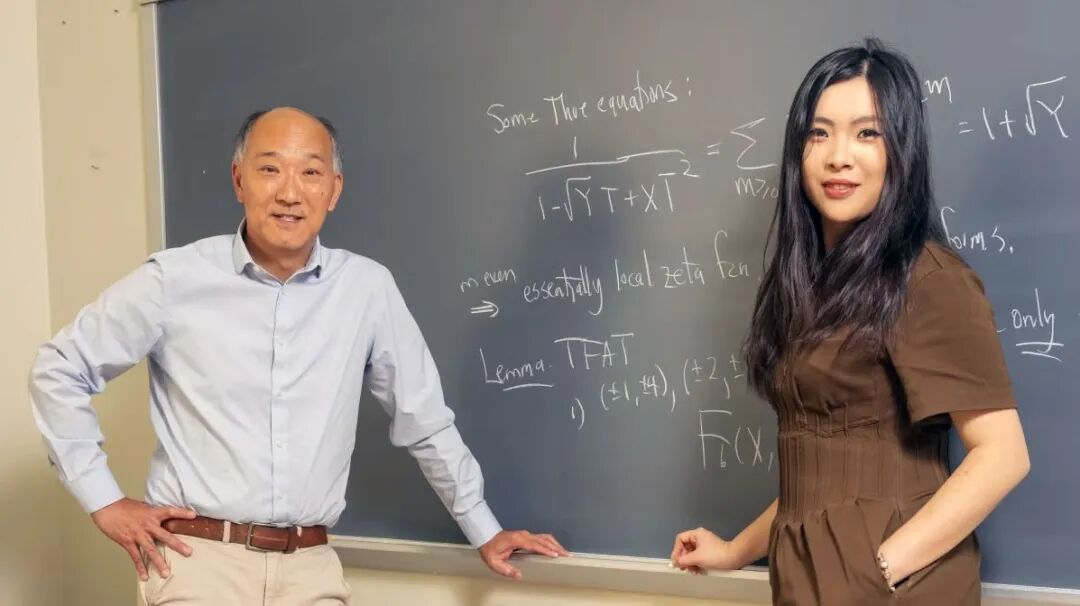
Shortly thereafter, Hong made a bold decision: she dropped out of Stanford to pursue entrepreneurship full-time.
"Many entrepreneurs pursue AI for business opportunities, but my mindset is different," Hong later explained in interviews. She identified a fundamental contradiction in AI: as models grow increasingly powerful, their reliability remains unresolved.
While AI errors may be tolerable in writing or chatting, they could prove catastrophic in finance, defense, or critical infrastructure. Axiom aims to address this critical pain point.
The team introduced "Verified AI"—a framework where every step of AI reasoning is mathematically verifiable, rather than relying on probabilistic guesses. Utilizing the Lean programming language, they translate mathematical proofs into executable programs, with each logical step validated by a checker. In essence, AI must not only provide answers but also prove their correctness.
This system quickly demonstrated its prowess. In December 2025, Axiom achieved a perfect score of 12/12 in the Putnam Competition, renowned as the "Undergraduate Math Olympics." Only five human participants had accomplished this feat in nearly a century. Subsequently, the system independently proved multiple open number theory conjectures.
"Mathematics is just the first step," Hong declared. "Future AI will generate vast amounts of software code, and ensuring its reliability is a massive challenge. We aim to use mathematical verification to rigorously prove the correctness of AI-generated code."
This positions Axiom not as a niche tool but as a foundational capability for AI’s future.

The Rise of "Vibe Coding": How Super-Individuals Leverage AI to Attract Capital
If Hong represents the academic faction of AI entrepreneurs, Guo Hangjiang exemplifies an alternative path.
A senior at Beijing University of Posts and Telecommunications, Guo catapulted to fame with MiroFish, an AI prediction engine that topped GitHub’s global trending list. MiroFish’s capabilities border on the fantastical: by feeding it news, policies, or financial signals, it constructs a high-fidelity "digital parallel universe" where hundreds of AI agents with independent personalities and long-term memory evolve through self-interaction, enabling users to observe potential futures.
Remarkably, this project—along with his previous graduation project, BettaFish, a public opinion analysis assistant—took just 10 days to complete. This approach, where natural language describes requirements and AI collaborates on coding, is known as "Vibe Coding" within the community.
Guo once used MiroFish to predict the lost ending of Dream of the Red Chamber. The system generated a vast character relationship map based on the first 80 chapters, ultimately predicting "Daiyu burns her manuscripts to sever love, Xianglian shaves his head to become a monk"—a conclusion largely aligning with existing folk versions, at a backend cost of merely RMB 14.
This AI mastery quickly caught the attention of capital titans. Chen Tianqiao, founder of Shanda Group, injected RMB 30 million for deep incubation, transforming Guo from a graduation project student to a startup CEO overnight.
"The market is desperately seeking individuals who can wield AI as productivity, especially creative super-individuals," Guo remarked, maintaining clarity. He posted a "call for heroes" on WeChat, prioritizing AI fluency over standard answers.
This confidence epitomizes Gen Z’s edge: while technology evolves, creativity remains scarce.

Generational Shift: Why Investors Now "Prefer Post-2000s"?
A few isolated cases might be coincidental, but a clear trend emerges when examining recent AI entrepreneurs.
Chen Yuanpei, born in 2001 with backgrounds from Peking University and Stanford, studied under "AI Godmother" Li Feifei. During his undergraduate years at Peking University, he achieved the world’s first successful reinforcement learning dual-arm control in real-world environments. Rejecting both Huawei’s "Genius Program" offer and Stanford’s Ph.D. admission, he chose entrepreneurship. Lingchu Intelligence, founded just over a year ago, has raised RMB 2 billion, with investors including state-backed funds and industry leaders. Its dexterous robotic hand can grip a cup without spilling a drop, even securing a deep collaboration with NVIDIA.
Yang Fengyu, a Yale Ph.D. graduate, returned to China to develop nanny robots, securing hundreds of millions in funding and multi-million-dollar orders before product launch. Fu Zhi, hailing from a Guizhou village, entered Tsinghua University and launched a "garage startup" in a Haidian shack, aiming to build "Didi for computing power"—a stable, low-cost, elastic computing power-sharing platform—generating over RMB 20 million in revenue within six months.
The 2026 Hurun U40 Global Self-Made Billionaires List reveals that the AI sector has produced 27 billion-dollar entrepreneurs, averaging just 32 years old. Many investors now admit: they might not invest in AI startups without post-2000s core members.
Why this phenomenon?
First, technological generational gaps confer cognitive advantages. Post-2000s grew up with internet proliferation, inherently better at adopting and understanding new technologies. They don’t "learn" AI—they "live" in it.
Second, they lack historical baggage. Every technological revolution is led by youth, unburdened by outdated paradigms and bold enough to challenge norms. Hong’s Stanford dropout, Guo’s 10-day product sprint, and Chen’s rejection of Huawei’s offer reflect unwavering confidence in new frontiers.
Finally, capital craves new narratives. The mobile internet era has peaked; investors urgently seek the next growth engine. AI, as the most certain track, becomes a funding magnet. Young entrepreneurs’ success stories further ignite market imagination.
A VC partner confided: "When evaluating AI projects, we now prioritize teams with post-2000s members. It’s not that older generations can’t succeed, but younger founders’ intuition and grasp of AI are unparalleled."
Figure: AI Future Technology Trends Concept Map
China’s entrepreneurial history has witnessed clear generational shifts. The internet’s early days starred the 1960s generation; mobile internet brought forth the 1970s and 1980s. Now, AI’s stage belongs to the post-2000s.
Raised in an internet-native environment, this generation accesses global cutting-edge technologies. Their entrepreneurial goals transcend profit; as Hong Letong stated, "I aim to solve AI’s fundamental reliability issues." Guo Hangjiang hopes to "demonstrate AI’s productivity potential."
As technology reshapes the world, a new wave of entrepreneurs ascends. They no longer look up to giants—they aspire to become the new rule-setters.
The AI entrepreneurial saga of the post-2000s has just begun.
For the venture capital world, this Gen Z-led transformation may only be the prologue.
-
![]()
The Allure of 'Acquisition Spree': Li Shufu's Left Turn, Xu Jiayin's Right
-
![]()
Strategic Transformation Yields Results: Phoenix Optics Reports 10.9% YoY Rise in Core Net Profit for H1 2026
-
![]()
Three Key Growth Trajectories Synergize! Crystal-Optech Reports 3.478 Billion Yuan in Revenue for H1 2026
-
![]()
Semi-Annual Report Sparks XPENG Motors Buzz
-
![]()
1.6 Billion Big Order Secured! SeeYA Technology's Revenue Soars by 287.87% in the First Half of the Year
-
![]()
Baidu's Profits Plunge by 68%: Unraveling the Mystery Behind the Numbers
-
![]()
Baidu’s Profits Tumble by 68%! Where Has All the Money Gone?
-
![]()
Hynix’s Taobao Store Shuts Down Abruptly: What Should Customers Do About Warranty Services for Memory Modules?