Chinese Cars 'Conquer' Australia, Is Canada Next?
 03/30 2026
 650
650
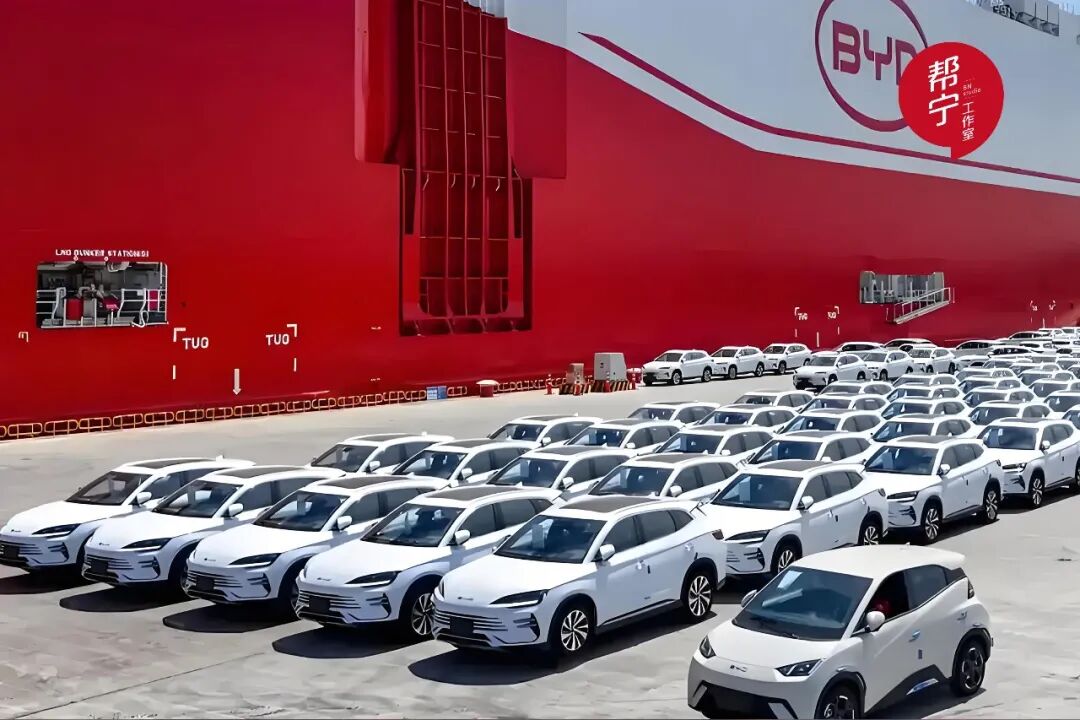
"Australia has opened its doors wide, but Canada has only cracked them open a bit."
Compiled by | Yang Yuke Edited by | Li Guozheng Produced by | Bangning Studio (gbngzs)
China has surpassed Japan for the first time to become Australia's largest source of new vehicles.
In February 2026, according to data from the Federal Chamber of Automotive Industries (FCAI), Chinese-made cars sold 22,362 units in Australia that month, surpassing Japan (21,671 units) for the first time. For nearly 30 years, Japan had been the leader in new vehicle sales in Australia.
Chinese cars (including internal combustion engine and electric vehicles) saw their market share in Australia rise to nearly 25%, while Japan's fell to about 23%. Tony Weber, CEO of the Federal Chamber of Automotive Industries, said, "China's growth trend is very clear, and it won't stop anytime soon."
Electric vehicles accounted for about 12% of Australian sales in February, with Chinese brands making up about 80% of that.
Weber emphasized that while Australia is no stranger to new entrants—with large automakers from countries like Japan and South Korea entering in waves over the past 50 years—the speed of Chinese car growth makes it a unique category. "The real difference is here. Chinese cars' market share quickly grew from zero to a quarter."
The Australian Automotive Dealer Association (AADA) predicts that by 2035, cars imported from China will account for 43% of the Australian market. Just before the COVID-19 pandemic, Chinese cars made up less than 2%.
"This is a huge growth story that is reshaping our market in real time," said AADA CEO James Voortman.
Voortman said that over the past five years, 28 new brands have entered Australia, supported by about 750 new dealerships. The AADA expects the number of active brands in the market to grow from 39 in 2021 to 75 by 2031, with Chinese brands driving nearly all of that growth.
Canada has reduced tariffs on 49,000 Chinese-made electric vehicles from 106.1% to 6.1%. Could what's happening in Australia be replicated in Canada?
Indeed, Australia and Canada share some similarities, but there are also significant differences between the two markets.
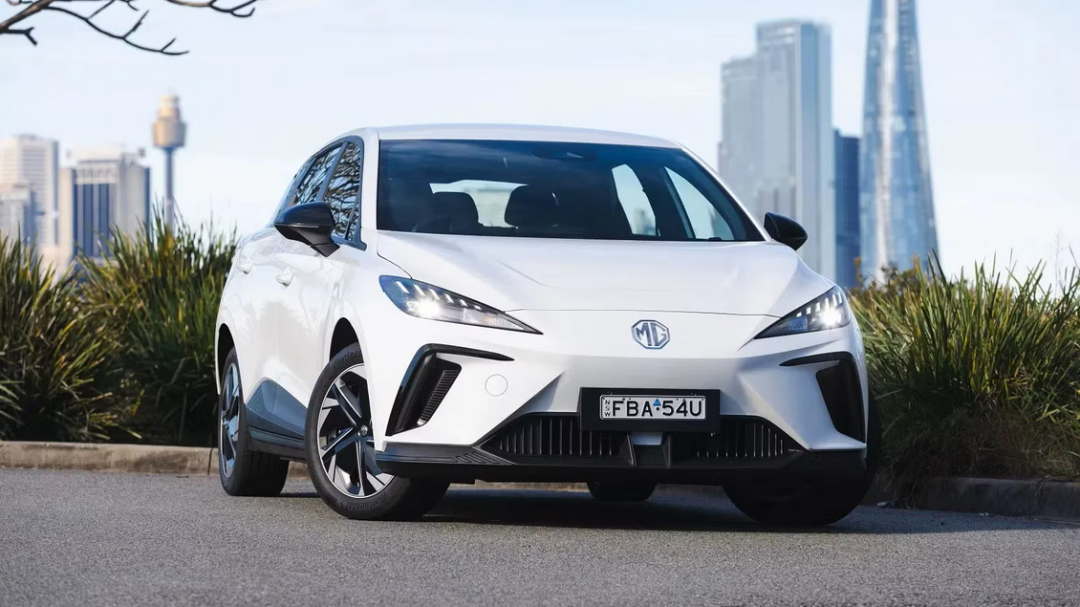
▍01 Australia's Open Door
Canada and Australia are among the world's larger mid-sized automotive markets, with Canada selling 1.9 million vehicles and Australia 1.2 million in 2025. The market compositions are similar, with SUVs holding the largest share in both countries, followed by pickups, which in Australia are usually compact or mid-size.
The appeal of Chinese brands in Australia comes from their competitive offerings in the SUV and pickup segments. Weber believes that new Chinese entrants benefit consumers by fostering greater price competition.
Moreover, in Weber's view, while price is undoubtedly a factor in the surge of Chinese car sales, quality and the rapid transformation capabilities of Chinese automakers are also significant drivers.
"Once they (Chinese automakers) realized that Australian consumers might be looking for plug-in hybrids as a transition, some of these brands quickly pivoted to plug-in hybrids and successfully met consumer preferences," Weber explained.
Like Canada, Australia has strict automotive emissions regulations aimed at pushing automakers to introduce more fuel-efficient vehicles, helping to drive the adoption of hybrid, plug-in hybrid, and battery electric vehicles.
Weber added, "Chinese cars are also well-positioned to meet the government's new regulations. Plus, they can profit by selling credits."
While Chinese automakers are known for their electric powertrains, many also sell gasoline and diesel vehicles in Australia.
One key difference is that Canada imposes a range of tariff and non-tariff barriers on automotive imports, while Australia has few such protections.
In the 1980s, Australia's automotive import tariffs were as high as 57.5%, but they gradually declined over subsequent decades as the country liberalized its market. Although Australia once had several auto assembly plants producing up to 500,000 vehicles annually, all local factories had closed by 2016.
Today, free trade agreements allow nearly all vehicles to enter Australia duty-free. The lack of non-tariff barriers makes it an "incredibly liberalized market."
Australia has its own minimum design standards, with safety and emissions regulations aligned with the EU, allowing any automaker operating in Europe to export "directly" to Australia.
Since Australia has no domestic auto assembly plants to protect, external government subsidies are not a concern.
"We want the best value from around the world. If it's subsidized elsewhere, that's seen as an advantage," Weber said. While Australia doesn't prohibit direct-to-consumer sales under franchise laws, virtually all brands choose to partner with local retailers.
"Chinese brands want to enter our market as quickly as possible. I think they've seen the challenges of going it alone in a country like Australia," Weber added.
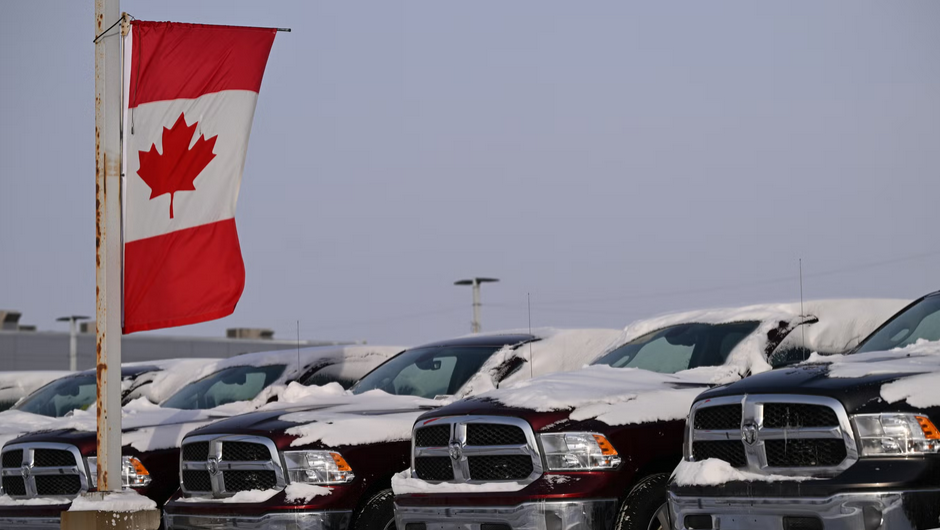
▍02 Canada's Barriers
Canada has been more cautious in its approach to Chinese electric vehicle imports.
Canada has a trade agreement with China that allows for a quota of 49,000 vehicles starting in 2026, increasing by 6.5% annually in subsequent years. However, in the short term, it limits the market share of Chinese imports to around 3%.
The regulatory hurdles Chinese automakers must clear are significant. Canada's vehicle safety standards are closely aligned with U.S. regulations, meaning certification for models sold in Europe or Asia offers little benefit.
Few automakers certify vehicles solely for the Canadian market if they don't plan to sell them in the U.S., as the process is both expensive and time-consuming.
Canada is home to five automakers and hundreds of suppliers. Importing cars risks local industry backlash and could complicate Chinese imports long-term. Ontario Premier Doug Ford and a range of industry stakeholders have condemned the Canada-China electric vehicle deal, as has federal Conservative leader Pierre Poilievre.
The Canadian government says the trade agreement with China is partly intended to "incentivize" Chinese investment in Canadian automotive manufacturing. No such deal has been announced yet.
Despite resistance from the automotive manufacturing sector, Canadian dealers generally support the agreement, as it would open the Canadian market to new entrants. Chinese brands BYD, Chery, and Geely are negotiating with Canadian dealers and considering expansion into Canada, including establishing local distribution channels.
In February, a Leger online poll found that most Canadian consumers favor importing more cars from China, despite concerns about national security risks and U.S. displeasure. The U.S. still imposes a 100% tariff on electric vehicle imports.
With the review of the US-Mexico-Canada Agreement set to conclude in July, Canada and the U.S. will begin trade negotiations. The Canada-China electric vehicle deal is widely seen as a provocation that could further disrupt Canada's relationship with its largest trading partner, the U.S.
Weber expects Chinese brands to continue accelerating in Australia but added that it "makes sense" for Canada to try to attach conditions to Chinese expansion from the outset.
"Once they're in Canada, customers will be the ones deciding. Our experience in Australia is that they've built a pretty solid place in customers' minds."
(This article partially synthesizes reporting from Automotive News, with some images sourced from the internet.)
-
![]()
Five Emerging Golden Entrepreneurial Pathways in the Agent Ecosystem: A Deep Dive into the Report (Part 2)
-
![]()
GEM-TIPS Makes Its Debut at Shenzhen International AI Expo: “Octopus AI Brain” + Intelligent Agent Cluster Pave New Ways for Industrial Intelligence
-
![]()
'China's Pioneer Domestic GPU Stock' Moore Threads Posts Profit in Q1, Yet True Profitability Unverified
-
![]()
Hynix Employees Await 3 Million Won in Bonuses, Samsung Employees Go on Strike: A Dramatic Clash Between Korea's Memory Giants
-
![]()
Twelve Years On, Can Cheng Yixiao Steer Kling to Another Victory?
-
![]()
From Data Scarcity to Open Source Boom: How China's Embodied AI Data Industry Can Break Through
-
Trend丨Indium Phosphide (InP) Prices Soar Amid AI Boom, with Cycles and Disruptions Set to Continue
-
![]()
One Article to Decode 'Computing Power Inflation': Why AI Costs Less for You While Computing Power Firms Rake in Profits